NCERT Solutions: Agriculture

Multiple Choice Questions
Q1. Which one of the following describes an agriculture system where a single crop is grown on a large area?
(a) Shifting Agriculture
(b) Plantation Agriculture
(c) Horticulture
(d) Intensive Agriculture
Ans: (b) Plantation Agriculture
Explanation: Plantation agriculture is a form of commercial farming in which a single crop (for example tea, coffee, rubber, or sugarcane) is cultivated over a large area. It is capital- and labour-intensive, often employs migrant or hired labour, and produces raw materials that are processed by industries. Plantations combine elements of both agriculture and industry, focusing on large-scale, specialised production for the market.
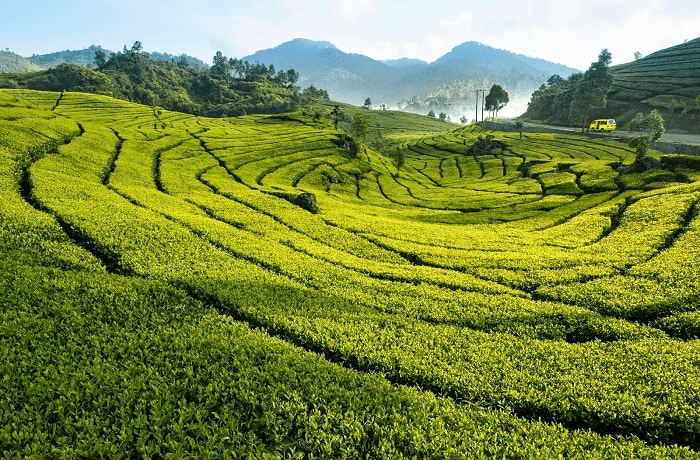 Plantation Agriculture
Q2. Which one of the following is a rabi crop?
(a) Rice
(b) Gram
(c) Millets
(d) Cotton
Ans: (b) Gram
Explanation: Gram is a rabi crop. Rabi crops are sown in winter (around October-December) and harvested in spring (around March-April). By contrast, rice, millets and cotton are kharif crops grown during the monsoon season when rainfall is plentiful.
Q3. Which one of the following is a leguminous crop?
(a) Pulses
(b) Jawar
(c) Millets
(d) Sesamum
Ans: (a) Pulses
Explanation: Pulses belong to the legume family and produce pods. They are well adapted to drier conditions and play an important role in restoring soil fertility because they fix atmospheric nitrogen into the soil through their root nodules. Common pulses include arhar (tur), moong, urad and gram.
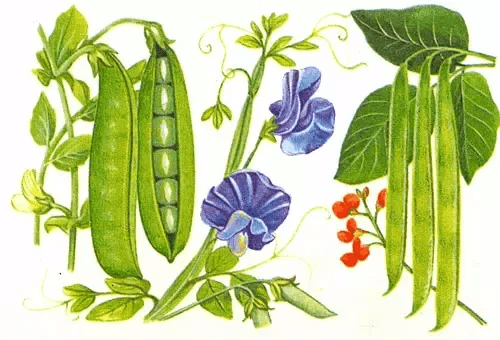 Leguminous Crops
Answer the Following Questions in 30 words
Q1. Name one important beverage crop and specify the geographical conditions required for its growth.
Ans: Tea is an important beverage crop. Geographical conditions:
- Tropical and sub-tropical climates: Tea grows best in warm, moist regions with well-distributed rainfall and cool periods for good leaf development.
- Soil: Deep, fertile, well-drained soils rich in humus and organic matter are ideal.
- Temperature: 20°C-30°C.
- Annual rainfall: 150-300 cm.
- Frequent showers: Evenly distributed rainfall throughout the year helps maintain leaf quality and yield.
Q2. Name one staple crop of India and the regions where it is produced.
Ans:
- Rice is a staple crop of India.
- Regions: It is produced in the plains of north and north-eastern India, coastal areas and deltaic regions such as West Bengal, Uttar Pradesh, Andhra Pradesh, Punjab, Bihar and Tamil Nadu.
Q3. Enlist the various institutional reform programmes introduced by the government in the interest of farmers.
Ans: Institutional reforms:
- Minimum Support Price (MSP): A guaranteed price for certain crops to protect farmers from price fluctuations.
- Subsidies on fertilisers: Financial support to reduce input costs for farmers.
- Crop insurance schemes: Insurance against droughts, floods and other crop failures.
- Rural banks and cooperatives: Establishment of Grameen banks and cooperative societies to provide loans at lower interest rates.
- Kisan Credit Cards (KCC): Easy and timely access to short-term credit for agricultural needs.
Answer the following questions in about 120 words
Q1. Suggest the initiative taken by the government to ensure the increase in agricultural production.
Ans:
- After independence, the government focused on land reforms including the abolition of the zamindari system, consolidation of holdings and promotion of cooperation among farmers to ensure more equitable land ownership and better cultivation.
- During the First Five Year Plan, land reform was emphasised to improve agricultural productivity and social justice in rural areas.
- In the 1960s and 1970s, India introduced the Green Revolution to increase food grain production through high-yielding seed varieties, chemical fertilisers and improved irrigation; the White Revolution (Operation Flood) boosted milk production.
- From the 1980s onwards, the government carried out comprehensive land development and technical reforms, and introduced institutional measures such as the Minimum Support Price policy, crop insurance schemes and subsidies on agricultural inputs.
- Other initiatives include the formation of rural banks and cooperatives, the launch of Kisan Credit Cards, farmer-friendly insurance schemes, and extension services such as special weather bulletins and agricultural programmes like Krishi Darshan to spread knowledge about better practices.
Q2. Describe the geographical conditions required for the growth of rice.
Ans:
- Season: Rice is mainly a kharif crop grown at the onset of the monsoon and harvested around September-October.
- Areas: It is commonly grown in the plains of north and north-eastern India, coastal regions and deltaic tracts - for example Assam, West Bengal, Odisha, Andhra Pradesh, Telangana, Tamil Nadu, Kerala, Maharashtra, Uttar Pradesh and Bihar.
- Temperature and humidity: Rice requires high temperatures (usually above 25°C) and high humidity for good growth.
- Rainfall and water: Annual rainfall above 100 cm or adequate irrigation is necessary; where rainfall is insufficient, canals and tube wells support rice cultivation (as seen in Punjab, Haryana and parts of Rajasthan).
- Soil: Rice grows well in deep, fertile soils that can retain water, such as alluvial and clayey soils found in river basins and deltas.
FAQs on NCERT Solutions: Agriculture
| 1. कृषि क्या है और इसके महत्व क्या हैं? |  |
| 2. विभिन्न प्रकार की खेती कौन सी हैं? | |
| 3. भारत में प्रमुख कृषि फसले कौन सी हैं? | |
| 4. कृषि में जलवायु का क्या प्रभाव है? | |
| 5. कृषि में आधुनिक तकनीकों का क्या योगदान है? | |





