Aggregates

Introduction
Aggregates are granular materials - sand, gravel, crushed stone or slag - used with a binding medium (cement paste, bitumen, or lime) to form concrete, mortar or bituminous mixes. Aggregates provide volume, improve dimensional stability, reduce shrinkage and affect strength, workability and durability of the mixture.
Shape, Size and Texture of Aggregates
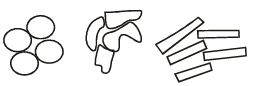
- Shape of aggregate particles is commonly described as rounded, angular or flaky. Shape strongly influences workability, packing and strength of the concrete or mix.
- Rounded aggregates have small surface area for a given volume and provide good workability because less paste is needed for lubrication. Rounded particles generally produce easier-to-place mixtures but may give slightly lower inter-particle bond and strength than angular particles.
- Angular aggregates have sharp edges and larger surface area. They develop stronger inter-particle mechanical anchorage and higher bond with the paste, producing higher strength mixes, but they reduce workability compared with rounded particles.
- Flaky particles (thin plate-like) and elongated particles (slender long particles) are undesirable because they reduce packing efficiency, produce non-uniform stress distribution and tend to lower both workability and mechanical strength of the mixture.
- Texture - smooth or rough surface - also affects behaviour. Smooth-textured aggregates increase workability; rough-textured aggregates give better bond and hence higher strength but require more paste for the same workability.
Angularity and Angularity Number
Angularity describes the degree of departure of the particle shape from a sphere or rounded shape. It is commonly quantified by an angularity number related to the voids in a loosely packed bed of aggregates.
- The angularity number may be expressed as the difference between the measured percentage voids in an aggregate sample and a reference void percentage (typically 33%).
- Angularity number = (% voids observed) - 33.
- Examples from the given reference: if void content = 33% then angularity number = 0; if void content = 44% then angularity number = 11.
- Aggregates suitable for concrete commonly have angularity numbers in the range 0 to 11; 0 represents highly rounded aggregate and 11 represents very angular aggregate (as given by the cited examples).
Testing of Aggregates
Overview
Laboratory tests on aggregates evaluate mechanical properties (strength, resistance to abrasion and impact), shape characteristics (flakiness, elongation) and suitability for concrete or pavement works. The following are commonly used tests.
Aggregate Crushing Value (ACV) Test
The aggregate crushing value indicates the resistance of an aggregate to crushing under a gradually applied compressive load. It gives a relative measure of the aggregate crushing strength.
- Sample selection and preparation: take the prescribed sample fraction (in the given reference, aggregates passing 12.5 mm sieve and retained on 10 mm sieve were used). Oven-dry the sample at 100-110°C for 3-4 hours.
- Filling the cylinder: fill the cylindrical measure in three approximately equal layers; tamp each layer 25 times with a standard tamping rod.
- Initial mass: record the mass of the oven-dried sample (W1).
- Crushing: place the plunger and sample assembly in the compression testing machine. Apply load uniformly so as to attain the specified maximum load (the provided procedure applies a load of 40 tonnes in about 10 minutes) or as per the relevant standard for the apparatus used.
- Sieving and final mass: sieve the crushed sample through a 2.36 mm sieve and record the mass of material passing the 2.36 mm sieve (W2).
- Computation: Aggregate crushing value = (W2 / W1) × 100 %.
- Interpretation: higher ACV indicates poorer resistance to crushing (i.e., a weaker aggregate); lower ACV indicates better crushing resistance.
Aggregate Impact Value (AIV) Test
The aggregate impact value measures the resistance of an aggregate to sudden shock or impact loads and is useful for assessing suitability for road surfacing and other dynamic loading conditions.
- Sample selection and preparation: use the specified fraction (here: passing 12.5 mm and retained on 10 mm sieve). Oven-dry the sample as required.
- Filling the cylinder: fill the impact testing cylinder in three layers; tamp each layer 25 times. Record the initial mass W1.
- Impact action: place the filled cylinder in the impact testing machine. Raise the hammer to the specified height (given example: 380 mm) and allow it to fall freely on the sample. Repeat for the number of blows specified (given example: 15 blows).
- Sieving and final mass: sieve the material after testing through a 2.36 mm sieve and record the mass of material passing the sieve (W2).
- Computation: Aggregate impact value = (W2 / W1) × 100 %.
- Interpretation: lower AIV indicates better resistance to impact. High values indicate susceptibility to fracture under sudden loads.
Aggregate Abrasion Value (Los Angeles Abrasion) Test
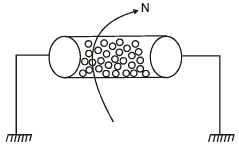
The Los Angeles (LA) abrasion test measures the resistance of aggregate to abrasion and wear from frictional forces and grinding action. It is widely used for aggregates for road construction and concrete.
- Sample preparation: take the required clean, oven-dried sample and record its mass (W1).
- Test apparatus and operation: charge the sample into the LA abrasion testing machine with the specified number of steel balls (as per the standard). Rotate the machine at the specified speed (given example: 20-33 revolutions per minute). Operate for the prescribed number of revolutions (given example: 1000 revolutions).
- Sieving and final mass: remove the sample, sieve through the specified sieve (given example: 1.7 mm). Wash, oven-dry and record the mass of aggregate retained on the sieve (W2) or follow the standard procedure to obtain the mass retained/ or the mass of fines produced as required by the particular standard.
- Computation: Aggregate abrasion value = ((W1 - W2) / W1) × 100 %.
- Interpretation: lower LA abrasion values indicate more durable, harder aggregates resistant to abrasion; higher values indicate weaker aggregates more prone to wear.
Shape Tests
Shape tests determine the percentage of flaky and elongated particles in an aggregate sample. Flaky and elongated particles negatively affect both workability and mechanical performance of concrete and bituminous mixes.
Flakiness Index Test
- The flakiness index (F.I.) is defined as the percentage by weight of particles whose least dimension (thickness) is less than 3/5 of their mean size.
- The test is not applicable to particle sizes smaller than 6.3 mm.
- Procedure summary: select sufficient aggregates so that approximately 200 pieces of each test fraction are available. Pass individual particles through the metal thickness gauge openings; particles that pass the gauge are considered flaky. Weigh the flaky particles and express their weight as a percentage of the original weight of the fraction. This percentage is the flakiness index.
- Interpretation: lower flakiness index means fewer flaky particles and generally better aggregate for stable, workable mixes.
Elongation Index Test
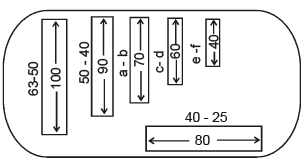
- The elongation index is defined as the percentage by weight of particles whose greatest dimension (length) is 1.8 times or more than their mean dimension.
- The test is applicable to aggregates larger than 6.3 mm. An elongation gauge is used to identify elongated particles.
- Procedure summary: measure or pass particles through the specified gauge openings; weigh the elongated particles and express as percentage of total weight of the sample fraction. Refer to IS: 2386 (Part I) for details of procedure and fractions.
- Notes: there are no universally fixed limits for elongation index in some standards, but lower values are preferred for most concrete and road construction applications.

Notes on Standards and Interpretation
- Many of the test procedures and limits are given in Indian Standards (for example, IS: 2386 series deals with methods of test for aggregates). Where precise procedural details, specimen sizes, tamping strokes, number of revolutions or limits are required, follow the applicable standard document.
- Always ensure representative sampling, correct drying procedures and calibrated apparatus to obtain reproducible and meaningful test results.
Summary
Aggregates influence workability, strength, durability and economy of concrete and bituminous mixes. Important properties include shape, size, texture, angularity, hardness and resistance to impact/abrasion. Standardised laboratory tests - aggregate crushing value, aggregate impact value, Los Angeles abrasion test, flakiness and elongation tests - help assess suitability of aggregates for structural and pavement works. Selection of aggregate should balance workability requirements with strength and durability needs while following relevant standards.
FAQs on Aggregates
| 1. What is the importance of aggregates in construction? |  |
| 2. What are the different types of aggregates used in construction? | |
| 3. How are aggregates produced? | |
| 4. What are the factors to consider when selecting aggregates for construction? | |
| 5. How can aggregates contribute to sustainable construction practices? | |