Chapter Notes: Chemical Coordination and Integration

Introduction
The neural system enables rapid, precise communication between organs and tissues, but its effects are generally short-lived and localized. Nerve fibres do not reach every cell in the body, and many cellular activities require sustained regulation. For long-term, body-wide coordination, the body uses chemical messengers called hormones. The endocrine system and the neural system act together to integrate and regulate physiological functions, with the endocrine system providing slower but longer-lasting control.
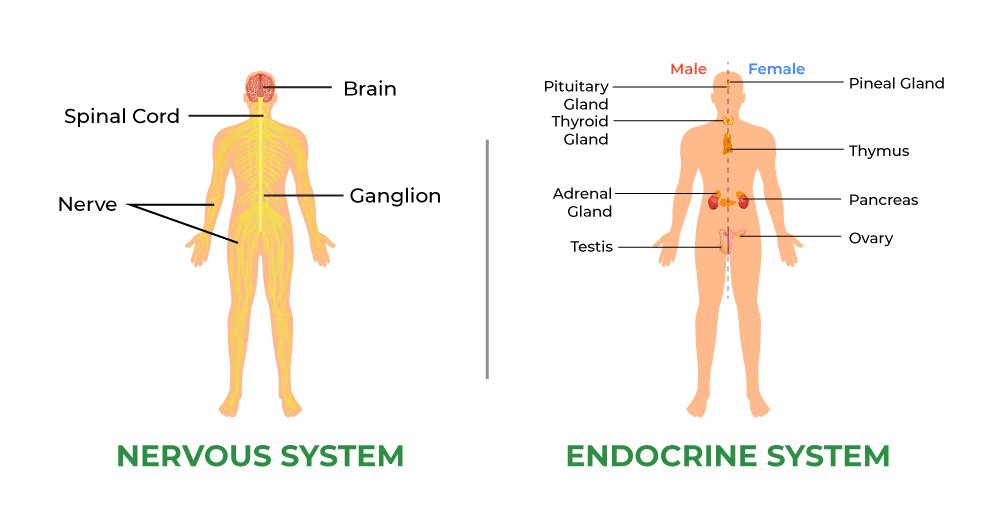
Endocrine glands and hormones
- Endocrine glands are ductless glands that release their secretions (hormones) directly into the blood stream.
- Classical definition: hormones are chemicals produced by endocrine glands, released into the blood and transported to distant target organs. Modern definition: hormones are non-nutrient chemical messengers produced in small amounts that act between cells and may be secreted by organised glands or by dispersed cells in various organs.
- Hormonal systems are present in invertebrates (simpler set of hormones) and vertebrates (more complex array of hormones) to coordinate physiology and development.
Human endocrine system
The human endocrine system comprises organised endocrine glands and hormone-producing cells in various organs. It includes a central regulatory link with the brain via the hypothalamus.
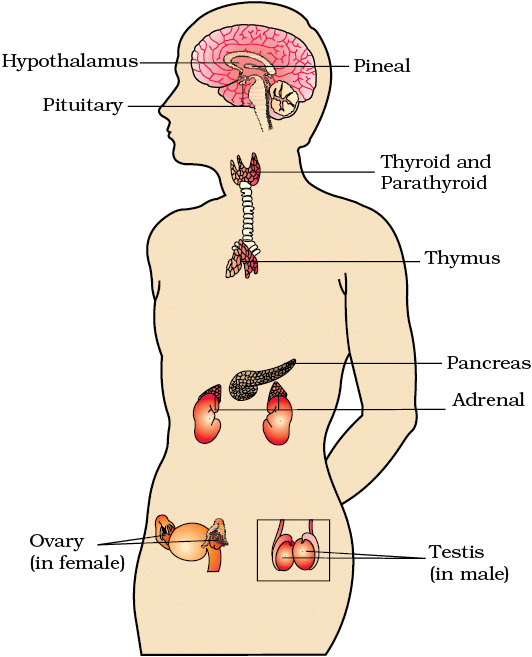 Location of endocrine glands
- Main organised endocrine glands: hypothalamus (neuroendocrine control), pituitary, pineal, thyroid, parathyroid, thymus, adrenal, pancreas, and the gonads (testes and ovaries).
- Other endocrine or hormone-secreting tissues: heart (atria), kidney (juxtaglomerular cells), gastrointestinal tract, liver and certain cells in many organs that secrete local growth factors.
- The hypothalamus in the brain is central to integrating neural signals and endocrine control; it regulates the pituitary and thereby influences most peripheral endocrine glands.
The sections that follow describe the structure, principal hormones and functions of each major endocrine gland, and the major disorders relevant to them.
1. Hypothalamus
- The hypothalamus lies at the base of the diencephalon and contains groups of specialised neurosecretory cells (nuclei) that synthesise neurohormones.
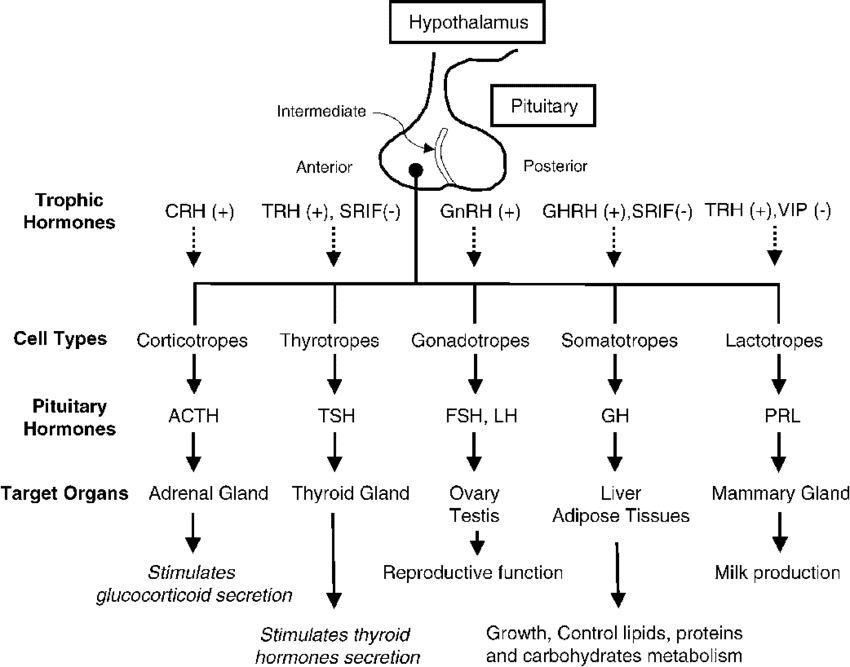
- These hypothalamic neurohormones are of two broad types: releasing hormones that stimulate anterior pituitary secretion and inhibiting hormones that reduce anterior pituitary secretion.
- Examples: Gonadotrophin-releasing hormone (GnRH) stimulates pituitary release of LH and FSH; somatostatin inhibits the release of growth hormone (GH).
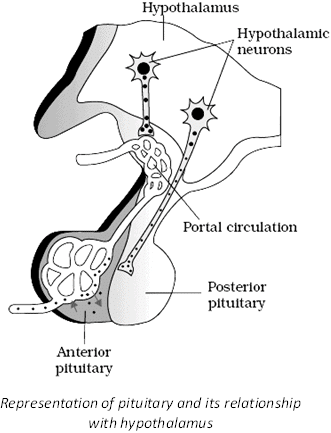
- Hypothalamic hormones reach the anterior pituitary via a specialised hypophyseal portal circulation, allowing rapid and concentrated control. The posterior pituitary is controlled by direct neural connections: hormones synthesised in hypothalamic neurons are transported along axons and stored in the posterior pituitary for release.
2. The pituitary gland
The pituitary gland (hypophysis) lies in the sella turcica and is connected to the hypothalamus by the pituitary stalk. It is anatomically and functionally divided into two main parts: the adenohypophysis (anterior pituitary) and the neurohypophysis (posterior pituitary).
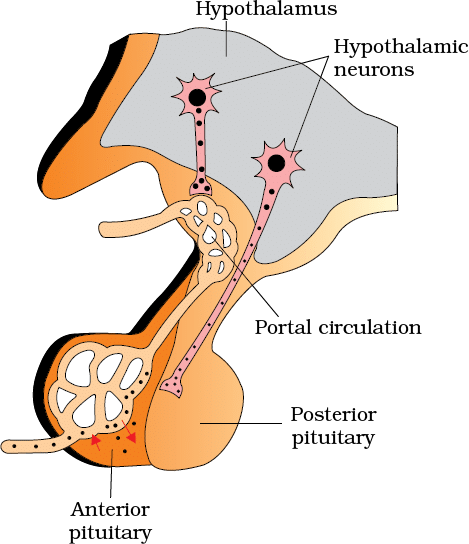 Diagrammatic representation of pituitary and its relationship with hypothalamus
Adenohypophysis (anterior pituitary)
- The adenohypophysis (pars distalis and pars intermedia) secretes several peptide hormones that regulate growth, metabolism and reproduction.
- Major hormones from the pars distalis and principal actions: GH (Growth hormone) - stimulates body growth, protein synthesis and mobilises fats; important for normal stature and development.
- Prolactin (PRL) - promotes mammary gland development and milk production.
- Thyroid-stimulating hormone (TSH) - stimulates thyroid hormone synthesis and release from the thyroid gland.
- Adrenocorticotropic hormone (ACTH) - stimulates glucocorticoid synthesis in the adrenal cortex.
- Follicle-stimulating hormone (FSH) and Luteinizing hormone (LH) - the gonadotropins; regulate gametogenesis and sex steroid production by gonads.
- The pars intermedia secretes melanocyte-stimulating hormone (MSH), which affects skin pigmentation (in humans the pars intermedia is often reduced and merged with pars distalis).
Neurohypophysis (posterior pituitary)
- The neurohypophysis stores and releases two hypothalamic peptides: oxytocin and vasopressin (antidiuretic hormone, ADH). These hormones are synthesised in hypothalamic neurons and transported to the posterior pituitary for storage and release.
- Oxytocin stimulates uterine smooth muscle contraction during parturition and causes milk ejection from mammary alveoli by myoepithelial contraction.
- Vasopressin (ADH) acts on the kidney to increase water reabsorption in collecting ducts, conserving body water and concentrating urine. Deficiency of ADH causes diabetes insipidus (large volumes of dilute urine and dehydration).
Clinical disorders related to pituitary function
- Hypersecretion of GH in children causes gigantism (excessive linear growth); in adults it causes acromegaly characterised by enlargement of hands, feet, jaw and facial features.
- Hyposecretion of GH during development leads to pituitary dwarfism (short stature with normal body proportions).
- Other pituitary tumours or lesions can cause excess or deficiency of pituitary hormones, affecting thyroid, adrenal or gonadal function.
3. The pineal gland
- The pineal gland is a small endocrine structure on the dorsal aspect of the forebrain.
- It secretes melatonin, a hormone important in regulation of circadian (24-hour) rhythms.
- Melatonin helps regulate the sleep-wake cycle, body temperature rhythms and may influence seasonal reproductive cycles, aspects of metabolism, pigmentation and aspects of immune function.
4. Thyroid gland
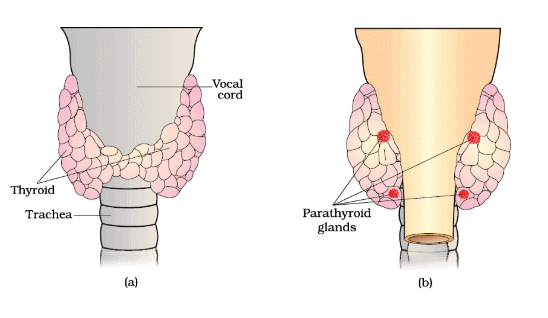
- The thyroid gland lies anterior to the trachea and consists of two lobes connected by an isthmus; its functional units are thyroid follicles lined by follicular epithelial cells.
- Follicular cells synthesise iodinated thyroid hormones: thyroxine (T4, tetraiodothyronine) and triiodothyronine (T3). Iodine is essential for their synthesis; iodine deficiency impairs thyroid hormone production and can lead to goitre (thyroid enlargement).
Thyroid hormones regulate basal metabolic rate (BMR), influence growth and development (including nervous system development), and control the metabolism of carbohydrates, proteins and fats. They also affect water and electrolyte balance and assist erythropoiesis.
Disorders and effects
- Hypothyroidism during fetal life, infancy or childhood may result in cretinism (impaired growth and mental retardation). In adults, hypothyroidism causes fatigue, cold intolerance, weight gain and menstrual irregularities in women.
- Hyperthyroidism results from excessive thyroid hormone production (e.g., Graves' disease). Clinical features include increased BMR, weight loss, heat intolerance and in Graves' disease there may be exophthalmos (protrusion of eyeballs) and diffuse goitre.
- The thyroid also secretes calcitonin (thyrocalcitonin, TCT) from parafollicular C-cells; calcitonin helps lower blood calcium by inhibiting bone resorption (its action complements PTH in calcium homeostasis).
5. Parathyroid glands
- Typically there are four small parathyroid glands located on the posterior surface of the thyroid lobes.
- They secrete parathyroid hormone (PTH), a peptide hormone whose release is regulated by circulating Ca2+ levels (low Ca2+ stimulates PTH release).
- PTH is a major hypercalcaemichormone; its actions to raise blood calcium include:
- stimulating bone resorption, releasing Ca2+ and phosphate into blood;
- increasing renal tubular reabsorption of Ca2+ and promoting phosphate excretion;
- enhancing intestinal calcium absorption indirectly by promoting activation of vitamin D (1,25-dihydroxyvitamin D) in the kidney.
- PTH and calcitonin together maintain calcium homeostasis, important for muscle contraction, nerve conduction and blood clotting.
6. Thymus
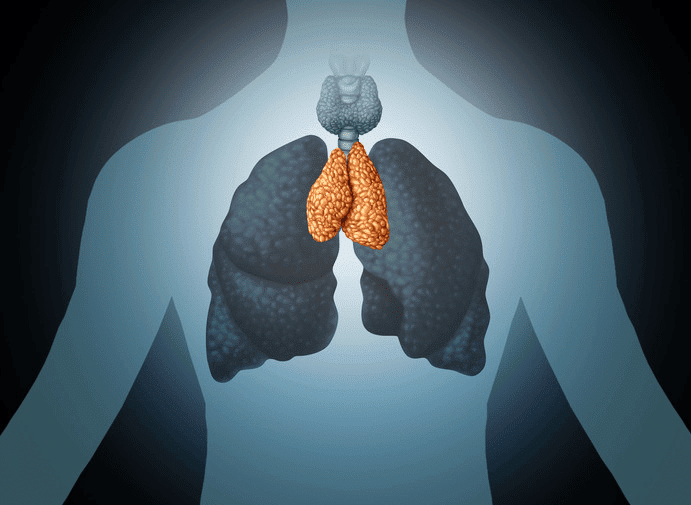
- The thymus is a lobulated organ located in the anterior mediastinum, dorsal to the sternum.
- It secretes peptide hormones collectively called thymosins (and related thymic factors) that are crucial for maturation and differentiation of T-lymphocytes in the thymus, thereby establishing cell-mediated immunity.
- Thymic hormones also support aspects of humoral immunity indirectly. The thymus is relatively large and active in children and adolescents and undergoes involution (degeneration) with age, contributing to age-related decline in immune responsiveness.
7. Adrenal glands
The paired adrenal glands sit above each kidney and consist of two distinct parts: the inner adrenal medulla (neuroendocrine) and the outer adrenal cortex (endocrine).
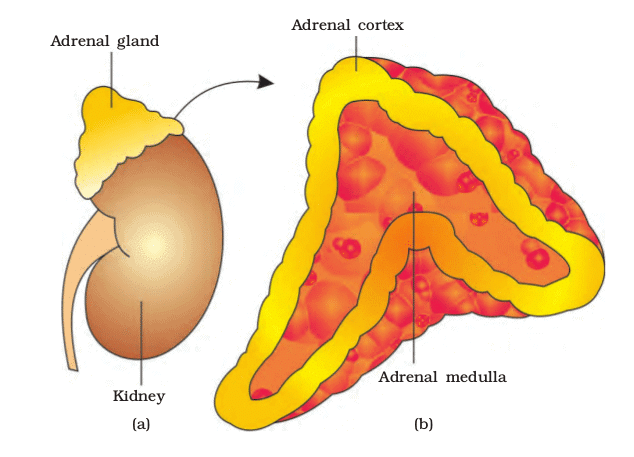 Diagrammatic representation of : (a) Adrenal gland above kidney (b) Section showing two parts of adrenal gland
- Adrenal medulla secretes catecholamines: adrenaline (epinephrine) and noradrenaline (norepinephrine). These are released rapidly during stress ('fight or flight') and increase heart rate, contractility, blood pressure, bronchial dilation, blood glucose (via glycogenolysis) and mobilisation of energy stores.
- Adrenal cortexproduces steroid hormones (collectively corticoids). The cortex has three layers:
- Zona glomerulosa (outer) - chiefly produces mineralocorticoids (e.g., aldosterone), important in sodium and water balance and in maintaining blood volume and pressure.
- Zona fasciculata (middle) - principally produces glucocorticoids (e.g., cortisol) that regulate carbohydrate, protein and fat metabolism, stimulate gluconeogenesis, have anti-inflammatory effects and modulate immune responses.
- Zona reticularis (inner) - produces small amounts of adrenal androgens that have secondary effects on sex characteristics and metabolism.
Clinical note
- Addison's disease results from chronic deficiency of adrenal cortical hormones, producing weakness, weight loss, low blood pressure, hyperpigmentation and disturbances in carbohydrate and electrolyte metabolism.
Physiological effects of catecholamines
- Increase alertness and readiness, dilate pupils, cause piloerection and sweating, increase heart rate and respiratory rate, mobilise glucose by glycogenolysis and promote lipolysis and protein catabolism for energy supply.
8. Pancreas (endocrine component)
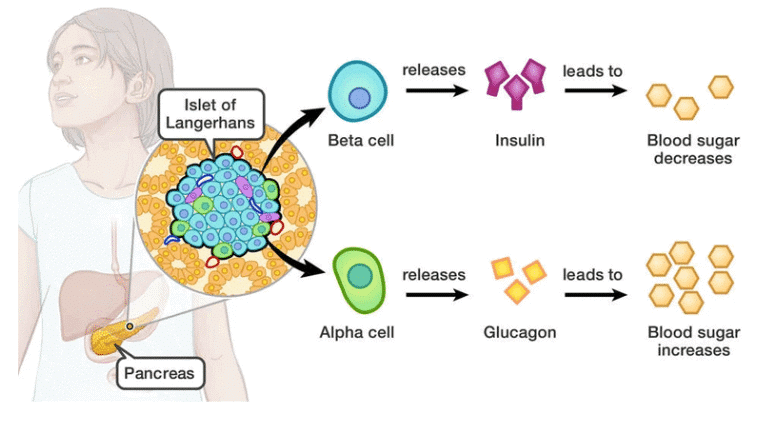
The pancreas has both exocrine and endocrine functions. The endocrine portion consists of the Islets of Langerhans, small clusters of hormone-secreting cells scattered through the pancreas (approximately 1-2 million islets in a typical human; they account for about 1-2% of the pancreatic mass).
- α-cells secrete glucagon, a hyperglycaemic hormone that raises blood glucose by stimulating hepatic glycogenolysis and gluconeogenesis, and by reducing peripheral utilisation of glucose.
- β-cells secrete insulin, a hypoglycaemic hormone that increases glucose uptake into liver, muscle and adipose tissue, stimulates glycogenesis (glycogen synthesis), promotes lipid and protein synthesis and lowers blood glucose.
- Insulin and glucagon act antagonistically to maintain blood glucose within a narrow physiological range.
Diabetes mellitus is a group of metabolic disorders characterised by chronic hyperglycaemia. Absolute or relative insulin deficiency leads to hyperglycaemia, glucosuria (glucose in urine) and, when severe, increased fatty acid oxidation and ketone body production (ketoacidosis). Insulin therapy and lifestyle management are mainstays of treatment.
9. Testis
- The paired testes are enclosed in the scrotum and function as the male gonads and endocrine glands.
- Interstitial (Leydig) cells produce androgens, principally testosterone, which regulate development and function of male accessory sex organs (epididymis, vas deferens, seminal vesicles, prostate and urethra) and promote male secondary sexual characteristics (facial and body hair, deepening of voice, increased muscle mass).
- Androgens stimulate and support spermatogenesis and influence male sexual behaviour (libido). They also have anabolic effects on protein and carbohydrate metabolism.
10. Ovary
- The paired ovaries in females are the primary female reproductive organs; each ovary releases an ovum during the menstrual cycle and secretes steroid hormones.
- Major ovarian hormones: oestrogens (oestrogen) and progesterone.
- Oestrogens are mainly produced by growing ovarian follicles; they promote development of female secondary sexual characteristics and reproductive tract growth, regulate the menstrual cycle and support mammary gland development.
- After ovulation the ruptured follicle forms the corpus luteum, which secretes progesterone. Progesterone prepares the uterus for implantation, supports early pregnancy and stimulates development of the secretory apparatus in the mammary glands for lactation.
Hormones of heart, kidney and gastrointestinal tract
Several non-classical endocrine organs also secrete hormones with important systemic roles:
- Atrial natriuretic factor (ANF) is secreted by atrial myocytes of the heart in response to atrial stretch (increased blood volume). ANF promotes vasodilation and increases renal sodium and water excretion, lowering blood volume and blood pressure.
- Erythropoietin (EPO) is produced by juxtaglomerular interstitial cells in the kidney in response to hypoxia; EPO stimulates erythropoiesis (red blood cell production) in the bone marrow.
- Gastrointestinal hormonesare peptide hormones produced by cells in the gut mucosa that regulate digestion and pancreatic and biliary secretion. Important examples:
- Gastrin - stimulates gastric acid (HCl) and pepsinogen secretion.
- Secretin - stimulates pancreatic secretion of bicarbonate-rich fluid and neutralises gastric acid entering the duodenum.
- Cholecystokinin (CCK) - stimulates gallbladder contraction and pancreatic enzyme secretion.
- Gastric inhibitory peptide (GIP) - inhibits gastric motility and secretion; also has an incretin effect on insulin secretion.
- Growth factors are locally acting peptide mediators (produced by many non-endocrine tissues) that regulate growth, differentiation, repair and regeneration of tissues.
Try yourself: What hormone is produced by alpha cells in the Islets of Langerhans?
Mechanism of hormone action
Hormones act by binding to specific hormone receptors that are expressed only in target cells. The receptor-hormone interaction determines the specificity of hormone action.
Two broad classes of receptors:
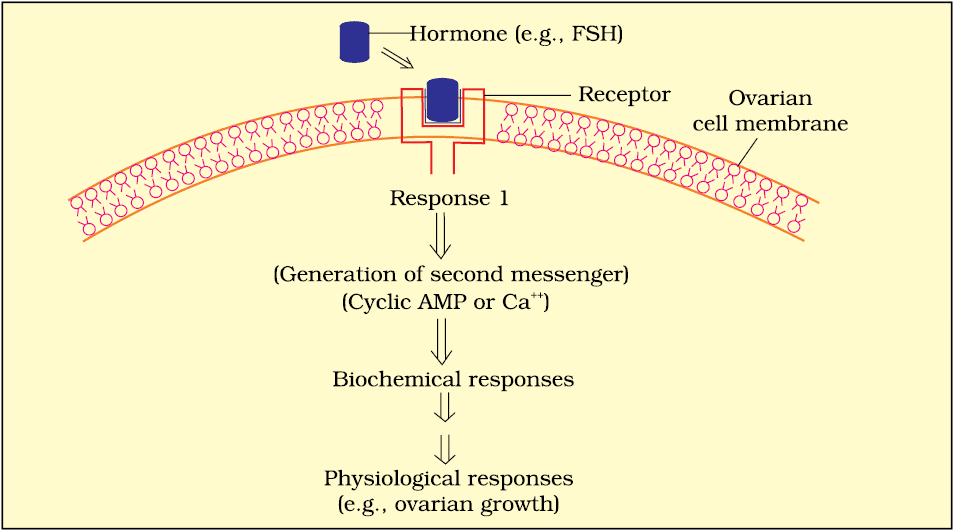
- Membrane-bound receptors - located on the cell surface; typical for peptide and protein hormones and some amino-acid-derived hormones (e.g., catecholamines). Hormone binding activates intracellular signalling cascades and second messengers (cyclic AMP, IP3, diacylglycerol, Ca2+) that modify enzyme activity and cell physiology.
- Intracellular receptors - located in the cytoplasm or nucleus; typical for lipid-soluble hormones (steroid hormones and iodothyronines). These hormones diffuse across the plasma membrane, bind to intracellular receptors, and the hormone-receptor complex acts on specific genes to regulate transcription and protein synthesis.
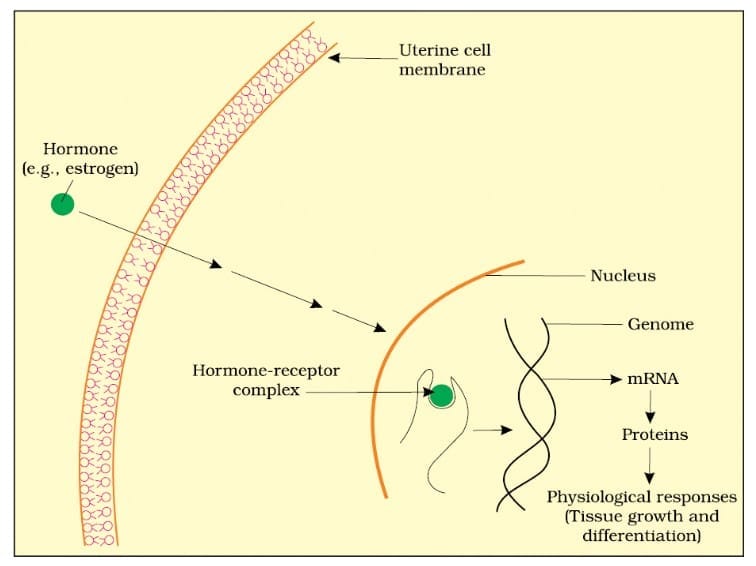
The hormone-receptor complex initiates a sequence of biochemical events in the target cell that result in altered metabolism, growth, secretion or gene expression appropriate to the hormone's role.
Hormones may be classified by chemical nature:
- Peptides, polypeptides and protein hormones - e.g., insulin, glucagon, most pituitary hormones and hypothalamic releasing factors.
- Steroid hormones - e.g., cortisol, aldosterone, testosterone, oestrogens, progesterone.
- Iodothyronines - thyroid hormones (T3, T4).
- Amino acid derivatives - e.g., epinephrine, norepinephrine.
Membrane-acting hormones usually trigger rapid responses via second messengers; intracellular-acting hormones usually alter gene transcription, producing slower but longer-lasting effects.
The endocrine system is a network of ductless glands and hormone-secreting cells that coordinate long-term and body-wide physiological processes. Hormones act through specific receptors, employing either membrane signalling (second messengers) or nuclear mechanisms (gene regulation). Together with the nervous system, the endocrine system maintains homeostasis, regulates growth and development, reproduction and responses to stress. Common clinical conditions-such as thyroid disorders, diabetes mellitus, adrenal insufficiency and pituitary hormone imbalances-illustrate the critical roles hormones play in health and disease.
FAQs on Chapter Notes: Chemical Coordination and Integration
| 1. What is the endocrine system and what are its primary functions? |  |
| 2. What are hormones and how do they affect the body? | |
| 3. How do hormones differ from enzymes? | |
| 4. What is the difference between hormones and vitamins? | |
| 5. What are the mechanisms through which hormones act on target cells? | |





