NCERT Solutions - The Lost Child

Page No.6
Think About It
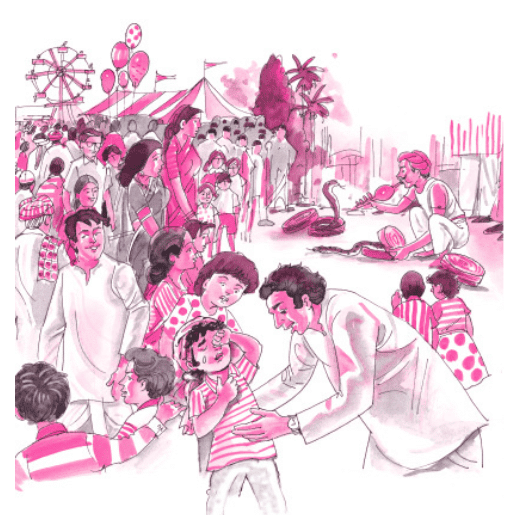
Q1: What are the things the child sees on his way to the fair? Why does he lag behind?
Ans: On his way to the fair the child sees toys, balloons of different colours, garland of gulmohur, a swing and a snake-charmer playing a flute. He gets attracted towards all these things. So, he lags behind.
 The Lost Child
Q2: In the fair, he wants many things. What are they? Why does he move on without waiting for an answer?
Ans: At the fair, the child desires a burfi from the sweetmeat seller, a garland of gulmohur flowers, colourful balloons, and a ride on the roundabout. He moves on without waiting for an answer because whenever he stops to see things, his parents gave him a cautionary call, "come, child, come!"
Q3: When does he realise that he has lost his way? How have his anxiety and insecurity been described?
Ans: The child sees a roundabout at the fair and gets attracted to it. He wants to have a ride on it. He asks his parents for permission to enjoy it. Having no response on the part of his parents, he realises that he has lost his way. He starts crying bitterly at once and runs here and there in search of them.
Q4: Why does the lost child lose interest in the things that he had wanted earlier?
Ans: The child loses interest in the things when be realized that he is separated from his parents. Earlier he wanted many things dearly. He is panic stricken on being separated from his parents. Now he needed nothing but parents. Children feel secure only with their parents. All things that attracted him in the fair no longer appeal to him as he realises being with parents is more important.
Q5: What do you think happens in the end? Does the child find his parents?
Ans: Yes, I believe the child is finally reunited with his parents. The kind man likely did everything he could to help find them, and the parents must have done all they could to search for their child.
Talk About It
Q1: How to ensure not to get lost?
Ans: It is very common that children get lost in fairs and crowds. Hardly a day passes when no child gets lost. It is the duty of both the parents and the children to ensure not to get lost. The parents need to be vigilant and more careful at crowded places. Before entering a crowded place the parents should fix a point where the child should wait in case of getting lost. They should make the child memorise home address and telephone numbers. They should put or pin up a note on the pocket of the child with full details. They should attend to the need of the child and never leave him behind, in case he happens to stand at some shop.
On the other hand the child should hold the hands of his parents at a crowded place. He should keep an eye on his parents so as not to lose sight of them. In case of any emergency the help of police, help centres and media can be taken.
FAQs on NCERT Solutions - The Lost Child
| 1. What is the central theme of "The Lost Child"? |  |
| 2. How does the child’s journey in "The Lost Child" reflect his emotions? | |
| 3. What role do the parents play in the story? | |
| 4. How does the author use imagery to enhance the story? | |
| 5. What lesson can readers learn from "The Lost Child"? | |