Pollination and Outbreeding Devices


What is Pollination?
Pollination is the process by which pollen grains are transferred from the anther of a flower to the stigma of the same flower, to a different flower on the same plant, or to a flower on a different plant of the same species. Successful pollination is the first step that leads to fertilisation and seed formation in flowering plants.
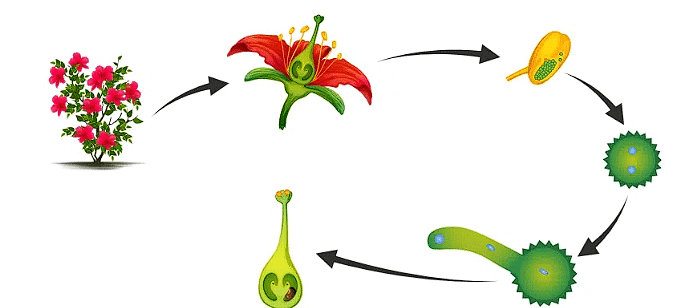 Pollination
Types of Pollination
Based on the source and the destination of pollen movement, pollination is classified into two main types: self-pollination and cross-pollination. Each type has subtypes and characteristic biological implications for genetic variation.
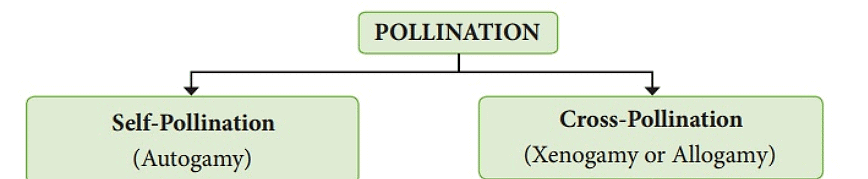
Self-pollination (Autogamy)
Self-pollination (also called autogamy) occurs when pollen from the anther of a flower is transferred to the stigma of the same flower or to another flower on the same plant.
Conditions that favour self-pollination
- The anther and stigma must be mature and functional at the same time so that pollen release and stigma receptivity coincide.
- The anther and stigma should be in close proximity (spatial closeness) so that pollen can easily reach the stigma without the help of external agents.
- In open, normally formed flowers with exposed reproductive parts, complete self-pollination is relatively uncommon because such flowers are accessible to pollinators and external agents. For self-pollination to occur in these flowers, both temporal and spatial conditions must match.
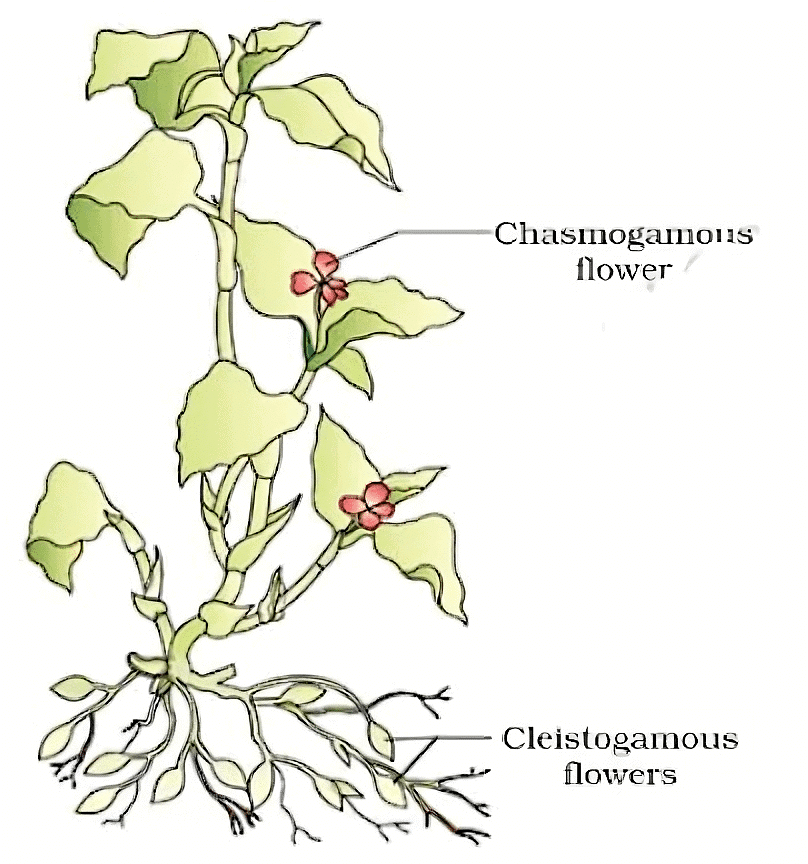
- Certain plants, for example Viola, Oxalis and Commelina, produce two types of flowers: chasmogamous flowers (which open and expose reproductive parts) and cleistogamous flowers (which never open). Cleistogamous flowers always self-pollinate because anthers and stigma are close within the unopened bud.
- Cleistogamy ensures seed formation even in the absence of pollinators and is therefore an assured, though genetically less variable, mode of reproduction.
Cross-pollination (Allogamy)
Cross-pollination (also called allogamy) occurs when pollen grains are transferred from the anther of one flower to the stigma of a different flower. Cross-pollination can occur between flowers on the same plant or between flowers on different plants of the same species.
Forms of cross-pollination
- Geitonogamy - pollen is transferred from one flower to another flower on the same plant. Although a pollinator may be involved, genetically geitonogamy is equivalent to self-pollination because the pollen source is the same individual plant.
- Xenogamy - pollen is transferred from the anther of a flower on one plant to the stigma of a flower on a different plant of the same species. Xenogamy leads to genetic recombination and increased genetic variability.
Agents of Pollination
Pollination may be brought about by abiotic agents such as wind and water, or by biotic agents, chiefly animals (insects, birds, bats and some mammals). Most flowering plants rely on animals; wind and water pollination are used by a smaller number of species. Abiotic pollination tends to be more random, so those plants produce abundant pollen to increase the chance of successful pollination.
1. Wind-pollinated plants (anemophily)
Wind is a common abiotic agent for pollination among many grasses, cereal crops and some trees.
Features that favour wind pollination
- Pollen grains are small, light and non-sticky so they can be borne by air currents.
- Stamens are often exserted (projecting out of the flower) so pollen is easily released into the air.
- Stigmas are typically large and feathery to efficiently trap airborne pollen.
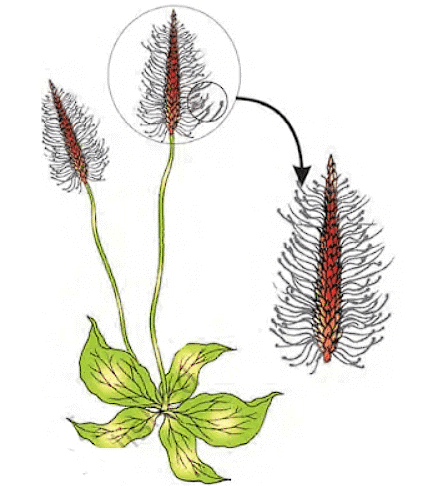 Wind pollinated- Exposed stamens
- Wind-pollinated flowers commonly produce a large quantity of pollen, have reduced or absent petals and often bear single ovules per ovary in some species. Examples include maize (Zea mays), many grasses and some trees (e.g., oak, pine).
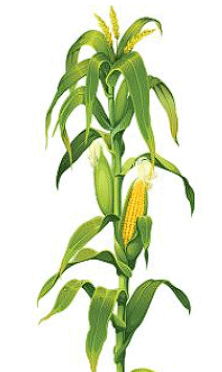 Corn Cob Tassels
2. Water-pollinated plants (hydrophily)
Water pollination is uncommon and occurs mostly in a limited number of aquatic angiosperms, mainly among monocots inhabiting fresh or marine waters.
Key points about water pollination
- Water pollination is mostly seen in a few genera such as Vallisneria, Hydrilla and some marine seagrasses like Zostera.
- Not all aquatic plants use water for pollination. Many aquatic species (for example, water hyacinth and water lily) are pollinated by insects or wind.
- To protect pollen grains from becoming non-viable in water, some water-pollinated species have a mucilaginous coating on pollen that helps them remain viable while being carried by water currents.
Example - Vallisneria
Female flowers of Vallisneria are borne on long stalks that reach the water surface. Male flowers detach and float on the water surface, releasing pollen there. Water currents transport the floating pollen to the stigmas of female flowers.
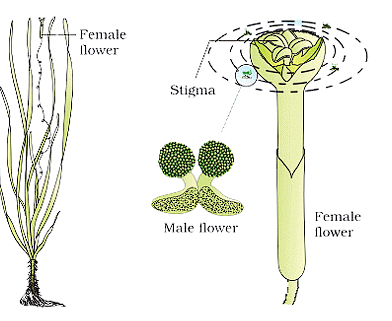 Pollination in Vallisneria
In some seagrasses the stigmas and flowers remain submerged and pollen is released and carried within the water column until it contacts the female reproductive structures.
Note on lower plant groups
Lower plant groups such as bryophytes and pteridophytes require water for the movement of male gametes (sperm) to the female reproductive organs and are therefore generally restricted to moist habitats; they do not produce pollen or seeds like angiosperms.
3. Animal-pollinated plants (zoophily)
Most flowering plants are pollinated by animals - especially insects (bees, butterflies, moths, flies, beetles), but also birds (hummingbirds, sunbirds), bats and some small mammals. Animals act as vectors, carrying pollen from flower to flower, often attracted by showy floral displays or rewards such as nectar and pollen.
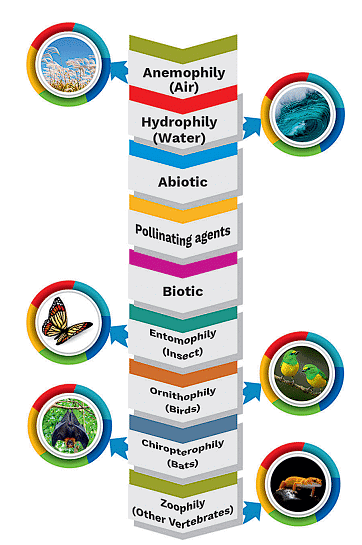 Pollinating Agents
Features of animal-pollinated flowers
- Flowers are often brightly coloured, scented and may provide nectar or pollen as a food reward.
- Small flowers are frequently grouped in inflorescences to increase attractiveness and handling efficiency for animals.
- Some flowers produce distinct visual cues, UV patterns or scents to attract specific pollinators. Others emit unpleasant odours to attract flies or beetles.
- When animals visit flowers for nectar or other rewards they become dusted with pollen, which they transfer to the stigma of the next flower they visit, effecting pollination.
Specialised mutualisms
Certain plants have highly specialised relationships with particular pollinators. For example, the Yucca and the Yucca moth form an obligate mutualism: the moth pollinates the flower while laying its eggs in the ovary, and the developing larvae feed on some of the developing seeds. The plant Amorphophallus provides large floral structures that may be used as sites for insects to lay eggs or shelter.
Difference between Self- and Cross-pollination
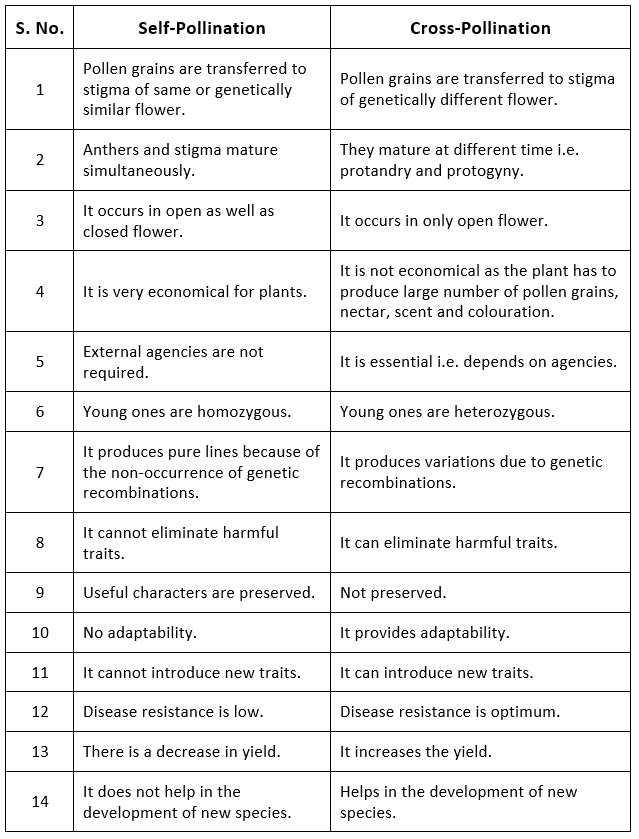
- Source of pollen: Self-pollination uses pollen from the same flower or same plant; cross-pollination uses pollen from a different plant.
- Genetic variation: Self-pollination maintains genetic uniformity (less variation); cross-pollination increases genetic variation (more variation).
- Dependence on pollinators: Self-pollination often does not require external agents; cross-pollination generally requires pollinators or abiotic vectors.
- Advantages: Self-pollination guarantees seed set even when pollinators are scarce; cross-pollination promotes adaptability by producing diverse offspring.
Out-breeding Devices
Many flowering plants possess structural or physiological mechanisms called out-breeding devices to reduce self-pollination and promote cross-pollination. These devices help maintain genetic diversity and reduce inbreeding depression.
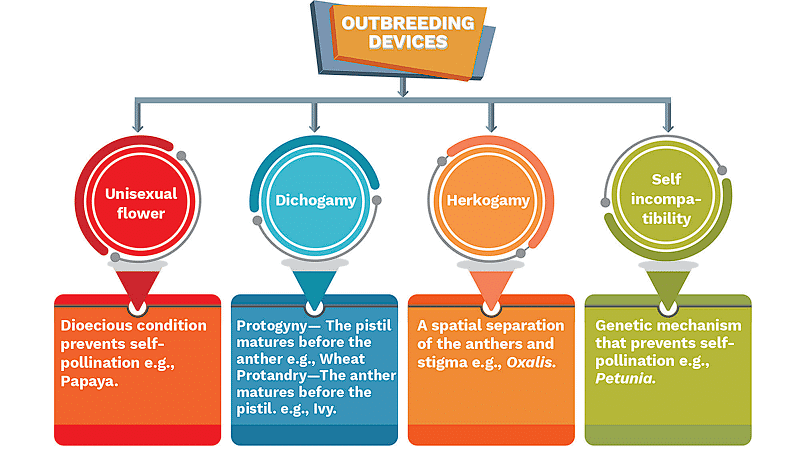
Types of out-breeding devices
- Dichogamy - temporal separation of sexual maturity of stamens and pistils within the same flower. If anthers mature first, the condition is protandry; if the stigma matures first, it is protogyny. Dichogamy reduces the chance of autogamy.
- Herkogamy - spatial separation of anthers and stigma so pollen cannot easily reach the stigma of the same flower (for example, styles and stamens positioned apart).
- Heterostyly - presence of different floral morphs in a species with differing style and stamen lengths (for example, Primula). This promotes pollen transfer between complementary morphs and discourages selfing.
- Self-incompatibility (SI) - a genetic mechanism in which pollen from the same plant (or genetically similar pollen) is recognised and rejected by the pistil, either by preventing pollen germination on the stigma or by halting pollen tube growth in the style. SI can be gametophytic or sporophytic depending on genetic control.
- Unisexuality and monoecy/dioecy - production of separate male and female flowers reduces autogamy: in monoecious species (e.g., maize, castor) male and female flowers occur on the same plant; in dioecious species (e.g., papaya) male and female flowers occur on different plants which prevents both autogamy and geitonogamy.
Pollen-Pistil Interaction
The interaction between pollen and pistil determines whether pollination will proceed to fertilisation. The pistil must recognise compatible pollen and then support pollen adhesion, hydration, germination, and pollen-tube growth through the style toward the ovule.
Possible outcomes of pollen-pistil interaction
- If pollen is compatible, it adheres to the stigma, hydrates, germinates and produces a pollen tube that grows through the style to deliver male gametes to the ovule for fertilisation.
- If pollen is incompatible, it may fail to adhere, fail to hydrate or germinate on the stigma, or the pollen tube may be arrested while attempting to grow through the style. Self-incompatibility systems are an important cause of such rejection.
Artificial Hybridisation
Artificial hybridisation is the deliberate crossing of selected plants by human intervention to combine desirable traits and produce improved crop varieties. Plant breeders use artificial hybridisation to transfer favourable characteristics such as higher yield, disease resistance, improved quality and stress tolerance into new cultivars.
Purpose of artificial hybridisation
- To combine desirable traits from two parents into a single hybrid.
- To create genetic variability that plant breeders can select from.
- To develop hybrids with heterosis (hybrid vigour) for improved performance.
Basic steps commonly used in artificial hybridisation
- Select parental plants with the desirable traits to be combined.
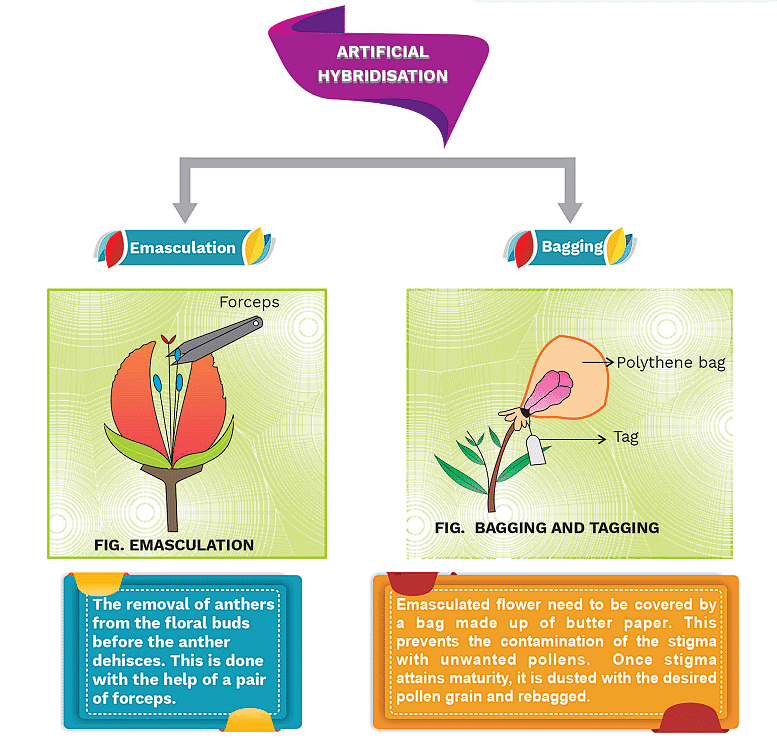
- Emasculation: remove anthers from the flower that will act as the female parent to prevent self-pollination (performed before anther dehiscence).
- Bagging: cover the emasculated flower to protect it from unwanted pollen and to mark it for controlled pollination.
- Controlled pollination: collect pollen from the chosen male parent and place it on the stigma of the emasculated flower.
- Tagging: label the pollinated flowers with parent details and date for record-keeping.
- Harvest and select: after fertilisation and seed formation, harvest seeds and raise progeny for selection of desirable hybrids and evaluation.
FAQs on Pollination and Outbreeding Devices
| 1. What is pollination and why is it important? |  |
| 2. What are the different types of pollination? | |
| 3. How do outbreeding devices help in pollination? | |
| 4. What is the significance of pollen-pistil interaction in pollination? | |
| 5. How does artificial hybridization play a role in pollination? | |





