Later Mughals


Bahadur Shah
Aurangzeb died without a clear nomination for succession. His three sons - Muazzam, Azam and Kam Baksh - claimed the throne and the empire was effectively partitioned among them. The struggle for supremacy followed. The eldest son, Muazzam, defeated and killed his brothers and ascended the throne with the regnal title Bahadur Shah. He reigned until his death in February 1712.
- Bahadur Shah pursued a comparatively conciliatory and tolerant policy towards the Marathas and the Rajputs. Over time the Marathas consolidated power in the Deccan while many Rajput states became effectively independent.
- On account of Aurangzeb's earlier persecution, the Sikhs had become a militant force under the leadership of Banda Singh (Banda Singh Bahadur). They attacked Sirhind and fought with strong religious conviction; Banda often led from the front.
- The Sikh raids and the growth of their power became a serious problem. Bahadur Shah personally marched against them, and the Sikhs were for a time defeated and driven into the hills, although Banda escaped immediate capture.
- Bahadur Shah died in February 1712 A.D.
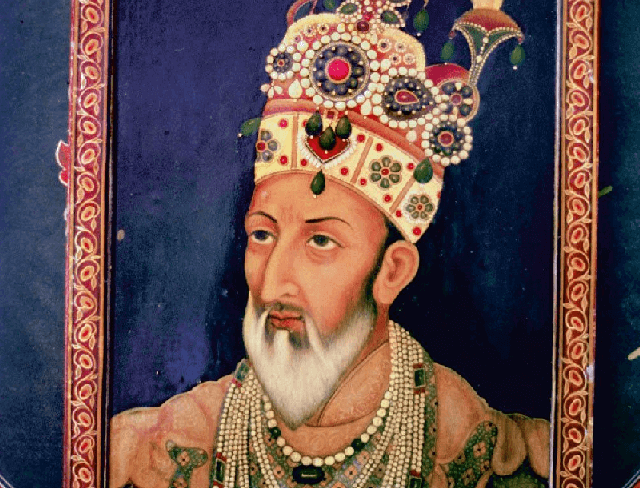 Bahadur Shah
Try yourself: Who succeeded Aurangzeb after his death?
Jahandar Shah (1712-1713)
After the death of Bahadur Shah there was another succession struggle among his sons. With support from powerful nobles, a son known as Jahandar Shah (referred in some contemporary accounts with variants of his name) seized the throne in 1712. His rule lasted for about eleven months.
- Jahandar Shah ascended the throne with the help of Zulfikar Khan (one of the powerful nobles) after defeating rival claimants.
- Contemporary sources describe him as indulging in luxury and debauchery; his conduct made him unpopular with many sections of the ruling elite and the public.
Facts To Be Remembered
- The founder of Rohilkhand was Ali Muhammad Khan.
- Muhammad Khan Bangash founded the independent kingdom of Bangash Pathans around Farrukhabad (1714).
- Sawai Jai Singh of Amber of the eighteenth century performed two asvamedha sacrifices (royal horse-sacrifices).
- The Sarkar of Guntur was a point of contention between Nizam Ali (ruler of Hyderabad) and the English.
- Safdarjung and Shuja-ud-daula, Nawabs of Awadh, were at one point appointed as Wazirs in the Mughal administration.
- Ahmad Shah Abdali invaded India multiple times (commonly counted as eight invasions in later traditional accounts).
- Travancore rose into prominence under King Marthanda Varma.
- The Fauz-i-Khas of Ranjit Singh was a 'model brigade' of the Sikh army; it was trained by European (including French) officers and was also known as the French Brigade or French Legion.
- The central organisation of a misl (Sikh confederacy) included the institution of gurmatta - collective decisions taken under the authority of the spiritual Guru or the community council.
- After the Third Battle of Panipat, traditional accounts record that Ahmad Shah Abdali returned to India on several further expeditions, partly to punish the Sikhs.
The two influential nobles known as the Sayyid brothers - Sayyid Abdullah (Governor of Allahabad) and Sayyid Hussain Ali (Governor of Bihar) - played decisive roles in court politics. They intervened in the succession and, after deposing Jahandar Shah, placed Farrukh Siyar (a nephew of Jahandar Shah) on the throne.
 Sayyid Brothers
Farrukh Siyar (1713-1719)
With the support of the Sayyid brothers Farrukh Siyar became emperor in 1713. The Sayyid brothers dominated the court and exercised real power as kingmakers.
- Although Farrukh Siyar was the nominal emperor, the Sayyid brothers controlled the administration and were the principal power-brokers.
- The Sikhs renewed their activities under Banda. The government sent a strong governor, Abdul Samad, to Lahore to suppress them.
- After severe fighting, Banda and about a thousand of his followers were captured and executed with harsh punishments (1716); the Sikh movement was crushed temporarily.
- Meanwhile the Marathas became powerful in the Deccan; this forced imperial ministers such as Hussain Ali to conclude humiliating arrangements with them.
- Sahu (the grandson of Shivaji) was recognised by the court and allowed to levy chauth and sardeshmukhi over territories in the Deccan.
- Farrukh Siyar grew increasingly resentful of the Sayyid brothers' influence and attempted to free himself from their control. The Sayyid brothers acted against him and he was murdered in 1719.
Muhammad Shah (1719-1748)

Following Farrukh Siyar's removal the Sayyid brothers briefly placed two royal youths - Rafi-ud-Darjat and Rafi-ud-Daula - on the throne; both died within a year. The Sayyid brothers then brought Roshan (who took the regnal name Muhammad Shah) to the throne in November 1719.
- Muhammad Shah (often called Rangila in traditional accounts) sought to free himself from the domination of the Sayyid brothers, who had become unpopular due to their arrogance and heavy-handedness.
- To undermine the Sayyids and other rivals the court politics continued to be factional and violent; noble cliques struggled for influence throughout Muhammad Shah's reign.
- The later decades of his reign saw growing regional powers (Marathas, Nizam of Hyderabad, Rohillas) and the erosion of central authority.
Try yourself: Who defeated and killed Jahandar Shah to ascend the throne?
Facts To Be Remembered
- The Nawab of Awadh who is recorded to have committed suicide to avoid disgrace at the hands of Nadir Shah was Saadat Khan.
- The early capital of the Nawabs of Awadh was Fyzabad.
- After nearly twelve years in exile, Shah Alam II was escorted back to Delhi by Mahadji Sindhia.
- From 1761 to 1770 the leading power-broker in Delhi was Najib Khan, often described as the "supreme dictator of Delhi".
- Sadashiv Rao Bhau is said to have stripped silver from the Diwan-i-Khas of the Red Fort and coined it for war expenditure.
- Ahmad Shah Abdali deposed Shah Alam II at one stage and proclaimed Ali Gauhar as emperor with the title Shah Alam II.
- Alivardi Khan concluded a treaty with the Marathas and agreed to pay them tribute (chauth) and ceded revenue from parts of Orissa.
- The governorship of Bengal became effectively hereditary under Shuja-ud-Din Khan.
- Murshid Quli Khan is recorded in some traditional accounts as having South Indian origins.
- In the later Mughal court, the distinction between Irani nobles (largely Shia) and Turani nobles (largely Sunni) was often remarked upon.
- In 1788 the later Mughal emperor Shah Alam II was blinded by the Afghan chief Ghulam Qadir (an episode during a period of extreme political disorder).
Ahmad Shah (Ahmad Shah Bahadur) and the Decline of the Sayyids
A faction formed to curb the growing power of the Sayyid brothers; this party included figures such as Chin Qilich Khan (later the Nizam) and Saadat Khan (Governor of Oudh). The weakness of central authority and factional rivalry continued to destabilise the empire.
- Chin Qilich Khan (also known later as Nizam-ul-Mulk) revolted and on two occasions defeated forces loyal to the Sayyid brothers. During these conflicts Hussain Ali was assassinated and Sayyid Abdullah was captured and killed; the Sayyid brothers' domination ended.
- While internal factionalism continued, external threats also rose. Nadir Shah, who had established himself as the ruler of Persia, invaded India in 1739 (a date commonly accepted in historical accounts).
- Nadir Shah advanced to Delhi, sacked the city, plundered the imperial treasury and carried off immense booty including the Peacock Throne and the Koh-i-Noor.
- The plunder was so vast that contemporary reports indicate Nadir Shah's forces took enormous sums from the imperial treasury and private collections; the Persian ruler stayed in Delhi for some weeks and left after extracting huge wealth and concluding a treaty that effectively left Muhammad Shah as a nominal ruler.
- The invasion accelerated the fragmentation of Mughal authority: provinces and local powers became more assertive, and the central treasury and military capacity were severely weakened.
Ahmad Shah Abdali (Durrani)
Ahmad Shah Abdali, also known as Ahmad Shah Durrani, was originally associated with Nadir Shah and served as his treasurer. On Nadir Shah's death the empire fragmented and Ahmad Shah secured the western portion (Afghanistan) and set up an independent Afghan polity from his base in Herat.
- He invaded India on several occasions. His invasions were motivated by the opportunities presented by a weak and factional Mughal court and by the desire to assert Afghan power.
- His second invasion of the Punjab took place in 1749, and on that occasion he retired after receiving a large payment from the governor of Punjab.
- Ahmad Shah Abdali's most important and decisive invasion culminated in the Third Battle of Panipat (1761), fought against the Marathas. The Afghan forces defeated the Marathas on the plains of Panipat.
- Although the victory at Panipat severely checked Maratha expansion, Ahmad Shah Abdali was unable to convert the military success into durable political control across northern India; his army suffered from mutiny and logistic difficulties, and he returned to Afghanistan.
- He returned in campaigns aimed at punishing regional rivals such as the Sikhs; his final years were marked by continued campaigning and a decline in health. Ahmad Shah Durrani died in 1764, after which the Sikhs progressively consolidated control over Lahore and much of the Punjab.
Try yourself: Who succeeded Muhammad Shah as the Emperor of India?
Ahmad Shah (1748-1754) and the Later 18th-century Disorder
The period after Muhammad Shah saw short and often ineffective reigns, palace intrigues and competing power centres - the Nizam in the Deccan, the Nawabs of Awadh, the Marathas, the Rohillas, and the English East India Company all became increasingly important actors.
- During this era factional rivalries continued: disagreements between courtiers and provincial governors frequently resulted in civil war or deposition of emperors.
- The Rohillas openly rebelled in the north; the Mughal court sought alliances where possible - at times even calling the Marathas to intervene in north Indian disputes.
- Ahmad Shah Abdali repeatedly invaded Punjab; after his campaigns the central authority weakened further and the effective control of Delhi began to contract to the imperial fort precincts.
- Civil war among high nobles, the ascendancy of regional strongmen, and foreign invasions combined to reduce the Mughal Emperor to a largely titular status by the later eighteenth century.
Alamgir II (1754-1759)

After the deposition and blinding of Ahmad Shah (not to be confused with Ahmad Shah Abdali), Ghazi-ud-Din (a powerful noble) raised a son of Jahandar Shah to the throne under the title Alamgir II. Ghazi-ud-Din was the dominant power behind the throne.
- During Alamgir II's reign Ahmad Shah Abdali made another major invasion and sacked Delhi; contemporary accounts record widespread plunder and violence, including the devastation of Mathura (1758).
- Alamgir II was murdered in 1759. His death marked another episode in the rapid turnover and instability of late Mughal emperors.
Shah Alam II (1759-1806)
Alamgir II's son, Ali Gauhar, assumed the title Shah Alam II. His long reign illustrates the changing balance of power in late eighteenth-century India.
- Because Ghazi-ud-Din had created many political enemies for the prince, Shah Alam II had to seek external allies; at one stage he sought Maratha assistance. The Marathas entered Delhi and at times exercised decisive influence over the imperial court.
- The Third Battle of Panipat (1761) between Ahmad Shah Abdali and the Marathas led to a crushing defeat for the Marathas and a temporary check on their imperial ambitions.
- In 1765 Shah Alam II granted the Dewani (the right to collect revenue) of Bengal and Bihar to the English East India Company in return for a fixed pension of 26 lakhs of rupees per year. This transfer marked a key step in the Company's consolidation of financial and administrative power in eastern India.
- Shah Alam II died in 1806 and was succeeded by his son Akbar II (1806-1837). By this time the Mughal emperor's authority was largely nominal and confined to the Red Fort precincts in Delhi.
- Later, Bahadur Shah II (reigned 1837-1851, commonly called Bahadur Shah Zafar) remained a titular sovereign and became a figurehead during the events of 1857; after the rebellion he was deported to Rangoon where he died in 1862, marking the effective end of the Mughal dynasty as a political power.
Facts To Be Remembered
- The later Mughal emperor Shah Alam II was actually known by the name Ali Gauhar.
- Ahmad Shah Abdali proclaimed Shah Alam II emperor of India after the Third Battle of Panipat (contemporary accounts describe shifting allegiances and post-battle arrangements).
- A courtesan named Lal Kunwar is recorded in many sources as having considerable influence in court politics during the brief reign of Jahandar Shah.
- The most powerful noble during the reigns of Bahadur Shah and Jahandar Shah was Zulfiqar Khan (variously styled in contemporary records).
- Usman Ali Khan is noted in later lists as a Nizam of Hyderabad; the Asaf Jahi line (Nizams) continued in Hyderabad.
- Nizam Ali signed subsidiary arrangements with the British; treaties in the later eighteenth and early nineteenth centuries reduced independent authority of many Indian rulers under British suzerainty.
- Nizam-ul-Mulk (Chin Qilich Khan) received confirmation of his viceregal authority in the Deccan and the title Asaf Jah from Emperor Muhammad Shah (date commonly cited as 1725).
- Shuja-ud-daula purchased the districts of Kara and Allahabad from the British in 1773 (a transaction reflecting shifting territorial controls).
FAQs on Later Mughals
| 1. Who were the Later Mughals and why did their empire start declining after Aurangzeb? |  |
| 2. What was the Mughal succession crisis and how did it weaken central authority? | |
| 3. How did the Maratha invasions and Afghan attacks contribute to Later Mughal decline? | |
| 4. What role did the Nawabs and provincial governors play in fragmenting Later Mughal power? | |
| 5. Why did the Later Mughal emperors fail to restore imperial authority despite occasional military successes? | |





