Revision Notes - Social Change & Social Order in Rural & Urban Society


Introduction
Social change means the transformation that occurs in the structure, institutions, relationships, values and behaviour patterns of a society over time. It includes changes in economic organisation, political authority, technology, cultural ideas and everyday practices. No society remains static; continuous transformation is a defining feature of human social life.
- Sociology as an academic discipline developed mainly to understand and explain rapid social changes that occurred in Western Europe between the seventeenth and nineteenth centuries.
- Although humans have existed for a very long time, sustained and large-scale social change is a relatively recent phenomenon in human history. Humans have lived on Earth for about 500,000 years, yet major and continuous changes in technology, urban life and institutions intensified only in the last few hundred years, accelerating sharply in the last century.
- Because change and continuity coexist, the study of social change is meaningful only in relation to social order - the patterns that persist and provide stability while other parts of society transform.
The Clock of Human History
Humans have lived on Earth for about 500,000 years (five lakh years).
Farming (agriculture) began only about 12,000 years ago, which allowed people to settle in one place.
Civilisations started around 6,000 years ago - much later in human history.
If we imagine human history as one full day (24 hours):
Agriculture would appear at 11:56 p.m.
Civilisations would appear at 11:57 p.m.
Modern societies would appear only in the last few seconds of this 'human day' - around 11:59 and 30 seconds.
This means that most major changes in human life - science, technology, cities, and modern lifestyles - have happened only in the last few seconds of this "human day."
So, even though humans have existed for a very long time, rapid change is a very recent part of our history.
Social Change
Social change refers to significant alterations over time in the structure and functioning of society - including changes in institutions, social relationships, values, norms and patterns of behaviour.
Causes: Social change may result from multiple social, cultural, economic, political, technological and environmental factors acting alone or together.
Types of Social Change
- Endogenous (internal) change: Change originating from within a society - for example, shifts in values, ideas, social movements, innovations generated locally.
- Exogenous (external) change: Change that comes from outside a society - for example, invasions, colonialism, trade contacts, cultural diffusion.
- Structural change: Transformations in the organisation of social institutions or the rules that govern them. Example: the introduction of paper money and modern banking altered economic exchange and credit systems.
- Evolutionary change: Slow, gradual changes occurring over long periods. Social thinkers sometimes used biological metaphors - Charles Darwin's idea of adaptation and the phrase "survival of the fittest" influenced social theories. Social Darwinism applied these ideas to social competition and change (this application is historically important but contested by sociologists).
- Revolutionary change: Sudden, dramatic, and far-reaching transformations that alter political and social structures quickly. Examples include the French Revolution (1789-1793), the Russian Revolution (1917) and industrial revolutions (Industrial Revolution, Telecommunications Revolution).
- Change in values and beliefs: Shifts in ideas and moral values can produce social change - for instance, nineteenth-century ideas about childhood helped transform attitudes to child labour and led to laws mandating schooling.
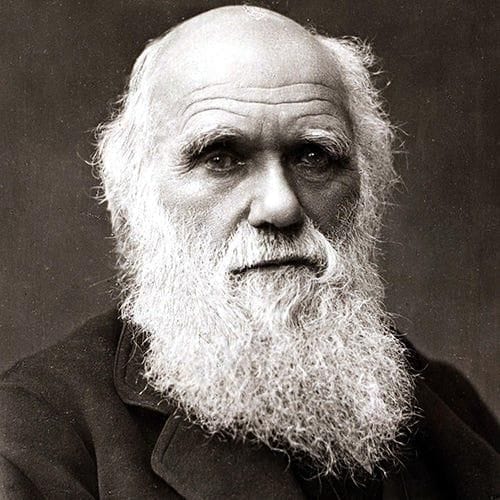 Charles Darwin
Try yourself: Which of the following is a major source of social change?
Sources / Causes of Social Change
1. Environment
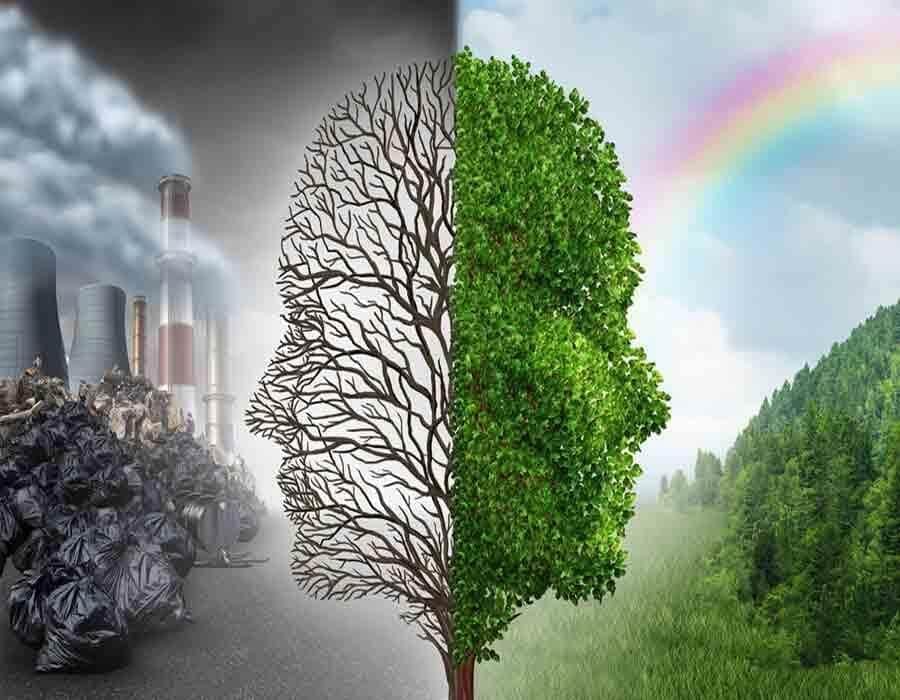
- The natural environment - geography, climate and ecological conditions - has historically shaped food habits, occupations, clothing and social organisation. For example, people living in fertile river valleys practised settled agriculture, whereas desert communities could not.
- With modern technology, the direct influence of the environment has declined because human beings can adapt to and modify natural conditions. Nevertheless, the environment continues to shape societies in different ways.
- Environmental change leads to social change in two broad ways:
1. Destructive change: Sudden natural disasters such as earthquakes, floods, volcanic eruptions or tsunamis can permanently alter livelihoods and social structures. Example: the 2004 Indian Ocean tsunami severely changed coastal communities in Indonesia, Sri Lanka, the Andaman Islands and Tamil Nadu.
2. Constructive change: Environmental or ecological discoveries can transform societies positively. Example: the discovery of oil in parts of West Asia (Middle East) transformed countries like Saudi Arabia, Kuwait and the UAE from small desert societies into wealthy states with new social and economic structures; similarly, the gold rush in 19th-century California altered migration and settlement patterns.
2. Technology and Economy

- Technology means tools, machines and techniques used to achieve material goals. It shapes production, occupations, transport and communication, and thereby affects social relations and everyday life.
- Technological and economic changes together have produced major social transformations, particularly since the Industrial Revolution.
- The Industrial Revolution introduced the steam engine, railways and steamships, enabling large-scale industry, faster transport and global trade. These changed the size and structure of settlements, work patterns and social life. In India, the introduction of the railway system (1853) reshaped trade and regional connections.
- Some inventions show their full social impact only later when conditions permit. Example: gunpowder and paper were discovered in China but revolutionised warfare and communication primarily after reaching modernising Europe.
- Economic reorganisation can also cause change without new technology. Example: plantation agriculture (cash crops such as sugarcane, tea, cotton) created large labour demands and was linked historically to slavery and the trans-Atlantic slave trade. In India, tea plantations in Assam depended on the migration of workers from regions such as Jharkhand and Chhattisgarh.
- Contemporary global economic rules - such as those shaped by WTO policies - can cause industries to decline or prosper suddenly, producing rapid social change in communities dependent on particular trades.
Try yourself: Which of the following best describes how geographical conditions can impact society?
3. Politics

- Political power and its distribution are major drivers of social change. Political events often reshape economic and social structures.
- Wars and conquests often bring immediate change: conquerors introduce new institutions and sometimes adopt useful practices from the conquered.
- Modern example - U.S. and Japan: After World War II the United States defeated and occupied Japan, introducing land reforms and political restructuring. Japan later developed industrial technology and management practices so effectively that by the 1970s-1990s it led globally in sectors such as automobiles and electronics. This shows how political change and external influence can trigger long-term economic and social transformations.
- Political change within societies (for example, India's struggle for independence, 1947, or Nepal's end of monarchy, 2006) affects how power and resources are redistributed among groups.
- The extension of universal adult franchise - the right to vote for all adults - is one of the most significant political changes in modern history. The principle of "one person, one vote" has reshaped political legitimacy worldwide and compelled governments to seek popular approval, although inequalities and manipulation persist.
4. Culture

- Culture refers to shared ideas, values and beliefs that guide social life. Changes in cultural ideas bring social change.
- Religion has often been a source of social change. Examples: Buddhism influenced ancient Indian society; the Bhakti movement affected caste and devotional practices in medieval India. Max Weber's study The Protestant Ethic and the Spirit of Capitalism argued that some Protestant values helped shape modern capitalism.
- Changing role of women: Cultural ideas about women's work and rights have changed considerably. During World War II many women worked in factories, performing jobs previously done by men, which strengthened claims for greater equality. Today women's increasing economic roles shape media, advertising and public life.
- Sports and popular culture: Sports such as cricket, once a colonial game, became a symbol of national pride in countries like India, Australia and the West Indies. The popularity of cricket in South Asia has changed the global economics of the sport.
- Cultural, political, technological and economic factors typically interact to produce complex patterns of social change; understanding these links helps societies adapt more effectively.
Social Order

- Meaning: Social order denotes the stability and continuity that enable society to function. It includes patterns of expected behaviour, institutions and norms that regulate social life and make everyday interaction predictable.
- Relationship with social change: Social order provides a background of continuity against which changes can be measured. While some parts of society change, others remain stable and provide consistency over time.
- Need for social order: Every society requires stability to reproduce itself. Predictable behaviour, adherence to rules and continuity of institutions help in maintaining social life.
- Resistance and demand for change: Dominant groups often resist changes that threaten their power, while subordinated or oppressed groups may push for change to improve their position. This tension explains the relative stability of societies most of the time and episodes of conflict at other times.
- Ways social order is maintained: Order is sustained partly by spontaneous consent - people internalise norms through socialisation and voluntarily follow them - and partly by coercion or power when consent is insufficient. Over time, repeated use of power may come to appear as legitimate domination.
- Domination and stability: Domination often takes a smooth form in normal times: unequal relationships appear accepted, routine and non-confrontational. In extraordinary times, however, these power relations may be challenged.
Domination, Authority and Law
Power and Domination
- Power is the ability to make others do what you want, even against their will.
- When such power becomes stable and accepted, it results in domination - a situation where unequal relationships seem normal and non-confrontational.
- Domination often appears smooth because people cooperate due to habit, acceptance, or dependence rather than open force.
Legitimation and Authority
- Legitimation refers to the acceptance of power as rightful or proper.
- Authority, as defined by Max Weber, is legitimate power - power seen as justified by social norms and values.
- Examples:
1. A judge has authority in the courtroom.
2. A police officer exercises authority in public spaces.
3. A teacher has authority in the classroom.
4. A religious leader, scholar, or artist may hold informal authority through respect or influence. - Authority is tied to roles and institutions, not personal traits, and is limited to specific contexts.
Law and Legal Authority
- Law is a formally written and codified set of rules that apply to all citizens.
- In a democratic society, laws are created by elected representatives in the name of the people.
- Even if individuals disagree with a particular law, it remains binding and enforceable.
- Legal authority is therefore one major form of legitimate power that ensures cooperation and social order.
Domination operates through both power and legitimacy. Legitimate power, or authority, is often codified in law, which provides stability and predictability in society. However, illegitimate power also exists and influences how societies function and change.
Try yourself: Which term refers to an explicitly codified norm or rule?
Contestation, Crime and Violence
1. Contestation
- Contestation means broad and persistent disagreement within society. It includes forms of dissent ranging from everyday disagreement to organised protest.
- Examples of contestation include youth counter-cultures, non-conformist lifestyles, public protests and electoral competition.
- Democratic societies permit a degree of contestation; beyond that boundary, dissent may be treated as illegal or unacceptable. The line between legitimate and illegitimate contestation marks what a society considers lawful and permissible.
2. Crime
- A crime is an act that violates a law. Crime is a legal category, not a purely moral one: an act can be unlawful but morally justified in the judgement of some people.
- Example: During the Civil Disobedience Movement, Mahatma Gandhi violated the British salt laws. Legally his actions were crimes, but they were morally inspired and widely supported by the movement.
- Thus, crime is often the point where legitimate dissent crosses into illegality according to the law in force at the time.
3. Violence
- According to Max Weber, the state is the entity that holds the monopoly on the legitimate use of physical force within a territory.
- Only the state and its authorised officials may lawfully use force; other uses of violence are unlawful except in narrow cases such as self-defence.
- Violence is an extreme form of contestation that violates both law and social norms. It challenges the state's authority and signals social tensions or failures of legitimacy.
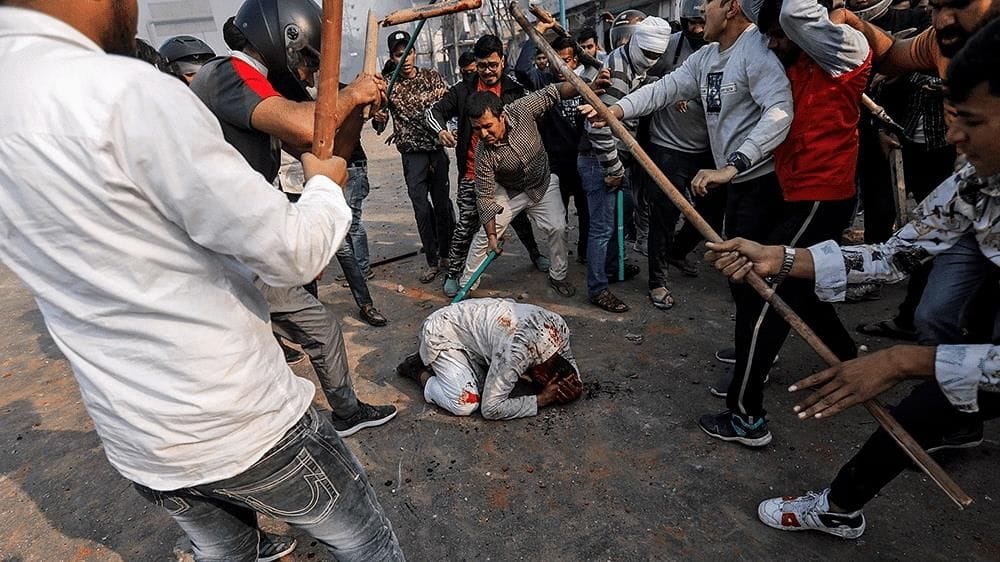 Social unrest
Social Order and Change in Village, Town and City
Societies are commonly divided into rural and urban sectors, each with distinct social organisation, relationships and patterns of change.
1. Origin and Structure of Villages
Villages originated when human groups shifted from nomadic hunting and gathering to settled agriculture. Settled farming made it possible to produce surplus, accumulate wealth, and develop occupational specialisation. These changes created more permanent settlements and introduced social differences, with agriculture as the economic base of village life.
2. Rural-Urban Distinction
- Population density: Cities and towns have higher population density than villages.
- Economic activity: Villages are primarily agricultural, while towns and cities have diverse non-agricultural occupations such as manufacturing, services and trade. Size alone is not decisive - some large villages may resemble small towns in organisation and activities.
3. Administrative Definitions
- Town and city: Often similar types of settlements, distinguished by official classification and relative size.
- Urban agglomeration: A city together with its suburban and satellite areas forming a continuous urban spread.
- Metropolitan area: A large continuous urban region that may include more than one city and its surrounding suburbs.
4. Urbanisation Trends
- Urbanisation is the process by which a greater share of the population comes to live in towns and cities.
- In India, the urban population rose from about 11% in 1901 to 17% in 1951, about 28% in 2001 and 37.7% in 2011.
- According to the UN (2014), 54% of the world's population lived in urban areas in 2014, with projections that urban share will rise to around 66% by 2050. Urbanisation is a long-term social change driven by modernisation, industrialisation and economic development, and it transforms the social order of both villages and cities.
Try yourself: What is a major consequence of rapid urbanisation?
Social Order and Social Change in Rural Areas
- Villages are typically small and close-knit, where personalised relationships prevail and most members know one another. Social institutions such as caste and religion often play a stronger role, so social change tends to be slower in villages than in towns and cities.
- Lack of anonymity, economic dependence of the poor on dominant groups, and control of local resources make dissent more difficult in many rural settings. Power structures become entrenched and resistant to change.
- Improved communication and transport - roads, television, mobile phones and the internet - have reduced cultural distance between villages and towns, accelerating certain kinds of change in rural areas.
- Post-independence land reforms altered patterns of ownership, and scholars such as M.N. Srinivas used the term dominant castes to describe middle-ranking landowning castes that are numerically strong and hold economic and political influence in particular regions. In recent decades, lower and backward castes have increasingly asserted themselves politically, producing social and political upheavals in various states.
- Technological and economic changes in agriculture - new machinery, changing crop patterns, market fluctuations - modify labour demand and local power relations. Agricultural distress caused by droughts or price crashes can prompt out-migration. Government programmes like MGNREGA (2005) provide rural employment and safety nets, influencing local social and economic relations.
Social Order and Social Change in Urban Areas
Urbanism and Modernity
- Urbanism is associated with modern life, larger populations, specialised occupations and more impersonal social relations, though cities also existed in ancient times.
- Earlier city growth was shaped by trade, religion and warfare; examples of old urban centres include Tezpur, Kozhikode, Ajmer, Varanasi and Madurai.
- City life often represents modernity and individuality, but the freedoms of urban life are more available to socially and economically privileged groups.
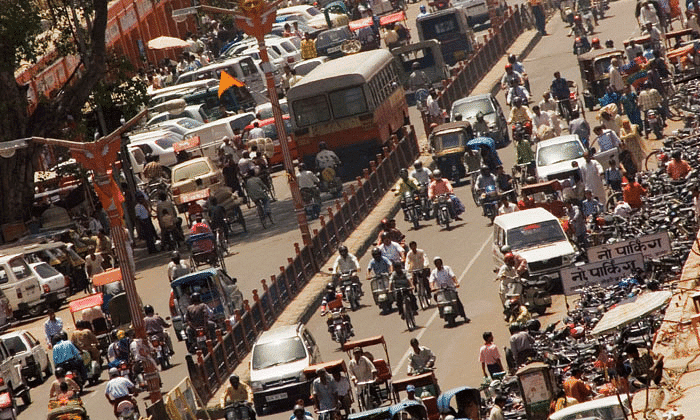 High density of population in urban areas
Social Identities in Cities
- Urban life fosters multiple group identities based on caste, class, religion, ethnicity, region and occupation.
- High population density can intensify competition and collective identities.
- The city is a space of individual freedoms as well as collective constraints created by economic inequality and spatial segregation.
Urban Social Order - Key Problems
- High population density increases competition for space and resources such as housing, water and public services.
- Main urban problems include:
1. Housing shortage: leading to homelessness, slums and street dwellers among poor populations.
2. Slums: overcrowded localities often lacking sanitation, safe water and electricity; in some cases controlled by local strongmen.
3. Gated communities: affluent residential areas enclosed with private security, reflecting class segregation.
4. Ghettoisation: the concentration of a single religion, caste or ethnic group in particular localities, reducing social mixing.
5. Transport and pollution: dependence on private vehicles creates congestion and air pollution; investments in mass transit (for example, metro rail systems) can improve accessibility and urban quality of life.
Social Change in Urban Areas
- Space and class relations in cities are dynamic: older central areas may decline or be revived through investment and policy changes.
- Gentrification is the transformation of lower-income neighbourhoods into middle- or upper-class areas, often displacing long-term poorer residents as property values rise.
- Migration - continuous inflow of people from rural areas and smaller towns - contributes to population pressure and shapes urban growth and labour markets.
- Suburbanisation: affluent groups moving to suburbs change the spatial and class structure of cities.
- Urban change affects social relations, economic opportunities and environmental conditions across the metropolitan region.
Suburban Commuter Culture in Mumbai
Daily long-distance commuters often form strong social and political communities that sometimes evolve into distinct sub-cultures. In Mumbai, suburban trains (the "locals") have given rise to informal commuter associations. Passengers engage collectively in activities such as singing bhajans, celebrating festivals, preparing food, playing games and socialising during journeys; these activities create solidarity and everyday organisation among commuters.
Important Terms
- Customs duties / tariffs: Taxes on imported or exported goods that raise the cost of foreign goods and protect domestic producers.
- Dominant castes: A concept by M.N. Srinivas referring to middle-ranking landowning castes that are numerically strong in a region and hold significant economic and political power.
- Gated communities: Enclosed residential areas for the wealthy with controlled access and private security.
- Gentrification: The process by which a low-income urban neighbourhood is transformed into a middle- or upper-class area, often causing displacement of poorer residents.
- Ghetto / ghettoisation: Areas where people from a single religion, caste or ethnic group become concentrated; originally used for medieval European Jewish quarters, now applied more broadly to spatial segregation.
- Legitimation: The process of making a power, institution or practice appear proper, justified or acceptable on social or moral grounds.
- Mass transit: Public transport systems designed to move large numbers of people quickly within urban areas, for example metro trains and city bus systems.
FAQs on Revision Notes - Social Change & Social Order in Rural & Urban Society
| 1. What's the difference between social change and social order in rural and urban societies? |  |
| 2. How do caste systems and occupational mobility differ between villages and cities in India? | |
| 3. Why do kinship networks and family structures work differently in cities compared to villages? | |
| 4. What role does stratification play in maintaining or challenging social order in rural versus urban communities? | |
| 5. How do institutions like education, religion, and governance adapt differently when societies shift from rural to urban settings? | |