NCERT Solutions- An Imperial Capital: Vijayanagara

Discuss
Page No. 175
Q: Locate Chandragiri, Madurai, Ikkeri, Thanjavur and Mysore, all centres of nayaka power, on Map 1. Discuss the ways in which rivers and hills may have facilitated or hindered communication with Vijayanagara in each case.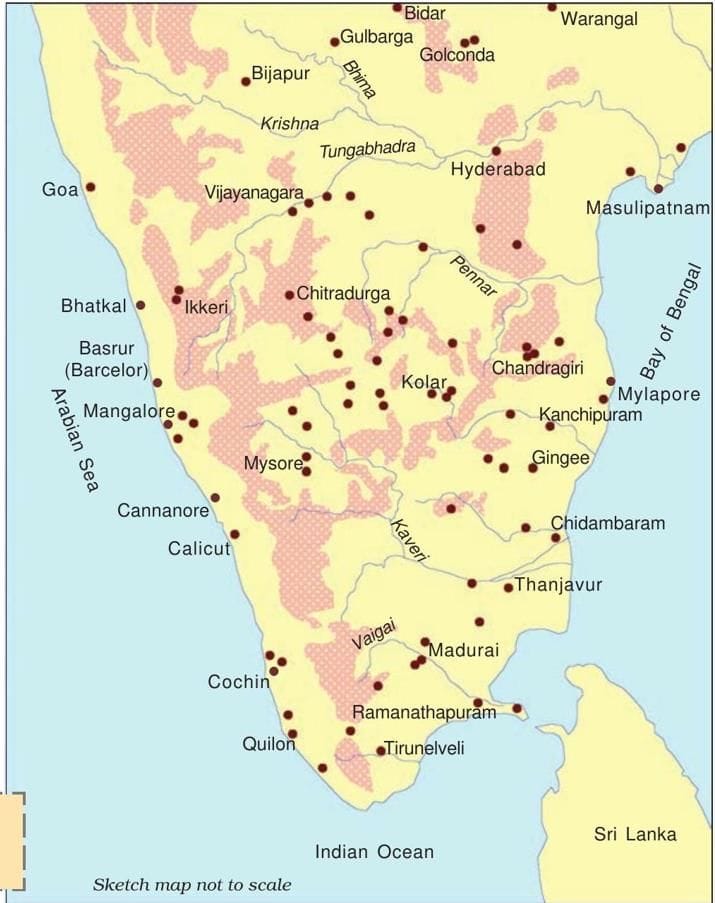 Ans: On Map 1 (South India, c. fourteenth-eighteenth century), Chandragiri is located near Tirupati in the southeast of Vijayanagara; Madurai is in the far south near the Vaigai river; Ikkeri is in the west, near the Arabian Sea coast; Thanjavur is in the east, in the Kaveri delta; and Mysore is south of Vijayanagara, near the Kaveri river.
- Chandragiri: The Pennar river may have facilitated communication by allowing water transport for goods and messengers. However, the Eastern Ghats hills could have hindered land travel by creating rough terrain and slowing down armies or traders.
- Madurai: Rivers like the Kaveri and Vaigai could have facilitated communication through boat travel and irrigation support for routes. But the hilly southern landscape might have hindered quick movement, especially during monsoons.
- Ikkeri: The Tungabhadra river's tributaries could have helped with some water-based communication. However, the Western Ghats hills would have significantly hindered access, making overland journeys difficult and time-consuming due to steep paths.
- Thanjavur: The Kaveri river greatly facilitated communication by providing easy water routes for trade and military movement. Fewer hills in the delta region meant minimal hindrance.
- Mysore: The Kaveri river facilitated smooth communication via water and fertile plains for roads. The relatively flat terrain with minor hills caused little hindrance compared to mountainous areas.
Page No. 179
Q: Compare the layout of Vijayanagara with that of your town or village.
Ans: Vijayanagara's layout was planned around natural features like the Tungabhadra river, granite hills, and a basin, divided into three major zones: the sacred centre (with temples like Virupaksha), the royal centre (palaces and administrative areas), and the urban core (markets and residences). It had multiple fortification walls enclosing agricultural fields, forests, and water channels for irrigation, emphasizing defense, water management, and religious focus.
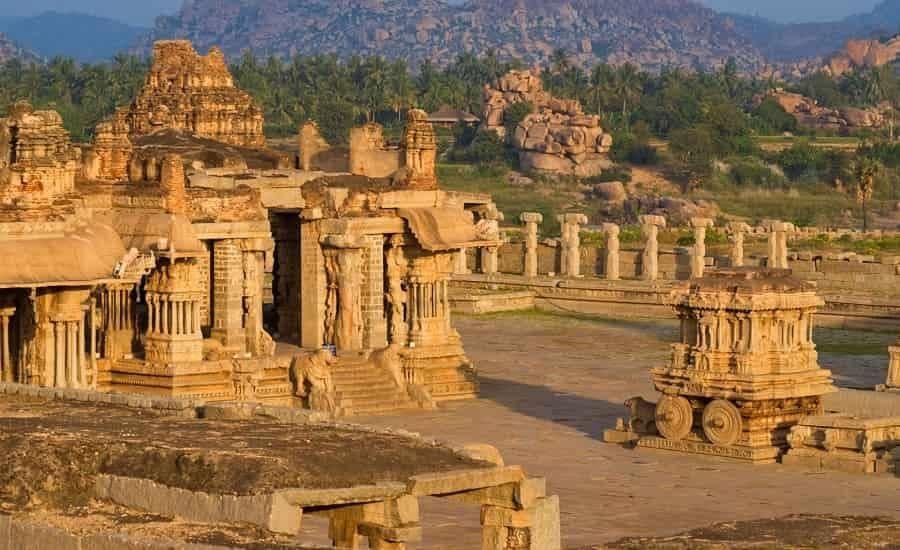 In contrast, my town (e.g., a mid-sized town like Jaipur or a village in Uttar Pradesh) has a more modern layout with residential colonies, commercial markets, industrial areas, and public spaces like parks. Roads and highways connect zones, but there's no massive fortification or river-integrated water system. While Vijayanagara used hills for natural defense, my town relies on police and legal boundaries. Both have water bodies (Vijayanagara had tanks like Kamalapuram; my town has reservoirs or ponds), but modern towns have piped water and electricity, making them more efficient but less integrated with nature.
Note: This is a subjective question, so answers may vary based on personal context.
Page No. 183
Q: Why did the nayakas continue with the building traditions of the rulers of Vijayanagara?
Ans: The nayakas continued the building traditions of Vijayanagara rulers because they were originally military commanders (amara-nayakas) under the rayas, who governed territories and collected revenue for the empire. After the empire's decline, many nayakas established independent kingdoms but maintained symbols of loyalty like temple patronage to legitimize their rule. They built on earlier traditions (e.g., from Cholas and Hoysalas) by constructing temples, gopurams, and irrigation works, as seen in places like Madurai and Thanjavur. This continuity helped them gain support from local people, priests, and elites by associating with Vijayanagara's prosperous and religious legacy, ensuring stability in their regions.
Page No. 188
Q: How and why did the rulers of Vijayanagara adopt and adapt earlier traditions of ritual architecture?
Ans: The rulers of Vijayanagara adopted and adapted earlier traditions of ritual architecture by building on the styles of powerful states like the Cholas (e.g., Brihadishvara temple at Thanjavur with its grand gopuram) and Hoysalas (e.g., Chennakeshava temple at Belur). They constructed fine temples, added impressive gopurams, and founded townships like Nagalapuram. Krishnadeva Raya, for example, credited with building temples and gopurams, borrowed concepts from Deccan Sultans and Gajapatis through interactions, developing them further with elaborate designs.
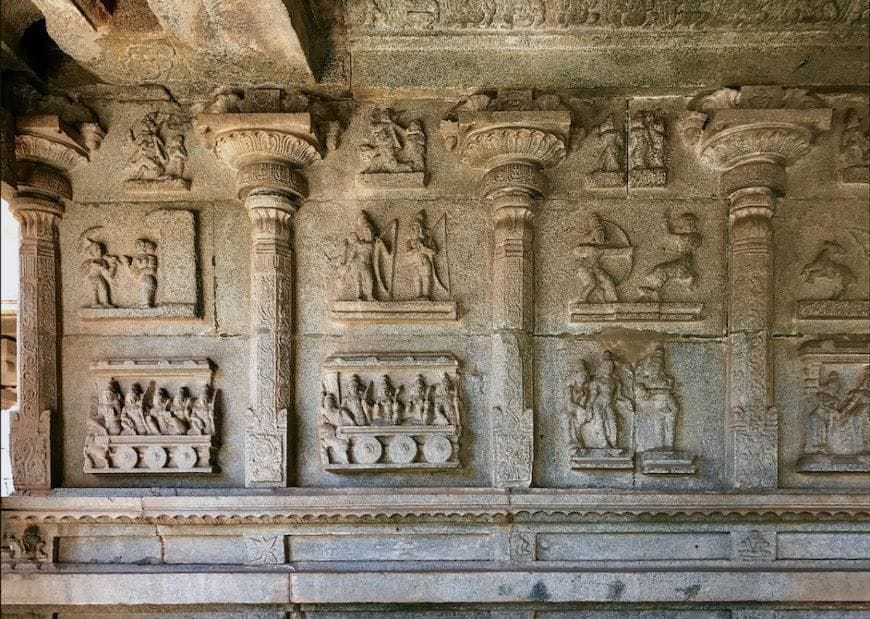 They did this to extend patronage to religion, which helped legitimize their authority over diverse peoples speaking different languages (Telugu, Kannada, Tamil, Sanskrit) and following various traditions. Adopting these styles symbolized continuity with prosperous southern kingdoms, strengthened cultural unity, and showcased their power, especially in a competitive region with Sultans and Gajapatis.
Answer in 100-150 words
Q1: What have been the methods used to study the ruins of Hampi over the last two centuries? In what way do you think they would have complemented the information provided by the priests of the Virupaksha temple?
Ans: The engineer and antiquarian Colonel Colin Mackenzie brought the ruins of Hampi to light in 1800. He worked for many years with the East India Company and prepared the first survey maps of this site. His initial information was based on the memories of priests of the Virupaksha temple and the shrine of Pampadevi. From 1856 onwards, photographers began recording pictures of monuments, which helped scholars study them in detail. Dozens of inscriptions were collected from the Virupaksha temple and other nearby temples. Historians gathered information from these sources as well as from accounts of foreign travellers and literature composed in Kannada, Telugu, Tamil, and Sanskrit, enabling the reconstruction of the city's history. These methods complemented the oral and traditional accounts provided by the priests of the Virupaksha temple.
Q2: How were the water requirements of Vijayanagara met?
Ans: The water requirement in Vijayanagara was fulfilled by the natural basin formed by the river Tungabhadra, which flowed in a north-easterly direction and was surrounded by granite hills. The rulers constructed large embankments and reservoirs of varying sizes to store water. They also arranged to collect rainwater, as this was one of the most arid zones of the peninsula. A very large tank, known as the Kamalapuram tank, was built in the fifteenth century to store water. The water of this tank was used for several Royal centre purposes:
- The water was used to irrigate nearby fields.
- It fulfilled the needs of the Royal centre.
- The Hiriya canal drew water from a dam across the Tungabhadra river, which was used for irrigation.
Q3: What do you think were the advantages and disadvantages of enclosing agricultural land within the fortified area of the city?
Ans:
Advantages of enclosing agricultural land within the fortified area:
- It had an elaborate canal system drawing water from the Tungabhadra to provide irrigation.
- It enclosed agricultural tracts, cultivated fields, gardens, and forests.
- This enclosure protected crops from being eaten by wild animals. Since medieval sieges often lasted many months or years to starve defenders, enclosing agricultural land and building large granaries helped sustain the city during sieges.
Disadvantages:
- This system was very expensive to maintain.
- During adverse circumstances, it proved inconvenient for farmers.
- Farmers had to seek permission from gatekeepers to access their fields. If the enemy encircled the fields, farmers could not tend to their crops.
Q4: What do you think was the significance of the rituals associated with the mahanavami dibba?
Ans: The Mahanavami Dibba was considered the King's palace in Vijayanagara, though there is no definite evidence. The structure had a beautiful wooden design with a platform base covered in relief carvings. The Mahanavami Dibba featured an impressive platform known as the "audience hall," surrounded by high double walls with a street running between them. Many rituals were associated with the Mahanavami Dibba, especially the Hindu festival Mahanavami or Navaratri, celebrated with great pomp during September-October. The festival lasted nine days and showcased the rulers' power, prestige, and suzerainty.
On this occasion, several ceremonies were performed, including:
- Worship of various gods and goddesses
- Worship of the state horse.
- Sacrifice of buffaloes and other animals.
- Main attractions included:
- Dances
- Wrestling matches
- Processions of horses, elephants, chariots and soldiers.
All these ceremonies were presented before the king and his guests. On the last day, the king inspected his army and the nayakas, and accepted gifts from them.
Q5: Fig. 7.33 is an illustration of another pillar from the Virupaksha temple. Do you notice any floral motifs? What are the animals shown? Why do you think they are depicted? Describe the human figures shown.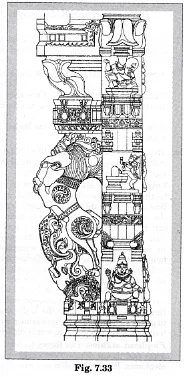 Ans: The illustrated pillar from the Virupaksha temple features floral motifs and various animals and birds, including peacock, horse, and duck. These carvings were probably made on gateways to attract people and express devotion, religiousness, and the ruler's patronage of art. Various animals and birds were associated with different gods and goddesses, hence they were also worshipped.
The human figures include both deities and their worshippers. One deity is shown wearing malas and a crown, holding a gada in his hands, probably representing a destroyer of Rakshasas. Another figure depicts a devotee near the 'Shivlinga,' performing a unique method of worship not commonly practised.
Write a short essay (about 250-300 words) on the following.
Q6: Discuss whether the term "royal centre" is an appropriate description for the part of the city for which it is used.
Ans: The term "royal centre" is appropriate for the part of the city it describes because this area contained over 60 temples, many constructed by the rulers of Vijayanagara to express their supremacy. The royal centre also included about 30 palaces, mostly made of perishable material.
A brief description of the buildings in the Royal centre is as follows:
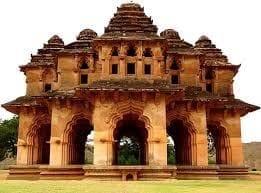
- One of the most beautiful buildings is the Lotus Mahal, named by British travellers in the nineteenth century. Though the name is romantic, historians are unsure of its exact use. One suggestion, based on a map drawn by Mackenzie, is that it may have served as a council chamber where the king met his advisers.
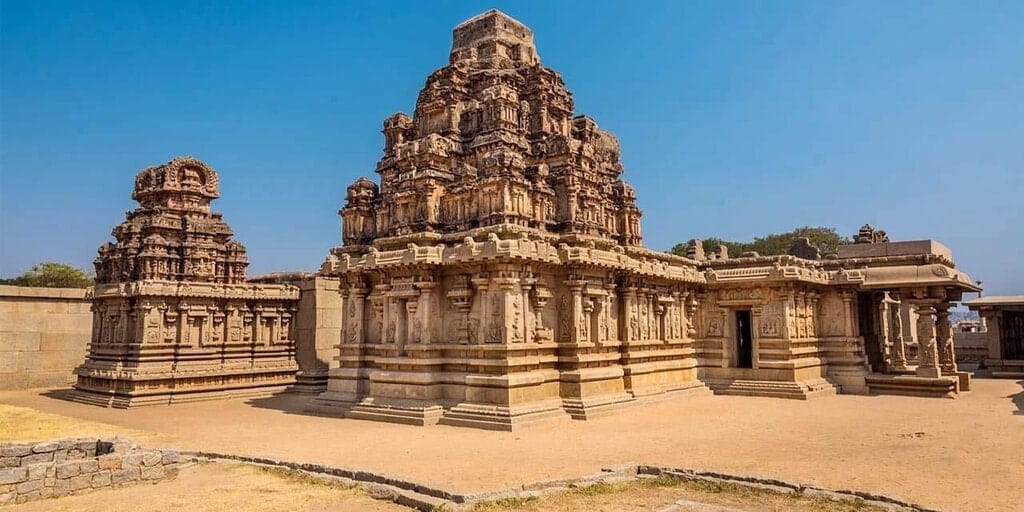
- Most temples were located in the sacred centre. One notable example is the Hazara Rama Temple, probably intended for exclusive use by the king and his family.
Q7: What does the architecture of buildings like the Lotus Mahal and elephant stables tell us about the rulers who commissioned them?
Ans: The architecture of buildings like the Lotus Mahal and elephant stables shows that the rulers adopted traditional Indian symbols, signs, and totems. They were Hindu by faith but liberal in nature.
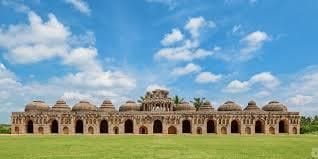
Lotus Mahal: Named by British travellers in the 19th century, historians have different opinions about its use. Some suggest it was a council chamber for the king and his advisers, supported by a map drawn by Colonel Colin Mackenzie. The building displays Indo-Islamic architectural style: the pillars and arches are Muslim in style, while the walls and roof reflect Indian construction, decorated with stone carvings. Much of the building is now ruined, making it difficult to fully appreciate its original grandeur.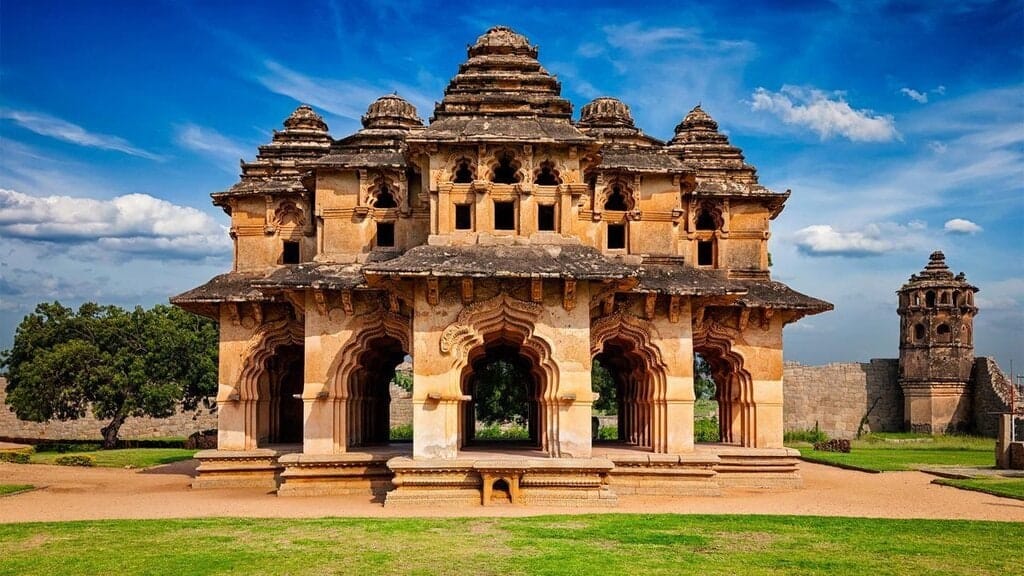 Lotus MahalElephant stables: The Vijayanagara rulers maintained a large army with many elephants. The elephant stables were constructed near the Lotus Mahal, consisting of multiple rooms lined up to house the elephants.
 Elephant stables
Q8: What are the architectural traditions that inspired the architects of Vijayanagara? How did they transform these traditions?
Ans: The rulers of Vijayanagara were known for innovations in architectural traditions. They built many new temples showcasing their skills and added new features such as gopurams (tall entrance towers) and royal gateways. The towers of the central shrines were designed to be visible from a great distance. These royal gateways symbolised the king's command over resources, techniques, and skilled labour.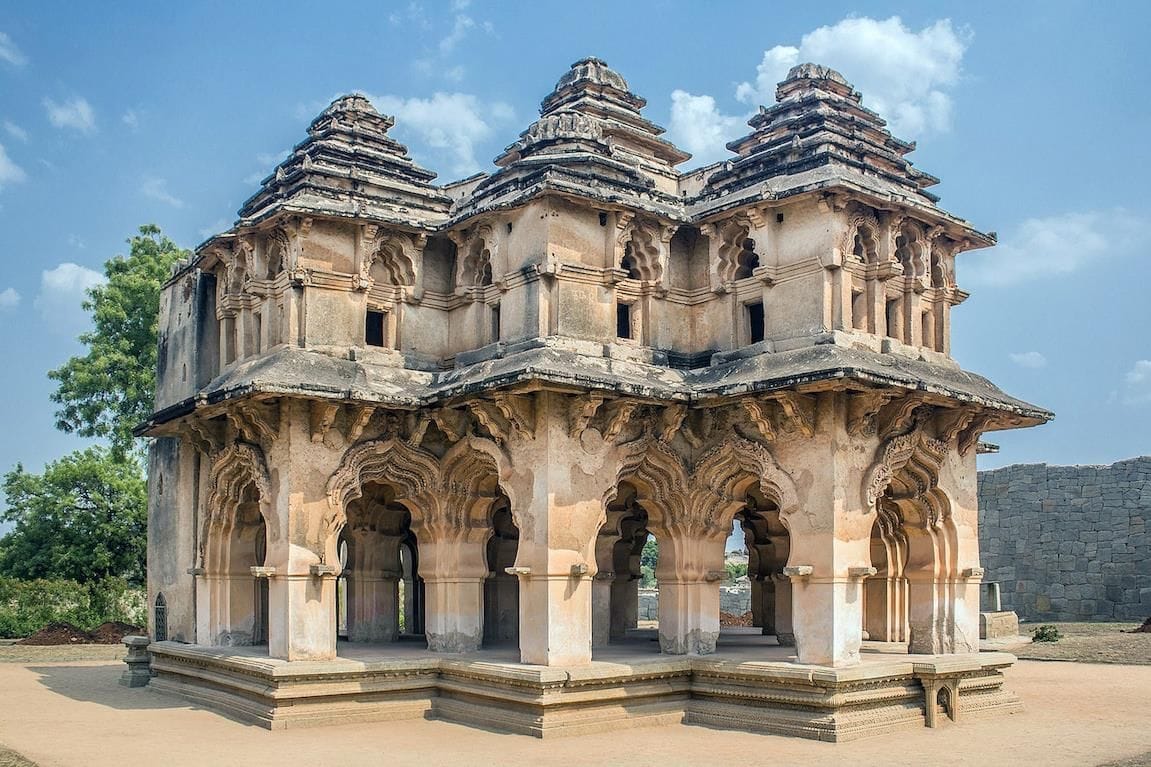
Other distinctive features included mandapas (pavilions) and pillared corridors around shrines. Two main temples-Virupaksha and Vitthala-exemplify these styles.
The Virupaksha temple, constructed originally in the 9th-10th centuries, was substantially enlarged after Vijayanagara's establishment. Krishnadeva Raya built a hall in front of the main shrine to mark his accession, decorated with delicately carved pillars. Many temple complexes had chariot streets extending straight from temple gopurams, paved with stone slabs and lined with pillared pavilions where merchants set up shops. Thus, Vijayanagara rulers built impressive and functional buildings that combined religious and commercial functions.
Q9: What impression of the lives of the ordinary people of Vijayanagara can you cull from the various descriptions in the chapter?
Ans: Ordinary people were those outside the power structure, speaking different languages and following various religious traditions. They included small traders and local merchants living in cities, trade centres, ports, towns, and villages. Merchant communities such as kudirai chettis (horse merchants) participated actively in trade.
Other ordinary people included peasants, workers, and slaves. Workers known as "Vipra viodin" included ironsmiths, goldsmiths, carpenters, and sculptors, who often quarrelled over rights, suggesting the need for social laws.
Weavers, called Kaikkol, were numerous and lived near temples, playing significant roles in temple administration. The Gadarias, known as Kambalattar, practised customs such as polyandry, with women often older than their husbands and sometimes maintaining relations with the husband's kin.
An orthodox and influential class called the Reddies owned land in the Telugu region. Meanwhile, lower caste groups such as Domber, Marva, Jogi, Paraiyan, Boi, and Kallaar had limited influence. Some low caste people converted to Christianity under Portuguese influence.
Map Work
Q10: On an outline map of the world, mark approximately Italy, Portugal, Iran and Russia. Trace the routes the travellers mentioned on p.176 would have taken to reach Vijayanagara.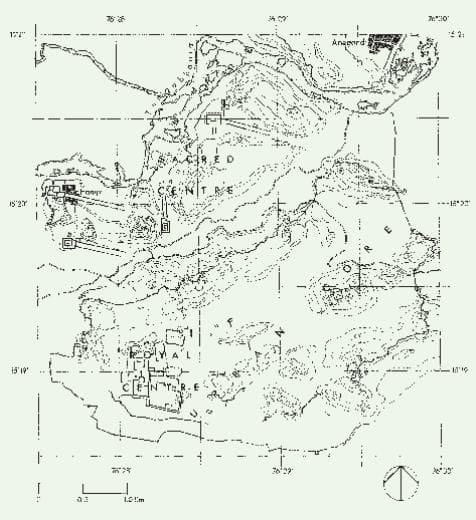 Ans: Routes to reach Vijayanagara from Italy and Portugal:
- Travellers crossed the Red Sea and Arabian Sea, then took land routes to reach South India.
- From the Atlantic Ocean, touching the Cape of Good Hope, they entered the Indian Ocean to reach Malabar Coast in India, then proceeded by land to Vijayanagara.
- Italian travellers crossed the Arabian Sea and Indian Ocean, reaching Vijayanagara via the Malabar coast. From Iran, travellers passed through Afghanistan and modern Pakistan, then by land to Karnataka, India.
- Russian travellers came via Afghanistan, crossing modern Punjab (Pakistan), central India through Vindhyachal and Satpura ranges to Karnataka.
Project (Choose one)
Q11: Find out more about any one of the major cities which flourished in the subcontinent during c. fourteenth-seventeenth centuries. Describe the architecture of the city. Are there any features to suggest that these were political centres? Are there buildings that were ritually significant? Is there an area for commercial activities? What are the features that distinguish the urban layout from that of surrounding areas?
Ans: One major city that flourished between the fourteenth and seventeenth centuries is Hampi or Vijayanagara, the capital of the Vijayanagara Empire.
According to the project's instructions, the architecture and features of this political centre can be summarised as follows:
- Introduction: Numerous inscriptions of Vijayanagara kings and their nayakas recording donations to temples and important events have been recovered. Several travellers visited and wrote about the city, including Italian trader Nicolo de Conti, Persian ambassador Abdur Razzaq, Russian merchant Afanasii Nikitin in the fifteenth century, and Portuguese travellers Duarte Barbosa, Domingo Paes, and Fernao Nuniz in the sixteenth century.
- The Capital and its environs: Like most capitals, Vijayanagara had a distinctive physical layout and building style.
- Vijayanagara (Hampi) was a sprawling city: Domingo Paes described Vijayanagara as so large that it could not all be seen from one spot. From a hill, he saw a city as large and beautiful as Rome, with many groves, gardens, water conduits, lakes, and fruit-bearing trees near the palace.
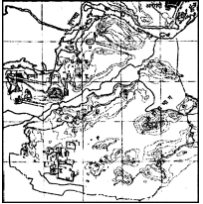
- Good water supply provision: The natural basin formed by the river Tungabhadra was a reliable water source. Tanks and canals were constructed for water supply.
- Fortification of the city: The remains of the great fortress walls of Hampi exist. Abdur Razzaq described seven lines of forts encircling the city, its agricultural hinterland, and forests. The outermost wall linked surrounding hills. The massive masonry walls tapered slightly.
- Roads: Archaeologists have studied roads inside and outside the city, identified by gateways and pavements. Roads wound through valleys, avoiding rocky terrain. Major roads extended from temple gateways and were lined with bazaars.
- The urban core of Hampi: Archaeological evidence of ordinary people's houses is sparse, but finds of fine Chinese porcelain suggest wealthy traders occupied certain areas, especially the north-eastern urban core.
- Vijayanagara (Hampi) was a sprawling city: Domingo Paes described Vijayanagara as so large that it could not all be seen from one spot. From a hill, he saw a city as large and beautiful as Rome, with many groves, gardens, water conduits, lakes, and fruit-bearing trees near the palace.
Prominent Buildings:
- Lotus Mahal: One of the most beautiful buildings in the royal centre, named by British travellers in the nineteenth century. Historians are unsure of its exact use; it may have been a council chamber where the king met his advisers. Hazara Rama Temple: Probably meant only for the king and his family. While images in the central shrine are missing, sculpted panels depicting scenes from the Ramayana surviveon the inner walls.
- Hazara Rama Temple: Hazara Rama Temple was probably meant to be used only by the king and his family. The images in the central shrine are missing however, sculpted panels on the walls survive. These include scenes from the Ramayana sculpted on the inner walls of the shrine.
Q12: Visit a religious building in your neighbourhood. Describe, with sketches, its roof, pillars and arches if any, corridors, passages, halls, entrance, water supply, etc. Compare these features with those of the Virupaksha temple. Describe what each part of the building is used for. Find out about its history.
Ans: I live in Tamil Nadu, where there is a Hindu temple in my neighbourhood. I have noticed seven key characteristics of this temple.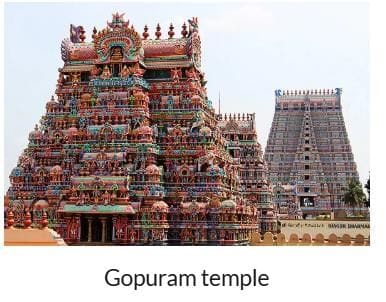 In terms of temple architecture, new features are evident, including structures of immense scale that symbolise imperial authority, best exemplified by gopurams or royal gateways. These often dwarf the towers on central shrines and signal the temple's presence from a distance. They also serve as reminders of the king's power and ability to command the resources, techniques, and skills needed to build towering gateways. The Virupaksha Temple was built over centuries. Inscriptions suggest the earliest shrine dates to the ninth-tenth centuries, but it was substantially enlarged after the establishment of the Vijayanagara Empire. The hall in front of the main shrine was built by Krishnadeva Raya to mark his accession. It is decorated with delicately carved pillars. Krishnadeva Raya also constructed the eastern gopuram. These additions meant the central shrine occupied a relatively small part of the complex. The halls served various purposes - housing images of gods for music, dance, and drama; celebrating deity marriages; and hosting deity swings. Special images distinct from those in the small central shrine were used on these occasions.
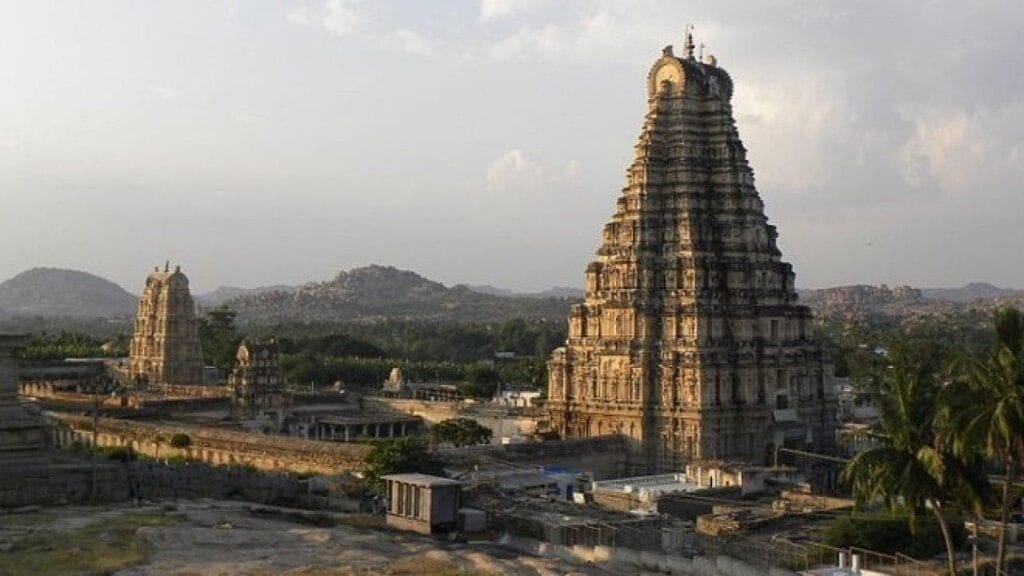 Virupaksha Temple
Comparison with Virupaksha Temple: When comparing the religious building in my neighbourhood with the Virupaksha Temple, the differences are significant. This is mainly due to the different time periods in which they were constructed.
FAQs on NCERT Solutions- An Imperial Capital: Vijayanagara
| 1. What was the significance of Vijayanagara as an imperial capital? |  |
| 2. How did the rulers of Vijayanagara contribute to the development of the city? | |
| 3. What led to the decline of Vijayanagara as an imperial capital? | |
| 4. How did the architecture of Vijayanagara reflect its imperial status? | |
| 5. What cultural and artistic legacies did Vijayanagara leave behind? | |