NCERT Solutions - Colonialism and the countryside

Discuss
Page No. 235
Q: Compare the account of the zamindars you have just read with that in Chapter 8.
Ans: In Chapter 8 of the NCERT textbook Themes in Indian History - Part II , zamindars were described as powerful local chieftains or landholders during the Mughal period in the 16th and 17th centuries. They played a vital role in the agrarian economy, owning large tracts of land and enjoying significant social and economic privileges, often belonging to upper castes. Zamindars had rights to sell, mortgage, or gift their property and collected revenue on behalf of the Mughal state. They maintained military forces and lent money to peasants, creating a system of patronage and paternalism. The Mughal state regulated their powers through systems like the Ain-i Akbari , aiming to maintain cultivation and social order under a strong ruling class. Women, both Hindu and Muslim, could inherit zamindaris, reflecting some flexibility in property rights. Overall, zamindars held semi-autonomous control, balancing their authority with state oversight and reciprocal relationships with peasants.
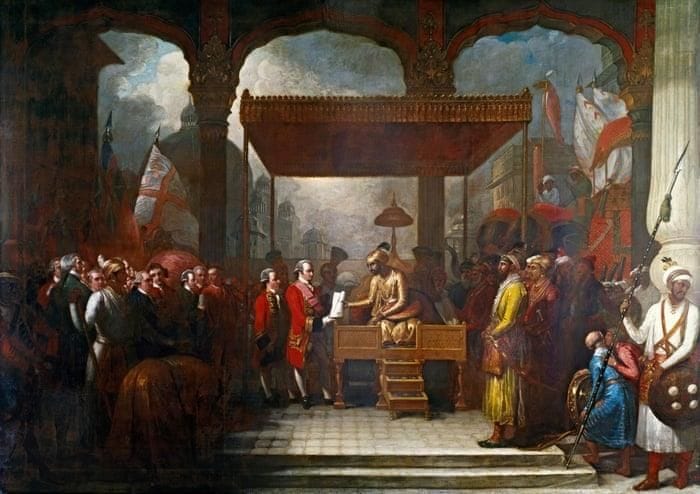 In contrast, the account in this chapter (Theme 9) on colonial Bengal under the East India Company shows a marked decline in zamindars' autonomy and power. The Permanent Settlement of 1793 redefined zamindars as mere revenue collectors for the Company, rather than true landowners. They were required to pay a fixed revenue demand in perpetuity, irrespective of harvest quality or agricultural conditions. This demand was set high initially, anticipating future price rises, which resulted in frequent defaults. The Sunset Law mandated that failure to pay by sunset would lead to auction of estates, causing over 75% of zamindaris to change hands by the early 19th century. Zamindars' authority was curtailed by disbanding their troops, abolishing customs duties, and placing courts (cutcheries) under Company Collectors, who became alternative power centres. Zamindars resisted through strategies like fictitious (benami) sales and transfers to family members, but they faced growing challenges from jotedars (wealthy peasants) who controlled villages, moneylending, and trade, often acquiring auctioned estates. While some zamindars consolidated power after the 1790s price depression ended, many collapsed during the 1930s Great Depression, with jotedars gaining dominance.
The key differences lie in the transition from semi-autonomous, privileged zamindars in the Mughal era to regulated, revenue-focused intermediaries under colonial rule, where economic pressures and limited powers weakened their position. However, similarities include their continuing role in revenue collection and exploitation of peasants (ryots), although under colonial policies this exploitation became more rigid and less reciprocal.
Page No. 245
Q: What does Buchanan's description tell us about his ideas of development? Illustrate your argument by quoting from the excerpts. If you were a Paharia forest dweller how would you have reacted to these ideas?
Ans: Francis Buchanan's description of the Paharias and Santhals in the Rajmahal hills reflects colonial ideas of development that emphasized settled agriculture, forest clearance, and plough-based cultivation as signs of progress. He viewed shifting cultivation and forest-dependent lifestyles as primitive or underdeveloped, favouring their transformation into permanent farming to increase economic productivity and facilitate state control. This aligned with British colonial goals of expanding revenue through settled lands.
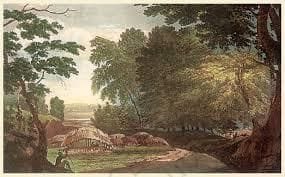 Buchanan describes the Paharias' life symbolised by the "hoe," used for shifting cultivation, where they "scratched the ground lightly with hoes, cultivated the cleared land for a few years, then left it fallow... and moved to a new area." He contrasts this with the Santhals, representing the "power of the plough," noting that "the battle between the hoe and the plough was a long one." This implies Buchanan saw the plough as superior and inevitable for development. He praises the Santhals as "very clever in clearing new lands," but criticises their living conditions as "meanly," with "huts... very small and slovenly." He highlights the benefits of settled farming through their cultivation of finer crops like tobacco and mustard. His journey notes describe the hills as "dangerous" and the Paharias as "hostile and apprehensive of officials," suggesting their resistance to outsiders was seen as a barrier to "progress." Overall, Buchanan's ideas promote colonial "development" through forest clearance, permanent settlement, and integration into revenue systems, viewing nomadic or forest-based lives as backward.
If I were a Paharia forest dweller, I would have reacted with strong resistance and suspicion to these ideas, as they threatened my way of life, autonomy, and connection to the forest. The Paharias already viewed Buchanan "with suspicion and distrust" during his 1810-11 travels, withdrawing into the mountains and waging war against outsiders. His push for settled cultivation would mean abandoning shifting practices that sustained us-gathering mahua for food, rearing silkworms, and hunting-while forcing us into plough agriculture, which we resisted (reflected in our refusal to "touch the plough"). This would disrupt our community structure, where chiefs maintained unity and we raided plains for resources. I would see it as an invasion, similar to how we fought British pacification campaigns in the 1770s-80s, preferring independence over being transformed into "settled agriculturists" for colonial revenue. Ultimately, it would reinforce our hostility, as it ignored our sustainable forest-based economy in favour of exploitative "development."
Page No. 255
Q: Check what rates of interest are charged in the region where you live at present. Find out whether these rates have changed over the last 50 years. Is there a variation in the rates paid by different groups of people? What are the reasons for the differences?
Ans: Note: Assuming the region is India, as the query context relates to Indian history and colonial Bengal. Interest rates here refer to lending rates such as bank loans or fixed deposits, regulated by the Reserve Bank of India (RBI). Data is based on current economic indicators as of October 2025.
Current interest rates in India (as of October 2025):
- The RBI's benchmark repo rate (key policy rate for bank borrowing) is 5.50%, unchanged from recent meetings amid easing inflation (headline inflation at 1.54% in September 2025).
- Fixed Deposit (FD) rates: 6.60% per annum for general customers and 7.10% for senior citizens (e.g., ICICI Bank rates).
- Loan rates vary: Home loans at 8-10%, personal loans at 10-15%, and agricultural loans at 7-9% (subsidized).
- Standing Deposit Facility (SDF) at 5.25% and Marginal Standing Facility (MSF) at 5.75%.
Changes over the last 50 years:
- In the 1970s-1980s, rates were high due to inflation and oil crises: Repo equivalents around 8-10% in the mid-1970s, peaking at 12-14% in the 1980s.
- 1990s: Rates rose to 12% amid economic liberalization and balance-of-payments crisis, then declined to 8-9% by late 1990s.
- 2000s: Dropped to 4-6% post-2000 reforms, but rose to 8-9% during the 2008 global financial crisis.
- 2010s: Peaked at 8-9% in 2011-2013 due to inflation, then fell to 4-6% by 2019.
- 2020s: Cut to historic lows (around 4%) during COVID-19 for stimulus, then hiked to 6.50% in 2022-2023 to combat inflation; now at 5.50% after 100 bps cuts in 2025. Overall, rates have trended downward from double digits (1970s-1990s) to 5-6% today, influenced by economic reforms, globalization, inflation control, and RBI's shift to inflation-targeting (4% ±2% since 2016).
Variation in rates paid by different groups: Yes, significant variations exist.
- Formal sector (banks): Lower rates for large corporations (6-8% on loans) vs. higher for individuals (10-15% on personal loans). Senior citizens get 0.50% extra on FDs (7.10% vs. 6.60%).
- Informal sector (moneylenders): 20-50% or more for poor/rural borrowers.
- By group: Farmers/agricultural loans at 7-9% (subsidized under schemes like Kisan Credit Card); MSMEs at 8-12%; women/self-help groups at lower rates (e.g., 7% under Mudra Yojana). NRIs on NRE FDs get tax-free rates around 6-7%.
- Poor/unorganized workers pay highest (up to 36% on microfinance or payday loans).
Reasons for differences:
- Risk assessment: High-risk borrowers (e.g., low credit score, no collateral) such as small farmers or daily-wage workers pay more due to default risks.
- Regulation and subsidies: Government schemes subsidize rates for priority sectors (agriculture, MSMEs) to promote growth; RBI caps on usury prevent excessive informal rates but enforcement is weak.
- Cost of funds: Banks charge based on their borrowing costs (e.g., repo rate); informal lenders have higher operational risks/costs.
- Credit history and access: Urban, salaried individuals with good CIBIL scores get lower rates; rural/poor groups lack formal banking, relying on high-rate moneylenders.
- Economic factors: Inflation, global events (e.g., US tariffs affecting rupee), and policy goals (e.g., inflation targeting) influence variations.
These variations highlight inequalities in access to credit, often exacerbating poverty in rural or low-income groups, similar to colonial moneylending issues discussed in the chapter.
Answer in 100-150 Words
Q1: Why was Jotedar a powerful figure in many areas of rural Bengal?
Ans: Jotedars were influential figures in rural Bengal due to several key factors:
- They were wealthy peasants who owned large plots of land, sometimes thousands of acres.
- Jotedars controlled local trade and money lending, giving them significant economic power.
- They had a strong influence over the local population, often regarded as more powerful than Zamindars.
- To weaken Zamindars, they mobilised ryots (farmers) to delay or refuse land revenue payments.
- Jotedars actively opposed any attempts by Zamindars to increase the jama (tax) of the village.
- Living in the villages allowed them to interact closely with and influence the peasants.
- They often purchased estates from Zamindars who could not pay their land revenue, further consolidating their power.
Overall, the Jotedars played a crucial role in shaping the rural economy and politics of Bengal.
Q2: How did Zamindars manage to retain control over their zamindaris?
Ans: Zamindars employed several strategies to maintain control over their zamindaris during difficult times. These tactics were essential for their survival:
- Fictitious Sales: Zamindars would create fake auctions where their own men would bid high but never pay. This process would exhaust the government, leading to the estate being sold back to the zamindar at a lower price.
- Transfer of Property: Parts of the estate were often transferred to female family members, as the government could not seize property owned by women.
- Use of Muscle Power: Zamindars would intimidate potential buyers to prevent others from acquiring their estates.
- Peasant Resistance: Sometimes, peasants influenced by zamindars would oppose the auction of the estate, further securing the zamindar's control.

Q3: How did the Paharias respond to the coming of outsiders?
Ans: The Paharias, residing in the hills of Rajmahal, faced significant changes with the arrival of outsiders, particularly the British and Santhal settlers. Their responses included:
- The Paharias initially resisted the Santhal settlement but eventually had to accommodate them.
- They retreated to deeper areas of the hills to escape the encroachment.
- Over time, they were confined to more barren and rocky regions.
- The Paharias practiced shifting cultivation, which became increasingly difficult due to stable settlements.
- As forests were cleared, their reliance on these resources for livelihood diminished, leading to a significant change in their lifestyle.

Q4: Why did the Santhals rebel against British rule?
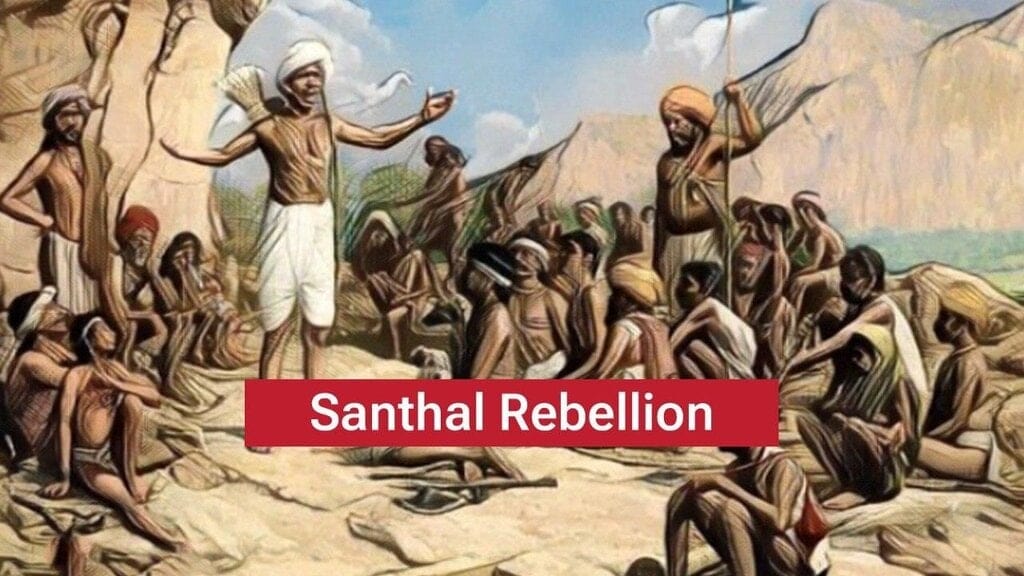
Ans: By 1832, the Santhals had settled in the Damin-i-Koh area, where their population and agricultural activities grew rapidly. However, dissatisfaction arose, leading to their rebellion against British rule. The main causes for this rebellion included:
- High Taxes: The Santhals were unhappy with the tax regime imposed by the British, which they felt was exploitative.
- Zamindar Control: Increased control by zamindars over Santhal lands, as part of British policy, caused resentment among the Santhals.
- Moneylenders: Rural moneylenders were viewed as agents of exploitation, often auctioning Santhal lands when debts were unpaid.
In response to these grievances, the British later established a separate district called Santhal Pargana and enacted laws to protect the Santhals.
Q5: What explains the anger of Deccan ryots against the moneylenders?
Ans: The anger of ryots towards moneylenders arose from several issues:
- Excessive Interest Rates: Interest often exceeded the principal amount, for example, a loan of Rs 100 accruing Rs 2000 in interest.
- Lack of Receipts: Moneylenders did not provide receipts for loan repayments, enabling manipulation and disputes.
- Fraudulent Practices: Instances of forgery and other dishonest acts were common.
- Insensitivity and Exploitation: Ryots perceived moneylenders as arrogant and exploitative, showing little concern for their plight.
Write a Short Essay (250-300 words)
Q6: Why were so many Zamindaris auctioned after the Permanent settlement?
Ans: The Permanent Settlement of 1793 introduced by the British in Bengal aimed to create a stable revenue system by fixing land revenue demands indefinitely. However, this system led to widespread auctioning of zamindaris because of several reasons.
- The revenue demand was excessively high and did not reflect fluctuations in agricultural productivity. Bengal suffered famines and declining output in the late 18th century, making it difficult for zamindars to collect rents from peasants. Unable to pay the fixed revenue on time, many zamindars defaulted.
- The Sunset Law enforced a strict payment deadline, stating that failure to pay by sunset would lead to auction of estates. This rigid system replaced earlier flexible revenue collection and caused many zamindars to lose their lands.
- The British curtailed zamindars' political power by disbanding their armed forces and limiting their ability to enforce tax collection. This empowered rich peasants and jotedars, who withheld payments and increased defaults.
- Many zamindars used strategies like fictitious purchases, where their agents bid on auctioned lands to return them to the original owners. Despite this, many traditional zamindari families lost influence as new landowners emerged.
Thus, the Permanent Settlement was a flawed policy that caused economic distress for zamindars, weakened their traditional authority, and led to widespread auctioning of estates.
Q7: In what way was the livelihood of Paharias different from that of Santhals?
Ans: The Paharias and Santhals, both inhabitants of the Rajmahal hills, had distinct livelihoods based on their relationship with land and economy.
- The Paharias were hunter-gatherers and shifting cultivators who relied on the forest for their livelihood. They lived in small groups, practiced slash-and-burn (jhum) cultivation, and supplemented their diet with forest produce such as mahua and silk cocoons. Their economy was not market-oriented, and they avoided interactions with outsiders. They also engaged in raids on settled villages, forcing zamindars and traders to pay them protection money.
- In contrast, the Santhals were agricultural settlers who cleared forests and established plough-based farming. Unlike the Paharias, they embraced settled agriculture and engaged in trade with outsiders, including the East India Company. The British and zamindars encouraged their migration to Rajmahal to expand cultivation, leading to a gradual decline of Paharia land and influence.
- As the Santhals expanded their farmlands, the Paharias retreated deeper into the hills, facing economic hardship due to loss of forest resources. While the Santhals adapted to the colonial economy, the Paharias resisted British control, resulting in conflicts.
Thus, the Paharias remained forest-dependent and isolated, while the Santhals transitioned into settled farming, ultimately displacing the Paharias from their traditional lands.
Q8: How did the American Civil War affect the lives of the ryots in India?
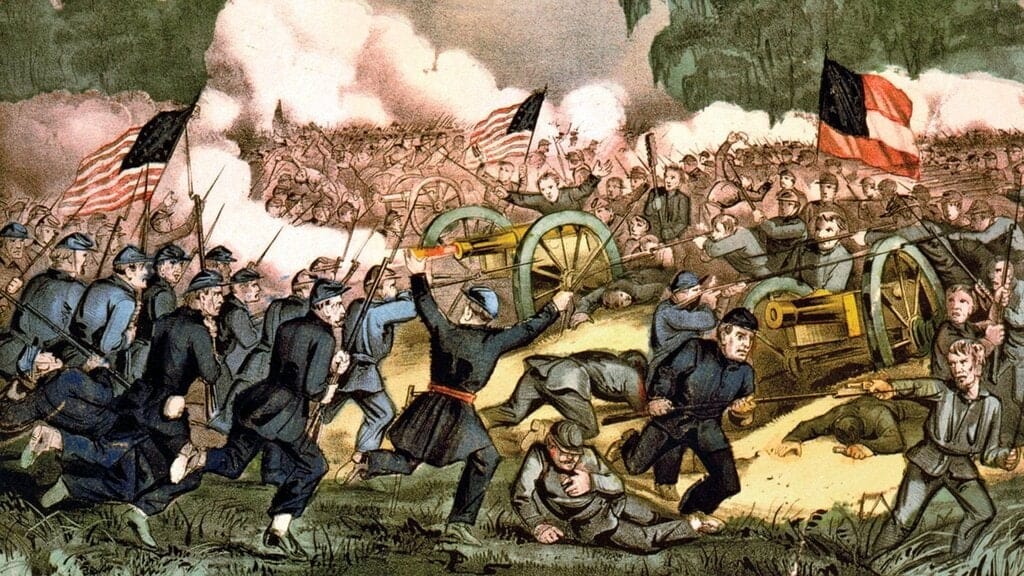
Ans: The American Civil War (1861-1865) had a significant impact on the Indian economy, particularly the ryots (peasants) in the Deccan. Before the war, British cotton mills relied heavily on raw cotton from the United States. However, as the war disrupted cotton exports from America, Britain turned to India as an alternative source.
- Before the war, British cotton mills relied heavily on American raw cotton. The war disrupted these exports, leading Britain to turn to India as an alternative source. This caused a cotton boom in Bombay and Deccan. British traders and moneylenders encouraged ryots to grow more cotton by offering easy credit. Many peasants took high-interest loans to buy seeds and expand cultivation, hoping for profits.
- After the war ended in 1865, American cotton exports resumed, causing cotton prices in India to crash. Moneylenders demanded loan repayments, but ryots, burdened with debt, could not pay.
- Moneylenders took over ryots' lands, forcing many into bonded labour. This led to widespread peasant revolts, including the Deccan Riots of 1875, where ryots attacked moneylenders, burned account books, and looted grain stores.
Thus, the American Civil War initially brought prosperity but eventually caused severe financial distress for Indian peasants, exposing them to exploitative moneylending under British rule.
Q9: What are the problems of using official sources in writing about the history of peasants?
Ans: Official sources from the Company Raj are often deemed unreliable when examining the history of the Ryots.
Here are the main issues associated with these sources:
- One-Sided Perspective: British records reflected the colonial administrators' viewpoint, focusing on their interests and ignoring peasants' grievances and struggles. For example, the Deccan Riots Commission blamed moneylenders but overlooked British revenue policies.
- Cultural Prejudice: British officials viewed Indian society through a Eurocentric lens, portraying local customs as backward and assuming peasants were lazy, ignoring harsh economic conditions.
- Manipulation of Data: Reports exaggerated or concealed facts to justify British policies. The Fifth Report on Bengal claimed zamindars lost land due to mismanagement, while many resisted revenue demands.
- Selective Recording of Information: Colonial records focused on tax collection and legal matters, neglecting peasants' social conditions and resistance movements.
- Need for Cross-Verification: To understand peasant history fully, official records must be compared with folk stories, petitions, traveller accounts, and oral histories. Recent research shows many British reports underestimated peasant resistance.
In conclusion, while official records provide data, they require critical analysis and supplementation with alternative sources to accurately understand peasant history under colonial rule.
Map Work
Q10: On an outline map of the subcontinent, mark out the areas described in this chapter. Find out whether there were other areas where the Permanent Settlement and the ryotwari system were prevalent and plot these on the map as well.
Ans: The chapter highlights the following areas of the subcontinent:
- Including Bangladesh and parts of Bihar, Orissa, and hilly regions of Assam.
- Bombay Presidency
- Madras Presidency
- The British introduced the Mahalwari system of land revenue in eastern Punjab.
- Surat
- Rajmahal Hills: Inhabited by the Paharias and Santhals.
Additionally, the Permanent Settlement was mainly implemented in Bengal, Bihar, and Orissa. The Ryotwari system was prevalent in Madras Presidency, Bombay Presidency (parts of Maharashtra and Gujarat), and Assam. The Mahalwari system was common in parts of North-Western Provinces, Punjab, and Central India.
FAQs on NCERT Solutions - Colonialism and the countryside
| 1. What were the major impacts of colonialism on rural economies? |  |
| 2. How did colonial policies affect the social structure of rural areas? | |
| 3. What role did agriculture play in the colonial economy? | |
| 4. How did resistance movements arise in rural areas during colonial rule? | |
| 5. What was the impact of colonial education on rural society? | |