Grade 12 Exam  >  Grade 12 Notes  >  Physical Education  >  Revision Notes, Psychology and Sports, Physical Education

Revision Notes, Psychology and Sports, Physical Education

Psychology and Sports

10.1 Definition and Importance of Psychology in Physical Education and Sports
10.2 Define and differentiate between Growth and Development
10.3 Developmental characteristics at different stages of development
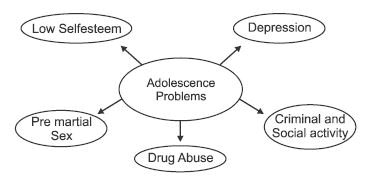
10.4 Adolescent problems and their management
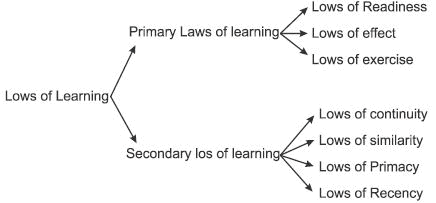
10.5 Define Learning, Laws of Learning and Transfer of Learning
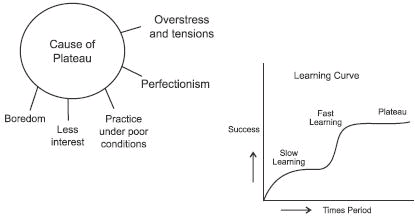
10.6 Plateau and Causes of Plateau
10.7 Emotion: Concept and controlling of Emotions

a. Psychology: Psychology is the study of mind and behavior.
Revision Notes, Psychology and Sports, Physical Educationb. Sports Psychology: Sports Psychology is an applied Psychology involving applications of psychological principles to the field of physical education.


MULTIPLE CHOICE QUESTION
Try yourself: What is the definition of psychology in the context of physical education and sports?
A

The study of the mind and behavior

B

The application of psychological principles in physical education

C

The study of physical development in sports

D

The application of physical principles in psychology

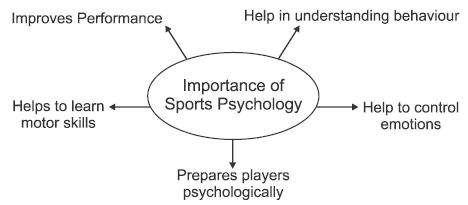
c. Importance of sports psychology:

Revision Notes, Psychology and Sports, Physical Education

d. Growth and Development: Growth "The term growth of parts of the education and the growth of parts of the body, may be in size, height and weight.
 Development can be defined as a progressive series of changes in an orderly coherent pattern.

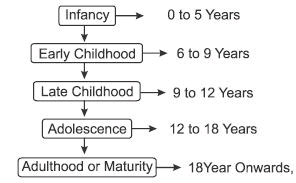
e. Different stages of growth and development
 5 stages of growth and development Infancy
Revision Notes, Psychology and Sports, Physical Education

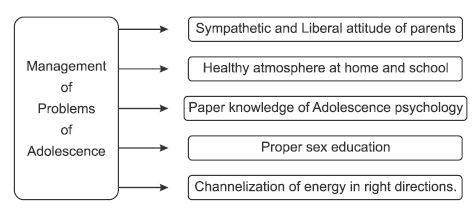
f. Adolescence, Problems of Adolescence and Management of Problems of Adolescents

Adolescence: Adolescence Is the period of change from childhood to adulthood.
Revision Notes, Psychology and Sports, Physical Education

Revision Notes, Psychology and Sports, Physical Education

g. Define Learning, Laws of Learning and Transfer of learning

Learning: Learning is a lifelong process: it starts in the womb and ends in the tomb.

Learning is adaptation and adjustment.
Revision Notes, Psychology and Sports, Physical Education

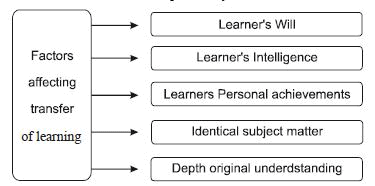
Transfer of learning, Types of Transfer of learning, factor affecting the transfer of learning

Transfer of learning: Transfer of learning occurs when a person's learning in one situation influence his learning and performances in other situation.
Types of is a transfer of learning:

(i) Positive Transfer: When there is an improvement in performance as a result of previous learning or training

(ii) Negative Transfer: When learned one skill makes the learning of the second skill more difficult

(iii) Application Transfer: When previous learning is applied successfully to life situations

Revision Notes, Psychology and Sports, Physical Education

(iv) Bilateral Transfer: When there is a change of performance in a number on one side of the body as a result of training the corresponding member on another side (v) Proactive Transfer: Learning of skill affects the learning of skill yet to be learned.

(vi) Retroactive Transfer: A skill recently being learned effects the previously learned skill.
Revision Notes, Psychology and Sports, Physical Education

h. Plateau and causes of Plateau Plateau:- A period of little or no apparent progress in an individuals learning, marked by an inability to increase speed, reduce the number of errors etc and indicated by a horizontal stretch in a learning curve or graph.
Revision Notes, Psychology and Sports, Physical Education

MULTIPLE CHOICE QUESTION
Try yourself: What is the definition of growth and development?
A

Growth refers to an increase in size, height, and weight, while development is a progressive series of changes in an orderly coherent pattern.

B

Growth and development both refer to physical changes in the body.

C

Growth is the increase in size, while development refers to changes in behavior and cognition.

D

Growth and development are terms used interchangeably to describe the changes that occur in an individual over time.

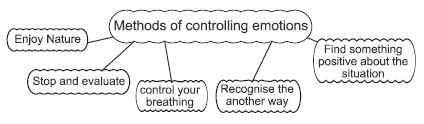
i.  The concept of emotions and methods of controlling emotions.
Emotions:- emotions are intense feelings that are directed at someone or something. Emotions are subjective conscious experiences characterized by expressions, biological reactions, and mental status.
Revision Notes, Psychology and Sports, Physical Education

The document Revision Notes, Psychology and Sports, Physical Education is a part of the Grade 12 Course Physical Education for Grade 12.
All you need of Grade 12 at this link: Grade 12

FAQs on Revision Notes, Psychology and Sports, Physical Education

1. What is the relationship between psychology and sports?
Ans. Psychology and sports are closely related as the psychological aspects of sports play a crucial role in an athlete's performance. Sports psychology involves the study of how mental factors influence athletic performance, including motivation, confidence, anxiety, stress, and concentration. It focuses on developing mental skills to enhance an athlete's performance, such as goal setting, visualization, and positive self-talk.
2. How can physical education benefit students?
Ans. Physical education can benefit students in many ways, including improving overall health and fitness, developing social skills and teamwork, and enhancing academic performance. Regular physical activity can reduce the risk of obesity, heart disease, and other chronic health problems. Physical education can also promote social and emotional development, as students learn to work together, communicate effectively, and develop leadership skills. Studies have shown that physical activity can improve academic performance by increasing attention span, memory, and problem-solving abilities.
3. What are the benefits of sports participation for children?
Ans. Sports participation can provide numerous benefits for children, including physical fitness, social development, and improved self-esteem. Through sports, children can develop physical fitness, coordination, and motor skills. They can also learn important life skills, such as teamwork, communication, and perseverance. Sports participation can also help children develop a positive self-image, as they learn to set and achieve goals and receive recognition for their accomplishments.
4. How can coaches use psychology to improve their athletes' performance?
Ans. Coaches can use psychology to improve their athletes' performance by helping them develop mental skills such as goal-setting, visualization, and positive self-talk. Coaches can also help athletes manage stress and anxiety, which can have a significant impact on performance. By creating a positive team environment and providing constructive feedback, coaches can also enhance athletes' motivation and confidence.
5. What are some of the challenges faced by athletes in sports psychology?
Ans. Athletes may face several challenges in sports psychology, including difficulty managing stress and anxiety, lack of motivation, and negative self-talk. They may also struggle with perfectionism and fear of failure, which can impact their performance. Additionally, athletes may have difficulty finding the time and resources to engage in mental training and may need the support of coaches and sports psychologists to overcome these challenges.
Explore Courses for Grade 12 exam
Get EduRev Notes directly in your Google search
Related Searches
Revision Notes, Physical Education, Previous Year Questions with Solutions, Revision Notes, Objective type Questions, Psychology and Sports, past year papers, Physical Education, mock tests for examination, shortcuts and tricks, Physical Education, MCQs, Sample Paper, Semester Notes, Extra Questions, Viva Questions, Important questions, pdf , Free, practice quizzes, ppt, study material, Revision Notes, Summary, Exam, video lectures, Psychology and Sports, Psychology and Sports;