Revision Notes - Challenges of Nation Building

Facts That Matter
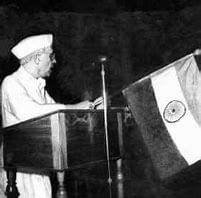
1. Tryst with Destiny: Nehru's Historic Speech (1947)
On the eve of India's independence, Pandit Jawaharlal Nehru delivered a momentous speech known as the "Tryst with Destiny." This address, made at midnight on August 14-15, 1947, during a special session of the Constituent Assembly, captured the spirit of the nation stepping into a new era of freedom.
2. Post-Independence Challenges
Immediately after gaining independence, India faced multifaceted challenges. The nascent nation needed to forge a united identity, establish democratic practices, and formulate effective policies for economic development, poverty eradication, and unemployment.
3. Two-Nation Theory and the Partition
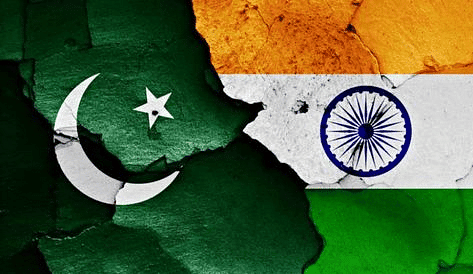
Muhammad Ali Jinnah's Two-Nation Theory, advocating a separate state for Muslims, led to the partition of India in 1947. This partition resulted in numerous challenges, including the division of Punjab and Bengal, conflicts over religious majorities, and the incorporation of regions like NWFP.
4. Unplanned Partition: Communal Riots and Social Sufferings
The abrupt and unplanned nature of the 1947 partition triggered communal riots, leading to the creation of community-specific zones. This unfortunate event caused widespread social suffering, with people seeking shelter in refugee camps, women facing violence, and families being separated.
5. Division of British India
British India was divided into provinces and princely states. Princely states retained some control over internal affairs under British supremacy.
6. Integration of Princely States: A Post-Independence Challenge
The integration of princely states into the Indian Union posed a significant challenge. Issues like the British announcement ending paramountcy, challenges in states such as Travancore, Hyderabad, and Bhopal complicated the process.
7. Government's Approach to Integration
The government, led by Sardar Vallabhbhai Patel, adopted a three-pronged approach: considering the will of the people, flexibility to accommodate regional demands, and safeguarding India's integrity through peaceful negotiations. Only four states-Junagarh, Hyderabad, Kashmir, and Manipur-faced difficulty in accession.
8. Hyderabad: A Struggle for Integration
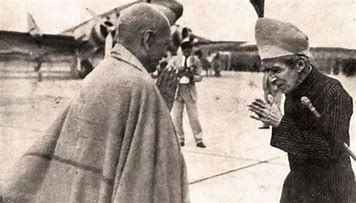
Hyderabad, the largest princely state ruled by the Nizam, witnessed protests against his rule. The government intervened in 1948 against the Razakars, ultimately achieving the accession of Hyderabad.
9. Manipur's Merger: A Constitutional Challenge
Maharaja Bodhachandra Singh of Manipur established a constitutional monarchy and conducted elections under Universal Adult Franchise. However, differences over Manipur's merger led to pressure from the Indian government, culminating in an agreement signed by the Maharaja in September 1949.
10. Linguistic States and Democratic Policies
In the initial years of state reorganization, concerns about separatism prompted the formation of linguistic states. This shift in democratic policies acknowledged regional and linguistic diversity while providing a uniform foundation for India's pluralistic democracy.
11. State Reorganisation Commission (1953)
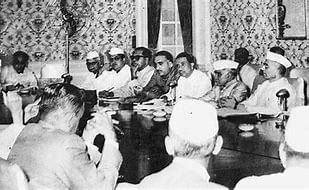 The Central Government established the State Reorganisation Commission in 1953 to redraw state boundaries based on linguistic considerations. This commission played a pivotal role in creating 14 states and six union territories, providing a more uniform basis for state boundaries that reflected linguistic diversity.
Words That Matter
1. Two Nations Theory: It was propounded by Muhammad Ali Jinnah to create a separate state for Muslims.
2. British Indian Provinces: The Indian provinces which were directly under the British government before independence.
3. Princely States: States ruled by Princes who enjoyed some form of control over their states internal affairs under the British supremacy.
4. Razakars: A para-military force of Nizam was sent to respond people's movement which had no bounds.
5. Nizam: Ruler of Hyderabad was titled as Nizam who was world's richest person.
6. State Reorganisation Commission: It was appointed in 1953 to look into the matter to redraw the boundaries of states.
FAQs on Revision Notes - Challenges of Nation Building
| 1. What are the main challenges India faced while building a unified nation after independence? |  |
| 2. How did communalism and religious divisions threaten India's nation-building process? | |
| 3. Why was integrating princely states considered such a difficult task in India's nation-building? | |
| 4. What role did language diversity play in challenging India's nation-building efforts? | |
| 5. How did caste-based discrimination impact India's nation-building and what measures addressed it? | |