Revision Notes (Part - 1) - Psychological Disorders

Introduction
Many people around us experience sadness, stress, or a sense of dissatisfaction in life. They may feel worried, restless, or unable to move forward. Life can sometimes seem full of struggles and pain. Every person goes through difficult times, such as feeling anxious before an exam, being tense about the future, or feeling upset when a loved one is ill.
While facing problems is normal, some people find it very hard to deal with stress or adjust to challenges. When this happens, they may develop emotional or mental difficulties. These difficulties can affect how they think, feel, and behave in daily life.
The branch of psychology that studies such problems is called Abnormal Psychology. It focuses on behaviours that are unhealthy or unhelpful - called maladaptive behaviours - and tries to understand their causes and effects. It also looks for ways to help people overcome these difficulties so they can live happier and more balanced lives.
Concept of Abnormality and Psychological Disorders
Various definitions of abnormality have been proposed, but none has gained universal acceptance. Most definitions share common features known as the four Ds: deviance, distress, dysfunction, and danger.
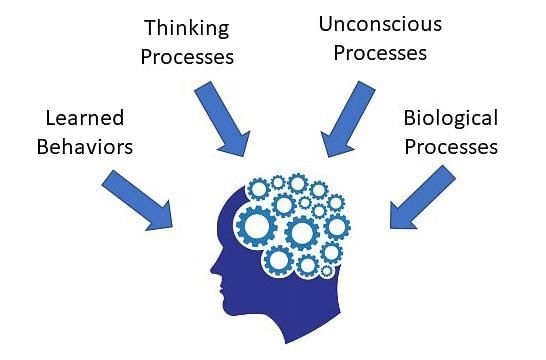
Psychological disorders are typically considered deviant, distressing, dysfunctional, and potentially dangerous.
- Deviation from Norms:
- The term 'abnormal' suggests a departure from established norms or standards.
- Psychology lacks an 'ideal' or 'normal' model of human behavior for comparison.
- Abnormal behavior is often seen as a deviation from social norms and societal expectations.
- Views on Abnormal Behavior:
- There are two primary views on abnormal behavior: deviation from social norms and maladaptive behavior.
- Deviation from social norms refers to behaviors that significantly differ from societal expectations.
- Maladaptive behavior is defined by its hindrance to the individual's well-being and growth.
- Stigma Surrounding Psychological Disorders:
- There is a common stigma attached to mental illness, leading individuals to feel ashamed of seeking help.
- Psychological disorders should be viewed as any other illness, indicating a failure in adaptation rather than a personal weakness.
Historical Background
- The organismic approach was introduced by Ancient Greek philosophers such as Hippocrates, Socrates, and Plato, who believed that disturbed behavior was a result of conflicts between emotions and reasoning. Galen also had a similar perspective, theorising that temperament was influenced by an imbalance in four humours, similar to the concept of tridoshas.
- During the Middle Ages, people with mental health issues were commonly associated with demons and superstition. St. Augustine discussed the topics of emotions, mental distress, and inner conflict, which established the foundation for contemporary psychodynamic theories.
- During the Renaissance period, there was an increased focus on humanism and curiosity about behavior. Johann Weyer suggested that psychic disorders were caused by troubled interpersonal relationships and that mentally disturbed individuals required medical treatment instead of theological treatment.
- The Age of Reason and Enlightenment in the 17th and 18th centuries led to the growth of the scientific method, which replaced faith and dogma. This movement contributed to reforms in society, including increased compassion for those who were suffering from mental health issues. Asylums were reformed, deinstitutionalization occurred, and community care was emphasized.
- In recent years, there has been a convergence of approaches resulting in an interactional biopsychosocial approach.
Classification Of Psychological Disorders
- Psychological disorders are categorised based on specific disorders that share similar characteristics and are grouped into various classes.
- These classifications benefit psychologists, psychiatrists, social workers, and other professionals in the field by enabling them to:
(i) Facilitate communication between professionals regarding the disorder
(ii) Assist in understanding the origins and mechanisms involved in the development and persistence of psychological disorders. - Official manuals providing descriptions and classifications for different types of psychological disorders include:
(i) The Diagnostic and Statistical Manual of Mental Disorders, 5th Edition (DSM-5), which is currently published by the American Psychiatric Association (APA). This manual presents specific clinical criteria that indicate whether a disorder is present or not.
(ii) The International Classification of Diseases (ICD-10), a classification of behavioural and mental disorders published by the World Health Organization (WHO). It provides descriptions of primary clinical features or symptoms, associated features, and diagnostic guidelines for each disorder.
Factors Underlying Abnormal Behavior
Human behaviour is very complex, and when it becomes abnormal, psychologists try to understand it from different viewpoints. Each approach highlights certain causes and gives its own explanation for why abnormal behaviour occurs. These causes can be biological, psychological, or socio-cultural in nature.
1. Biological Factors
- Biological factors affect every part of our behaviour. Problems such as genetic defects, brain injury, hormonal imbalance, poor nutrition, or other physical issues can lead to abnormal behaviour.
- According to the biological model, mental disorders have a physical or chemical basis in the brain. Research shows that disturbances in the working of neurotransmitters(chemicals that send messages between brain cells) can cause specific disorders:
- Low GABA → linked to anxiety
- High dopamine → linked to schizophrenia
- Low serotonin → linked to depression
- Genes also play a role. Disorders like bipolar disorder, schizophrenia, and intellectual disability can run in families. However, it is not one single gene but the combined effect of many genes and environmental factors that leads to these problems. Thus, biology alone cannot explain all mental disorders - psychological and social influences are also important.
2. Psychological Factors
Psychological models focus on how experiences, thoughts, emotions, and relationships influence behaviour. Several psychological approaches explain abnormality differently:
- Psychodynamic Model: Based on Freud's theory, it says abnormal behaviour results from unconscious conflicts in the mind - usually from early childhood experiences. These inner struggles between our desires (id), reasoning (ego), and morals (superego) shape behaviour.
- Behavioural Model: Suggests that abnormal behaviour is learned, just like normal behaviour. People may learn unhealthy behaviour patterns through conditioning - for example, by associating fear with certain situations or by receiving rewards for negative actions. Such behaviours can also be unlearned through therapy.
- Cognitive Model: Focuses on faulty thinking patterns. People who think negatively about themselves, misinterpret events, or make generalisations from one bad experience may develop emotional problems such as anxiety or depression.
- Humanistic-Existential Model: Emphasises the freedom and potential of human beings. Humanists believe people naturally strive for growth and self-fulfilment, while existentialists stress that individuals must find meaning in life. When people avoid responsibility or fail to find purpose, they may feel empty and develop emotional issues.
3. Socio-Cultural Factors
- Our surroundings, relationships, and society also shape our behaviour. Problems like poverty, unemployment, discrimination, violence, or rapid social change can cause stress and emotional breakdown.
- According to the socio-cultural model, mental health depends on social support and community relationships.
- Families that are too controlling or overinvolved can limit personal growth.
- People who are isolated or lack friendships tend to feel more depressed.
- Society's labels, such as calling someone "mentally ill" or "crazy," can worsen the problem, as people may begin to act according to those labels.
4. Diathesis-Stress Model
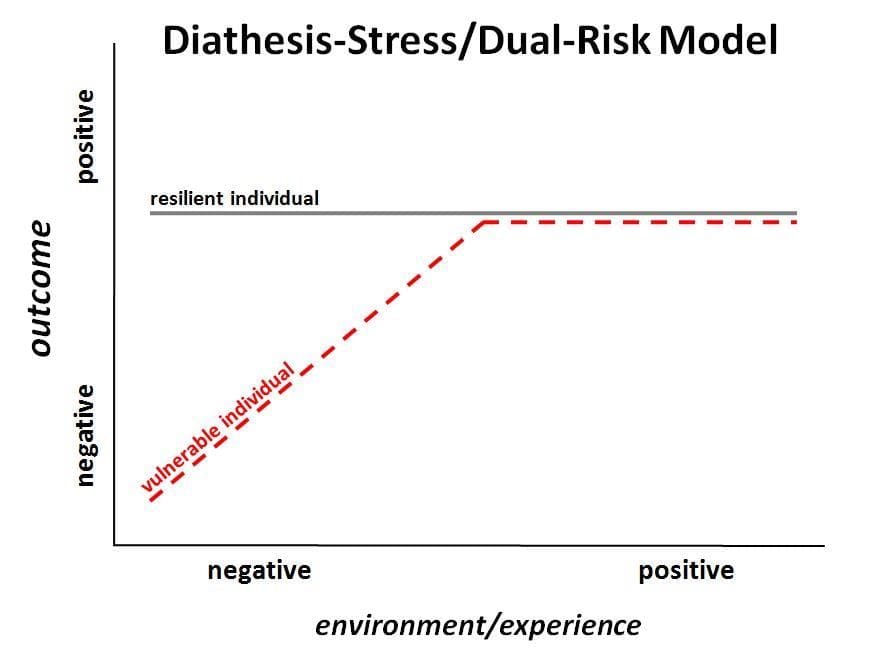
- This is a combined explanation. It says that mental disorders develop when a person who already has a biological or genetic vulnerability (diathesis) faces stressful life situations.
- The diathesis may be inherited or inborn.
- It makes a person predisposed or at risk for mental illness.
- When strong stressors (like trauma or loss) occur, the disorder may actually appear.
- This model helps explain many disorders such as anxiety, depression, and schizophrenia, showing that both nature (biology) and nurture (environment) work together to cause abnormal behaviour.
Major Psychological Disorders
As per the information provided in the class on Psychological Disorders, the DSM-5 covers several major psychological disorders:
Anxiety Disorders
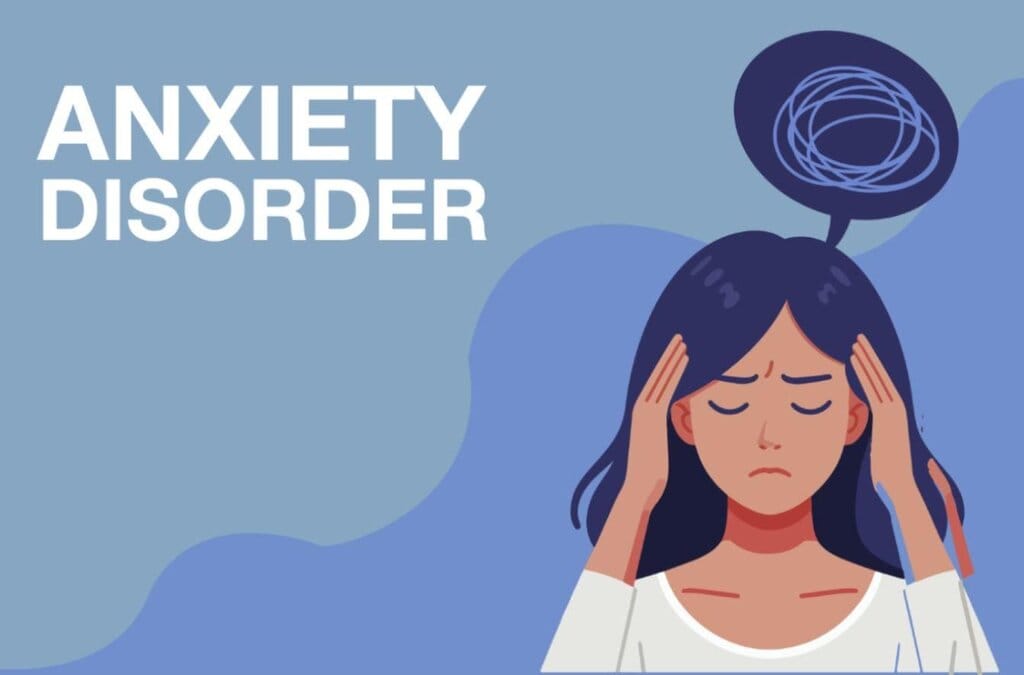
Anxiety disorders are characterized by an overall feeling of fear and apprehension, accompanied by symptoms such as rapid heart rate, sweating, dizziness, and fainting.
The major types of anxiety disorders are as follows:
- Generalised Anxiety Disorders: Generalized Anxiety Disorder is characterized by a persistent, excessive, and unrealistic worry and fear about everyday life events and activities, without any apparent cause or specific trigger. Its symptoms include restlessness, feeling on edge, difficulty concentrating, irritability, muscle tension, and sleep disturbances. People with this disorder find it challenging to control their worrying and have difficulty relaxing.
- Panic Disorder: This category of anxiety disorder is characterized by frequent episodes of sudden and overwhelming terror or fear, known as panic attacks, that are often triggered by specific situations or stimuli. Symptoms can include shortness of breath, chest pain, choking sensation, nausea, fear of dying or going crazy, and other physical and emotional symptoms.
- Phobias: Phobias as irrational fears related to a specific object, person, or situation. There are three types of phobias:
(i) Specific phobias: These are highly irrational fears, such as the fear of a specific type of animal or being enclosed in a small space.
(ii) Social phobias: This is an intense fear of embarrassment when dealing with others in public.
(iii) Agoraphobia: This is the fear of entering unfamiliar situations, and people with agoraphobia may have difficulty leaving their homes, which prevents them from carrying out their normal activities. - Separation Anxiety Disorder: Separation Anxiety Disorder is characterized by an extreme fear of being separated from individuals with whom an emotional attachment has been formed, to the extent that it impairs normal development. Children with this disorder exhibit symptoms such as a reluctance to go to school alone, constantly following their parents, and throwing fits when they are away from their parents for even a short period of time.
Obsessive-Compulsive and Related Disorders
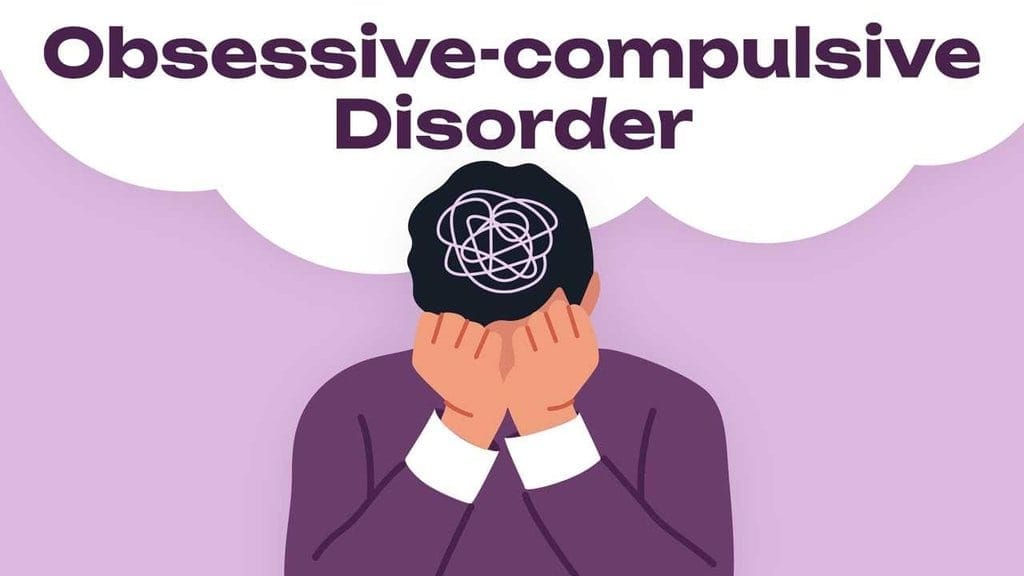
- Individuals with OCD are excessively focused on a specific idea or thought and unable to stop themselves from performing certain behaviours that disrupt their daily activities.
- Obsessive behaviour refers to the inability to cease thinking about a specific thought or behaviour.
- Compulsive behaviour refers to the urge to repeatedly engage in certain actions.
Trauma and Stress-Related Disorder
- Individuals exposed to bomb blasts or terrorist attacks often suffer from Post-Traumatic Stress Disorder (PTSD).
- This disorder is characterised by recurrent nightmares, frequent flashbacks, and emotional distress related to the traumatic event.
FAQs on Revision Notes (Part - 1) - Psychological Disorders
| 1. What are the main types of psychological disorders covered in CBSE Class 12 psychology? |  |
| 2. What's the difference between anxiety disorders and panic disorder in psychological disorders? | |
| 3. How do schizophrenia symptoms differ from mood disorder symptoms? | |
| 4. What causes dissociative disorders and how do they affect memory? | |
| 5. Why is early diagnosis and treatment of psychological disorders important for recovery? | |