NCERT Solutions - Displacing Indigenous Peoples

Exercise Page No. 134 (Activity)
Q: If you compare the four timelines given in the book, you will find that the chronological reference periods in the left-hand column differ. Can you think of the reasons for this? Try and design a timeline of your own, giving reasons for your selections.
Ans: The timelines differ because each highlights a different region and theme - such as the Americas, Europe, or Australia - and historians organize time according to the major events or turning points in that area.
In designing my own timeline, I would select periods based on important developments like colonization, independence movements, and industrialization to show how societies changed over time.
Exercise Page No. 141 (Activity 1)
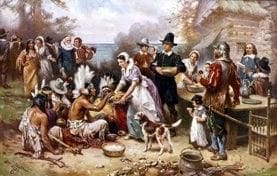
Q: Discuss the different images that Europeans and native Americans had of each other, and the different ways in which they saw nature.
Ans: Europeans frequently regarded Native Americans as uncivilized "savages," whereas Native Americans at first viewed Europeans as possible allies but eventually came to see them as aggressors. While Europeans treated nature as a resource to be exploited, Native Americans considered it sacred and maintained a spiritual bond with the land through sustainable practices. These contrasting worldviews shaped their relationships and fueled conflicts during the colonial era.
Exercise Page No. 144 (Activity 2)
Q: Comment on these two sets of population data.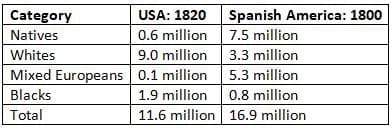 Ans: In the early 19th century, the USA had fewer natives but a higher number of white and black populations compared to Spanish America. In contrast, Spanish America showed a much larger mixed European population because of widespread intermarriage. Although the composition of each group differed, Spanish America's total population was greater than that of the USA. These variations highlight the distinct colonial experiences and social structures that shaped each region.
Exercise Page No. 148 (Activity 3)
Q: Comment on the following statement by the American historian Howard Spodek: 'For the indigenous [people] the effects of the American Revolution were exactly opposite to those of the settlers - expansion became contraction, democracy became tyranny, prosperity became poverty, and liberty became confinement.'
Ans: Spodek shows that the American Revolution brought opposite results for two groups.
- For settlers, it meant freedom, expansion, and prosperity.
- For Indigenous peoples, it led to loss of land, restricted movement, and growing poverty. Thus, liberty for one group came at the cost of another's subjugation
Exercise Page No. 150 (Activity 4)
Q: In 1911, it was announced that New Delhi and Canberra would be built as the capital cities of British India and of the Commonwealth of Australia. Compare and contrast the political situations of the native people in these countries at that time.
Ans:
- In 1911, New Delhi was declared the capital of British India, and Canberra became the capital of the Commonwealth of Australia. However, the political circumstances of the native populations in these regions were quite different:
- In British India, native Indians lived under British colonial rule, enduring oppression and inequality while actively participating in the struggle for independence.
- In Australia, Indigenous Australians faced land dispossession, discrimination, and forced assimilation by European settlers, resulting in continuing social and economic challenges.
Answer in Brief
Q1: Comment on any points of difference between the native peoples of South and North America.
Ans: The indigenous peoples of South and North America show several key differences:
- South America had rich and varied cultures such as the Inca and Maya, while North America included groups like the Navajo and Inuit, each with distinct traditions.
- South American societies were generally urban and centralized, whereas North American communities were often nomadic or semi-nomadic, organized into smaller groups.
- In South America, native civilizations endured conquest and forced labor under Spanish and Portuguese domination, while in North America, indigenous groups faced displacement and conflicts over treaties with European settlers.
- South American peoples adapted to Andean highlands and tropical regions, whereas North American natives developed ways to survive in Arctic and Subarctic environments.
Q2: Other than the use of English, what other features of English economic and social life do you notice in nineteenth-century USA?
Ans: In nineteenth-century America, alongside the widespread use of English, many aspects of English social and economic life were evident:
- American institutions drew inspiration from English models, such as common law and parliamentary systems.
- English ideas of land ownership, feudalism, and property rights shaped the distribution of land in early U.S. settlements.
- Like England, the United States had a social hierarchy consisting of elites, a middle class, and a working class.
- English cultural influences in literature, art, and religion played a key role in forming American cultural identity.
- The Industrial Revolution in England spurred similar trends of industrial growth and urbanization in the U.S.
- Educational systems in America followed English traditions, with universities, colleges, and public schools modeled on English frameworks.
Q3: What did the 'frontier' mean to the Americans?
Ans: For Americans in the nineteenth century, the term "frontier" carried several meanings. It symbolized opportunity, representing economic progress, land ownership, and upward mobility. It also stood for the nation's westward expansion, reflecting America's drive to extend its territory and power. Additionally, the frontier embodied ideas of freedom and independence, giving people the chance to escape urban life and shape their own futures.
The frontier was likewise seen as a space for exploration and adventure, where settlers encountered new landscapes, cultures, and challenges. Yet, it was also an area of conflict and conquest, marked by struggles with Indigenous peoples and competition over land and resources. Combining opportunity, expansion, freedom, adventure, and conflict, the frontier played a defining role in shaping American identity and history.
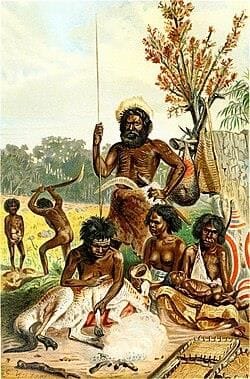
Q4: Why was the history of the Australian native peoples left out of history books?
Ans: The exclusion of Australia's Indigenous peoples from history textbooks stemmed from entrenched biases and colonial objectives. Academic narratives shaped by Eurocentric perspectives sidelined Indigenous experiences. To justify colonization and displacement, colonial authorities encouraged assimilation and erasure policies. Persistent racism and prejudice further distorted and devalued Indigenous histories and cultures. Additionally, the lack of recognition and representation of Indigenous voices in historical writing kept them out of educational materials.
School curricula focused heavily on European history, neglecting Indigenous viewpoints. Efforts to decolonize historical narratives and highlight Indigenous perspectives have only emerged in recent decades. These initiatives aim to acknowledge the vital role of Indigenous histories and contributions in shaping Australia's past. Addressing these silences is essential for fostering understanding, reconciliation, and a more inclusive account of Australian history.
Answer in Short Essay
Q5: How satisfactory is a museum gallery display in explaining the culture of a people? Give examples from your own experience of a museum.
Ans: The ability of a museum gallery to effectively represent a people's culture depends on factors such as the quality of curation, presentation, and interpretation. Although museum exhibits can provide valuable perspectives on a culture, they may not always offer a full or deeply nuanced understanding.
For instance, during a visit to a museum focused on Indigenous cultures in Canada, I observed a gallery featuring traditional artifacts, art, and oral histories. While the display offered meaningful insights into Indigenous ways of life, it did not fully capture the diversity or complexity of their cultures. Moreover, the interpretive texts were limited in depth and did not address present-day challenges faced by Indigenous communities.
In contrast, a museum exhibition on ancient Egyptian civilization stood out for its immersive design, thorough explanations, and use of multimedia. Through artifacts, reconstructions, and interactive features, it provided an engaging and comprehensive portrayal of ancient Egyptian culture, religion, and everyday life.
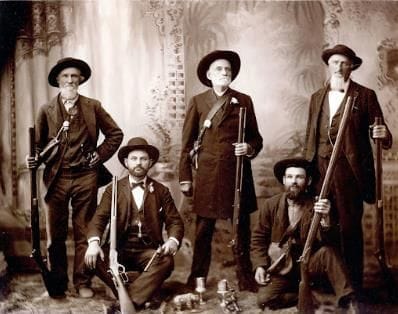
Q6: Imagine an encounter in California in about 1880 between four people: a former African slave, a Chinese labourer, a German who had come out in the Gold Rush, and a native of the Hopi tribe, and narrate their conversation.
Ans: Around a campfire in 1880s California, four individuals from diverse backgrounds share their stories. Elijah, a former African slave, recounts his path to freedom and his hopes for a brighter future. Chang, a Chinese laborer, describes the hardships faced by immigrants like himself while building the railroad. Johann, a German immigrant, shares tales of adventure and struggle in his quest for prosperity. Meanwhile, Kachina, a member of the Hopi tribe, speaks about her people's deep connection to the land and their resistance against encroaching settlers. Despite their different origins, they find common ground in their shared pursuit of opportunity and resilience amid California's harsh conditions.
FAQs on NCERT Solutions - Displacing Indigenous Peoples
| 1. What is meant by displacing indigenous peoples? |  |
| 2. What are the main reasons for displacing indigenous peoples? | |
| 3. What are the impacts of displacing indigenous peoples? | |
| 4. How does displacing indigenous peoples violate their rights? | |
| 5. What are some examples of displacing indigenous peoples? | |