NEET Exam  >  NEET Test  >  Topic-wise MCQ Tests  >  31 Years NEET Previous Year Questions: Body Fluids & Circulation - 1 - NEET MCQ

31 Years NEET Previous Year Questions: Body Fluids & Circulation - 1 Free


MCQ Practice Test & Solutions: 31 Years NEET Previous Year Questions: Body Fluids & Circulation - 1 (30 Questions)

You can prepare effectively for NEET Topic-wise MCQ Tests for NEET with this dedicated MCQ Practice Test (available with solutions) on the important topic of "31 Years NEET Previous Year Questions: Body Fluids & Circulation - 1". These 30 questions have been designed by the experts with the latest curriculum of NEET 2026, to help you master the concept.

Test Highlights:

  • - Format: Multiple Choice Questions (MCQ)
  • - Duration: 30 minutes
  • - Number of Questions: 30

Sign up on EduRev for free to attempt this test and track your preparation progress.

31 Years NEET Previous Year Questions: Body Fluids & Circulation - 1 - Question 1

Cardiac activities of the heart are regulated by: [Neet 2025]
A. Nodal tissue 
B. A special neural centre in the medulla oblongata 
C. Adrenal medullary hormones 
D. Adrenal cortical hormones
Choose the correct answer from the options given below:

Detailed Solution: Question 1

A. Nodal tissue: The heart has specialized nodal tissues, such as the sinoatrial (SA) node and atrioventricular (AV) node, which generate and conduct electrical impulses. The SA node is known as the natural pacemaker of the heart, initiating rhythmic contractions. This is a critical intrinsic mechanism for regulating heart activity.
B. A special neural center in the medulla oblongata: The medulla oblongata in the brainstem contains the cardiovascular center that regulates heart rate and blood pressure. This center has two components: the cardiac accelerator center (sympathetic stimulation increases heart rate) and the cardiac inhibitory center (parasympathetic stimulation decreases heart rate). This represents the extrinsic neural regulation of the heart.
C. Adrenal medullary hormones: Hormones such as adrenaline and noradrenaline secreted by the adrenal medulla play a vital role in increasing heart rate and the force of cardiac contractions during stress or emergencies, part of the "fight or flight" response.
D. Adrenal cortical hormones: These hormones, such as cortisol and aldosterone, are involved in long-term stress responses and electrolyte balance, but they do not play a direct role in the immediate regulation of cardiac activities. Therefore, this option is incorrect.

31 Years NEET Previous Year Questions: Body Fluids & Circulation - 1 - Question 2

Following are the stages of pathway for conduction of an action potential through the heart  [NEET 2024]
A. AV bundle
B. Purkinje fibres
C. AV node
D. Bundle branches
E. SA node
Following are the stages of pathway for conduction of an action potential through the heart

Detailed Solution: Question 2

The electrical pathway for the conduction of an action potential through the heart is a precisely coordinated process, essential for maintaining the heart's rhythmic beating. To understand this conduction pathway, it’s important to know the roles of the specific components involved:

SA node (Sinoatrial node): Often referred to as the pacemaker of the heart. It initiates the electrical impulse, causing the atria to contract.
AV node (Atrioventricular node): Receives the impulse from the SA node and provides a slight delay, allowing the ventricles time to fill with blood before they contract.
AV bundle (Bundle of His): Transfers the electrical impulse from the AV node to the bundle branches.
Bundle branches: Conducts the impulses through the interventricular septum.
Purkinje fibers: Distribute the electrical impulse throughout the ventricles, stimulating them to contract uniformly and powerfully.

The correct sequence for the pathway of an action potential through the heart follows a route designed to efficiently coordinate the heartbeat starting from the initiation of the action potential to the consequential contraction of the heart muscles. The sequence is:

SA node (E): The pacemaker where the electrical activity originates.
AV node (C): Where the impulse is delayed slightly.
AV bundle (A): Conducts the impulse from the AV node to the bundle branches.
Bundle branches (D): Leads the impulse to the Purkinje fibers.
Purkinje fibers (B): Distributes the impulse throughout the ventricles.

31 Years NEET Previous Year Questions: Body Fluids & Circulation - 1 - Question 3

Match List I with List II   [NEET 2024]

2024

Choose the correct answer from the options given below:

Detailed Solution: Question 3

  • P wave represents depolarisation of atria.
  • QRS complex represents depolarisation of ventricles.
  • T wave represents repolarisation of ventricles.
  • T-P gap represents the time when heart muscles are electrically silent.

31 Years NEET Previous Year Questions: Body Fluids & Circulation - 1 - Question 4

In standard ECG diagram, the P-wave represents:   [NEET 2024]

Detailed Solution: Question 4

The P-wave in the ECG represents the electrical activity associated with depolarisation of the atria.

31 Years NEET Previous Year Questions: Body Fluids & Circulation - 1 - Question 5

Match List-I with List-II   [NEET 2024]

Choose the correct answer from the options given below:

Detailed Solution: Question 5

  • Tricuspid valves guard the opening between right atrium and right ventricle.
  • Sino-atrial node is the cardiac musculature in the right upper corner of the right atrium.
  • Mitral valves guard the opening between the left atrium and left ventricle.
  • Semilunar valves guard the opening of the ventricles into the pulmonary artery and aorta.

31 Years NEET Previous Year Questions: Body Fluids & Circulation - 1 - Question 6

Lub' sound of heart is caused by the ___________   [NEET 2024]

Detailed Solution: Question 6

The 'Lub' sound occurs due to the closure of the tricuspid and bicuspid (mitral) valves during the start of systole, preventing backflow of blood into the atria.

31 Years NEET Previous Year Questions: Body Fluids & Circulation - 1 - Question 7

Match List I with List II.     [NEET 2023]

2023

Choose the correct answer from the options given below :

Detailed Solution: Question 7

  • P-wave: Depolarisation of atria
  • Q-wave: Beginning of systole
  • QRS complex: Depolarisation of ventricles
  • T-wave: Repolarisation of ventricles

31 Years NEET Previous Year Questions: Body Fluids & Circulation - 1 - Question 8

Which of the following are correct?     [NEET 2023]
A. Basophils are the most abundant cells of the total WBCs
B. Basophils secrete histamine, serotonin and heparin
C. Basophils are involved in inflammatory response
D. Basophils have kidney shaped nucleus
E. Basophils are agranulocytes
Choose the correct answer from the options given below:

Detailed Solution: Question 8

The correct answer is Option C : B and C only.

  • Statement A is incorrect. Basophils are actually the least abundant cells of the total white blood cells (WBCs), not the most abundant.
  • Statement B is correct. Basophils do secrete histamine, serotonin, and heparin. Histamine and serotonin are involved in inflammatory response, while heparin is an anticoagulant.
  • Statement C is also correct. Basophils are involved in the inflammatory response. They release chemicals such as histamine and serotonin that dilate blood vessels and attract other white blood cells to the site of inflammation.
  • Statement D is incorrect. Basophils do not have a kidney-shaped nucleus. That description is more appropriate for monocytes, another type of white blood cell.
  • Statement E is incorrect. Basophils are not agranulocytes. They are granulocytes, a category of white blood cells characterized by the presence of granules in their cytoplasm. Agranulocytes, which lack visible cytoplasmic granules, include lymphocytes and monocytes.

31 Years NEET Previous Year Questions: Body Fluids & Circulation - 1 - Question 9

Match List-I with List-II  [NEET 2023]

List-I

  • A. Neutrophils
  • B. Monocytes
  • C. Lymphocytes
  • D. Eosinophils

List-II

  • I. 2-3%
  • II. 60-65%
  • III. 6-8%
  • IV. 20-25%

Choose the correct answer from the options given below:

Detailed Solution: Question 9

Correct option: C

Neutrophils are the most abundant type of white blood cells and constitute about 60-65% of total leukocytes.

Monocytes account for approximately 6-8% of the leukocyte population.

Lymphocytes make up about 20-25% of total white blood cells.

Eosinophils are present in smaller numbers, roughly 2-3%.

Thus the correct matching is A-II, B-III, C-IV, D-I, which corresponds to option C.

31 Years NEET Previous Year Questions: Body Fluids & Circulation - 1 - Question 10

A unique vascular connection between the digestive tract and liver is called______.    [NEET 2022 Phase 2]

Detailed Solution: Question 10

  • Option (c) is the correct answer because hepatic portal system is a unique vascular connection between digestive tract and liver.
  • Option (a) is not correct because hepato-cystic system is part of biliary pathway where common hepatic duct joins cystic duct of gall bladder.
  • Option (b) is incorrect because hepato-pancreatic system is a part of biliary pathway where common bile duct fuses with pancreatic duct.
  • Option (d) is incorrect because renal portal system is a unique vascular connection between lower parts of the body and kidney.

31 Years NEET Previous Year Questions: Body Fluids & Circulation - 1 - Question 11

Arrange the following formed elements in the decreasing order of their abundance in blood in humans:
(a) Platelets
(b) Neutrophils
(c) Erythrocytes
(d) Eosinophils
(e) Monocytes
Choose the most appropriate answer from the options given below:     [NEET 2022 Phase 2]

Detailed Solution: Question 11

Option (b) is the correct answer as a healthy adult man has, on an average, 5 millions to 5.5 millions of RBCs (erythrocytes) mm–3 of blood.
Blood normally contains 1,50,000 – 3,50,000 platelets mm–3.
Neutrophils form 60-65 percent of the total WBCs, monocytes form 6-8 percent of the total WBCs and eosinophils form 2-3 percent of the total WBCs. The total WBCs are approximately 6000-8000 mm–3 of blood.
Thus, the formed elements in the decreasing order of their abundance in blood in humans: -
Erythrocytes – Platelets – Neutrophils – Monocytes – Eosinophils

31 Years NEET Previous Year Questions: Body Fluids & Circulation - 1 - Question 12

Given below are two statements:     [NEET 2022 Phase 1]
Statement I: The coagulum is formed of network of threads called thrombins. 
Statement II: Spleen is the graveyard of erythrocytes. 
In the light of the above statements, choose the most appropriate answer from the options given below: 

Detailed Solution: Question 12

  • Option (c) is the correct answer because coagulum or clot is formed mainly of a network of threads called fibrins. Hence, Statement I is incorrect.
  • RBCs are destroyed in the spleen so spleen is known as the graveyard of erythrocytes. Hence, Statement II is correct.

31 Years NEET Previous Year Questions: Body Fluids & Circulation - 1 - Question 13

Which one of the following statements is correct?     [NEET 2022 Phase 1]

Detailed Solution: Question 13

  • Option (a) is incorrect because bicuspid and tricuspid valves open due to pressure exerted by blood present in atria and decrease in pressure in ventricles during ventricular diastole.
  • Option (b) is the correct answer because during joint diastole, blood moves freely from atrium to ventricle as atrioventricular valve remain open during joint diastole.
  • Option (c) is incorrect because decrease in ventricular pressure, during ventricular diastole closes semilunar valves to produce 'dub' heart sound.
  • Option (d) is incorrect because SA node generates action potential to stimulate atrial contraction.

31 Years NEET Previous Year Questions: Body Fluids & Circulation - 1 - Question 14

Which enzyme is responsible for the conversion of inactive fibrinogens to fibrins?    [2021]

Detailed Solution: Question 14

Fibrins are formed by the conversion of inactive fibrinogens in the plasma by the enzyme thrombin.

31 Years NEET Previous Year Questions: Body Fluids & Circulation - 1 - Question 15

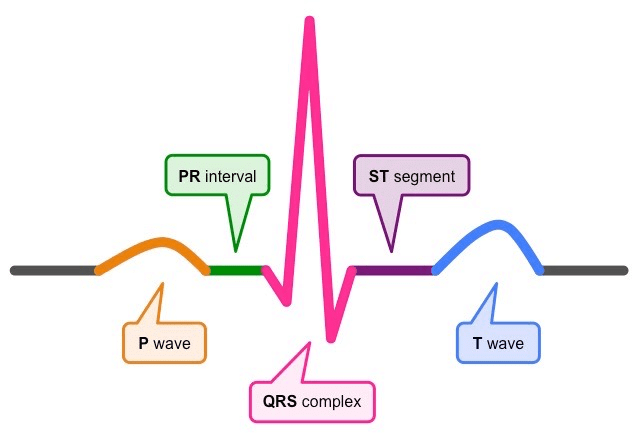
The QRS complex in a standard ECG represents :     [2020]
Detailed Solution: Question 15

The QRS complex represents the depolarisation of the ventricles, which initiates the ventricular contraction. The contraction starts shortly after Q and marks the beginning of the systole.

31 Years NEET Previous Year Questions: Body Fluids & Circulation - 1 - Question 16

What would be the heart rate of a person if the cardiac output is 5 L, blood volume in the ventricles at the end of diastole is 100 mL and at the end of the ventricular systole is 50 mL?    [2019]

Detailed Solution: Question 16

Stroke volume = End diastolic volume - End systolic volume
= 100 - 50 = 50 mL
Cardiac output = Heart beat x stroke volume
∴ Heart beat = Cardiac output/Stroke volume = 5000 / 50 = 100 beats per minute

31 Years NEET Previous Year Questions: Body Fluids & Circulation - 1 - Question 17

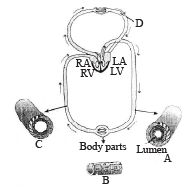
Figure shows blood circulation in humans with labels A to D. Select the option which gives correct identification of label and functions of the part: [NEET Kar. 2013]
Detailed Solution: Question 17

Arter y is blood vessel which receives blood from heart, has elastic thick wall shows jerky movements due to pumping activity of heart. Vein is a blood vessel which carries blood towards the heart, has wider lumen with internal valves where blood flows smoothly and slowly. Blood capillary is a very fine blood vessel which has a single layered wall. Pulmonary veins are the only veins which carry oxygenated blood. (PO2 = 95 mmHg, PCO2 = 40 mmHg)

31 Years NEET Previous Year Questions: Body Fluids & Circulation - 1 - Question 18

Which one of the following blood cells is involved in antibody production.

Detailed Solution: Question 18

B-lymphocytes cells are involved in antibody production.

31 Years NEET Previous Year Questions: Body Fluids & Circulation - 1 - Question 19

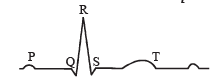
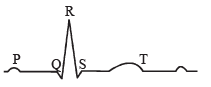
The diagram given here is the standard ECG of a normal person, the P-wave represents the : [NEET 2013]
Detailed Solution: Question 19

The P-wave represents the electrical excitation (or depolarisation) of the atria, which leads to the contraction of both the atria. The  QRS complex represents the depolarisation of the ventricles, which initiates the ventricular contraction. The contraction starts shortly after Q and marks the beginning of the systole.

31 Years NEET Previous Year Questions: Body Fluids & Circulation - 1 - Question 20

Which one of the following human organs is often called the graveyard of RBCs?[2011M]

Detailed Solution: Question 20

Spleen is an organ of the lymphatic system located in the left side of the abdominal cavity under the diaphragm, the muscular partition between the abdomen and the chest. It is called graveyard of RBC because fragment of red blood cells, old and dead cells are constantly being removed from the blood streams by it.

31 Years NEET Previous Year Questions: Body Fluids & Circulation - 1 - Question 21

Bulk of carbon dioxide (CO2) released from body tissues into the blood is present as [2011M]

Detailed Solution: Question 21

70% to 75% CO2 is transported as primary buffer of the blood. Bicarbonate ion (HCO3) in blood plasma. When CO2 diffuses from tissues into blood then it is acted upon by the enzyme carbonic anhydrase.

31 Years NEET Previous Year Questions: Body Fluids & Circulation - 1 - Question 22

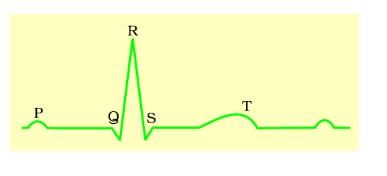
Given below is the ECG of a normal human. Which one of its components in human is correctly interpreted below 
Detailed Solution: Question 22

P wave is formed when the atria (the two upper chambers of the heart) contract to pump blood into the ventricles. 

QRS Complex is formed when the ventricles (the two lower chambers of the heart) are contracting to pump out blood. It is one complete pulse.

ST segment measures the end of the contraction of the ventricles to the beginning of the rest period before the ventricles begin to contract for the next beat.

T wave measures the resting period of the ventricles.

So, the correct answer is option C.

31 Years NEET Previous Year Questions: Body Fluids & Circulation - 1 - Question 23

Which one of the following statements is correct regarding blood pressure ? [2011]

Detailed Solution: Question 23

Hypertension is the term for blood pressure that is higher than normal (120/80). In this measurement, 120 mm Hg (millimeter of mercury pressure) is the systolic, or pumping, pressure and 80 mm Hg is the diastolic, or resting pressure. If repeated checks of blood pressure 190/100 mm Hg) of an individual is 140/90 (140 over 90) or higher, it shows hypertension. High blood pressure (190/100 mm Hg) leads to heart diseases and also affects vital organs like brain and kidney. 

31 Years NEET Previous Year Questions: Body Fluids & Circulation - 1 - Question 24

Arteries are best defined as the vessels which : [2011]

Detailed Solution: Question 24

Arteries are best defined as the vessels which break up into capillaries which reunite to form a vein.
Arteries are the blood vessels which carry oxygenated blood from the heart to the organs. It breaks up into several branches of capillaries before entering the organs. These capillaries again reunite to form venules and ultimately veins which carry the deoxygenated blood towards the heart. 

31 Years NEET Previous Year Questions: Body Fluids & Circulation - 1 - Question 25

Which one of the following plasma proteins is involved in the coagulation of blood ? [2011]

Detailed Solution: Question 25

Fibrinogen, the protein of blood plasma is converted to insoluble protein fibrin during the clotting process. The fibrinogen free fluid obtained after removal of the clot, called blood serum is plasma minus fibrinogen.

31 Years NEET Previous Year Questions: Body Fluids & Circulation - 1 - Question 26

‘Bundle of His’ is a part of which one of the following organs in humans? [2011]

Detailed Solution: Question 26

‘Bundle of His’ are a typical cardiac muscle fibres, connecting the atria with ventricle.

31 Years NEET Previous Year Questions: Body Fluids & Circulation - 1 - Question 27

What is true about RBCs in humans? [2010]

Detailed Solution: Question 27

Blood transports oxygen from respiratory organs to the tissue cells and also transports carbon dioxide from the tissue cells to the respiratory membrane. About 97% of oxygen is transported by RBCs in the blood while the remaining three percent of oxygen is carried in a dissolved state through plasma. Nearly 20-25% of carbon dioxide is transported by RBCs whereas 70% is carried as bicarbonate. About 7% of CO2 is carried in dissolved state through plasma.

31 Years NEET Previous Year Questions: Body Fluids & Circulation - 1 - Question 28

If due to some injury the chordae tendinae of the tricuspid valve of the human heart is partially non - functional, what will be the immediate effect? [2010]

Detailed Solution: Question 28

Tricuspid valve is the valve in the heart between the right atrium and right ventricle. The valve opens to allow blood to flow from atrium into the ventricle. Thus if tricuspid valve is partially nonfunctional, then the flow of blood into the pulmonary artery will be reduced

31 Years NEET Previous Year Questions: Body Fluids & Circulation - 1 - Question 29

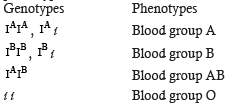
ABO blood groups in humans are controlled by the gene I. It has three alleles – IA IB and i. Since there are three different alleles, six different genotypes are possible. How many phenotypes can occur? [2010]
Detailed Solution: Question 29

The three calle/es in ABO blood groups in humans can produce six different genotypes and four different phenotypes

31 Years NEET Previous Year Questions: Body Fluids & Circulation - 1 - Question 30

In a standard ECG which one of the following alphabets is the correct representation of the respective activity of the human heart?   [2009]

Detailed Solution: Question 30

In a standard ECG, the P-wave is a small upward wave that indicates the depolarisation of the atria. This is caused by the activation of SA node.

8 docs|805 tests
Information about 31 Years NEET Previous Year Questions: Body Fluids & Circulation - 1 Page
In this test you can find the Exam questions for 31 Years NEET Previous Year Questions: Body Fluids & Circulation - 1 solved & explained in the simplest way possible. Besides giving Questions and answers for 31 Years NEET Previous Year Questions: Body Fluids & Circulation - 1, EduRev gives you an ample number of Online tests for practice
Download as PDF