JEE Exam  >  JEE Test  >  Chapter-wise Tests Main & Advanced  >  Test: JEE Main 35 Year PYQs- General Principles & Processes of Isolation of Elements - JEE MCQ

JEE Main 35 Year PYQs- General Principles & Processes of Isolation Elements


MCQ Practice Test & Solutions: Test: JEE Main 35 Year PYQs- General Principles & Processes of Isolation of Elements (10 Questions)

You can prepare effectively for JEE Chapter-wise Tests for JEE Main & Advanced with this dedicated MCQ Practice Test (available with solutions) on the important topic of "Test: JEE Main 35 Year PYQs- General Principles & Processes of Isolation of Elements". These 10 questions have been designed by the experts with the latest curriculum of JEE 2026, to help you master the concept.

Test Highlights:

  • - Format: Multiple Choice Questions (MCQ)
  • - Duration: 20 minutes
  • - Number of Questions: 10

Sign up on EduRev for free to attempt this test and track your preparation progress.

Test: JEE Main 35 Year PYQs- General Principles & Processes of Isolation of Elements - Question 1

Aluminium is extracted by the electrolysis of         [2002]

Detailed Solution: Question 1

Pure aluminium can be obtained by  electrolysis of a mixture containing alumina, crayolite and fluorspar in the ratio 20 : 24 : 20. The fusion temperature of this mixture is 900ºC and it is a good conductor of electricity

Test: JEE Main 35 Year PYQs- General Principles & Processes of Isolation of Elements - Question 2

The metal extracted by leaching with a cyanide is                  [2002]

Detailed Solution: Question 2
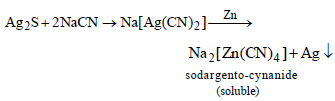
Silver ore forms a soluble complex with NaCN from which silver is precipitated using scrap zinc.

Test: JEE Main 35 Year PYQs- General Principles & Processes of Isolation of Elements - Question 3

Which one of the following ores is best concentrated byfroth-flotation method ?       [2004]

Detailed Solution: Question 3

Froth ­flotation method is used for the concentration of sulphide ores. The method is based on the preferential wetting properties with the frothing agent and water. In the given options, Galena (PbS) is the only sulphide ore.

Test: JEE Main 35 Year PYQs- General Principles & Processes of Isolation of Elements - Question 4

During the process of electrolytic refining of copper, some metals present as impurity settle as ‘anode mud’. These are    [2005]

Detailed Solution: Question 4

During the process of electrolytic refining Ag and Au are obtained as anode mud.

Test: JEE Main 35 Year PYQs- General Principles & Processes of Isolation of Elements - Question 5

Which of the following factors is of no significance forroasting sulphide ores to the oxides and not subjecting thesulphide ores to carbon reduction directly? [2008]

Detailed Solution: Question 5

NOTE : The reduction of metal sulphides by carbon reduction process is not spontaneous because DG for such a process is positive. The reduction of metal oxide
by carbon reduction process is spontaneous as DG for such a process is negative.
From this we find that on thermodynamic considerations CO2 is more stable than CS2 and the metal sulphides are more stable than corresponding oxides.
In view of above the factor listed in choice (c) is incorrect and so is of no significance.
Hence the correct answer is (c)

Test: JEE Main 35 Year PYQs- General Principles & Processes of Isolation of Elements - Question 6

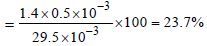
29.5 mg of an organic compound containing nitrogen wasdigested according to Kjeldahl’s method and the evolvedammonia was absorbed in 20 mL of 0.1 M HCl solution. Theexcess of the acid required 15 mL of 0.1 M NaOH solutionfor complete neutralization. The percentage of nitrogen inthe compound is                [2010]

Detailed Solution: Question 6

Moles of HCl taken = 20 × 0.1 × 10–3 =  2 × 10⁻³
Moles of HCl neutralised by NaOH solution
= 15 × 0.1 × 10–3 = 1.5 × 10⁻³
Moles of HCl neutralised by ammonia
= 2 × 10⁻³ – 1.5 × 10–3
= 0.5 × 10⁻³

Test: JEE Main 35 Year PYQs- General Principles & Processes of Isolation of Elements - Question 7

Which method of purification is represented by the following equation ? [2012]

Detailed Solution: Question 7

Van Arkel is a method in which heat treatment is used to purify metal in this process metals are converted into other metal compound for loosly coupled like as iodine to make metal iodide which are easily decomposed and give pure metal.
The process is known as Van Arkel method.

Test: JEE Main 35 Year PYQs- General Principles & Processes of Isolation of Elements - Question 8

The metal that cannot be obtained by electrolysis of anaqueous solution of its salts is: [JEE M 2014]

Detailed Solution: Question 8
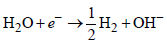
On electrolysis of aqueous solution of s-block elements H2 gas discharge at cathode.

Test: JEE Main 35 Year PYQs- General Principles & Processes of Isolation of Elements - Question 9

In the context of the Hall - Heroult process for the extraction of Al, which of the following statements is false ?[JEE M 2015]

Detailed Solution: Question 9

In Hall-Heroult process,
2 Al2O3 + 3 C → 4 Al + 3CO2
Oxygen liberated at anode reacts with carbon anode to give CO and CO2.

Na3AlF6 (cryolite) or CaF2 is mixed with purified Al2O3 to lower the melting point for easier electrolysis.

Test: JEE Main 35 Year PYQs- General Principles & Processes of Isolation of Elements - Question 10

Which one of the following ores is best concentrated byfroth floatation method? [JEE M 2016]

Detailed Solution: Question 10

Froth floatation method is mainly applicable for
sulphide ores.
(1) Malachite ore : Cu(OH)2 . CuCO3
(2) Magnetite ore : Fe3O4
(3) Siderite ore : FeCO3
(4) Galena ore : PbS (Sulphide Ore)

446 docs|929 tests
Information about Test: JEE Main 35 Year PYQs- General Principles & Processes of Isolation of Elements Page
In this test you can find the Exam questions for Test: JEE Main 35 Year PYQs- General Principles & Processes of Isolation of Elements solved & explained in the simplest way possible. Besides giving Questions and answers for Test: JEE Main 35 Year PYQs- General Principles & Processes of Isolation of Elements, EduRev gives you an ample number of Online tests for practice
Download as PDF