
Casting Processes - 2 - Free MCQ Practice Test with solutions, GATE ME
MCQ Practice Test & Solutions: Test: Casting Processes - 2 (10 Questions)
You can prepare effectively for Mechanical Engineering Topicwise Question Bank for Mechanical Engineering with this dedicated MCQ Practice Test (available with solutions) on the important topic of "Test: Casting Processes - 2". These 10 questions have been designed by the experts with the latest curriculum of Mechanical Engineering 2026, to help you master the concept.
Test Highlights:
- - Format: Multiple Choice Questions (MCQ)
- - Duration: 30 minutes
- - Number of Questions: 10
Sign up on EduRev for free to attempt this test and track your preparation progress.

Arrange the following materials in order of their increasing die life:
Which of the following casting processes uses a rotating mould?

Mechanical properties of the cast parts are superior in
Detailed Solution: Question 3
Consider the following statements pertaining to investment casting:
1. It uses a wax pattern.
2. Large number of castings can be produced.
3. Only small size castings can be produced
4. It uses pressure to feed the molten metal into the mould cavity.
1. It uses a wax pattern.
2. Large number of castings can be produced.
3. Only small size castings can be produced
4. It uses pressure to feed the molten metal into the mould cavity.
Which of the following materials is not suitable for centrifugal castings? 1. Brass 2. Aluminum 3. Steel 4. Magnesium
Detailed Solution: Question 6
Most commonly used materials cast by using hot-chamber die casting include
Most commonly used materials cast by using cold-chamber die casting include
Which of the following casting process can suitably replace a rolling operation?
Match the List-I (Casting processes) with List-II (Description):
List-I
A. Continuous casting
B. Squeeze casting
C. Shell-mould casting
D. Slush casting
List-ll
1. A variation of sand mould casting
2. Used for making ornamental and decorative objects
3. Also known as strand casting
4. Uses pressure during solidification
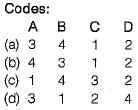
List-I
A. Continuous casting
B. Squeeze casting
C. Shell-mould casting
D. Slush casting
List-ll
1. A variation of sand mould casting
2. Used for making ornamental and decorative objects
3. Also known as strand casting
4. Uses pressure during solidification
45 videos|314 tests |
