CBSE Class 2  >  Class 2 Test  >  Science  >  Test: Uses of Plants- 1 - Class 2 MCQ

Uses of Plants- 1 - Free MCQ Practice Test with solutions, Class 2 Science


MCQ Practice Test & Solutions: Test: Uses of Plants- 1 (10 Questions)

You can prepare effectively for Class 2 Science for Class 2 with this dedicated MCQ Practice Test (available with solutions) on the important topic of "Test: Uses of Plants- 1". These 10 questions have been designed by the experts with the latest curriculum of Class 2 2026, to help you master the concept.

Test Highlights:

  • - Format: Multiple Choice Questions (MCQ)
  • - Duration: 15 minutes
  • - Number of Questions: 10

Sign up on EduRev for free to attempt this test and track your preparation progress.

Test: Uses of Plants- 1 - Question 1

I remain underground and helps in the absorption of water, who am?

Detailed Solution: Question 1

Roots remain underground and help in the absorption of water.

Test: Uses of Plants- 1 - Question 2

The rose and hibiscus plant can be placed in the same group because both of them are _____ .

Detailed Solution: Question 2

Both rose and hibiscus plant are shrubs.

Test: Uses of Plants- 1 - Question 3

Which of the following is an aquatic plant?

Detailed Solution: Question 3

Water lily is an aquatic plant.

Test: Uses of Plants- 1 - Question 4

Which of the following is NOT matched correctly?

Detailed Solution: Question 4

Flower is the reproductive part of plant.

Test: Uses of Plants- 1 - Question 5

Read the given features of a plant and identify it. A. It is a small plant with soft stem. B. Its leaves are used to make medicine. C.  It is used to add flavor to food.

Detailed Solution: Question 5

  • Tulsi is a herb which is a small plant with soft stem and its leaves are used to make medicine.
  • It adds flavor to food.

Test: Uses of Plants- 1 - Question 6

What can we make from plants?

Detailed Solution: Question 6

What can we make from plants?
There are various products that can be made from plants. Some of them include:
Papers:
- Paper is one of the most common products made from plants, specifically from trees.
- The process involves cutting down trees, removing the bark, and then breaking down the wood fibers to create paper pulp.
- The pulp is then processed and dried to form paper sheets.
Textiles and Fibers:
- Plants such as cotton, flax, and hemp are used to produce fibers that can be spun into yarn and woven into fabrics.
- Cotton is especially popular and used in the production of clothing, bedding, and towels.
- Flax is used to make linen, while hemp can be used for various purposes including clothing, bags, and ropes.
Food and Beverages:
- Plants are a primary source of food and beverages for humans.
- Fruits, vegetables, grains, and legumes are all examples of plant-based foods.
- Additionally, plants like tea leaves, coffee beans, and cocoa beans are used to make popular beverages.
Medicines:
- Many medicinal products are derived from plants and their extracts.
- Plants like aloe vera, chamomile, lavender, and Echinacea are used in various natural remedies and herbal medicines.
- Certain plants also serve as the source of important drugs, such as the bark of the willow tree which contains salicylic acid, the precursor to aspirin.
Cosmetics and Personal Care Products:
- Plants are commonly used in the production of cosmetics and personal care products.
- Ingredients like aloe vera, coconut oil, shea butter, and various essential oils are derived from plants and used in skincare, haircare, and body care products.
Building Materials:
- Bamboo, a fast-growing plant, is used as a building material in many parts of the world.
- It is lightweight, durable, and sustainable, making it an eco-friendly alternative to traditional materials.
- Other plants, such as straw and reeds, can also be used in construction for thatching roofs or creating natural insulation.
Renewable Energy Sources:
- Plants like corn, sugarcane, and switchgrass can be used to produce biofuels such as ethanol.
- Biofuels are considered a renewable energy source as they can be produced from plants that can be regrown.
Conclusion:
Plants are incredibly versatile and provide us with a wide range of products. From papers and textiles to food and medicine, plants play a crucial role in our daily lives. Utilizing plant-based resources in various industries helps to promote sustainability and reduce our reliance on non-renewable materials.

Test: Uses of Plants- 1 - Question 7

Plants give us food grains. What are the examples of such grains?

Detailed Solution: Question 7

All of these are food grains.

Test: Uses of Plants- 1 - Question 8

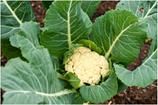
Which part of these plants given below are eaten as food?
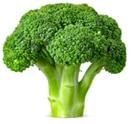
          Broccoli                     Cauliflower

Detailed Solution: Question 8

Flowers of broccoli and cauliflower are eaten as food.

Test: Uses of Plants- 1 - Question 9

Direction: Select the odd one out

Detailed Solution: Question 9

  • Wood, pulses and medicines are obtained from plants.
  • Water is a natural thing.

Test: Uses of Plants- 1 - Question 10

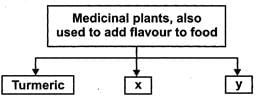
Study the given flowchart and select the option to correctly fill the empty space x and y?.
Detailed Solution: Question 10

Mint and clove the medicinal plants used to add flavour to food.

11 videos|111 docs|24 tests
Information about Test: Uses of Plants- 1 Page
In this test you can find the Exam questions for Test: Uses of Plants- 1 solved & explained in the simplest way possible. Besides giving Questions and answers for Test: Uses of Plants- 1, EduRev gives you an ample number of Online tests for practice
11 videos|111 docs|24 tests
Download as PDF