CBSE Class 4  >  Class 4 Test  >  Science  >  Test: Solids, Liquids & Gases- 1 - Class 4 MCQ

Solids, Liquids & Gases- 1 - Free MCQ Practice Test with solutions,


MCQ Practice Test & Solutions: Test: Solids, Liquids & Gases- 1 (10 Questions)

You can prepare effectively for Class 4 Science for Class 4 with this dedicated MCQ Practice Test (available with solutions) on the important topic of "Test: Solids, Liquids & Gases- 1". These 10 questions have been designed by the experts with the latest curriculum of Class 4 2026, to help you master the concept.

Test Highlights:

  • - Format: Multiple Choice Questions (MCQ)
  • - Duration: 15 minutes
  • - Number of Questions: 10

Sign up on EduRev for free to attempt this test and track your preparation progress.

Test: Solids, Liquids & Gases- 1 - Question 1

Choose the correct option from the following on the basis of the packing of molecules.

Detailed Solution: Question 1
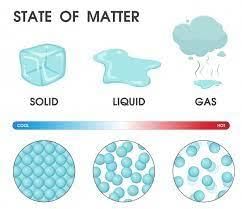
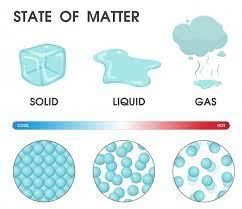
Solid > Liquid > Gas. Solids have the most tightly packed molecules and gases have the least packed molecules.

Test: Solids, Liquids & Gases- 1 - Question 2

When a gas changes into a liquid, it is called _______.

Detailed Solution: Question 2
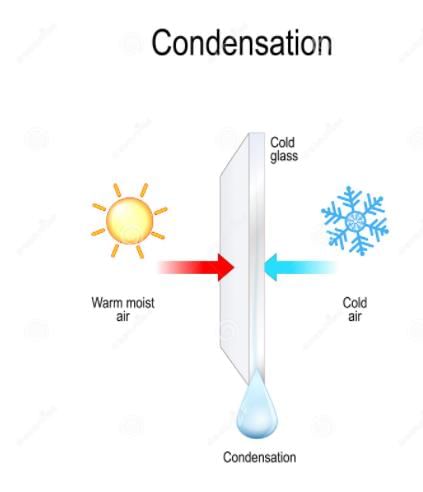
Conversion of gases into liquids is called condensation.

Test: Solids, Liquids & Gases- 1 - Question 3

State whether the following statement is True or False:

Some solids that dissolve in water are called soluble substances.

Detailed Solution: Question 3
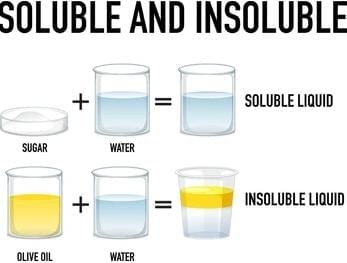
  • When a solid substance dissolves in water, we call it a soluble substance. For example, when you add sugar to water and stir it, the sugar disappears because it dissolves in the water, forming a sugar water solution. So, the statement is True.

  • Salt, sugar, soap, and orange juice are some examples of substances that can dissolve in water.

Test: Solids, Liquids & Gases- 1 - Question 4

Which matter is normally hard?

Detailed Solution: Question 4

In the solid state, the individual particles of a substance are in fixed positions with respect to each other because there is not enough thermal energy to overcome the intermolecular interactions between the particles. As a result, solids have a definite shape and volume. Most solids are hard.

Test: Solids, Liquids & Gases- 1 - Question 5

State whether the following statement is True or False:

The substance that dissolves in a liquid to form a solution is called a solute.

Detailed Solution: Question 5
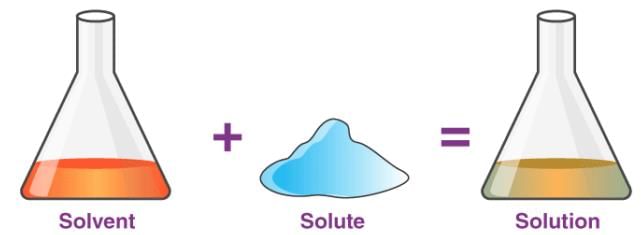
When a substance dissolves in a liquid to make a solution, it is called a solute. For example, when you mix salt in water and it disappears, salt is the solute. This makes the statement TRUE.

Test: Solids, Liquids & Gases- 1 - Question 6

What is the state of matter that takes the shape of its container?

Detailed Solution: Question 6
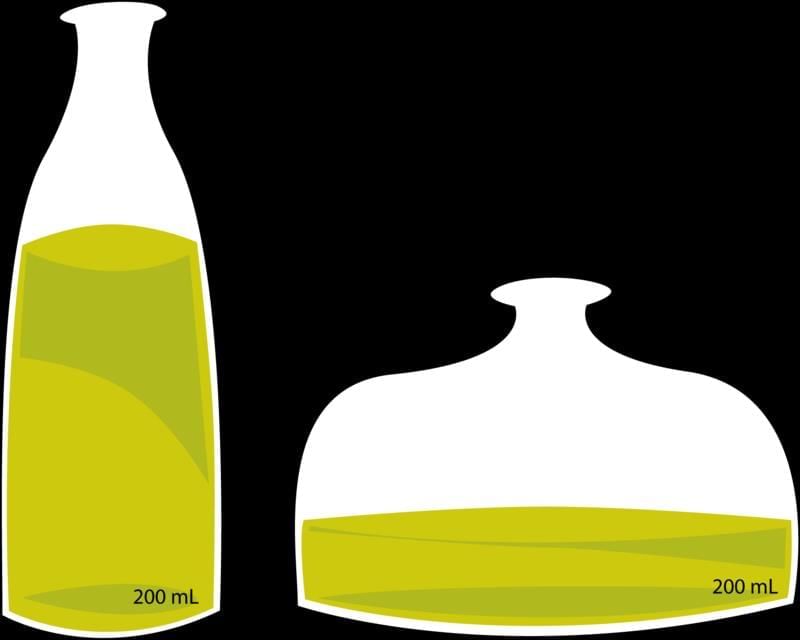
Liquids are cool because they can change their shape to fit into any container they are poured into.

Test: Solids, Liquids & Gases- 1 - Question 7

What method is used to separate a mixture of sand and water?

Detailed Solution: Question 7
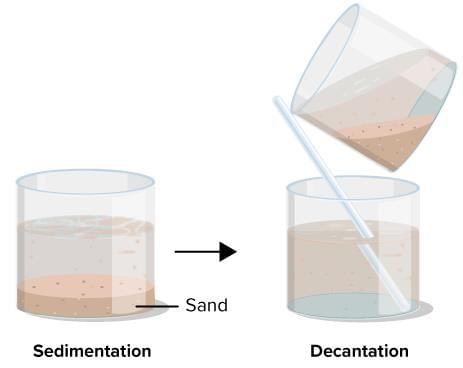
Sedimentation and decantation are used to separate sand from water. Sand settles at the bottom of the glass, and the clear water can be poured off, leaving the sand behind. This method is effective for separating insoluble solids from liquids.

Test: Solids, Liquids & Gases- 1 - Question 8

What changes occur to the molecules of a substance during evaporation?

Detailed Solution: Question 8

During evaporation, the molecules of a substance move further apart as they gain enough energy to escape the liquid state and enter the gas phase. This process involves an increase in kinetic energy and movement of molecules.

Test: Solids, Liquids & Gases- 1 - Question 9

Which state of matter is characterized by the highest rate of diffusion?

Detailed Solution: Question 9

Gases exhibit the highest rate of diffusion because their particles are widely spaced and move freely, allowing them to mix rapidly with other gases. This high mobility contrasts with the slow diffusion in solids and liquids.

Test: Solids, Liquids & Gases- 1 - Question 10

What is the main reason why gases are highly compressible compared to liquids and solids?

Detailed Solution: Question 10

Gases are highly compressible because they have large intermolecular spaces between particles, allowing them to be compressed into a smaller volume. This is due to the negligible forces of attraction between gas particles.

48 videos|193 docs|34 tests
Information about Test: Solids, Liquids & Gases- 1 Page
In this test you can find the Exam questions for Test: Solids, Liquids & Gases- 1 solved & explained in the simplest way possible. Besides giving Questions and answers for Test: Solids, Liquids & Gases- 1, EduRev gives you an ample number of Online tests for practice
48 videos|193 docs|34 tests
Download as PDF