UPSC Exam  >  UPSC Test  >  Old & New NCERTs for IAS Preparation (Must Read)  >  Test: Civilising the “Native”, Educating the Nation - 1 - UPSC MCQ

Civilising the “Native”, Educating Nation - 1 - UPSC Free MCQ Test


MCQ Practice Test & Solutions: Test: Civilising the “Native”, Educating the Nation - 1 (15 Questions)

You can prepare effectively for UPSC Old & New NCERTs for IAS Preparation (Must Read) with this dedicated MCQ Practice Test (available with solutions) on the important topic of "Test: Civilising the “Native”, Educating the Nation - 1". These 15 questions have been designed by the experts with the latest curriculum of UPSC 2026, to help you master the concept.

Test Highlights:

  • - Format: Multiple Choice Questions (MCQ)
  • - Duration: 10 minutes
  • - Number of Questions: 15

Sign up on EduRev for free to attempt this test and track your preparation progress.

Test: Civilising the “Native”, Educating the Nation - 1 - Question 1

How many pathshalas were there in Bengal and Bihar according to William Adam's report?

Detailed Solution: Question 1

In Bengal and Bihar, there were over 1 lakh pathshalas according to William Adam's report. This means there were many pathshalas, more than any of the other options given.

Test: Civilising the “Native”, Educating the Nation - 1 - Question 2

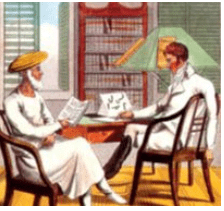
Identify this linguist who arrived in Calcutta in 1783 as a junior judge at the Supreme Court.
Detailed Solution: Question 2

William Jones was a British linguist who arrived at Calcutta, India, in 1783. Initially, he was appointed as a junior judge in the Supreme Court established by the Company in India. Jones had knowledge of Greek, Latin, French, Arabic and Persian.

Test: Civilising the “Native”, Educating the Nation - 1 - Question 3

Where in India a Madrasa was set up in 1781 to promote the study of Arabic, Persian and Islamic Law ?

Detailed Solution: Question 3

madrasa was set up in Calcutta in 1781 to promote the study of ArabicPersian and Islamic law; and the Hindu College was established in Benaras in 1791 to encourage the study of ancient Sanskrit texts that would be useful for the administration of the country.

Test: Civilising the “Native”, Educating the Nation - 1 - Question 4

What was Rabindranath Tagore's main idea behind starting Santiniketan school?

Detailed Solution: Question 4

  • Rabindranath Tagore started Santiniketan school to make a place where children could be happy and free to learn and explore.
  • He believed that children should enjoy learning and be able to think and create freely.
  • This means that at Santiniketan, children could learn in a joyful and imaginative way, surrounded by nature and creativity.

Test: Civilising the “Native”, Educating the Nation - 1 - Question 5

What did Mahatma Gandhi believe about English education?

Detailed Solution: Question 5

Mahatma Gandhi thought that English education made Indians feel inferior and enslaved them. He believed it took away their pride in their own culture. He wanted education that would help Indians feel dignified and respected.

Test: Civilising the “Native”, Educating the Nation - 1 - Question 6

What did Thomas Babington Macaulay suggest should be the focus of education in India?

Detailed Solution: Question 6

  • Thomas Babington Macaulay believed that Indians should be made familiar with the scientific and technical advances that the West had made, rather than with the poetry and sacred literature of the Orient.
  • This would help them understand the developments in Western science and philosophy, which could change their tastes, values, and culture to be more aligned with Western advancements.

Test: Civilising the “Native”, Educating the Nation - 1 - Question 7

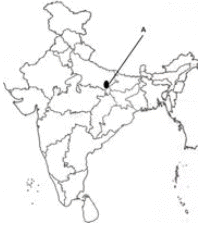
From the outline map of India, identify the place where the Hindu College was established in 1791 to promote the study of ancient Sanskrit texts.
Detailed Solution: Question 7

The Hindu College was established at Benares (Varanasi or Kashi) in 1791 to encourage the study of ancient Sanskrit texts that were considered useful for administration.

Test: Civilising the “Native”, Educating the Nation - 1 - Question 8

Who started the journal Asiatick Researches?

Detailed Solution: Question 8

In January 1784, Sir William Jones sent a circular letter to select British residents in Calcutta. His aim was to establish a society focused on Asiatic studies.

Key points about this initiative:

  • Jones aimed to gather individuals interested in ancient Indian culture.
  • He collaborated with notable figures like Henry Thomas Colebrooke and Nathaniel Halhed.
  • Together, they founded the Asiatic Society of Bengal.
  • This society led to the creation of the journal Asiatick Researches.

Jones and his contemporaries respected both Indian and Western cultures, believing that understanding ancient texts was crucial for appreciating India's rich heritage.

Test: Civilising the “Native”, Educating the Nation - 1 - Question 9

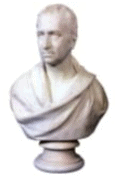
From the image given below, name this English scholar who learnt Sanskrit and ancient sacred writings of Hinduism along with William Jones.
Detailed Solution: Question 9

Henry Thomas Colebrookewas a Sanskrit scholar and orientalist. He held administrative, legal and academic posts whilst in India during which time he learnt Sanskrit. He was thus able to translate “Digest of Hindu Laws”, unfinished by Sir William Jones. He translated the two treatises, the Mitacshara of Vijnaneshwara and the Dayabhaga of Jimutavahana  under the title Law of Inheritance. During his residence at Calcutta he wrote his Sanskrit Grammar (1805), some papers on the religious ceremonies of the Hindus, and his Essay on the Vedas (1805).

Test: Civilising the “Native”, Educating the Nation - 1 - Question 10

William Jones was an expert in ____.

Detailed Solution: Question 10

William Jones was very good at understanding and working with laws. He studied them carefully to help make fair decisions.

Test: Civilising the “Native”, Educating the Nation - 1 - Question 11

Three Englishmen were busy discovering the ancient Indian heritage and mastering Indian languages. One was Willam Jones and another Henry Thomas Colebrooke. Name the third person

Detailed Solution: Question 11

It was necessary to study Indian history, philosophy, and law. William Jones, an expert in law and a linguist, took this task. He began to study ancient Indian texts on law, philosophy, religion, morality, arithmetic, medicine and the other sciences.

Englishmen like Henry Thomas Colebrooke and Nathaniel Halhed were also busy discovering the ancient Indian heritage, mastering Indian languages and translating Sanskrit and Persian works into English.

Test: Civilising the “Native”, Educating the Nation - 1 - Question 12

What does the Arabic word Madrasa refer to?

Detailed Solution: Question 12

It is the Arabic word for any type of educational institution, secular or religious (of any religion), whether for elementary instruction or higher learning. The word is variously transliterated madrasah, medresa, madrassa, madraza, medrese, etc.

Test: Civilising the “Native”, Educating the Nation - 1 - Question 13

Name the scholar who studied Sanskrit and translated important works such as Shakuntala and Manusmriti into English.

Detailed Solution: Question 13

William Jones studied Sanskrit and translated important Indian texts like Shakuntala and Manusmriti into English, helping introduce ancient Indian literature to the West.

Test: Civilising the “Native”, Educating the Nation - 1 - Question 14

Rabindranath Tagore established Santiniketan as an abode of _____.

Detailed Solution: Question 14

Rabindranath Tagore established Santiniketan as an abode of peace because he wanted a place where children could be happy, free, and creative, living in harmony with nature.

Test: Civilising the “Native”, Educating the Nation - 1 - Question 15

Which of the following did William Adam observe about village pathshalas in Bengal and Bihar during the 1830s?

Detailed Solution: Question 15

William Adam found that village pathshalas functioned in a flexible manner. Classes were often held under banyan trees, in temples, shops, or the guru’s home, without fixed timetables, printed books, or annual examinations.

3 videos|703 docs|515 tests
Information about Test: Civilising the “Native”, Educating the Nation - 1 Page
In this test you can find the Exam questions for Test: Civilising the “Native”, Educating the Nation - 1 solved & explained in the simplest way possible. Besides giving Questions and answers for Test: Civilising the “Native”, Educating the Nation - 1, EduRev gives you an ample number of Online tests for practice
Download as PDF