NEET Exam  >  NEET Test  >  Topic-wise MCQ Tests  >  Test: The Root (NCERT) - NEET MCQ

The Root (NCERT) - Free MCQ Practice Test with solutions, NEET


MCQ Practice Test & Solutions: Test: The Root (NCERT) (10 Questions)

You can prepare effectively for NEET Topic-wise MCQ Tests for NEET with this dedicated MCQ Practice Test (available with solutions) on the important topic of "Test: The Root (NCERT)". These 10 questions have been designed by the experts with the latest curriculum of NEET 2026, to help you master the concept.

Test Highlights:

  • - Format: Multiple Choice Questions (MCQ)
  • - Duration: 10 minutes
  • - Number of Questions: 10

Sign up on EduRev for free to attempt this test and track your preparation progress.

Test: The Root (NCERT) - Question 1

The given figure (A, B, and C) shows different types of roots. Identify the root which is seen in wheat plant and originate from the base of the stem?
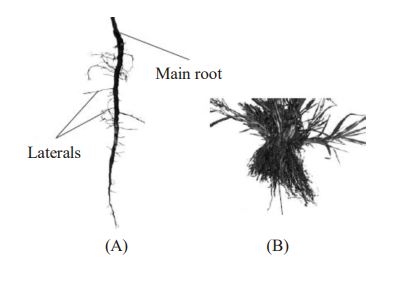
RootRoot

Detailed Solution: Question 1

Line from NCERT : In monocotyledonous plants, the primary root is short lived and is replaced by a large number of roots. These roots originate from the base of the stem and constitute the fibrous root system, as seen in the wheat plant

Test: The Root (NCERT) - Question 2

Which of the following is characteristic of the tap root system?

Detailed Solution: Question 2

The tap root system is characterized by the presence of a primary root that grows inside the soil and bears lateral roots of various orders. The primary root and its branches form the tap root system, as seen in dicotyledonous plants like mustard.

Test: The Root (NCERT) - Question 3

Which region of the root is responsible for the growth in length?

Detailed Solution: Question 3

The region of elongation is responsible for the growth of the root in length, as cells in this region undergo rapid enlargement and elongation.

Test: The Root (NCERT) - Question 4

Which of the following plants is most likely to exhibit adventitious roots?

Detailed Solution: Question 4

Correct answer: C.

Adventitious roots are roots that develop from any plant part other than the radicle, for example from stems, leaves or nodes.

They occur in different forms: aerial adventitious roots (from stems or branches), prop roots (for support) and fibrous adventitious roots (from stem bases or nodes).

Monstera produces prominent aerial adventitious roots from its climbing stems; these roots help the plant attach to surfaces and absorb moisture. This makes Monstera the clearest example of a plant showing adventitious roots among the given options.

By contrast, Mustard, Pea and Sunflower typically develop a taproot system derived from the radicle and do not characteristically show prominent adventitious roots.

Therefore the correct option is C.

Test: The Root (NCERT) - Question 5

From which region of the root do the root hairs originate?

Detailed Solution: Question 5

Root hairs originate from the region of maturation. These thread-like structures help in the absorption of water and minerals from the soil.

Test: The Root (NCERT) - Question 6

In a longitudinal section of a root, starting from the tip upward, the four zones occur in the following order:

Detailed Solution: Question 6

In a longitudinal section of the root, the zones occur in the following order:
Root cap
Region of cell division (meristematic activity)
Region of cell enlargement (elongation)
Region of cell maturation (differentiation)

Test: The Root (NCERT) - Question 7

What is the primary function of the root system in plants?

Detailed Solution: Question 7

The root system primarily functions to absorb water and minerals from the soil, anchor the plant parts, store reserve food materials, and synthesize plant growth regulators.

Test: The Root (NCERT) - Question 8

In which type of plants is the fibrous root system commonly found?

Detailed Solution: Question 8

The fibrous root system is typical of monocotyledonous plants, where the primary root is short-lived and replaced by numerous roots originating from the base of the stem, as seen in plants like wheat.

Test: The Root (NCERT) - Question 9

Which statement is incorrect about the primary root in monocotyledonous plants?

Detailed Solution: Question 9

In monocotyledonous plants, the primary root is short-lived and is replaced by a fibrous root system. It does not constitute the tap root system, which is found in dicotyledonous plants.

Test: The Root (NCERT) - Question 10

What is the function of the root cap?

Detailed Solution: Question 10

The root cap protects the tender apex of the root as it makes its way through the soil, ensuring that the root grows without damage.

6 docs|803 tests
Information about Test: The Root (NCERT) Page
In this test you can find the Exam questions for Test: The Root (NCERT) solved & explained in the simplest way possible. Besides giving Questions and answers for Test: The Root (NCERT), EduRev gives you an ample number of Online tests for practice
Download as PDF