NEET Exam  >  NEET Test  >  NCERT Based Tests  >  Test: Bond Parameters (NCERT) - NEET MCQ

Bond Parameters (NCERT) - Free MCQ Practice Test with solutions, NEET NCERT


MCQ Practice Test & Solutions: Test: Bond Parameters (NCERT) (15 Questions)

You can prepare effectively for NEET NCERT Based Tests for NEET with this dedicated MCQ Practice Test (available with solutions) on the important topic of "Test: Bond Parameters (NCERT)". These 15 questions have been designed by the experts with the latest curriculum of NEET 2026, to help you master the concept.

Test Highlights:

  • - Format: Multiple Choice Questions (MCQ)
  • - Duration: 15 minutes
  • - Number of Questions: 15

Sign up on EduRev for free to attempt this test and track your preparation progress.

Test: Bond Parameters (NCERT) - Question 1

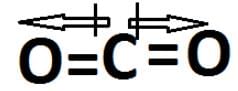
The correct order of decreasing bond lengths of CO, COand C032- is

Detailed Solution: Question 1
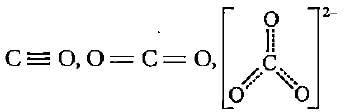
As the bond order increases, bond length
decreases.

Test: Bond Parameters (NCERT) - Question 2

The correct sequence of bond length in single bond,double bond and triple bond of C is

Detailed Solution: Question 2
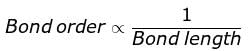
Test: Bond Parameters (NCERT) - Question 3

Which of the following willbe the strongest bond?

Detailed Solution: Question 3

Bond strength ∝ Difference in electronegativity
of atoms

Test: Bond Parameters (NCERT) - Question 4

Arrange the following in increasing order of covalent character - NaCl, MgCl2, AICI3

Detailed Solution: Question 4

Cation size is decreasing in the order:
Ne+ > Mg2+ > Al3+

Al3+ has maximum polarisation effect and Na+
has minimum polarisation effect.

The covalent nature is in the order : AlCl3 > MgCl2 > NaCl

Test: Bond Parameters (NCERT) - Question 5

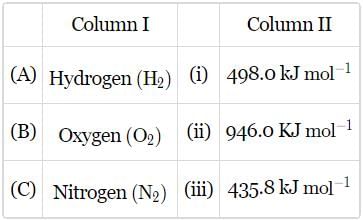
Match the bond enthalpies given in column II with the molecules given in column I and mark the appropriate choice.
Detailed Solution: Question 5

The order of bond enthalpies of the bonds is
given as. Bond order ∝ Bond enthalpy
Hence, single bond enthalpy < double bond enthalpy < triple bond enthalpy

H − H < O = O < N ≡ N

Test: Bond Parameters (NCERT) - Question 6

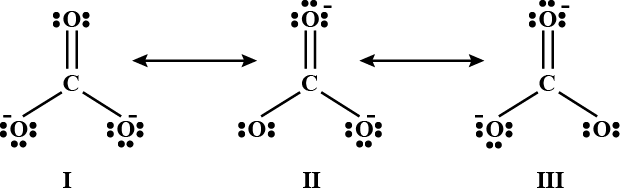
The given structures I, II and III of carbonate ion represent
Detailed Solution: Question 6

The structures represent canonical or resonating structures of carbonate ion.

Test: Bond Parameters (NCERT) - Question 7

Which of the following molecules does not show any resonating structures?

Detailed Solution: Question 7

NH3 does not show any resonating structure due to the absence of double bond.

Test: Bond Parameters (NCERT) - Question 8

The canonical or resonating structures of a molecule required to describe the structure of a molecule follow which of the following rules?

Detailed Solution: Question 8

Canonical structures differonly in the position
of electrons not in number of paired and unpaired electrons.

Test: Bond Parameters (NCERT) - Question 9

Arrange the following in order of increasing dipole moment: H2O, H2S,BF3

Detailed Solution: Question 9
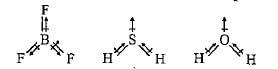
In BF3, dipole moment is zero due to its
symmetrical structure. Summations of all dipoles is zero.

In H2S and H2O due to unsymmetrical structure net +ve dipole is there. H2O has a higher dipole due to the higher electronegativity of oxygen than sulphur.

Test: Bond Parameters (NCERT) - Question 10

Which of the following is non-polar?

Detailed Solution: Question 10

Since the dipoles are in opposite directions, the net dipole moment is zero.

Test: Bond Parameters (NCERT) - Question 11

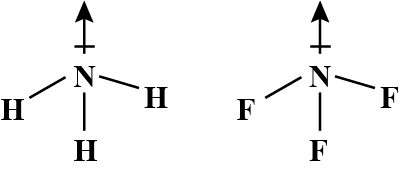
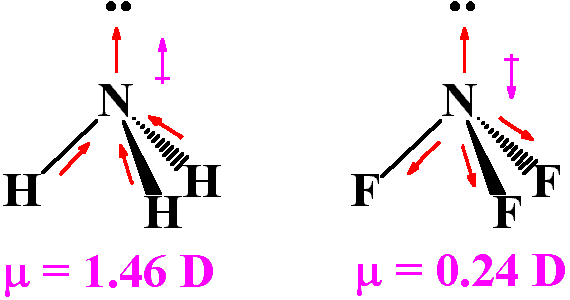
Although F is more electronegative than H, the resultant dipole moment of NHis much more than that of NF3. It can be explained as
Detailed Solution: Question 11
Test: Bond Parameters (NCERT) - Question 12

In a diatomic molecule the bond distance is 1X10⁻⁸ cm. Its dipole moment is 1.2 D. What is the fractional electronic charge on each atom?

Detailed Solution: Question 12
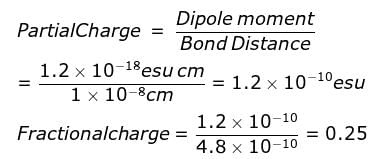
(4.8 X10⁻¹⁰ is a theoretical value of μ..)

Test: Bond Parameters (NCERT) - Question 13

Which of the following are arranged in the decreasing order of dipole moment?

Detailed Solution: Question 13

The values of dipole moments of methyl halides:

Test: Bond Parameters (NCERT) - Question 14

In water molecule, the two O—H bonds are oriented at an angle of 104.5°. In BF3, the tliree B—F bonds are oriented at an angle of 120°. In BeF2, the two Be—F bonds are oriented at an angle of 180°. Which of the following will have highest dipole moment?

Detailed Solution: Question 14
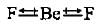
BeF2 : μ = 0

Test: Bond Parameters (NCERT) - Question 15

What is the correct dipole moment of NH3 and NFrespectively?

677 tests
Information about Test: Bond Parameters (NCERT) Page
In this test you can find the Exam questions for Test: Bond Parameters (NCERT) solved & explained in the simplest way possible. Besides giving Questions and answers for Test: Bond Parameters (NCERT), EduRev gives you an ample number of Online tests for practice
Download as PDF