CBSE Class 4  >  Class 4 Test  >  GK Olympiad  >  Olympiad Test Level 1: Our Body and Health- 2 - Class 4 MCQ

Olympiad Test Level 1: Our Body and Health- 2 Class 4 GK MCQs & solutions


MCQ Practice Test & Solutions: Olympiad Test Level 1: Our Body and Health- 2 (15 Questions)

You can prepare effectively for Class 4 GK Olympiad for Class 4 with this dedicated MCQ Practice Test (available with solutions) on the important topic of "Olympiad Test Level 1: Our Body and Health- 2". These 15 questions have been designed by the experts with the latest curriculum of Class 4 2026, to help you master the concept.

Test Highlights:

  • - Format: Multiple Choice Questions (MCQ)
  • - Duration: 30 minutes
  • - Number of Questions: 15

Sign up on EduRev for free to attempt this test and track your preparation progress.

Olympiad Test Level 1: Our Body and Health- 2 - Question 1

Which of the following equipment is used to measure blood pressure?

Detailed Solution: Question 1

A sphygmomanometer is a device used to measure blood pressure. It has a cuff that wraps around your arm and a gauge that tells how much pressure your blood is applying to your arteries.

  • A stethoscope is used by doctors to listen to heartbeats and breathing sounds, not for measuring blood pressure.
  • A nebulizer helps people breathe better by turning medicine into a mist.
  • An incubator keeps babies who are born early warm and safe.

Olympiad Test Level 1: Our Body and Health- 2 - Question 2

The nutrients that protect our body from various diseases and keep us fit and healthy are_________ .

Detailed Solution: Question 2

Vitamins and minerals help our body stay healthy and protect it from diseases. They help us fight illnesses and keep our organs working properly. Carbohydrates and fats give us energy, and proteins help us grow and repair our body, but it's vitamins and minerals that mainly protect us from diseases and keep us strong.

Olympiad Test Level 1: Our Body and Health- 2 - Question 3

The nerves that carry the messages from the sense organs to the spinal cord or brain are :

Detailed Solution: Question 3

  • Sensory nerves are responsible for carrying messages from the sense organs (like the eyes, ears, skin, etc.) to the spinal cord or brain. These nerves help the brain process information from the senses.
  • Motor nerves carry messages from the brain or spinal cord to the muscles and glands to trigger actions or responses.

Therefore, sensory nerves are the ones that carry messages from the sense organs to the spinal cord or brain.

Olympiad Test Level 1: Our Body and Health- 2 - Question 4

Which of the following food components are needed in small quantities?

Detailed Solution: Question 4

  • Vitamins are required by the body in small quantities, but they are essential for various bodily functions, such as boosting the immune system, supporting metabolism, and promoting overall health.
  • Proteins, fats, and carbohydrates are all macronutrients that are needed in larger quantities to provide energy, support growth, and maintain body functions.

Therefore, vitamins are the food component that is needed in small quantities.

Olympiad Test Level 1: Our Body and Health- 2 - Question 5

Identify the sense organ which is used as sense of hearing.

Detailed Solution: Question 5

Ears are the organs that help us in hearing different sounds in the surroundings.

Olympiad Test Level 1: Our Body and Health- 2 - Question 6

Which of these are used for movements in body?

Detailed Solution: Question 6

Muscles are the primary structures responsible for movement in the body. When muscles contract, they pull on bones, causing movement at the joints.

  • Joints are the connections between bones, allowing movement, but they themselves do not produce movement.
  • Ribs are bones that protect organs, but they do not directly facilitate movement.
  • Ligaments connect bones to other bones and provide stability, but they do not generate movement.

Therefore, muscles are the correct answer.

Olympiad Test Level 1: Our Body and Health- 2 - Question 7

Who amongst the following treats kidney diseases?

Detailed Solution: Question 7

Cardiologist treats cardiovascular system, nephrologist treats kidney diseases, dermatologist treats skin diseases and psychiatrist treats mental health conditions.

Olympiad Test Level 1: Our Body and Health- 2 - Question 8

Out of these, identify an excretory organ.

Detailed Solution: Question 8
The kidney is an excretory organ. It helps in filtering waste products from the blood and excreting them as urine. It also helps regulate the balance of water, salts, and other important substances in the body.

  • Hair: Part of the integumentary system, not an excretory organ.
  • Eyes: Part of the sensory system, not involved in excretion.
  • Nose: Involved in breathing and smelling, but not an excretory organ.

Olympiad Test Level 1: Our Body and Health- 2 - Question 9

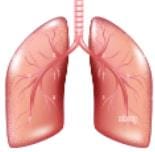
Name the organ given in the figure.

Detailed Solution: Question 9

The image shows the lungs, which are the primary organs of the respiratory system responsible for gas exchange, allowing oxygen to enter the bloodstream and carbon dioxide to be expelled.

Olympiad Test Level 1: Our Body and Health- 2 - Question 10

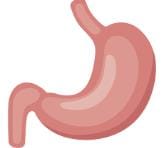
Which part of the digestive system is shown in the figure below?

Detailed Solution: Question 10

The organ shown in the picture is Stomach which helps in the digestion of food.

Olympiad Test Level 1: Our Body and Health- 2 - Question 11

Which of the following helps in the formation of hair and nails?

Detailed Solution: Question 11

Formation of Hair and Nails: Hair and nails are formed through a complex process involving various nutrients. The following points explain how proteins help in the formation of hair and nails:
Proteins: Proteins are essential for the formation of hair and nails. Hair and nails are made up of a protein called keratin. Proteins help in the growth, repair, and maintenance of body tissues, including hair and nails.

Olympiad Test Level 1: Our Body and Health- 2 - Question 12

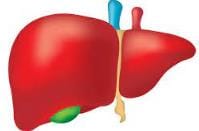
Identify the gland given in the figure.
Detailed Solution: Question 12

The gland shown is liver and it is part of the digestive system.

Olympiad Test Level 1: Our Body and Health- 2 - Question 13

Which of the following is the respiratory system’s mechanism for getting rid of irritants?

Detailed Solution: Question 13

Both coughing and sneezing are mechanisms used by the respiratory system to get rid of irritants such as dust, smoke, or other particles.

  • Coughing helps clear the airways in the lungs and throat.
  • Sneezing helps expel irritants from the nose and upper respiratory tract.

Both actions are the body’s natural ways to protect itself from harmful substances.

Olympiad Test Level 1: Our Body and Health- 2 - Question 14

___ focuses on the organs involved in breathing.

Detailed Solution: Question 14

Neurologist treats conditions of nerves and spine, pulmonologist treats problems of breathing organs, psychiatrist treats mental health and nephrologists treats conditions of kidney.

Olympiad Test Level 1: Our Body and Health- 2 - Question 15

Which of the following is not an external body organ?

Detailed Solution: Question 15

The lungs are inside your body, in your chest, and help you breathe. They are not seen from the outside, so they are internal organs. The eyes, tongue, and nose, on the other hand, are external organs because they are outside the body and can be seen.

18 videos|29 docs|43 tests
Information about Olympiad Test Level 1: Our Body and Health- 2 Page
In this test you can find the Exam questions for Olympiad Test Level 1: Our Body and Health- 2 solved & explained in the simplest way possible. Besides giving Questions and answers for Olympiad Test Level 1: Our Body and Health- 2, EduRev gives you an ample number of Online tests for practice
18 videos|29 docs|43 tests
Download as PDF