Test Level 2: Blood Relations - CAT MCQ
15 Questions MCQ Test - Test Level 2: Blood Relations

Directions: Read the following statements carefully and answer the given question.
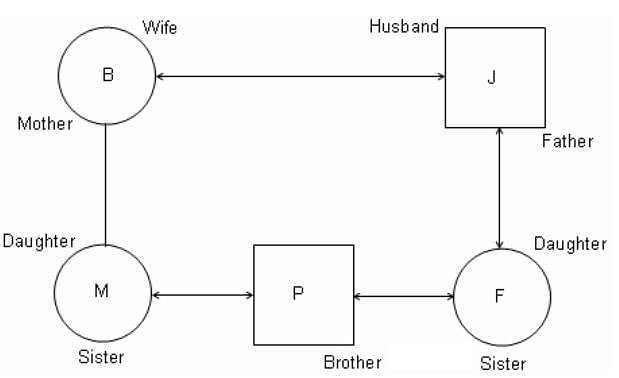
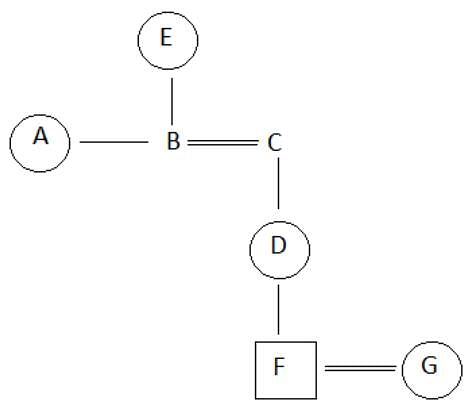
I. J is the father of F, but F is not the son of J.
II. M is the daughter of B and sister of P.
III. P is the brother of F.
Q. Which of the following statements is not true?
II. M is the daughter of B and sister of P.
III. P is the brother of F.
Directions: Read the following statements carefully and answer the given question.
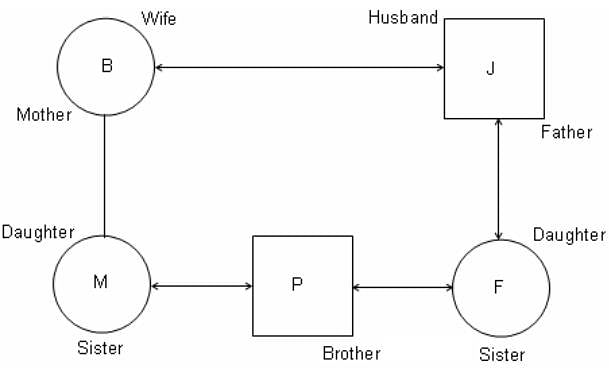
I. J is the father of F, but F is not the son of J.
II. M is the daughter of B and sister of P.
III. P is the brother of F.
Q. Which of the following statements is/are true?
II. M is the daughter of B and sister of P.
III. P is the brother of F.
| 1 Crore+ students have signed up on EduRev. Have you? Download the App |
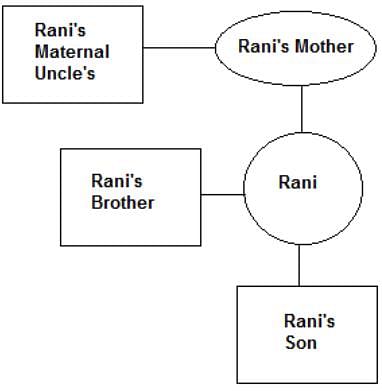
Rani was going with a boy and her friend. Her friend asked Rani about the boy. She said, "My maternal uncle and the uncle of the boy's maternal uncle are the same". How is Rani and that boy related?
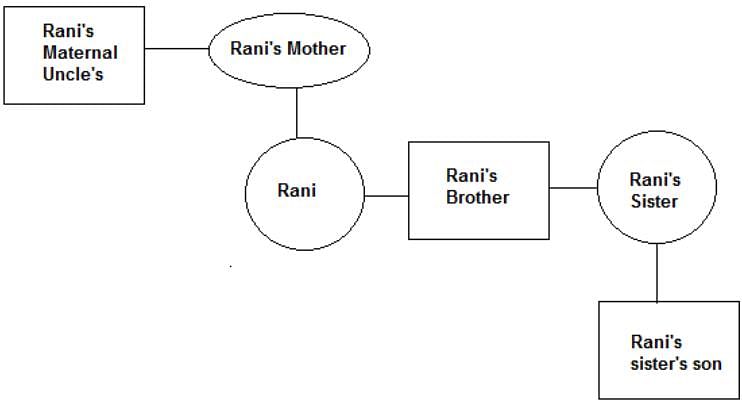
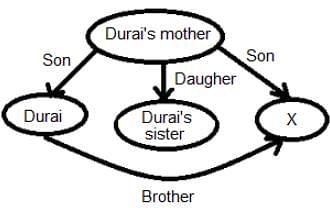
Durai said to Natraj, "The man who is playing football is the younger of the two brothers of the daughter of my father's wife." How is the man playing football related to Durai?
Directions: Read the following information carefully and answer the question given below.
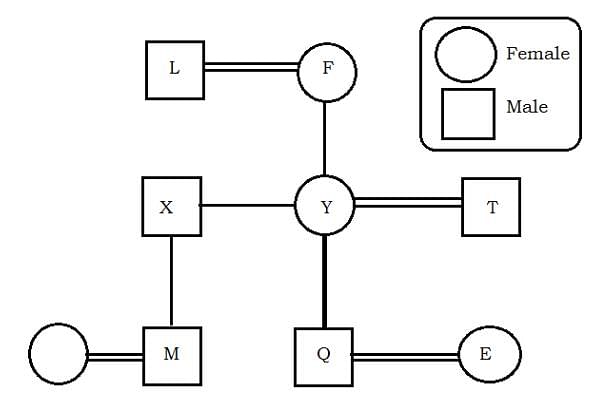
In a family of nine, X and Y are brother and sister and are the only children of their parents. Q is the son of the only daughter of F. L is the grandfather of M. X is the father-in-law of M's wife. E is the daughter-in-law of T, who is the son-in-law of L. F is the wife of L.
Q. How is T related to X?
Directions: Read the following information carefully and answer the question given below.
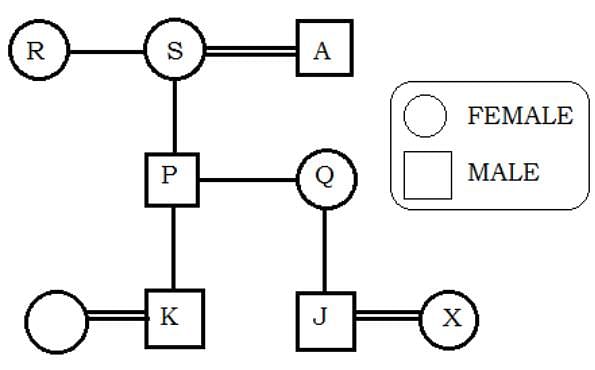
In a family of nine, K is the son of the only son of S. R and S are sisters. Q is the daughter of the only sister of R. J is the nephew of P, who is the only son of A. X is the daughter-in-law of Q. P is the father-in-law of K's wife. A and S are married.
Q. How is J related to X?
Directions: Read the information given below to answer the question.
Rani and Shreshtha are a married couple having two daughters, Medha and Deepti. Deepti is married to Anurag, who is the son of Garima and Tarun. Nidhi is the daughter of Anurag. Komal, who is Anurag's sister, is married to Harshit and has two sons, Aman and Prem. Prem is the grandson of Garima and Tarun.
Q. What is the relation between Aman and Nidhi?
Directions: Read the following information carefully and answer the question that follows.
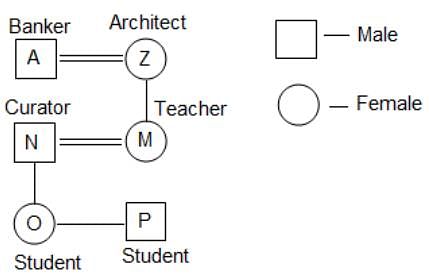
A, Z, N, M, O and P are members of a family. There are two married couples. N is a curator and the father of O, P is the son of the daughter of A, who is a banker. O is the granddaughter of Z, who is an architect. There are two unmarried students in the family. There is one teacher in the family and banker is her father.
Q. Who is the husband of M?
Directions: Read the following information carefully and answer the question that follows.
A, B, C, D, E and F are members of a family. E is the sister-in-law of the Doctor, F is the granddaughter of the Manager's wife. C is the son of the Nurse. D is married to the Homemaker and is the father of F. C is the paternal uncle of F. One of the unmarried male members' siblings is an Engineer. B is not the father of D. The Student is not married.
Q. What is the profession of D?
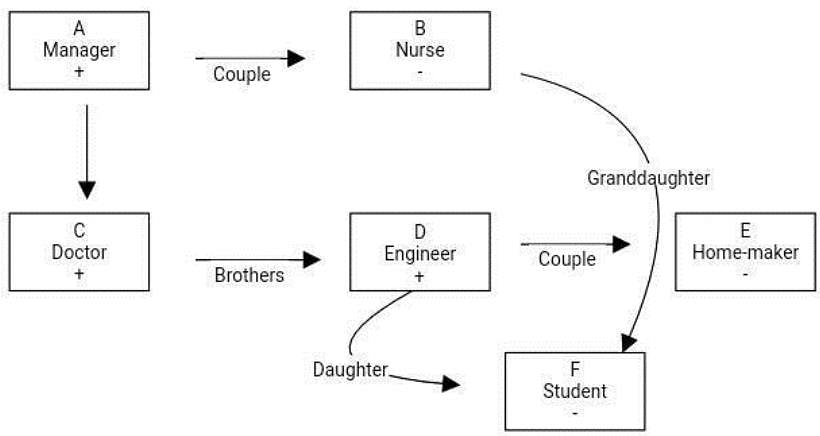
Directions: Read the following information carefully and answer the question that follows.
A, B, C, D, E and F are members of a family. E is the sister-in-law of the Doctor, F is the granddaughter of the Manager's wife. C is the son of the Nurse. D is married to the Homemaker and is the father of F. C is the paternal uncle of F. One of the unmarried male members' siblings is an Engineer. B is not the father of D. The Student is not married.
Q. What is the profession of A?
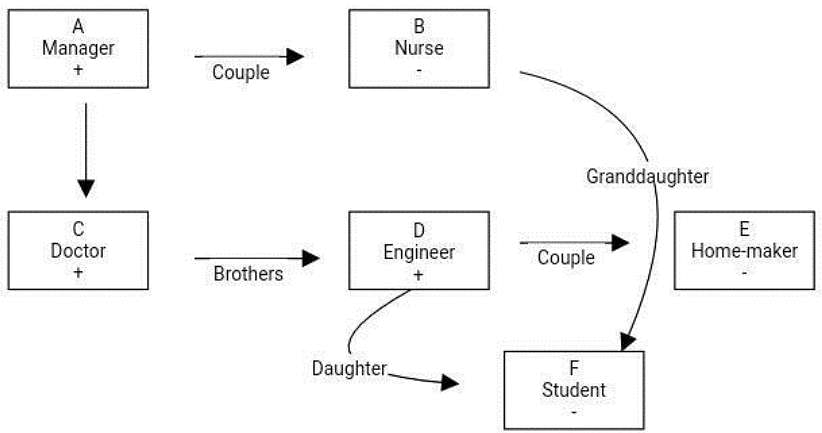
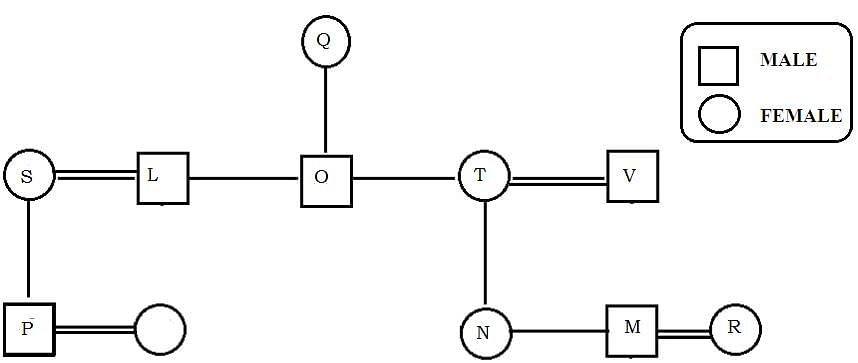
Directions: Read the following information and answer the question given below.
In a family of eleven, M is the son of O's mothers's daughter. Q is the mother of L and T. L and O are brothers. N is the daughter of T, who is the wife of V. P is the son of S, who is the daughter-in-law of Q. L is the father-in-law of P's wife. R is the daughter-in-law of V.
Q. Who is M's mother?
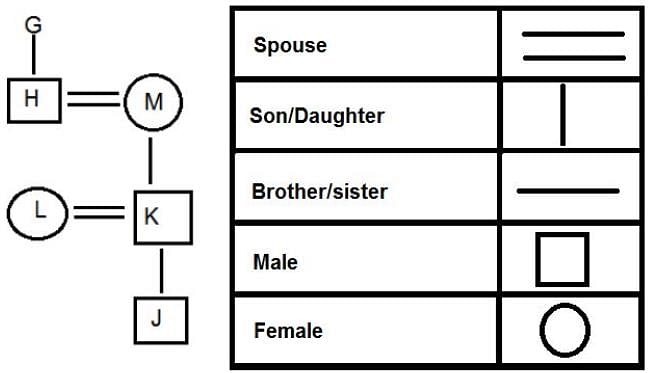
Directions: In the following question, the symbols #, @, $, *, &, %, = and ! are used with the following meanings as illustrated below. Study the following information and answer the given question:
A # B - A is brother of B.
A @ B - B is the child of A.
A $ B - B is daughter-in-law of A.
A * B - B is elder than A.
A & B- B is son of A.
A % B- A is the wife of B.
A = B - A is husband of B.
A ! B - A is brother-in-law of B.
Q. If the expression G @ H = M $ L % K & J holds true, then how is M related to J?
Directions: In this problem, the symbols ?, #, $, *, &, ^, % and @ are used with the meanings as illustrated below. Study the given information and answer the following question:
P ? Q → 'P is the mother of Q.'
P # Q → 'P is the child of Q.'
P $ Q → 'Q is the sibling of P.'
P * Q → 'Q is younger than P.'
P & Q → 'Q is the daughter of P.'
P ^ Q → 'P is the husband of Q.'
P % Q → 'P is the grandparent of Q.'
P @ Q → 'P is the sister-in-law of Q.'
Q. If E ? B * A @ C & D ? F ^ G, A $ B and the elder child of E is married, then who among the following is the granddaughter-in-law of C?
Directions: Read the following information carefully and answer the question that follows.
In a village of Bastar district in Madhya Pradesh, only two types of people live who belong to a tribal class. The first type is known as class A, while the other is known as class B. In that village, there is no other type of person except these two. The activities of both types of people are governed by perfectly patterned norms of social behaviour. Each person of the tribe has to obey the norms. They are rigid about this.
As far as marriage is concerned, the following norms are to be followed:
(A) The people of class A cannot marry any other member of their own class, though they can marry members of class B.
(B) After being married, each male member ceases to be member of that class in which he was born, but automatically he becomes the member of the other class to which his wife belongs.
(C) As far as females are concerned, they remain the members of their own class after being married.
(D) On its birth, the child automatically becomes the member of its mother's class.
(E) When any male member becomes widower or divorcee, then he again belongs to the group in which he was born.
(F) Nobody can marry more than one person according to social laws.
Q. A boy who was born in class B (boy and his wife both can have married and unmarried brothers) can have
Directions: Read the following information carefully and answer the question that follows.
In a village of Bastar district in Madhya Pradesh, only two types of people live who belong to a tribal class. The first type is known as class A, while the other is known as class B. In that village, there is no other type of person except these two. The activities of both types of people are governed by perfectly patterned norms of social behaviour. Each person of the tribe has to obey the norms. They are rigid about this.
As far as marriage is concerned, the following norms are to be followed:
(A) The people of class A cannot marry any other member of their own class, though they can marry members of class B.
(B) After being married, each male member ceases to be member of that class in which he was born, but automatically he becomes the member of the other class to which his wife belongs.
(C) As far as females are concerned, they remain the members of their own class after being married.
(D) On its birth, the child automatically becomes the member of its mother's class.
(E) When any male member becomes widower or divorcee, then he again belongs to the group in which he was born.
(F) Nobody can marry more than one person according to social laws.
Any female of class B can have
(P) grandfather (father's father) born in class B
(Q) grandmother (father's mother) born in class B
Top Courses for CAT



Important Questions for Test Level 2: Blood Relations
Test Level 2: Blood Relations MCQs with Answers
Online Tests for Test Level 2: Blood Relations
|
© EduRev
|
Education Revolution
|


|