Test Level 2: Data Sufficiency - 1 - CAT MCQ
10 Questions MCQ Test - Test Level 2: Data Sufficiency - 1

Directions: This problem consists of a question followed by two statements numbered I and II given below it. Read the statements carefully and decide which of them is/are sufficient/necessary to answer the question.
Mark your answer as
a. if the data in statement I alone is sufficient to answer the question, while the data in statement II alone is not sufficient to answer the question
b. if the data in statement II alone is sufficient to answer the question, while the data in statement I alone is not sufficient to answer the question
c. if the data in either of the statements alone is sufficient to answer the question
d. if the data in both statements I and II together is not sufficient to answer the question
e. if the data in both statements I and II together is necessary to answer the question
Q. How many people are in Amit's family, if the number of people in his family is not less than five?
I. Amit has two sisters and each sister has one brother. Amit and his sisters are un-married.
II. There are two mothers and two fathers in the family.
a. if the data in statement I alone is sufficient to answer the question, while the data in statement II alone is not sufficient to answer the question
b. if the data in statement II alone is sufficient to answer the question, while the data in statement I alone is not sufficient to answer the question
c. if the data in either of the statements alone is sufficient to answer the question
d. if the data in both statements I and II together is not sufficient to answer the question
e. if the data in both statements I and II together is necessary to answer the question
II. There are two mothers and two fathers in the family.
Directions: This problem consists of a question followed by two statements numbered I and II given below it. Read the statements carefully and decide which of them is/are sufficient/necessary to answer the question.
Mark your answer as
a. if the data in statement I alone is sufficient to answer the question, while the data in statement II alone is not sufficient to answer the question
b. if the data in statement II alone is sufficient to answer the question, while the data in statement I alone is not sufficient to answer the question
c. if the data in either of the statements alone is sufficient to answer the question
d. if the data in both statements I and II together is not sufficient to answer the question
e. if the data in both statements I and II together is necessary to answer the question
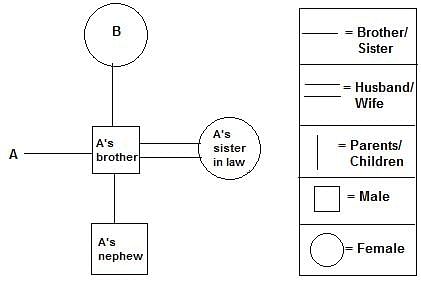
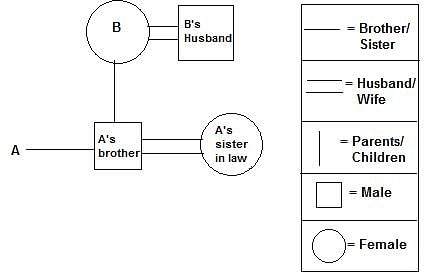
Q. How to B related to A?
I. A's only brother's wife's only son's Paternal grandmother is B.
II. B is the wife of A's only brother's wife's father-in-law.
a. if the data in statement I alone is sufficient to answer the question, while the data in statement II alone is not sufficient to answer the question
b. if the data in statement II alone is sufficient to answer the question, while the data in statement I alone is not sufficient to answer the question
c. if the data in either of the statements alone is sufficient to answer the question
d. if the data in both statements I and II together is not sufficient to answer the question
e. if the data in both statements I and II together is necessary to answer the question
II. B is the wife of A's only brother's wife's father-in-law.
| 1 Crore+ students have signed up on EduRev. Have you? Download the App |
Directions: This problem consists of a question followed by two statements numbered I and II given below it. Read the statements carefully and decide which of them is/are sufficient/necessary to answer the question.
Mark your answer as
a. if the data in statement I alone is sufficient to answer the question, while the data in statement II alone is not sufficient to answer the question
b. if the data in statement II alone is sufficient to answer the question, while the data in statement I alone is not sufficient to answer the question
c. if the data in either of the statements alone is sufficient to answer the question
d. if the data in both statements I and II together is not sufficient to answer the question
e. if the data in both statements I and II together is necessary to answer the question
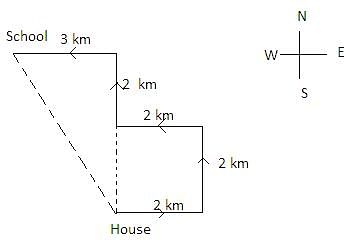
Q. What is the shortest distance between Amit's house and his office?
I. Amit drove 2 km towards east from his house and then took a left turn and drove another 2 km. He then again took a left turn and drove 2 km. Next, he took a right turn to cover 2 km more. Finally, he took a left turn and covered 3 km to reach his office.
II. Amit had a uniform speed of 30 km/hr throughout the journey.
Mark your answer as
a. if the data in statement I alone is sufficient to answer the question, while the data in statement II alone is not sufficient to answer the question
b. if the data in statement II alone is sufficient to answer the question, while the data in statement I alone is not sufficient to answer the question
c. if the data in either of the statements alone is sufficient to answer the question
d. if the data in both statements I and II together is not sufficient to answer the question
e. if the data in both statements I and II together is necessary to answer the question
II. Amit had a uniform speed of 30 km/hr throughout the journey.
Directions: This problem consists of a question followed by two statements numbered I and II given below it. Read the statements carefully and decide which of them is/are sufficient/necessary to answer the question.
Mark your answer as
a. if the data in statement I alone is sufficient to answer the question, while the data in statement II alone is not sufficient to answer the question
b. if the data in statement II alone is sufficient to answer the question, while the data in statement I alone is not sufficient to answer the question
c. if the data in either of the statements alone is sufficient to answer the question
d. if the data in both statements I and II together is not sufficient to answer the question
e. if the data in both statements I and II together is necessary to answer the question
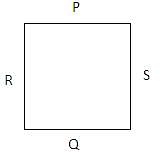
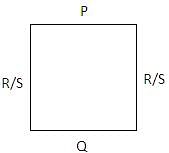
Q. P, Q, R and S are sitting around a square table facing the centre with each one sitting on each side. Who is sitting to the immediate left of P?
I. P is sitting opposite to Q, who is sitting to the immediate right of R.
II. P is sitting adjacent to R, who is sitting adjacent to Q.
Directions: This problem contains a question followed by two statements numbered I and II giving certain data. Read the statements carefully and decide which of them is/are sufficient/necessary to answer the question. Choose the correct option accordingly.
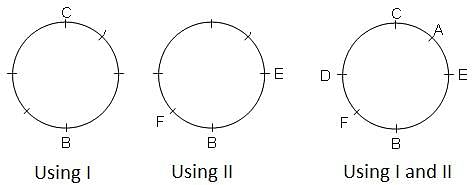
Q. Around a circular table, six persons A, B, C, D, E and F are sitting. Who is to the immediate left of A?
Statements:
I. B is sitting opposite to C, and D is sitting opposite to E.
II. F is sitting to the immediate left of B, and B is sitting to the immediate left of E.
Directions: This problem consists of a question followed by two statements numbered I and II given below it. Read the statements carefully and decide which of them is/are sufficient/necessary to answer the question.
Mark your answer as
a. if the data in statement I alone is sufficient to answer the question, while the data in statement II alone is not sufficient to answer the question
b. if the data in statement II alone is sufficient to answer the question, while the data in statement I alone is not sufficient to answer the question
c. if the data in either of the statements alone is sufficient to answer the question
d. if the data in both statements I and II together is not sufficient to answer the question
e. if the data in both statements I and II together is necessary to answer the question
Q. Amit went to office from home and came back the same way. At what speed did Amit walk back from office?
I: Amit went to office from home on bike at the speed of 39 km/hr and it took him 20 minutes to reach.
II: Amit walked back from office and reached home in 40 minutes.

Directions: This problem consists of a question followed by two statements numbered I and II given below it. Read the statements carefully and decide which of them is/are sufficient/necessary to answer the question.
Mark your answer as
a. if the data in statement I alone is sufficient to answer the question, while the data in statement II alone is not sufficient to answer the question
b. if the data in statement II alone is sufficient to answer the question, while the data in statement I alone is not sufficient to answer the question
c. if the data in either of the statements alone is sufficient to answer the question
d. if the data in both statements I and II together is not sufficient to answer the question
e. if the data in both statements I and II together is necessary to answer the question
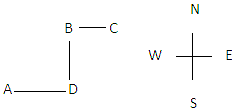
Q. What is the direction of B with respect to D?
I. C is to the east of B, which is to the northeast of A.
II. A is to the west of D, which is to the south of B, which is to the west of C.
Directions: This problem consists of a question followed by two statements numbered I and II given below it. Read the statements carefully and decide which of them is/are sufficient/necessary to answer the question.
Mark your answer as
a. if the data in statement I alone is sufficient to answer the question, while the data in statement II alone is not sufficient to answer the question
b. if the data in statement II alone is sufficient to answer the question, while the data in statement I alone is not sufficient to answer the question
c. if the data in either of the statements alone is sufficient to answer the question
d. if the data in both statements I and II together is not sufficient to answer the question
e. if the data in both statements I and II together is necessary to answer the question
Q. Four people - A, B, C and D - live on four different floors of a building. Who lives on the top floor?
I. A lives on the floor above C, and B lives on the floor above D.
II. Only one person lives on the floor above C.

Directions: This problem consists of a question followed by two statements numbered I and II given below it. Read the statements carefully and decide which of them is/are sufficient/necessary to answer the question.
Mark your answer as
a. if the data in statement I alone is sufficient to answer the question, while the data in statement II alone is not sufficient to answer the question
b. if the data in statement II alone is sufficient to answer the question, while the data in statement I alone is not sufficient to answer the question
c. if the data in either of the statements alone is sufficient to answer the question
d. if the data in both statements I and II together is not sufficient to answer the question
e. if the data in both statements I and II together is necessary to answer the question
Q. What would be the date when Gaurav will have the English exam?
I. Gaurav has been preparing for the English exam for 3 months.
II. Gaurav has a different exam after every 3rd day and his last Math's exam was on Monday.
Directions: This problem consists of a question followed by two statements numbered I and II given below it. Read the statements carefully and decide which of them is/are sufficient/necessary to answer the question.
Mark your answer as
a. if the data in statement I alone is sufficient to answer the question, while the data in statement II alone is not sufficient to answer the question
b. if the data in statement II alone is sufficient to answer the question, while the data in statement I alone is not sufficient to answer the question
c. if the data in either of the statements alone is sufficient to answer the question
d. if the data in both statements I and II together is not sufficient to answer the question
e. if the data in both statements I and II together is necessary to answer the question
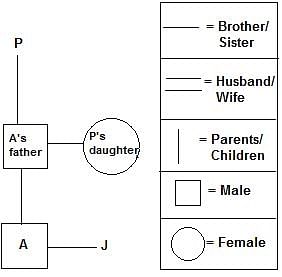
Q. How is A related to J?
I. P's daughter's only brother has A as his only son.
II. P is the paternal grandfather of J.
Top Courses for CAT



Important Questions for Test Level 2: Data Sufficiency - 1
Test Level 2: Data Sufficiency - 1 MCQs with Answers
Online Tests for Test Level 2: Data Sufficiency - 1
|
© EduRev
|
Education Revolution
|


|