
GATE ECE (Electronics) Test: Light Emitting Diodes Free Online Test 2026
MCQ Practice Test & Solutions: Test: Light Emitting Diodes (10 Questions)
You can prepare effectively for Electronics and Communication Engineering (ECE) GATE ECE (Electronics) Mock Test Series 2027 with this dedicated MCQ Practice Test (available with solutions) on the important topic of "Test: Light Emitting Diodes". These 10 questions have been designed by the experts with the latest curriculum of Electronics and Communication Engineering (ECE) 2026, to help you master the concept.
Test Highlights:
- - Format: Multiple Choice Questions (MCQ)
- - Duration: 30 minutes
- - Number of Questions: 10
Sign up on EduRev for free to attempt this test and track your preparation progress.

Which of the following semiconductor compound is not used in the construction of Light Emitting Diodes?
Detailed Solution: Question 1
Red (R), Green (G) and Blue (B) Light Emitting Diodes (LEDs) were fabricated using p-n junctions of three different inorganic semiconductors having different band-gaps. The built-in voltages of red, green and blue diodes are VR, VG and VB, respectively. Assume donor and acceptor doping to be the same (NA and ND, respectively) in the p and n sides of all the three diodes.
Which one of the following relationships about the built-in voltages is TRUE?
Detailed Solution: Question 2
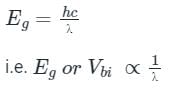

If the speed of light in air is represented by e and the speed in a medium is u, then the refractive index of the medium can be calculated using the formula_______.
Detailed Solution: Question 3
Which of the following statements about LED is INCORRECT?
Detailed Solution: Question 4
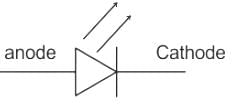
Identify the diode for which the above symbol is used.
Detailed Solution: Question 5
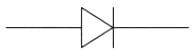
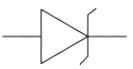
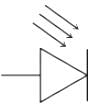
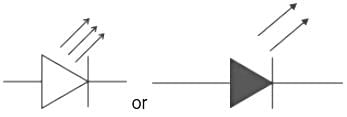
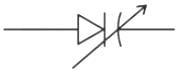
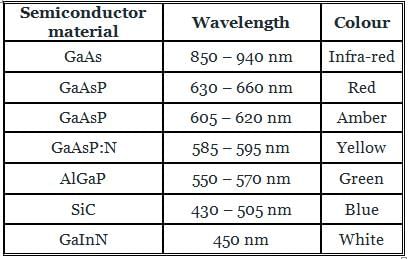
Detailed Solution: Question 6
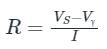
What value of a series resistor is required to limit the current through an LED to 20 mA with a forward voltage drop of 2.0 V, when connected to a 10-V supply?
Detailed Solution: Question 7

Detailed Solution: Question 8
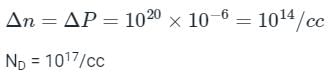
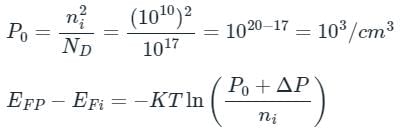
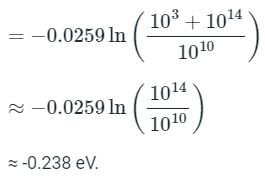
An n type silicon sample with donor doping concentration of ND = 1017/cm3 is steadily illuminated such that there is an additional generation rate (g') of 1020 cm-3s-1. If τn0 = τp0 = 10-6 s, the portion of qnari-fermi level for holes with respect to intrinsic level is ______ eV. (ni = 1010/cm3 and τ = 300 K)
Detailed Solution: Question 9
As compared to an LED, an LCD has the distinct advantage of
Detailed Solution: Question 10
26 docs|263 tests |
