ACT Exam  >  ACT Test  >  Physics  >  Test: Vectors Multiplication - ACT MCQ

Vectors Multiplication - Free MCQ Practice Test with solutions, ACT Physics


MCQ Practice Test & Solutions: Test: Vectors Multiplication (10 Questions)

You can prepare effectively for ACT Physics for ACT with this dedicated MCQ Practice Test (available with solutions) on the important topic of "Test: Vectors Multiplication". These 10 questions have been designed by the experts with the latest curriculum of ACT 2026, to help you master the concept.

Test Highlights:

  • - Format: Multiple Choice Questions (MCQ)
  • - Duration: 15 minutes
  • - Number of Questions: 10

Sign up on EduRev for free to attempt this test and track your preparation progress.

Test: Vectors Multiplication - Question 1

What is the result when î + 14ĵ is multiplied by √49?

Detailed Solution: Question 1

√49 = 7. When î + 14ĵ is multiplied by 7, we get 7î + 98ĵ as the answer. Hence, 7î + 98ĵ is the correct answer.

Test: Vectors Multiplication - Question 2

What happens when a vector is multiplied by a scalar?

Detailed Solution: Question 2
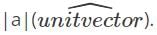
Any vector a, can be written as a =  Hence, when we multiply it by a scalar, the magnitude multiplies by that much amount.

Test: Vectors Multiplication - Question 3

Eleven times unit vector along X added to 7 times unit vector along Y gives ______

Detailed Solution: Question 3

Unit vector along X is î and that along Y is ĵ. Hence, eleven times unit vector along X added to 7 times unit vector along Y will give 11î + 7ĵ.

Test: Vectors Multiplication - Question 4

Multiplying 2î + 7ĵ by 5 gives ______

Detailed Solution: Question 4

When 2î + 7ĵ is multiplied by 5, both the components get multiplied by 5. Hence, the answer is 10î + 35ĵ.

Test: Vectors Multiplication - Question 5

A car travels 5m in X direction and then 7m in Y direction. What is the final vector position of the car with respect to the origin?

Detailed Solution: Question 5

Unit vector along X is î and that along Y is ĵ. Hence, when the car travels 5m in X direction and 7m in y direction, the final position becomes 5î + 7ĵ.

Test: Vectors Multiplication - Question 6

A unit vector has the magnitude of ___

Detailed Solution: Question 6

A unit vector has the magnitude 1. It is used to represent non-unit vectors using along other unit vectors. Any vector can be represented as a sum of unit vectors, multiplied by required scalars.

Test: Vectors Multiplication - Question 7

Dividing 5î + 10ĵ by 5 gives ______

Detailed Solution: Question 7

When 5î + 10ĵ is divided by 5, both the components get divided by 5. Hence, the answer is î + 2ĵ.

Test: Vectors Multiplication - Question 8

What is the dot product of two vectors, vector A and vector B? The angle between both the vector is θ.

Detailed Solution: Question 8

Concept:

  • The dot product is the sum of the products of the corresponding entries of the two sequences of numbers.
  • Geometrically, it is the product of the Euclidean magnitudes of the two vectors and the cosine of the angle between them.

The Dot product of two vectors is defined as:

The Cross/Vector product of two vectors is defined as:

Explanation:

The dot product of two vectors is given by:

So option 2 is correct.

Some important results:

î × ĵ = k̂ and ĵ × î = -k̂

k̂ × î = ĵ and î × k̂ = -ĵ

ĵ × k̂ = î and k̂ × ĵ = -î

î × î = ĵ × ĵ = k̂ × k̂ = 0

î.ĵ = ĵ.k̂ = î.k̂ = 0

î.î = ĵ.ĵ = k̂.k̂ = 

Test: Vectors Multiplication - Question 9

Which of the following physical quantities can be expressed as the vector product of two vectors?

Detailed Solution: Question 9

Concept:

  • Vector Product (cross product): Its magnitude is equal to the products of the magnitude of two vectors and sine of the angle between them and whose direction is perpendicular to the plane of the two vectors 

Mathematically it is written as: 

Where θ is the angle between a vector 

  • Torque, Angular momentum, and Instantaneous velocity all can be expressed as the vector products of two vectors.

Explanation:

  • Torque (τ): The torque acting on a particle is equal to the vector products of its position vector  and force vector 
  • Angular momentum (L): It is equal to the cross product of its position vector  and the linear momentum 
  • Linear Velocity (v): It is equal to the cross product of its angular velocity ω and the position vector 
  • These physical quantities can be expressed as the vector products of two vectors. 
  • Hence all of the above options are correct.

Test: Vectors Multiplication - Question 10

Two equal forces acting on a body in different directions have their resultant equal to the magnitude of one of the force. Find the angle between them?

Detailed Solution: Question 10

Concept:

  • Vector quantities are those physical quantities that have both magnitude and direction and obey the vector law of addition.
    • Example Displacement, Velocity, Force, Momentum, etc

The magnitude of resultant of two vectors is given by:

Where A and B are the magnitudes of two vectors and θ is the angle between them
Calculation:

Let's assume two forces A and B having two equal force have their resultant equal to either.

A = B = R

cosθ = -1/2,  Since (cos -1/2 = 120° )

The angle between them is, θ = 120° 

169 videos|137 docs|75 tests
Information about Test: Vectors Multiplication Page
In this test you can find the Exam questions for Test: Vectors Multiplication solved & explained in the simplest way possible. Besides giving Questions and answers for Test: Vectors Multiplication, EduRev gives you an ample number of Online tests for practice
169 videos|137 docs|75 tests
Download as PDF