REET Exam  >  REET Test  >  RSMSSB Lab Assistant Mock Test Series 2027  >  RSMSSB Lab Assistant Paper 2 Mock Test - 4 - REET MCQ

RSMSSB Lab Assistant Paper 2 Mock Test - 4 Free Online Test 2026


Full Mock Test & Solutions: RSMSSB Lab Assistant Paper 2 Mock Test - 4 (100 Questions)

You can boost your REET 2026 exam preparation with this RSMSSB Lab Assistant Paper 2 Mock Test - 4 (available with detailed solutions).. This mock test has been designed with the analysis of important topics, recent trends of the exam, and previous year questions of the last 3-years. All the questions have been designed to mirror the official pattern of REET 2026 exam, helping you build speed, accuracy as per the actual exam.

Mock Test Highlights:

  • - Format: Multiple Choice Questions (MCQ)
  • - Duration: 120 minutes
  • - Total Questions: 100
  • - Analysis: Detailed Solutions & Performance Insights

Sign up on EduRev for free and get access to these mock tests, get your All India Rank, and identify your weak areas to improve your marks & rank in the actual exam.

RSMSSB Lab Assistant Paper 2 Mock Test - 4 - Question 1

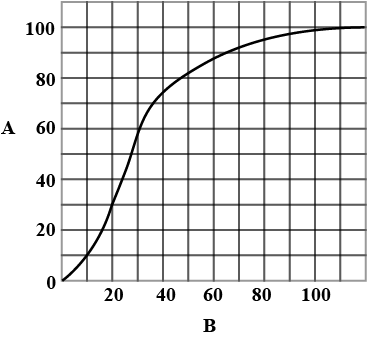
Which of the following is incorrect about the given graph?
Detailed Solution: Question 1

The part ′B′ in the graph represents partial pressure of oxygen.

The Oxygen dissociation curve represents the relationship between the partial pressure of oxygen (usually on the X-axis) and the percentage of saturation of Hemoglobin (usually on the Y-axis).

RSMSSB Lab Assistant Paper 2 Mock Test - 4 - Question 2

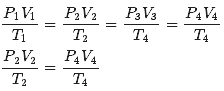
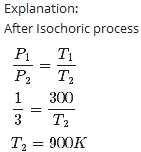
Four liters of a diatomic ideal gas ( λ =1.4) confined to a cylinder is subject to a closed cycle. Initially, the gas is at 1.00 atm and at 300 K. First, its pressure is tripled under constant volume. Then, it expands adiabatically to its original pressure. Finally, the gas is compressed isobarically to its original volume. Find the temperature at the end of the cycle

Detailed Solution: Question 2
*Multiple options can be correct
RSMSSB Lab Assistant Paper 2 Mock Test - 4 - Question 3

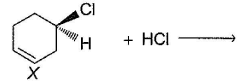
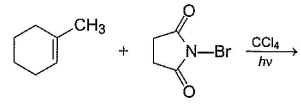
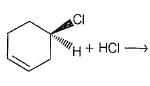
Consider the following reaction,

Q.

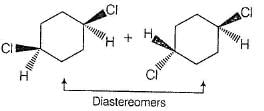
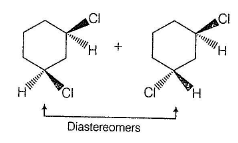
When a pure enantiomer of X is taken in the above reaction, correct completion regarding the reaction is/are

Detailed Solution: Question 3

RSMSSB Lab Assistant Paper 2 Mock Test - 4 - Question 4

 Photophosphorylation is the process in which

Detailed Solution: Question 4

Photophosphorylation is the conversion of ADP to ATP using the energy of sunlight by activation of PSII. This involves the splitting of the water molecule in oxygen and hydrogen protons (H+), a process known as photolysis.

RSMSSB Lab Assistant Paper 2 Mock Test - 4 - Question 5

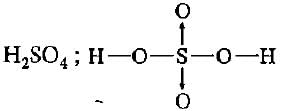
Which of the following molecules contains covalent and coordinate bonds?

Detailed Solution: Question 5
RSMSSB Lab Assistant Paper 2 Mock Test - 4 - Question 6

Which of the following is/are not the characteristics of the class Osteichthyes?
(i) Body is streamlined and mouth is terminal.
(ii) Gills are covered by operculum.
(iii) Skin covered with cycloid and placoid scales.
(iv) Many of them are viviparous. 

Detailed Solution: Question 6

Osteichthyes is a class of fish that includes bony fish. Some of the characteristics of this class include:

  • Body is streamlined and mouth is terminal: This characteristic is correct and would not be excluded from the list of characteristics of Osteichthyes.

  • Gills are covered by operculum: This characteristic is correct and would not be excluded from the list of characteristics of Osteichthyes.

  • Skin covered with cycloid and placoid scales: This characteristic is incorrect and would be excluded from the list of characteristics of Osteichthyes. Osteichthyes have scales on their skin, but these scales are not necessarily cycloid or placoid.

  • Many of them are viviparous: This characteristic is incorrect and would be excluded from the list of characteristics of Osteichthyes. Many Osteichthyes are oviparous, meaning they lay eggs, rather than being viviparous, meaning they give birth to live young.

Therefore, the correct answer is (iii) and (iv).

RSMSSB Lab Assistant Paper 2 Mock Test - 4 - Question 7

Which species has the largest size?Option

Detailed Solution: Question 7

Answer: Option D
The ionic size increases with the addition of electrons and decreases with the removal of electrons. S²⁻ has the largest size due to the highest electron repulsion among the given species.

RSMSSB Lab Assistant Paper 2 Mock Test - 4 - Question 8

Given below are few mixtures formed by mixing two components. Which of the following binary mixtures will have same composition in liquid and vapour phase?
(i) Ethanol + Chloroform
(ii) Nitric acid + Water
(iii) Benzene + Toluene
(iv) Ethyl chloride + Ethyl bromide

Detailed Solution: Question 8

(iii) and (iv) will form ideal solutions hence do not form azeotropes. Azeotropes have same composition in liquid and vapour form when distilled.

To determine which binary mixtures will have the same composition in the liquid and vapor phases, we need to identify mixtures that form ideal solutions. In an ideal solution, the composition of the liquid phase and the vapor phase is the same at equilibrium.

Here’s a brief analysis of each mixture:

  1. Ethanol + Chloroform:

    • This mixture does not behave ideally due to strong hydrogen bonding interactions between ethanol and chloroform, which can cause deviations from Raoult's Law.
  2. Nitric Acid + Water:

    • Nitric acid and water form a non-ideal solution. Nitric acid forms strong hydrogen bonds with water, resulting in significant deviations from ideal behavior. Thus, the composition in the liquid and vapor phases will not be the same.
  3. Benzene + Toluene:

    • Benzene and toluene form an ideal solution. The interactions between benzene and toluene are similar, and thus the composition of the liquid and vapor phases will be the same.
  4. Ethyl Chloride + Ethyl Bromide:

    • Ethyl chloride and ethyl bromide also form an ideal solution. The interactions between these two similar substances lead to minimal deviations from ideal behavior.

Based on the above analyses, the mixtures that will have the same composition in the liquid and vapor phases are:

2. (iii) and (iv)

So the correct answer is:

2. (iii) and (iv)

RSMSSB Lab Assistant Paper 2 Mock Test - 4 - Question 9

A rectangular conductor PQRS in which the conductor PQ is free to move is kept in a magnetic field B ,which is perpendicular to the PQRS which lies in a single plane. If the conductor PQ has a length l,moves with a speed v, then induced emf is

Detailed Solution: Question 9

RSMSSB Lab Assistant Paper 2 Mock Test - 4 - Question 10

Phenols do not respond to which of these tests?

Detailed Solution: Question 10

- Schiff’s reagent test is used to detect aldehydes. Phenols do not contain the aldehyde functional group, so they do not respond to this test.
- FeCl3 test is specific for phenols, producing a violet color.
- Br2 water test results in the decolorization of bromine due to the formation of bromophenols.
- Litmus test detects acidity; phenols are weakly acidic and can turn blue litmus red.
- Therefore, phenols do not respond to the Schiff’s reagent test.

RSMSSB Lab Assistant Paper 2 Mock Test - 4 - Question 11

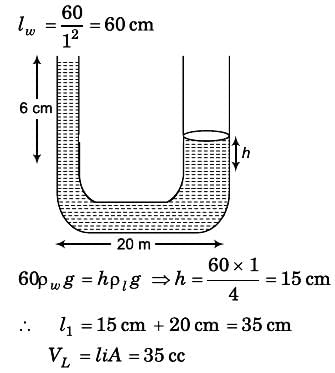
A U-tube having horizontal arm of length 20 cm, has uniform cross-sectional area = 1 cm2. It is filled with water of volume 60 cc. What volume of a liquid of density 4 g/cc should be poured from one side into the U-tube so that no water is left in the horizontal arm of the tube?

Detailed Solution: Question 11
RSMSSB Lab Assistant Paper 2 Mock Test - 4 - Question 12

Predict major product of the following reaction.
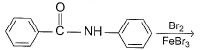
Detailed Solution: Question 12

This reaction is a bromination in the presence of Br2​ and FeBr3 a typical electrophilic aromatic substitution.

Structure Analysis:

  • The compound has an amide group (−CONH−) attached to a benzene ring. This group is an electron-donating group due to resonance, activating the ring, particularly at the ortho and para positions relative to the −CONH− group.

Expected Product:

  • Bromination will most likely occur at the para position (due to steric hindrance at the ortho position).
  • Thus, the correct major product should have a bromine atom at the para position to the −CONH− group.

*Multiple options can be correct
RSMSSB Lab Assistant Paper 2 Mock Test - 4 - Question 13

Consider the following reaction,

Q. 

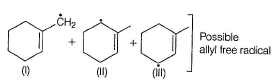
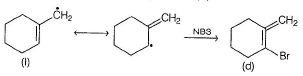
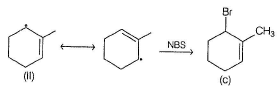
The expected product(s) is/are

Detailed Solution: Question 13
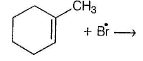
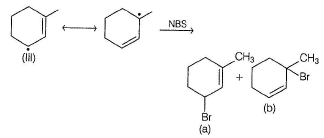
NBS in CCI4 brings about allylic brom ination by free radical mechanism:


RSMSSB Lab Assistant Paper 2 Mock Test - 4 - Question 14

Which bacterium helps in the production of ‘Swiss cheese’?

Detailed Solution: Question 14

Large holes in ‘Swiss cheese’ are due to production of CO2 by Propionibacterium sharmanii (a bacterium).

RSMSSB Lab Assistant Paper 2 Mock Test - 4 - Question 15

Which of the statements given above is/are correct?

i. The respiratory rhythm centre is primarily located in the medulla region of the brain.

ii. The pneumotaxic centre, found in the pons, enhances the duration of inspiration.

iii. Chemosensitive areas respond to increases in CO2 and hydrogen ions to regulate breathing.

iv. Oxygen plays a significant role in the regulation of respiratory rhythm.

Detailed Solution: Question 15

- Statement i is correct because the respiratory rhythm centre is indeed located in the medulla region of the brain, which is responsible for the basic rhythm of breathing.

- Statement ii is incorrect; the pneumotaxic centre moderates the functions of the respiratory rhythm centre by reducing the duration of inspiration, not enhancing it.

- Statement iii is correct as the chemosensitive area near the rhythm centre responds to elevated levels of CO2 and hydrogen ions, leading to adjustments in the respiratory process.

- Statement iv is incorrect; the text states that the role of oxygen in regulating respiratory rhythm is quite insignificant.

Thus, the correct statements are i and iii, making Option A the right answer.

Topic in NCERT: REGULATION OF RESPIRATION

Line in NCERT: "Respiratory rhythm is maintained by the respiratory centre in the medulla region of brain. A pneumotaxic centre in the pons region of the brain and a chemosensitive area in the medulla can alter respiratory mechanism."

RSMSSB Lab Assistant Paper 2 Mock Test - 4 - Question 16

In the reaction N2 + 3H2 ⇌ 2NH3

 and at some instant if  

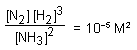
then at this instant value of  is :

Detailed Solution: Question 16

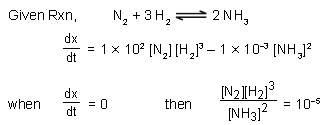
Hence the reaction will be at equilibrium at the given instant

RSMSSB Lab Assistant Paper 2 Mock Test - 4 - Question 17

Independent assortment of genes does not take place when

Detailed Solution: Question 17

Independent assortment ofgenes takes place only when they are located on separate non-homologus chromosomes. Where two or more than two genes are located on same chromosome, independent assortment will not be possible.

RSMSSB Lab Assistant Paper 2 Mock Test - 4 - Question 18

Four capacitors with capacitances C1 = 1 μF, C2 = 1.5 μF, C3 = 2.5 μF and C4 = 0.5 μF are connected as shown and are connected to 30 volt source. The potential difference between points a and b is
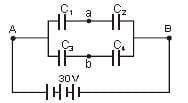
Detailed Solution: Question 18
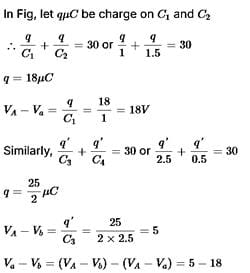
= - 13 volt

RSMSSB Lab Assistant Paper 2 Mock Test - 4 - Question 19

An infinitely long rod lies along the axis of a concave mirror of focal length f. The near end of the rod is at a distance u > f from the mirror. Its image will have a length

Detailed Solution: Question 19
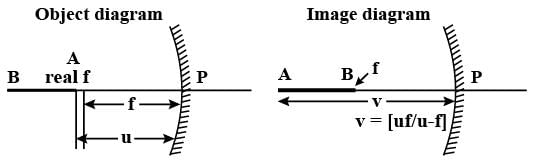
At infinity, image of B will form at focus since it is at infinity. Image of A will be at A which can be calculated by mirror formula.
1/v​+(1/−u)​=(1/−f)
⟹v= fu /(f−u)​=−( fu/(u−f)​)
Image length = v−f=(fu/(u−f)​)−(f)

= f2​/(u−f)
(We take the absolute values of the distances to calculate the rod length)

RSMSSB Lab Assistant Paper 2 Mock Test - 4 - Question 20

A satellite moves in a circular orbit around earth. The radius of this orbit is one half that of moon’s orbit. The satellite completes one revolution in:

Detailed Solution: Question 20

The time period of revolution of the moon around the earth = 1 lunar month.
► Ts/Tm = (rs/rm)3/2 = (1/2)3/2
►  Ts  = (2)-3/2 lunar month

RSMSSB Lab Assistant Paper 2 Mock Test - 4 - Question 21

Study the food web given below and answer the questions that follow.
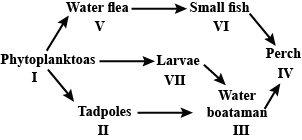
Which of the following organisms in the given food web acts as a secondary consumer?

Detailed Solution: Question 21

In the given food web, organisms I (phytoplanktons) act as producers, organisms II, V and VII act as primary consumers as they feed on producers, organisms III and VI act as secondary consumers as they upon primary consumers, and organism IV acts as a tertiary consumer.

Topic in NCERT: Trophic Levels in an Ecosystem

Line in NCERT: "Those animals that depend on the primary carnivores for food are labelled secondary carnivores."

RSMSSB Lab Assistant Paper 2 Mock Test - 4 - Question 22

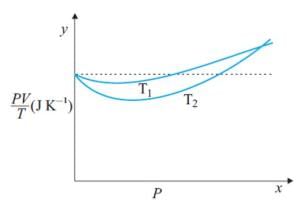
Figure shows plot of PV/T versus P for 1.00x10⁻³ kg of oxygen gas at two different temperatures. What is the value of PV/T where the curves meet on the y-axis?
Detailed Solution: Question 22

PV=nRT

Hence the value of PV/T where the curves meet on the y-axis is 0.26 jK-1

RSMSSB Lab Assistant Paper 2 Mock Test - 4 - Question 23

Identify the alcohol or phenol from the following which is most soluble in water.

Detailed Solution: Question 23

- Solubility in Water: Solubility of alcohols in water is largely determined by the ability to form hydrogen bonds. Methanol (CH3OH) has a small alkyl group, which makes it highly polar and capable of forming strong hydrogen bonds with water molecules.
- Comparison:
- Methanol (CH3OH) has the shortest carbon chain, enhancing its solubility.
- Longer carbon chains in other options (propyl, isopropyl, and phenol) make them less polar, reducing water solubility.
- Conclusion: Methanol (Option A) is the most soluble in water due to its short carbon chain and strong hydrogen bonding capability.

RSMSSB Lab Assistant Paper 2 Mock Test - 4 - Question 24

The sound waves which travel in the air are called:

Detailed Solution: Question 24

Do not conclude that sound is a transverse wave that has crests and troughs. Sound waves traveling through air are indeed longitudinal waves with compressions and rarefactions. As sound passes through air (or any fluid medium), the particles of air do not vibrate in a transverse manner.

RSMSSB Lab Assistant Paper 2 Mock Test - 4 - Question 25

The magnitude of a physical quantity is 8.5 Ns. The physical quantity is :

Detailed Solution: Question 25

The newton second (also newton-second, symbol N s or N·s) is the derived SI unit of impulse. It is dimensionally equivalent to the momentum unit kilogram metre per second (kg·m/s). One newton second corresponds to a one-newton force applied for one second. Derivation- p=mv =kg×m/s =kgm/s×s/s =kgm/s^2×s =N×s

RSMSSB Lab Assistant Paper 2 Mock Test - 4 - Question 26

The fertility of soil starts getting badly impacted when pH of soil exceeds:

Detailed Solution: Question 26

When the soil has pH value greater than 11, it is termed as practically infertile.

Causes of high soil pH:

  • Sources of alkalinity.
  • Role of cations (Na and Ca)
  • Influence of soluble salt levels
  • Influence of carbon dioxide and carbonates.

Important Points 

  1. If the pH in the case of saline soil is around 8.5, very good structure
  2. And in the case of saline-sodic soil, it is from 8.5 to 10, good structure.
  3. And in the case of sodic soil, it is generally greater than 10, structureless.

Note:

Why high pH soils are infertile:

The high pH caused due to the presence of sodium carbonate which is highly soluble.

This high pH causes fulvic and humic acid of organic matter to get dissolve and when the water evaporates, it gives the surface a black color.

This sodic soil creates physical disintegration and due to high sodium and low salt concentration, slaking, swelling and dispersion occurs which caused coagulation of soil particles as Vander Vaal forces dominate due to deficiency of hydrated ions. 

Complete dispersion causes soil crusting and as a result of this germination problem due to clogs that restrict soil and air movement and makes soil infertile.

RSMSSB Lab Assistant Paper 2 Mock Test - 4 - Question 27

The first use of quantum theory to explain the structure of atom was made by –

Detailed Solution: Question 27

Bohr first made use of quantum theory to explain the structure of atom and proposed that energy of electron in an atom is quantized

RSMSSB Lab Assistant Paper 2 Mock Test - 4 - Question 28

A force is defined as a

Detailed Solution: Question 28

Force is a push or a pull that changes or tends to change the state of rest or uniform motion of an object or changes the direction or shape of an object

Option C is correct.

RSMSSB Lab Assistant Paper 2 Mock Test - 4 - Question 29

The Indian Parliament passed a Central Legislation named Air Pollution Control Act in the year:

Detailed Solution: Question 29

Air pollution control Act:

  • The Air (Prevention and Control of Pollution) Act 1981 was a law passed by the Parliament of India to prevent and control the harmful effects of air pollution in India.
  • This act is seen as the first concrete step taken by the Government of India to combat air pollution. 
  • Act to provide for the prevention, control, and abatement of air pollution, for the establishment, with a view to carrying out the aforesaid purposes, of Boards, for conferring on and assigning to such Boards powers and functions relating thereto. And whereas it is considered necessary to implement the decisions aforesaid in so far as they relate to the preservation of the quality of air and control of air pollution.

Water pollution control Act:

  • The Water (Prevention and Control of Pollution) Act was enacted in 1974 to provide for the prevention and control of water pollution, and for the maintaining or restoring of the wholesomeness of water in the country. The Act was amended in 1988.

Noise Pollution Act:

  • Noise Pollution (Control and Regulation) Rules 1999 was published under the notification number S.O. 528 (E), dated the 28th June 1999, objections and suggestions are invited from all persons likely to be affected, before the expiry of a period of sixty days from the date on which copies of the Gazette containing the said notification. made available to the heinous.

Biodiversity Act:

  • The Biological Diversity Act 2002 is an Act enacted by the Parliament of India to protect or preservation of biological diversity in India and provides a mechanism for equitable sharing of benefits arising out of the use of traditional biological resources and knowledge.
  • Act to provide for the conservation of biological diversity, sustainable use of its components, and fair and equitable sharing of the benefits arising out of the use of biological resources, knowledge, and matters connected therewith or incidental thereto.

RSMSSB Lab Assistant Paper 2 Mock Test - 4 - Question 30

The correct relation between current 'I' and amount of charge flown 'q' during a time 't' through a conductor is

Detailed Solution: Question 30
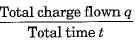
Correct relation is current I = 
⇒ q = It

View more questions
20 tests
Information about RSMSSB Lab Assistant Paper 2 Mock Test - 4 Page
In this test you can find the Exam questions for RSMSSB Lab Assistant Paper 2 Mock Test - 4 solved & explained in the simplest way possible. Besides giving Questions and answers for RSMSSB Lab Assistant Paper 2 Mock Test - 4, EduRev gives you an ample number of Online tests for practice
Download as PDF