CBSE Class 10  >  Class 10 Test  >  Chemical Reactions And Equations - MCQ Test, Class 10 Science - Class 10 MCQ

Chemical Reactions And Equations - MCQ Test, Class 10 Science Solved MCQs


MCQ Practice Test & Solutions: Chemical Reactions And Equations - MCQ Test, Class 10 Science (30 Questions)

You can prepare effectively for Class 10 with this dedicated MCQ Practice Test (available with solutions) on the important topic of "Chemical Reactions And Equations - MCQ Test, Class 10 Science". These 30 questions have been designed by the experts with the latest curriculum of Class 10 2026, to help you master the concept.

Test Highlights:

  • - Format: Multiple Choice Questions (MCQ)
  • - Duration: 30 minutes
  • - Number of Questions: 30

Sign up on EduRev for free to attempt this test and track your preparation progress.

Chemical Reactions And Equations - MCQ Test, Class 10 Science - Question 1

Which of the following is not a decomposition reacion?

Detailed Solution: Question 1
Chemical Reactions And Equations - MCQ Test, Class 10 Science - Question 2

Which two gases are released on heating lead nitrate?

Detailed Solution: Question 2

Heating lead nitrate produces two gases:

  • Nitrogen dioxide (NO2)
  • Oxygen (O2)

During the decomposition of lead nitrate, these gases are released due to the breakdown of its chemical structure when exposed to heat.

Chemical Reactions And Equations - MCQ Test, Class 10 Science - Question 3

What happens when Hydrogen combines with oxygen in the presence of an electric current?

Detailed Solution: Question 3
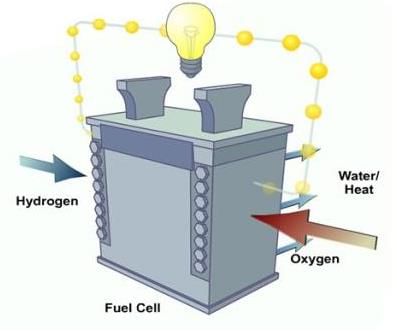
H2 + O2 → H2O

When electric current is passed, we get water as by product. This is basis of fuel cell. At the cathode, the electrons and the hydrogen ions combine with oxygen to make water, which then flows out of the cell.

A fuel cell takes in hydrogen and oxygen and produces electricity, with water and heat as byproducts.

Chemical Reactions And Equations - MCQ Test, Class 10 Science - Question 4

Match the following with correct response.

(1) Oxidation        (A) Gain of electron

(2) Reduction       (B) Electron accepting species

(3) Reducing agent     (C) Electron losing species

(4) Oxidising agent    (D) Loss of electron

Detailed Solution: Question 4

Match the following with correct response.

  • Oxidation: Refers to the loss of electrons from a species.
  • Reduction: Involves the gain of electrons by a species.
  • Reducing agent: This is the electron-losing species that donates electrons in a reaction.
  • Oxidising agent: This is the electron-accepting species that gains electrons in a reaction.

Chemical Reactions And Equations - MCQ Test, Class 10 Science - Question 5

Which of the following represent a double displacement reaction?

Detailed Solution: Question 5

A double displacement reaction involves two compounds exchanging ions (AB + CD → AD + CB). C (NaCl + AgNO₃ → NaNO₃ + AgCl) shows Na⁺ and Ag⁺ swapping partners. A, B, and D are synthesis reactions, not double displacement.

Chemical Reactions And Equations - MCQ Test, Class 10 Science - Question 6

Some crystals of copper sulphate were dissolved in water. The colour of the solution obtained would be

Detailed Solution: Question 6

The solution obtained from dissolving copper sulphate crystals in water will have a distinctive colour.

  • The resulting solution will appear blue.
  • This blue colour is characteristic of copper sulphate due to its chemical properties.
  • When dissolved, the copper ions impart this vibrant hue to the solution.

Chemical Reactions And Equations - MCQ Test, Class 10 Science - Question 7

Mg ribbon burns with a dazzling flame in air (oxygen) and changes into a white substance, Magnesium oxide. Magnesium is

Detailed Solution: Question 7

In the reaction involving magnesium ribbon burning in air, the following occurs:

  • Magnesium reacts with oxygen, resulting in a bright flame.
  • This process produces a white substance known as magnesium oxide.
  • During this reaction, magnesium undergoes a change in its oxidation state.
  • Specifically, magnesium is oxidised as it loses electrons to oxygen.

Thus, magnesium is not reduced; it is solely oxidised in this reaction.

Chemical Reactions And Equations - MCQ Test, Class 10 Science - Question 8

What happens when dilute HCl is added to iron fillings? Select the correct answer.

Detailed Solution: Question 8

When dilute hydrochloric acid (HCl) is added to iron filings, a chemical reaction occurs.

  • The reaction produces hydrogen gas and iron chloride.
  • This is a typical reaction between an acid and a metal.
  • The iron filings react with the acid, resulting in the formation of these products.

Chemical Reactions And Equations - MCQ Test, Class 10 Science - Question 9

Match the following with correct response.

(1) Chemical change (2) Physical change (3) Exothermic (4) Endothermic

(A) Energy releasing (B) Rusting of iron (C) Energy absorbed (D) Dissolution of sugar or salt in water

Detailed Solution: Question 9

Match the following with correct response.

  • Chemical change:Rusting of iron
  • Physical change:Dissolution of sugar or salt in water
  • Exothermic:Energy releasing
  • Endothermic:Energy absorbed

Chemical Reactions And Equations - MCQ Test, Class 10 Science - Question 10

Which statement is correct about the following reaction?

ZnO + CO Zn + CO2

Detailed Solution: Question 10

In ZnO + CO → Zn + CO₂, ZnO loses oxygen (Zn²⁺ to Zn⁰), indicating reduction. CO gains oxygen (C²⁺ to C⁴⁺), indicating oxidation. Thus, only D (ZnO is being reduced) is correct.

Chemical Reactions And Equations - MCQ Test, Class 10 Science - Question 11

The colour of zinc metal is

Detailed Solution: Question 11

Zinc metal has a shiny, silvery appearance in its pure form, though it may dull slightly upon exposure to air due to oxide formation.

Chemical Reactions And Equations - MCQ Test, Class 10 Science - Question 12

The reactions in which more reactive element can displace less reactive element from a compound are called

Detailed Solution: Question 12

The reactions where a more reactive element displaces a less reactive element from a compound are known as:

  • Displacement reactions

These reactions occur in various scenarios, including:

  • A more reactive metal replacing a less reactive metal in a compound.
  • An element taking the place of another in a solution, leading to the formation of a new compound.

Understanding these reactions is essential for predicting chemical behaviour and reactivity in various contexts.

Chemical Reactions And Equations - MCQ Test, Class 10 Science - Question 13

Colour of copper sulphate solution changes when an iron nail is dipped in it because of

Detailed Solution: Question 13

The colour of copper sulphate solution changes when an iron nail is dipped in it due to a chemical reaction. This reaction is classified as a:

  • Displacement reaction because iron displaces copper from copper sulphate.
  • The iron nail reacts with copper ions in the solution.
  • This leads to the formation of iron sulphate and the deposition of copper on the nail.
  • The change in colour indicates the presence of copper metal and the new iron sulphate solution.

Chemical Reactions And Equations - MCQ Test, Class 10 Science - Question 14

Match the following with correct response.

(1) Gain of hydrogen (2) Loss of hydrogen (3) Unpleasant taste and foul small in fatty food (4) Eating away of metal in the presence of air and moisture

(A) Reduction (B) Rancidity (C) Oxidation (D) Corrosion

Detailed Solution: Question 14

1. Gain of hydrogen: This process is referred to as Reduction.

2. Loss of hydrogen: This process is known as Oxidation.

3. Unpleasant taste and foul smell in fatty food: This is called Rancidity.

4. Eating away of metal in the presence of air and moisture: This phenomenon is termed Corrosion.

Chemical Reactions And Equations - MCQ Test, Class 10 Science - Question 15

Fe2O3 + 2Al Al2O3 + 2Fe This reaction is an example of –

Detailed Solution: Question 15

This reaction is an example of a:

  • Displacement reaction: In this type of reaction, one element displaces another in a compound.
  • Here, aluminium replaces iron in iron(III) oxide (Fe2O3), resulting in the formation of aluminium oxide (Al2O3) and iron (Fe).
  • This process showcases the reactivity of aluminium, which is more reactive than iron.

Chemical Reactions And Equations - MCQ Test, Class 10 Science - Question 16

Which of the following is a decomposition reaction?

Detailed Solution: Question 16

A decomposition reaction is a type of chemical reaction in which a single compound breaks down into two or more elements or new compounds which is occuring in option (c) only.

Chemical Reactions And Equations - MCQ Test, Class 10 Science - Question 17

Which one of the following will be required to identify the gas evolved when diluted HCl reacts with zinc metal?

Detailed Solution: Question 17

To identify the gas produced when diluted HCl reacts with zinc metal, the following method can be used:

  • Gaseous Product: The reaction produces hydrogen gas (H2).
  • Testing Method: Bring a burning splinter close to the gas. If it ignites with a 'pop' sound, hydrogen gas is confirmed.
  • Other Indicators: Blue and red litmus solutions are not suitable for identifying this gas.
  • Lime Water: This is used to test for carbon dioxide, which is not relevant in this case.

Chemical Reactions And Equations - MCQ Test, Class 10 Science - Question 18

Decomposition of ferrous sulphate into Fe2O3,SO2 and SO3 occurs in the presence of

Detailed Solution: Question 18

Ferrous sulphate (2FeSO₄) decomposes when heated: 2FeSO₄ → Fe₂O₃ + SO₂ + SO₃. Heat is the primary condition; light or catalysts are not typically required.

Chemical Reactions And Equations - MCQ Test, Class 10 Science - Question 19

What happens when copper metal is added to silver nitrate solution?

Detailed Solution: Question 19

When Copper (Cu) is added to Silver nitrate (AgNO3) solution, a displacement reaction occurs because copper is more reactive than silver.
Cu + 2AgNO3 → Cu(NO3)2 + 2Ag
Copper displaces silver, forming copper(II) nitrate 

So, Correct Option: (C)

Chemical Reactions And Equations - MCQ Test, Class 10 Science - Question 20

Match the following with correct response.

(1) Reaction in which two substances combine to form new product

(2) substance split to form two or more simple substance

(3) More reactive metal displaces less reactive metal

(4) Loss or gain of electrons occurs


(A) Displacement reaction

(B) Combination Reaction

(C) Redox reaction
(D) Decomposition

Detailed Solution: Question 20

Match the following terms with their correct definitions:

  • Combination Reaction: When two substances react to form a new product.
  • Decomposition: A process where a compound breaks down into two or more simpler substances.
  • Displacement Reaction: Occurs when a more reactive metal displaces a less reactive metal from a compound.
  • Redox Reaction: Involves the loss or gain of electrons during the reaction.

Chemical Reactions And Equations - MCQ Test, Class 10 Science - Question 21

When Iron nails are added to an aquous solution of copper sulphate, a chemical change occurs, which of the following is not true about this reaction?

Detailed Solution: Question 21

When iron nails are immersed in an aqueous solution of copper sulphate, several observations can be made about the reaction:

  • Blue colour: The blue colour of the solution fades as copper ions are displaced.
  • Iron nails: The nails develop a brownish tint due to the deposition of copper.
  • Displacement reaction: This is indeed a displacement reaction, where iron replaces copper.
  • Dissolution: Iron nails do not completely dissolve in the solution.

Chemical Reactions And Equations - MCQ Test, Class 10 Science - Question 22

Which of the following reactions is a metathesis (double displacement) reaction?

Detailed Solution: Question 22

Only option A shows the metathesis (double displacement) reaction.

Chemical Reactions And Equations - MCQ Test, Class 10 Science - Question 23

Which of the following is not a balanced chemical equation?

Detailed Solution: Question 23

To determine which equation is not balanced, we can analyse each option:

  • A: Mg(s) + CuSO4(aq) → MgSO4(aq) + Cu(s)
    • Balanced: 1 Mg, 1 Cu, 1 SO4 on both sides.
  • B: Zn(s) + H2SO4(aq) → ZnSO4(aq) + H2(g)
    • Balanced: 1 Zn, 1 SO4, 2 H on both sides.
  • C: Ca(OH)2(l) + CO2(g) → CaCO(s) + H2O(l)
    • Not balanced: 1 Ca, 1 C, 2 O on the left, but 1 Ca, 1 C, 3 O on the right.
  • D: Fe(s) + Cl2(g) → FeCl2(s)
    • Balanced: 1 Fe, 2 Cl on both sides.

Conclusion: The unbalanced equation is option C.

Chemical Reactions And Equations - MCQ Test, Class 10 Science - Question 24

The compound formed by  Hg+2 and CI- is

Detailed Solution: Question 24

The compound formed by Hg+2 and Cl- is:

  • The cation Hg+2 has a charge of +2.
  • The anion Cl- has a charge of -1.
  • To balance the charges, two chloride ions are needed for each mercury ion.
  • The resulting compound is HgCl2, known as mercury(II) chloride.

Chemical Reactions And Equations - MCQ Test, Class 10 Science - Question 25

Which gas is produced when calcium carbonate reacts with dilute HCl?

Detailed Solution: Question 25

Answer: C (CO₂)

Solution: CaCO₃ + 2HCl → CaCl₂ + H₂O + CO₂. Carbon dioxide (CO₂) is released as a gas.

Chemical Reactions And Equations - MCQ Test, Class 10 Science - Question 26

Match the following with correct response.

(1) Quick lime is added to water (2) Formula for rust (3) Silver tarnishing (4) Pop sound

(A) Ca(OH)2       (B) H2S gas (C) Fe2O3.xH2O        (D) H2 gas

Detailed Solution: Question 26

Quick lime is added to water:

  • The reaction produces calcium hydroxide, represented as Ca(OH)2.

Formula for rust:

  • Rust is primarily composed of iron oxide, denoted as Fe2O3.xH2O.

Silver tarnishing:

  • This occurs due to the formation of silver sulfide, which is represented as H2S gas.

Pop sound:

  • A characteristic pop sound is produced when hydrogen gas is ignited.

Chemical Reactions And Equations - MCQ Test, Class 10 Science - Question 27

Pieces of Zn metal are added to four different test tubes containing different solutions. In which test tube no change is observed?

Detailed Solution: Question 27

When zinc metal is added to various solutions, the following observations can be made:

  • Al2(SO4)3: No reaction occurs, as zinc does not displace aluminium.
  • FeSO4: Zinc can displace iron due to its higher position in the reactivity series, leading to a reaction.
  • H2SO4: Zinc reacts with sulphuric acid, producing hydrogen gas and zinc sulfate.
  • CuSO4: Zinc displaces copper in this solution, resulting in a visible reaction.

Conclusion: The test tube containing Al2(SO4)3 shows no change when zinc is added.

Chemical Reactions And Equations - MCQ Test, Class 10 Science - Question 28

Can we store CuSO4 in iron container and why?

Detailed Solution: Question 28

Can we store CuSO4 in an iron container and why?

No, storing CuSO4 in an iron container is not advisable due to the following reasons:

  • Reactivity: Iron is more reactive than copper.
  • Potential Reaction: When in contact, iron can react with CuSO4, leading to possible corrosion of the container.
  • Contamination Risk: This reaction could contaminate the solution with iron ions.

For these reasons, it is better to use a container made of a less reactive material for storing CuSO4.

Chemical Reactions And Equations - MCQ Test, Class 10 Science - Question 29

H2S burns in air to give

Detailed Solution: Question 29

When hydrogen sulfide (H2S) burns in air, it reacts to produce certain products.

During this combustion process, the following occurs:

  • H2S reacts with oxygen from the air.
  • This reaction primarily produces water (H2O) and sulfur dioxide (SO2).

Although sulfur trioxide (SO3) can form under specific conditions, the main products from the complete combustion of H2S in air are water and sulfur dioxide.

Chemical Reactions And Equations - MCQ Test, Class 10 Science - Question 30

Which of the following statements about the given reaction are correct?
3Fe (s) + 4H2O (g) → Fe3O4 (s) + 4 H2 (g)
(i) Iron metal is getting oxidised
(ii) Water is getting reduced
(iii) Water is acting as reducing agent
(iv) Water is acting as oxidising agent 

Detailed Solution: Question 30

Reaction:

3Fe (s) + 4H₂O (g) → Fe₃O₄ (s) + 4H₂ (g)

Analysis of Statements:

  1. Iron metal is getting oxidised:

    • Iron (Fe) starts in the elemental state (0) and forms Fe₃O₄, where it has mixed oxidation states (+2 and +3). This means iron is losing electrons (oxidation).
    • This statement is correct.
  2. Water is getting reduced:

    • Water (H₂O) is reduced to hydrogen gas (H₂), as the oxygen in water helps oxidize iron. The hydrogen in water gains electrons to form H₂.
    • This statement is correct.
  3. Water is acting as a reducing agent:

    • A reducing agent is a substance that donates electrons. In this reaction, water is accepting electrons (reduced to H₂), so it is not a reducing agent.
    • This statement is incorrect.
  4. Water is acting as an oxidizing agent:

    • Water is causing the oxidation of iron by accepting electrons. Thus, it is an oxidizing agent.
    • This statement is correct.

Information about Chemical Reactions And Equations - MCQ Test, Class 10 Science Page
In this test you can find the Exam questions for Chemical Reactions And Equations - MCQ Test, Class 10 Science solved & explained in the simplest way possible. Besides giving Questions and answers for Chemical Reactions And Equations - MCQ Test, Class 10 Science, EduRev gives you an ample number of Online tests for practice
Download as PDF