
CTET & State TET Exam > CTET & State TET Test > EVS & Pedagogy Paper 1 for CTET & TET Exams > EVS Content (Animal Kingdom) - CTET & State TET MCQ
EVS Content (Animal Kingdom) - Free MCQ Test with solutions for CTET
MCQ Practice Test & Solutions: EVS Content (Animal Kingdom) (10 Questions)
You can prepare effectively for CTET & State TET EVS & Pedagogy Paper 1 for CTET & TET Exams with this dedicated MCQ Practice Test (available with solutions) on the important topic of "EVS Content (Animal Kingdom)". These 10 questions have been designed by the experts with the latest curriculum of CTET & State TET 2026, to help you master the concept.
Test Highlights:
- - Format: Multiple Choice Questions (MCQ)
- - Duration: 10 minutes
- - Number of Questions: 10
Sign up on EduRev for free to attempt this test and track your preparation progress.
EVS Content (Animal Kingdom) - Question 1

Which animals are known for laying eggs with a hard shell?
Detailed Solution: Question 1
EVS Content (Animal Kingdom) - Question 2
Assertion (A): Amphibians can live both on land and in water.
Reason (R): Amphibians have moist, slimy, and soft skin that helps them absorb oxygen through their skin when in water.
Detailed Solution: Question 2

Detailed Solution: Question 3
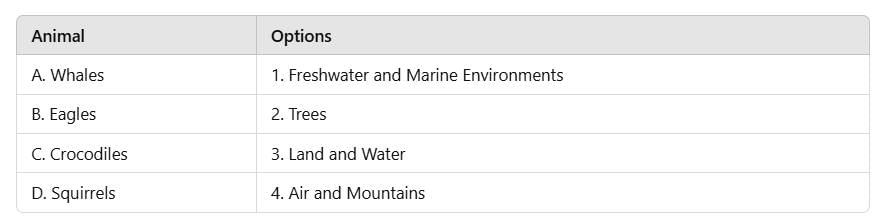
Detailed Solution: Question 4
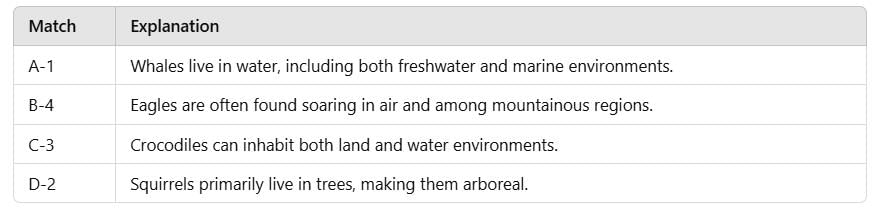
Detailed Solution: Question 5
Detailed Solution: Question 6
EVS Content (Animal Kingdom) - Question 7
Assertion (A): Decomposers break down dead organic material, enriching the soil.
Reason (R): Vultures are considered decomposers as they consume dead animals.
Detailed Solution: Question 7
Detailed Solution: Question 8
EVS Content (Animal Kingdom) - Question 9
Which type of fertilization occurs inside the female body?
Detailed Solution: Question 9
EVS Content (Animal Kingdom) - Question 10
Which classification is based on the type of cell structure in animals?
Detailed Solution: Question 10
22 videos|176 docs|48 tests |
Information about EVS Content (Animal Kingdom) Page
In this test you can find the Exam questions for EVS Content (Animal Kingdom) solved & explained in the simplest way possible. Besides giving Questions and answers for EVS Content (Animal Kingdom), EduRev gives you an ample number of Online tests for practice
