JEE Exam  >  JEE Test  >  Chemistry Main & Advanced  >  d – and f – Block Elements - 1 - JEE MCQ

d – and f Block Elements - 1 - Free MCQ Test with solutions for JEE Chemistry


MCQ Practice Test & Solutions: d – and f – Block Elements - 1 (30 Questions)

You can prepare effectively for JEE Chemistry for JEE Main & Advanced with this dedicated MCQ Practice Test (available with solutions) on the important topic of "d – and f – Block Elements - 1". These 30 questions have been designed by the experts with the latest curriculum of JEE 2026, to help you master the concept.

Test Highlights:

  • - Format: Multiple Choice Questions (MCQ)
  • - Duration: 60 minutes
  • - Number of Questions: 30

Sign up on EduRev for free to attempt this test and track your preparation progress.

d – and f – Block Elements - 1 - Question 1

What would happen when a solution of potassium chromate is treated with an excess of dilute nitric acid -

[AIEEE-03]

Detailed Solution: Question 1

The correct answer is Option B.
 
A solution of potassium chromate, when treated with an excess of dilute nitric acid doesn't oxidize nitric acid as N is already present in its maximum oxidation state (+5). The products formed are Cr2O72- and H2O.

d – and f – Block Elements - 1 - Question 2

 Excess of KI reacts with CuSO4 solution and then Na2S2Osolution is added to it. Which of the statements is incorrect for this reaction -

[AIEEE-04]

Detailed Solution: Question 2

The correct answer is option B
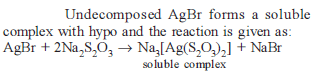
It is given that an excess of KI reacts with CuSO4​ solution and then Na2​S2​O3​ is added to it. This is hypo test and reactions are as follows:
2CuSO4​ + 4KI → 2K2​SO4 ​+ 2CuI+I2
2Na2​S2​O3​ + I2​→ Na2​S4​O6 ​+ 2NaI
CuI2​ is not formed according to the following reaction.
2CuI2​(unstable) → 2CuI+I2
Hence, the statement in option B is incorrect.
 

d – and f – Block Elements - 1 - Question 3

Calomel on reaction with NH4OH gives –

[AIEEE-04]

Detailed Solution: Question 3

The correct answer is option A
When calomel (Hg2​Cl2​) reacts with NH4​OH solution, the compound formed is [HgO.Hg(NH2​)Cl]. It is black in colour.
Hg2​Cl2​+2NH4​OH→[HgO.Hg(NH2​)Cl]↓+NH4​Cl+2H2​O

d – and f – Block Elements - 1 - Question 4

Knowing that the Chemistry of lanthanoids (Ln) is dominated by its +3 oxidation state, which of the following statements is incorrect ?

[AIEEE-09]

Detailed Solution: Question 4

The correct answer is option  B
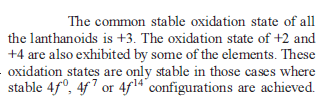
Ln(III) compounds are coloured due to the f−f transitions in the lanthanide but the colour is fainter as compared to the d−d transitions in transition metals.
 

d – and f – Block Elements - 1 - Question 5

Iron exhibits + 2 and +3 oxidation states. Which of the following statements about iron is incorrect?

 [AIEEE-2012]

Detailed Solution: Question 5

The correct answer is Option D.

Ferrous oxide is more basic in nature than ferric oxide. Ferrous compounds are relatively more ionic than the corresponding ferric compounds. Ferrous compounds are less volatile than the corresponding ferric compounds as ferrous compounds are more ionic. 
 
But ferric compounds are more easily hydrolyzed than the corresponding ferrous compounds due to their more positive charge.
 

d – and f – Block Elements - 1 - Question 6


Detailed Solution: Question 6


d – and f – Block Elements - 1 - Question 7


Detailed Solution: Question 7


d – and f – Block Elements - 1 - Question 8


Detailed Solution: Question 8


d – and f – Block Elements - 1 - Question 9


Detailed Solution: Question 9


d – and f – Block Elements - 1 - Question 10

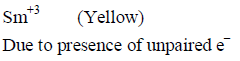
The lanthanide ion that would show colour is -

Detailed Solution: Question 10


d – and f – Block Elements - 1 - Question 11


Detailed Solution: Question 11


d – and f – Block Elements - 1 - Question 12


Detailed Solution: Question 12


d – and f – Block Elements - 1 - Question 13


Detailed Solution: Question 13


d – and f – Block Elements - 1 - Question 14


Detailed Solution: Question 14


d – and f – Block Elements - 1 - Question 15


Detailed Solution: Question 15


d – and f – Block Elements - 1 - Question 16


Detailed Solution: Question 16


d – and f – Block Elements - 1 - Question 17


Detailed Solution: Question 17


d – and f – Block Elements - 1 - Question 18


Detailed Solution: Question 18


d – and f – Block Elements - 1 - Question 19


Detailed Solution: Question 19


d – and f – Block Elements - 1 - Question 20


Detailed Solution: Question 20


d – and f – Block Elements - 1 - Question 21


Detailed Solution: Question 21


d – and f – Block Elements - 1 - Question 22


Detailed Solution: Question 22


d – and f – Block Elements - 1 - Question 23


Detailed Solution: Question 23


d – and f – Block Elements - 1 - Question 24


Detailed Solution: Question 24

d – and f – Block Elements - 1 - Question 25


Detailed Solution: Question 25


d – and f – Block Elements - 1 - Question 26


Detailed Solution: Question 26


d – and f – Block Elements - 1 - Question 27


Detailed Solution: Question 27


d – and f – Block Elements - 1 - Question 28


Detailed Solution: Question 28


d – and f – Block Elements - 1 - Question 29


Detailed Solution: Question 29


d – and f – Block Elements - 1 - Question 30


Detailed Solution: Question 30


332 videos|699 docs|300 tests
Information about d – and f – Block Elements - 1 Page
In this test you can find the Exam questions for d – and f – Block Elements - 1 solved & explained in the simplest way possible. Besides giving Questions and answers for d – and f – Block Elements - 1, EduRev gives you an ample number of Online tests for practice
Download as PDF