NEET Exam  >  NEET Test  >  Biology CUET UG Mock Test Series 2026  >  Test: Asexual Reproduction (Old NCERT) - NEET MCQ

Biology CUET UG Test: Asexual Reproduction (Old NCERT) Free Online Test


MCQ Practice Test & Solutions: Test: Asexual Reproduction (Old NCERT) (10 Questions)

You can prepare effectively for NEET Biology CUET UG Mock Test Series 2026 with this dedicated MCQ Practice Test (available with solutions) on the important topic of "Test: Asexual Reproduction (Old NCERT)". These 10 questions have been designed by the experts with the latest curriculum of NEET 2026, to help you master the concept.

Test Highlights:

  • - Format: Multiple Choice Questions (MCQ)
  • - Duration: 10 minutes
  • - Number of Questions: 10

Sign up on EduRev for free to attempt this test and track your preparation progress.

Test: Asexual Reproduction (Old NCERT) - Question 1

Budding is a method of asexual reproduction found in ______.

Detailed Solution: Question 1
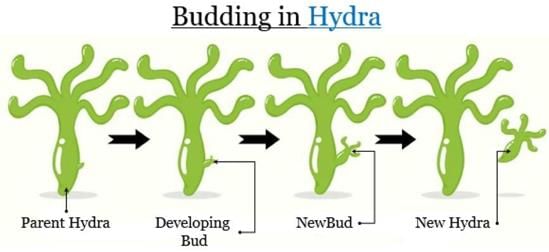
  • Hydra reproduces by asexual mode of reproduction. It reproduces by budding.
  • A new organism develops from an outgrowth or bud due to cell division at one particular site. The bud remains attached to the parent plant and separates after it gets mature. It leaves a scar at the point of separation.

  • Sponges reproduce asexually by internal buds called gemmules.
  • Penicillium reproduces asexually by forming conidia.
  • Amoeba reproduces asexually through binary fission. In this process, an individual divides itself into two daughter cells.

Hence, the correct answer is A
NCERT Reference: Page no. 6 topic “Asexual Reproduction” from chapter 1 of NCERT

Test: Asexual Reproduction (Old NCERT) - Question 2

Ginger is vegetatively propagated through:

Detailed Solution: Question 2

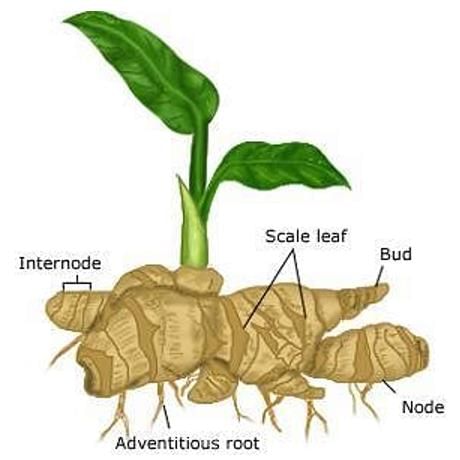
  • Horizontal underground plant stem capable of producing the shoot and root systems of a new plant.
  • The rhizomes propagate vegetatively. They store food materials and appear tuberous.
  • Example: Zingiber officinale (ginger), Curcuma longa (turmeric)


Fig: Vegetative Propagation in Ginger

  • Bulbils are the vegetative buds meant for vegetative propagation in Agave.
  • Bryophyllum has buds in the margins of leaves. If a leaf of this plant falls on a moist soil, each bud can give rise to a new plant.
  • Offset is a modification of stem in which a lateral branch with short internode and each node bearing a rosette of leaves and a tuft of roots found in water hyacinth.

Hence, the correct answer is A
NCERT Reference:
 Page no. 7 topic “asexual reproduction” from chapter 1 of NCERT

Test: Asexual Reproduction (Old NCERT) - Question 3

There is no natural death in single-celled organisms like Amoeba and bacteria because

Detailed Solution: Question 3

  • There is no natural death in single-celled organisms like Amoeba and bacteria because the parental body is distributed among the offspring.
  • In such organisms, reproduction occurs by cell division where a cell (parent) divides into two halves and each rapidly grows into an adult (offspring).

Hence, the correct answer is D
NCERT Reference: 
the “introduction” from chapter 1 of NCERT

Test: Asexual Reproduction (Old NCERT) - Question 4

Which of the following undergoes binary fission?

Detailed Solution: Question 4
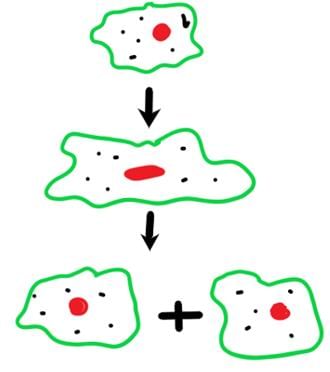
Amoeba undergoes binary fission. Many single celled organisms undergo binary fission. The diagram depicts the process.

Hence, the correct answer is A

NCERT Reference: page no. 6 of topic “1.1 ASEXUAL REPRODUCTION” of chapter 1 of NCERT

Test: Asexual Reproduction (Old NCERT) - Question 5

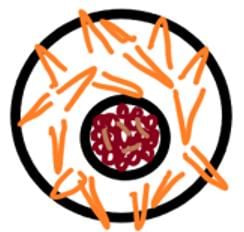
What does the following image depict?

Detailed Solution: Question 5

  • Gemmules are reproductive structures produced by sponges.
  • It is a form of internal budding.
  • Each gemmule is defined as a mass of undifferentiated archaeocytes surrounded by a protective spicule.
  • When the sponge degenerates, it releases the gemmules into the water.

Hence, the correct answer is C

NCERT Reference: Page no. 6 of topic “1.1 ASEXUAL REPRODUCTION” of chapter 1 of NCERT

Test: Asexual Reproduction (Old NCERT) - Question 6

Offset can also be described as a ______

Detailed Solution: Question 6

  • Offset is a thick runner type branch that helps in vegetative propagation by sub aerial stems.
  • It can grow even if there is an injury and it will grow independently.
    Examples are Pistia, Eichhornia.

Hence, the correct answer is C

NCERT Reference: Page no. 7 of topic “1.1 ASEXUAL REPRODUCTION” of chapter 1 of NCERT

Test: Asexual Reproduction (Old NCERT) - Question 7

Which one of the following statements is not correct?

Detailed Solution: Question 7

1. In potato, banana, and ginger, the plantlets arise from nodes present in the modified stem.

  • Tubers of potato are the underground modification of stem which stores starch. It has buds on the nodes which helps in the growth of new plant as these buds are meristematic in nature. The buds are also known as eye.
  • Ginger is propagated by the rhizome. It is an underground stem modification. The stem is differentiated into nodes and internodes. 
  • The plantlets arise from nodes present in the modified stem.
  • Banana is propagated by inflorescence. The female flowers of the inflorescence present on the node of the true stem matures and develop into fruit without fertilization of gametes. This process is known as Parthenocarpy.

So, the statement is false.

2. Asexually developed plants are the clone of their own parents because of the fusion of gametes does not take place in vegetative propagation so there is no chance of recombination and variation.
The statement is true.

3. A zoospore is a motile asexual spore that uses a flagellum for locomotion.
The statement is true.
 

4. Water hyacinth is an aquatic weed which is popularly known as the terror of Bengal because it grows very rapidly and eliminates the growth of several species and even eliminates them.

  • Due to its voluminous growth in water bodies, it increases the biological oxygen demand of the water and leads to the death of aquatic life which also cause a major decrease in the biodiversity due to alien species invasion.

The statement is true.
Hence the correct answer is A

NCERT Reference: Page 7 topic “asexual reproduction” from chapter 1 of NCERT

Test: Asexual Reproduction (Old NCERT) - Question 8

Asexual reproduction produces offsprings with variations.

Detailed Solution: Question 8

  • Asexual reproduction doesn’t produce offspring with variations. It produces offspring that are genetically and morphologically similar. Another name for the offspring is clone.
  • Since it doesn’t have any variations, it becomes difficult for the clones to adapt with the changing atmosphere.

Hence, the correct answer is A

NCERT Reference: Page no. 5 of topic “1.1 ASEXUAL REPRODUCTION” of chapter 1 of NCERT

Test: Asexual Reproduction (Old NCERT) - Question 9

Which of the following options shows bisexual animals only?

Detailed Solution: Question 9

  • When both male and female sex organs are present in the same individual, such animals are called hermaphrodite or bisexual, e.g, tapeworm, earthworm, sponge and leech.

So, the correct answer is 'Earthworm, sponge, leech'.

Hence, the correct answer is B

NCERT Reference: Page no. 6 of topic “1.1 ASEXUAL REPRODUCTION” of chapter 1 of NCERT

Test: Asexual Reproduction (Old NCERT) - Question 10

How many daughter cells are produced when a bacterial cell reproduces asexually?

Detailed Solution: Question 10
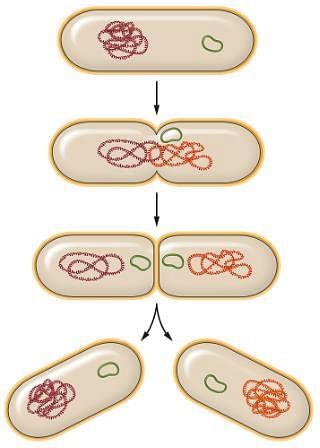
Prokaryotes, which include bacteria and single-celled microorganisms called Archaea, usually pass their chromosomal DNA onto their offspring asexually. In other words, a bacterial cell reproduces by simply replicating its chromosome and dividing it into two daughter cells.


EduRev Tip: This question analyzes your reasoning & analytical skills, asked in NEET exam recently.

4 docs|170 tests
Information about Test: Asexual Reproduction (Old NCERT) Page
In this test you can find the Exam questions for Test: Asexual Reproduction (Old NCERT) solved & explained in the simplest way possible. Besides giving Questions and answers for Test: Asexual Reproduction (Old NCERT), EduRev gives you an ample number of Online tests for practice
Download as PDF