Chemistry Exam  >  Chemistry Test  >  Organic   >  Test: Pericyclic Level - 1 - Chemistry MCQ

Pericyclic Level - 1 - Free MCQ Practice Test with solutions, Chemistry


MCQ Practice Test & Solutions: Test: Pericyclic Level - 1 (20 Questions)

You can prepare effectively for Chemistry Organic Chemistry with this dedicated MCQ Practice Test (available with solutions) on the important topic of "Test: Pericyclic Level - 1". These 20 questions have been designed by the experts with the latest curriculum of Chemistry 2026, to help you master the concept.

Test Highlights:

  • - Format: Multiple Choice Questions (MCQ)
  • - Duration: 60 minutes
  • - Number of Questions: 20

Sign up on EduRev for free to attempt this test and track your preparation progress.

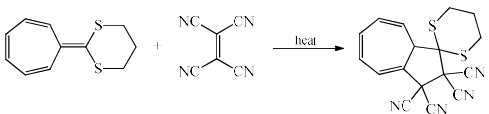
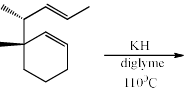
Test: Pericyclic Level - 1 - Question 1

Following reaction is an example of:


Detailed Solution: Question 1
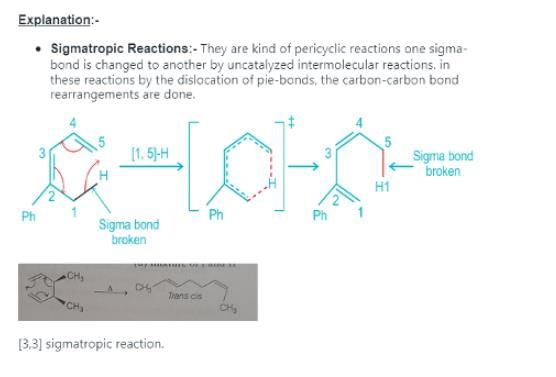
[8 + 2] cycloaddition

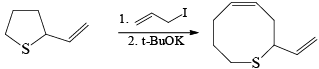
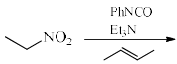
Test: Pericyclic Level - 1 - Question 2

Following reaction is an example of:

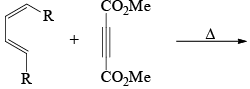
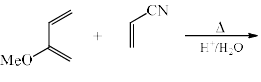
Test: Pericyclic Level - 1 - Question 3

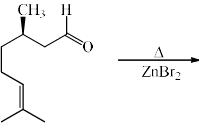
The major product of the reaction is:

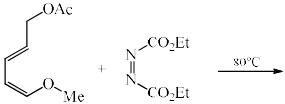
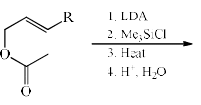
Test: Pericyclic Level - 1 - Question 4

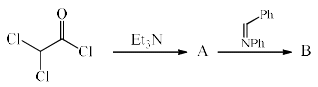
The major product of the reaction is:

Test: Pericyclic Level - 1 - Question 5

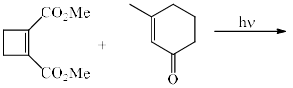
The major product of the reaction is:

Test: Pericyclic Level - 1 - Question 6

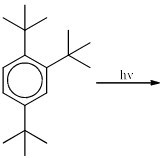
The major product formed in the following reaction is:

Test: Pericyclic Level - 1 - Question 7

The major product of the reaction is:

Test: Pericyclic Level - 1 - Question 8

The major product of the following reaction is:

Test: Pericyclic Level - 1 - Question 9

The major product of the following reaction:

Test: Pericyclic Level - 1 - Question 10

The major product of the following is:

Test: Pericyclic Level - 1 - Question 11

The major product of the following reaction is:

Test: Pericyclic Level - 1 - Question 12

The major product of the following reaction is:

Test: Pericyclic Level - 1 - Question 13

The most basic compound among the following is:-

Detailed Solution: Question 13
Basicity is inversely proportional to resonance of lone pair electrons. Benzylamine is more basic. The electron pairs do not involve in resonance in benzylamine. In other amines, there is delocalization of lone pair of electron on N atom on the ring. In acetanilide, the delocalization of lone pair of electrons on N atom is due to adjacent CO group.
Hence option (B) is the answer.

Test: Pericyclic Level - 1 - Question 14

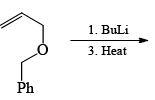
The major product of the following reaction is:

Test: Pericyclic Level - 1 - Question 15

The major product of the following reaction is:

Test: Pericyclic Level - 1 - Question 16

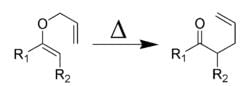
The major product of the following is:

Detailed Solution: Question 16

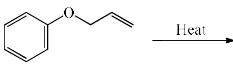
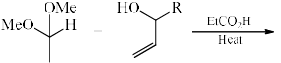
The Claisen rearrangement is a powerful carbon–carbon bond-forming chemical reaction discovered by Rainer Ludwig Claisen. The heating of an allyl vinyl ether will initiate a [3,3]-sigmatropic rearrangement to give a γ,δ-unsaturated carbonyl.

Test: Pericyclic Level - 1 - Question 17

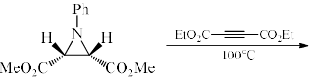
The major product of the following reaction is:


Test: Pericyclic Level - 1 - Question 18

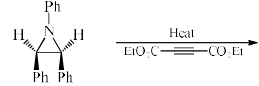
The major product of the following reaction is:

Test: Pericyclic Level - 1 - Question 19

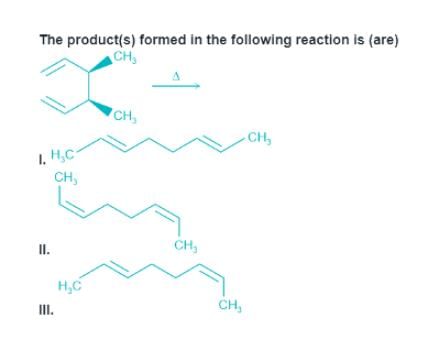
Which of the following dienes cannot undergo Diels-Alder reactions?

Detailed Solution: Question 19
The Diels-Alder reaction is a chemical reaction between a conjugated diene and a dienophile to form a six-membered ring. A crucial requirement for the diene is that it must be able to adopt an s-cis conformation. This means the two double bonds must be on the same side of the single bond that connects them.

Let's analyze the options:

  • a) 2-methyl-1,3-butadiene (isoprene): This is an open-chain diene. The single bond between the two double bonds can freely rotate, allowing it to easily adopt the required s-cis conformation. Thus, it can undergo a Diels-Alder reaction.

  • b) 1-methylene-2-cyclohexene: In this molecule, the conjugated diene system is held in a rigid s-trans conformation by the ring structure. The exocyclic double bond (the one outside the ring) cannot rotate into an s-cis position relative to the endocyclic double bond (the one inside the ring). Since it is "locked" in the s-trans form, it cannot undergo a Diels-Alder reaction.

  • c) 1,3-cyclohexadiene: The two double bonds are part of the same ring and are permanently locked in the s-cis conformation. This makes it an excellent diene for Diels-Alder reactions.

  • d) (2E,4E)-hexa-2,4-diene: Like molecule (a), this is an open-chain diene. It is shown in the s-trans conformation, but it can freely rotate around the central single bond to achieve the reactive s-cis conformation. Therefore, it can undergo a Diels-Alder reaction.

Therefore, the diene that cannot undergo a Diels-Alder reaction is b) because it is locked in an s-trans conformation.

Test: Pericyclic Level - 1 - Question 20

Detailed Solution: Question 20

39 videos|96 docs|46 tests
Information about Test: Pericyclic Level - 1 Page
In this test you can find the Exam questions for Test: Pericyclic Level - 1 solved & explained in the simplest way possible. Besides giving Questions and answers for Test: Pericyclic Level - 1, EduRev gives you an ample number of Online tests for practice
39 videos|96 docs|46 tests
Download as PDF