
GATE Mechanical (ME) Test: Critical Thickness of Insulation & Heat Transfer
MCQ Practice Test & Solutions: Test: Critical Thickness of Insulation & Heat Transfer From Extended Surfaces (Fins) - 2 (30 Questions)
You can prepare effectively for Mechanical Engineering GATE Mechanical (ME) Mock Test Series 2027 with this dedicated MCQ Practice Test (available with solutions) on the important topic of "Test: Critical Thickness of Insulation & Heat Transfer From Extended Surfaces (Fins) - 2". These 30 questions have been designed by the experts with the latest curriculum of Mechanical Engineering 2026, to help you master the concept.
Test Highlights:
- - Format: Multiple Choice Questions (MCQ)
- - Duration: 90 minutes
- - Number of Questions: 30
Sign up on EduRev for free to attempt this test and track your preparation progress.

It is proposed to coat a 1 mm diameter wire with enamel paint (k = 0.1W/mK) to increase heat transfer with air. If the air side heat transfer coefficient is 100 W/m2K, then optimum thickness of enamel paint should be:
Detailed Solution: Question 1
 = 1mm
= 1mm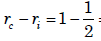 = 0.5 mm
Two rods, one of length L and the other of length 2L are made of thesame material and have the same diameter. The two ends of the longerrod are maintained at 100°C. One end of the shorter rod Is maintainedat 100°C while the other end is insulated. Both the rods are exposed tothe same environment at 40°C. The temperature at the insulated end ofthe shorter rod is measured to be 55°C. The temperature at the midpointof the longer rod would be:
Detailed Solution: Question 2

Upto the critical radius of insulation
Detailed Solution: Question 3
A hollow pipe of 1 cm outer diameter is to be insulated by thick cylindrical insulation having thermal conductivity 1 W/mK. The surfaceheat transfer coefficient on the insulation surface is 5 W/m2K. What isthe minimum effective thickness of insulation for causing the reduction in heat leakage from the insulated pipe?
Detailed Solution: Question 4
 = 0.2m = 20cm
A copper wire of radius 0.5 mm is insulated with a sheathing ofthickness 1 mm having a thermal conductivity of 0.5 W/m – K. Theoutside surface convective heat transfer coefficient is 10 W/m2 – K. Ifthe thickness of insulation sheathing is raised by 10 mm, then theelectrical current-carrying capacity of the wire will:
Detailed Solution: Question 5
A copper pipe carrying refrigerant at – 200 C is covered by cylindrical insulation of thermal conductivity 0.5 W/m K. The surface heat transfer coefficient over the insulation is 50 W/m2 K. The critical thickness ofthe insulation would be:
Detailed Solution: Question 6
 = 0.5m = 0.01m
The temperature variation in a largeplate, as shown in the given figure,would correspond to which of thefollowing condition (s)?
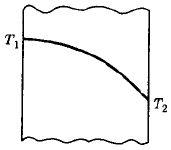
1. Unsteady heat
2. Steady-state with variation of k
3. Steady-state with heat generation
Select the correct answer using the codes given below:
Codes:
1. Unsteady heat
2. Steady-state with variation of k
3. Steady-state with heat generation
Select the correct answer using the codes given below:
Codes:
Detailed Solution: Question 7
Water jacketed copper rod “D” m in diameter is used to carry the current. The water, which flows continuously maintains the rod temperature at Toi C during normal operation at “I” amps. The electrical resistance of the rod is known to be “R” Ω /m. If the coolant water ceased to be available and the heat removal diminished greatly, the rod would eventually melt. What is the time required for melting to occur if the melting point of the rod material is Tmp?
[Cp = specific heat, ρ = density of the rod material and L is the length of the rod]
[Cp = specific heat, ρ = density of the rod material and L is the length of the rod]
Detailed Solution: Question 8
Consider the following statements:
1. Under certain conditions, an increase in thickness of insulation may increase the heat loss from a heated pipe.
2. The heat loss from an insulated pipe reaches a maximum when theoutside radius of insulation is equal to the ratio of thermalconductivity to the surface coefficient.
3. Small diameter tubes are invariably insulated.
4. Economic insulation is based on minimum heat loss from pipe.
Of these statements
1. Under certain conditions, an increase in thickness of insulation may increase the heat loss from a heated pipe.
2. The heat loss from an insulated pipe reaches a maximum when theoutside radius of insulation is equal to the ratio of thermalconductivity to the surface coefficient.
3. Small diameter tubes are invariably insulated.
4. Economic insulation is based on minimum heat loss from pipe.
Detailed Solution: Question 9
Consider the following statements:
1. Under certain conditions, an increase in thickness of insulation mayincrease the heat loss from a heated pipe.
2. The heat loss from an insulated pipe reaches a maximum when theoutside radius of insulation is equal to the ratio of thermalconductivity to the surface coefficient.
3. Small diameter tubes are invariably insulated.
4. Economic insulation is based on minimum heat loss from pipe.Of these statements
Detailed Solution: Question 10
An electric cable of aluminium conductor (k = 240 W/mK) is to be insulated with rubber (k = 0.15 W/mK). The cable is to be located in air (h = 6W/m2). The critical thickness of insulation will be:
Detailed Solution: Question 11
Match List-I (Parameter) with List-II (Definition) and select the correct answer using the codes given below the lists:

Nomenclature: h: Film heat transfer coefficient, ksolid: Thermal conductivity of solid, kfluid: Thermal conductivity of fluid, ρ: Density,
c: Specific heat, V: Volume, l: Length.

Nomenclature: h: Film heat transfer coefficient, ksolid: Thermal conductivity of solid, kfluid: Thermal conductivity of fluid, ρ: Density,
c: Specific heat, V: Volume, l: Length.
Detailed Solution: Question 12
What is the critical radius of insulation for a sphere equal to?k = thermal conductivity in W/m-K
h = heat transfer coefficient in W/m2K
h = heat transfer coefficient in W/m2K
Detailed Solution: Question 13
In current carrying conductors, if the radius of the conductor is lessthan the critical radius, then addition of electrical insulation isdesirable, as
Detailed Solution: Question 14
Provision of fins on a given heat transfer surface will be more it thereare:
Detailed Solution: Question 15
In current carrying conductors, if the radius of the conductor is lessthan the critical radius, then addition of electrical insulation is desirable, as
Detailed Solution: Question 16
Which one of the following is correct?
The effectiveness of a fin will be maximum in an environment with
The effectiveness of a fin will be maximum in an environment with
Detailed Solution: Question 17
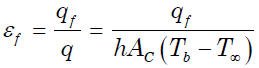
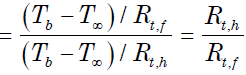
On heat transfer surface, fins are provided
Detailed Solution: Question 18
In order to achieve maximum heat dissipation, the fin should be designed in such a way that:
Detailed Solution: Question 19
Consider the following statements pertaining to large heat transferrate using fins:
1. Fins should be used on the side where heat transfer coefficient is small
2. Long and thick fins should be used
3. Short and thin fins should be used
4. Thermal conductivity of fin material should be large
Which of the above statements are correct?
1. Fins should be used on the side where heat transfer coefficient is small
2. Long and thick fins should be used
3. Short and thin fins should be used
4. Thermal conductivity of fin material should be large
Which of the above statements are correct?
Detailed Solution: Question 20
Assertion (A): Nusselt number is always greater than unity.
Reason (R): Nusselt number is the ratio of two thermal resistances, onethe thermal resistance which would be offered by the fluid, if it wasstationary and the other, the thermal resistance associated with convective heat transfer coefficient at the surface.
Detailed Solution: Question 21
Assertion (A): In a liquid-to-gas heat exchanger fins are provided in thegas side.
Reason (R): The gas offers less thermal resistance than liquid
Reason (R): The gas offers less thermal resistance than liquid
Detailed Solution: Question 22
Extended surfaces are used to increase the rate of heat transfer. When the convective heat transfer coefficient h = mk, the addition ofextended surface will:
Detailed Solution: Question 23
Consider the following statements pertaining to heat transfer throughfins:
1. Fins are equally effective irrespective of whether they are on thehot side or cold side of the fluid.
2. The temperature along the fin is variable and hence the rate of heattransfer varies along the elements of the fin.
3. The fins may be made of materials that have a higher thermalconductivity than the material of the wall.
4. Fins must be arranged at right angles to the direction of flow of theworking fluid.Of these statements:
1. Fins are equally effective irrespective of whether they are on thehot side or cold side of the fluid.
2. The temperature along the fin is variable and hence the rate of heattransfer varies along the elements of the fin.
3. The fins may be made of materials that have a higher thermalconductivity than the material of the wall.
4. Fins must be arranged at right angles to the direction of flow of theworking fluid.Of these statements:
Detailed Solution: Question 24
Addition of fin to the surface increases the heat transfer if 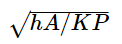 is:
is:
is: Detailed Solution: Question 25
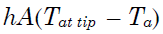
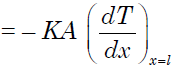
A fin of length 'l' protrudes from a surface held at temperature togreater than the ambient temperature ta. The heat dissipation from thefree end' of the fin is assumed to be negligible. The temperaturegradient at the fin tip  is:
is:
is: Detailed Solution: Question 26
The insulated tip temperature of a rectangular longitudinal fin having an excess (over ambient) root temperature of θo is:
Detailed Solution: Question 27
A metallic rod of uniform diameter and length L connects two heat sources each at 500°C. The atmospheric temperature is 30°C. The temperature gradient  at the centre of the bar will be:
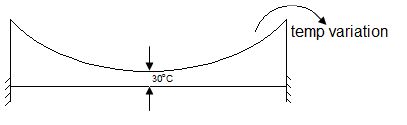
at the centre of the bar will be: Detailed Solution: Question 28
The efficiency of a pin fin with insulated tip is:
Detailed Solution: Question 29
A fin of length l protrudes from a surface held at temperature To; it being higher than the ambient temperature Ta. The heat dissipationfrom the free end of the fin is stated to be negligibly small, What is the temperature gradien at the tip of the fin?
at the tip of the fin? Detailed Solution: Question 30
30 docs|220 tests |
