Engineering Mathematics Exam  >  Engineering Mathematics Test  >  Engineering Mathematics  >  Test: Partial Derivatives, Gradient- 1 - Engineering Mathematics MCQ

Partial Derivatives, Gradient- 1 - Free MCQ Practice Test with solutions,


MCQ Practice Test & Solutions: Test: Partial Derivatives, Gradient- 1 (20 Questions)

You can prepare effectively for Engineering Mathematics Engineering Mathematics with this dedicated MCQ Practice Test (available with solutions) on the important topic of "Test: Partial Derivatives, Gradient- 1". These 20 questions have been designed by the experts with the latest curriculum of Engineering Mathematics 2026, to help you master the concept.

Test Highlights:

  • - Format: Multiple Choice Questions (MCQ)
  • - Duration: 60 minutes
  • - Number of Questions: 20

Sign up on EduRev for free to attempt this test and track your preparation progress.

Test: Partial Derivatives, Gradient- 1 - Question 1

Consider the function f(x) = x2 – x – 2. The maximum value of f(x) in the closed interval [–4, 4] is 

Detailed Solution: Question 1
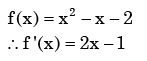
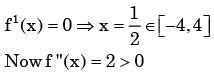
∴ f (x )has minimum at x= 1 / 2 It Shows that a maximum value that will be at x = 4  or x = - 4 

At x = 4, f (x )= 10

∴ At x= −4, f (x ) = 18

∴ At x= −4, f (x ) has a maximum.

Test: Partial Derivatives, Gradient- 1 - Question 2

Detailed Solution: Question 2

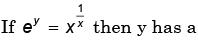
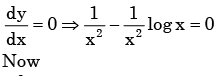
Option A is correct: the function y attains a maximum at x = e.

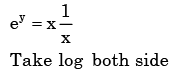
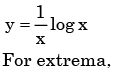
Write y = (ln x)/x.

Differentiate: dy/dx = (1 - ln x)/x2.

Critical points satisfy dy/dx = 0, so ln x = 1 and hence x = e.

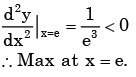
Compute the second derivative: d2y/dx2 = (2 ln x - 3)/x3.

At x = e, d2y/dx2 = (2·1 - 3)/e3 = -1/e3 < 0.

Because the second derivative is negative at the critical point, the function has a maximum at x = e. Thus option A is correct.


Test: Partial Derivatives, Gradient- 1 - Question 3

Detailed Solution: Question 3

Test: Partial Derivatives, Gradient- 1 - Question 4

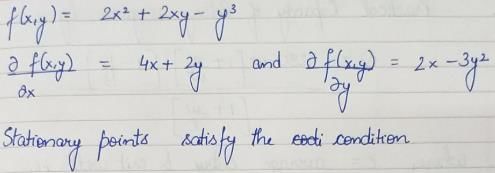
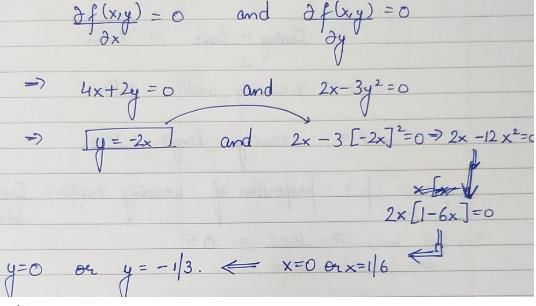
The function f(x,y) = 2x2 +2xy – y3 has 

Detailed Solution: Question 4


Test: Partial Derivatives, Gradient- 1 - Question 5

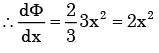
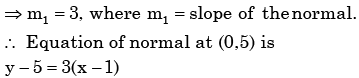
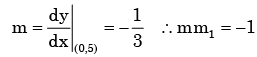
Equation of the line normal to function f(x) = (x-8)2/3+1 at P(0,5) is  

Detailed Solution: Question 5
Test: Partial Derivatives, Gradient- 1 - Question 6

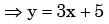
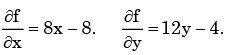
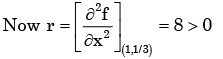
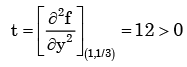
The distance between the origin and the point nearest to it on the surface z2 = 1 + xy is 

Detailed Solution: Question 6
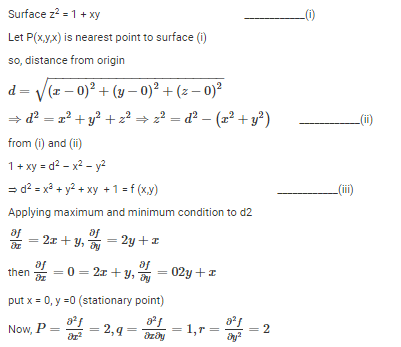


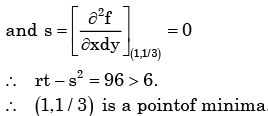
or pr – q2 = 4 – 1 = 3 > 0 and r = +ve

so f(xy) is minimum at (0,0)

Hence, minimum value of d2 at (0,0)

d2 = x2 + y2 + xy + 1 = (0)2 + (0)2 + (0)(0) + 1 = 1

Then the nearest point is

z2 = 1 + xy = 1+ (0)(0) = 1

or z = 1

Test: Partial Derivatives, Gradient- 1 - Question 7

Given a function 

The optimal value of f(x, y)

Detailed Solution: Question 7

Test: Partial Derivatives, Gradient- 1 - Question 8

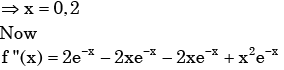
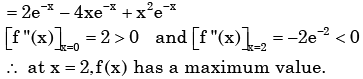
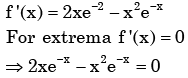
For the function f(x) = x2e-x, the maximum occurs when x is equal to 

Detailed Solution: Question 8
Test: Partial Derivatives, Gradient- 1 - Question 9

A cubic polynomial with real coefficients  

Detailed Solution: Question 9

So maximum two extrema and three zero crossing  

Test: Partial Derivatives, Gradient- 1 - Question 10

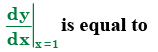
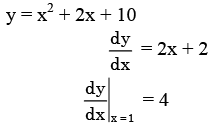
Given y = x2 + 2x + 10, the value of 

Detailed Solution: Question 10

Test: Partial Derivatives, Gradient- 1 - Question 11

Consider the function y = x2 - 6x + 9. The maximum value of y obtained when x varies over the interval 2 to 5 is

Detailed Solution: Question 11

B. 4 is the maximum value.

Rewrite the expression as y = (x-3)2.

Because (x-3)2 ≥ 0 for all real x, the minimum value of y is 0, attained at x = 3.

Evaluate y at the interval endpoints: at x = 2, y = 1; at x = 5, y = 4.

Comparing these values, the largest is 4, attained at x = 5; hence the maximum on the closed interval [2, 5] is 4.

If the interval were intended to be open, i.e. (2, 5), the supremum would still be 4 but it would not be attained (so there would be no maximum value in that open interval).

Test: Partial Derivatives, Gradient- 1 - Question 12

Test: Partial Derivatives, Gradient- 1 - Question 13

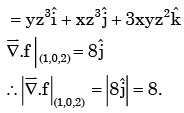
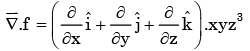
The magnitude of the gradient of the function f = xyz3 at (1,0,2) is 

Detailed Solution: Question 13
Test: Partial Derivatives, Gradient- 1 - Question 14

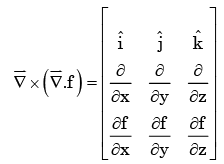
The expression curl (grad f), where f is a scalar function, is  

Detailed Solution: Question 14
Test: Partial Derivatives, Gradient- 1 - Question 15

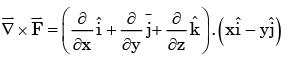
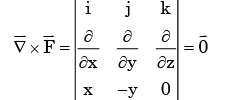
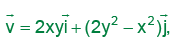
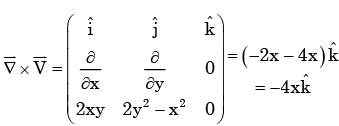
If the velocity vector in a two – dimensional flow field is given by    the  vorticity vector, curl  
Detailed Solution: Question 15
Test: Partial Derivatives, Gradient- 1 - Question 16

The vector field 

Detailed Solution: Question 16

Test: Partial Derivatives, Gradient- 1 - Question 17

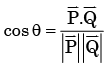
The angle between two unit-magnitude co-planar vectors P (0.866, 0.500, 0) and Q (0.259, 0.966, 0) will be 

Detailed Solution: Question 17
Test: Partial Derivatives, Gradient- 1 - Question 18

Stokes theorem connects  

Test: Partial Derivatives, Gradient- 1 - Question 19

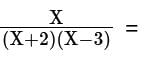
Detailed Solution: Question 19

Let's solve it using partial diffraction:

Now comparing both sides:

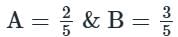
A + B = 1  ----- ---Eq(ii)

-3A + 2B = 0  ----Eq(iiI)

after solving the above equations, we get:

after putting these value in Eq(i), we will get:

Test: Partial Derivatives, Gradient- 1 - Question 20

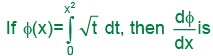
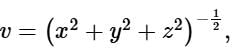
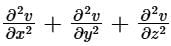
If then is

Detailed Solution: Question 20

Concept

Calculation:

Given:

Similarly,

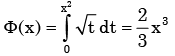
Now,

71 videos|135 docs|94 tests
Information about Test: Partial Derivatives, Gradient- 1 Page
In this test you can find the Exam questions for Test: Partial Derivatives, Gradient- 1 solved & explained in the simplest way possible. Besides giving Questions and answers for Test: Partial Derivatives, Gradient- 1, EduRev gives you an ample number of Online tests for practice
71 videos|135 docs|94 tests
Download as PDF