NEET PG Exam  >  NEET PG Test  >  Medicine  >  Test: Arrhythmias and Emergency Medicine- 1 - NEET PG MCQ

Arrhythmias and Emergency Medicine- 1 - Free MCQ Practice Test with solutions,


MCQ Practice Test & Solutions: Test: Arrhythmias and Emergency Medicine- 1 (30 Questions)

You can prepare effectively for NEET PG Medicine with this dedicated MCQ Practice Test (available with solutions) on the important topic of "Test: Arrhythmias and Emergency Medicine- 1". These 30 questions have been designed by the experts with the latest curriculum of NEET PG 2026, to help you master the concept.

Test Highlights:

  • - Format: Multiple Choice Questions (MCQ)
  • - Duration: 30 minutes
  • - Number of Questions: 30

Sign up on EduRev for free to attempt this test and track your preparation progress.

Test: Arrhythmias and Emergency Medicine- 1 - Question 1

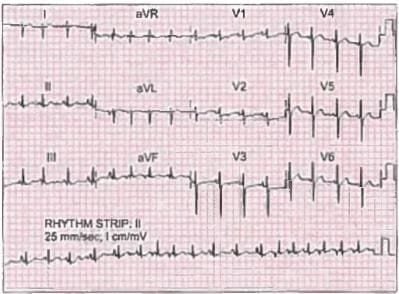
A patient presents with recent onset breathlessness and ECG was done. The diagnosis is? (AIIMS May 2019, Nov 2018)
Detailed Solution: Question 1


The heart rate is irregular. Observe the horizontal rhythm strip markings.

Right axis deviation is present.

There is a right axis deviation present. The P wave is evident and displays various morphologies. The vertical markings emphasise the different shapes of the P waves. The existence of P waves effectively excludes atrial fibrillation and paroxysmal supraventricular tachycardia.

  • qRS complexes are of normal duration.
  • ST segment appears normal.
  • Progression of the R wave towards the lateral chest leads is abnormal.
  • Deep S waves in the lateral leads suggest a potential right ventricular enlargement.

The findings indicate a diagnosis of multifocal atrial tachycardia.

Test: Arrhythmias and Emergency Medicine- 1 - Question 2

Which of the following is the most common heart block in neonatal lupus. (Recent Pattern 2014-15)

Detailed Solution: Question 2

In individuals with SLE, the Ro antibody can be transmitted through the placenta to the fetus, leading to potential harm to the fetus's AV node. This may cause the infant to be born with complete heart block, also known as third-degree heart block.

  • The neonate presents with bradycardia.
  • There is an occurrence of AV dissociation.
  • Pacing is necessary during the initial days after birth.

Test: Arrhythmias and Emergency Medicine- 1 - Question 3

True about Torsades de pointes? (Recent Pattern 2014-15)

Detailed Solution: Question 3

Torsades de pointes ('Twisting of the Points'; a form of polymorphic VT linked to extended QT intervals) refers to ventricular tachycardia (VT) marked by polymorphic qRS complexes that vary in amplitude and cycle length, creating a visual effect of oscillations around the baseline. This rhythm is inherently related to QT prolongation.

  • Factors contributing to Torsades de pointes include:
  • Administration of various antiarrhythmic medications, particularly quinidine
  • Phenothiazine usage
  • Tricyclic antidepressants
  • Liquid protein diets
  • Intracranial incidents
  • Bradyarrhythmias, especially third-degree AV block
  • Can manifest as a congenital condition, often presenting with Torsades de pointes (resulting in syncope or sudden death) at a young age

The electrocardiographic signature is polymorphic VT, typically preceded by significant QT prolongation, often exceeding 0.60 seconds. These patients frequently experience multiple episodes of nonsustained polymorphic VT that are linked to recurrent syncope; however, they may also progress to VT and sudden cardiac death.

Test: Arrhythmias and Emergency Medicine- 1 - Question 4

A 40-year-old male presents to the office with a history of palpitations that last for a few seconds and occur two or three times a week. There are no other symptoms. ECG shows a single unifocal premature ventricular contraction. The most likely cause of this finding is: (Recent Pattern 2014-15)

Detailed Solution: Question 4

PVCs are frequently observed in both individuals with and without heart conditions, being identified in 60% of adult males during Holter monitoring.

Rare unifocal PVCs do not indicate any of the underlying conditions mentioned.

Test: Arrhythmias and Emergency Medicine- 1 - Question 5

A 78-year-old male with hypertension (controlled on anti­hypertensive drugs) presents with new onset of mild left hemiparesis and ECG finding of atrial fibrillation. Which of the following must be done? (Recent Pattern 2014-15)

Detailed Solution: Question 5

This patient has a CHADS2 score of 5 (stroke = 2 points, age = 2 points, and 1 point for hypertension). Aspirin alone may be adequate for a stroke patient without the complication of atrial fibrillation. However, for those with atrial fibrillation, where the stroke risk approaches 30%, therapeutic anticoagulation using warfarin significantly lowers the likelihood of future strokes when compared to aspirin.

  • This specific patient might qualify for either medical or electrical cardioversion.
  • This process requires pretreatment with Coumadin for 3 weeks if atrial fibrillation has lasted more than 48 hours or has an unknown onset.
  • Alternatively, a transesophageal echocardiogram (TEE) could be conducted to rule out the presence of a left atrial thrombus.
  • Following this, cardioversion can take place, followed by maintaining warfarin anticoagulation for 4 weeks.

Lidocaine is effective for ventricular arrhythmias, but not for supraventricular ones.

Test: Arrhythmias and Emergency Medicine- 1 - Question 6

While at the ward round, you see an elderly lady attendant slump to the floor. Going to her aid, you notice her to be unresponsive and apneic. Your first step in Adult Basic Life Support(CPR) should be the following?

Detailed Solution: Question 6

The BLS algorithm has been streamlined, and the 'Look, Listen and Feel' component has been eliminated from the process.
  • These steps were found to be inconsistent and time-consuming.
  • Consequently, the 2015 AHA Guidelines for CPR recommend the immediate activation of the emergency response system.
  • Start chest compressions for any unresponsive adult victim who is not breathing or only gasping.
Encourage Hands-Only CPR (compression-only) for those without training. - Begin chest compressions before administering rescue breaths (CA-B instead of A-B-C).- Chest compressions can be initiated right away, while positioning the head, creating a seal for mouth-to-mouth rescue breathing, or preparing a bag-mask device for rescue breathing all require additional time.- Starting CPR with 30 compressions instead of 2 ventilations results in a shorter wait before the first compression. The advised depth for compressions for adult victims has risen from 1½ inches to at least 2 inches.

Test: Arrhythmias and Emergency Medicine- 1 - Question 7

In the ICU, a patient suddenly becomes unresponsive, pulseless, and hypotensive, with cardiac monitor indicating ventricular tachycardia. The first therapeutic step among the following should be: (Recent Pattern 2014-15)

Detailed Solution: Question 7

The typical procedure for managing ventricular fibrillation or pulseless ventricular tachycardia includes:
  • Defibrillation at 200 joules, followed by
  • If necessary, an intravenous (IV) push of 1 mg epinephrine every 3 to 5 minutes and/or
  • Vasopressin to ensure adequate brain perfusion.
If ventricular fibrillation or pulseless ventricular tachycardia persists, the following may be considered:
  • An IV push of 300 mg amiodarone or
  • An IV push of lidocaine at a dosage of 1.0 to 1.5 mg/kg.
Furthermore, in cases of Torsade de Pointes or suspected arrhythmia due to low magnesium levels, 1 to 2 g of magnesium sulfate IV may also be administered.

Test: Arrhythmias and Emergency Medicine- 1 - Question 8

A 12-year-old wheel chair bound boy with scoliosis has presented with Dyspnea. ECG shows deep QS waves in V₂, V₃ with tall R waves in V₅, V₆. Probable diagnosis:  (Recent Pattern 2014-15)

Detailed Solution: Question 8

All individuals with DMD are male and typically become wheelchair-dependent by the age of 12 to 15 years, subsequently succumbing to pneumonia.

  • The heart is also affected in these patients, and dilated cardiomyopathy may lead to increased dyspnoea due to associated pulmonary oedema.
  • The ECG findings noted indicate muscle hypertrophy of the heart, along with global dysfunction, which exacerbates the cardiovascular condition of these patients.

ALS is excluded since it usually manifests between the ages of 30 and 40 and does not involve cardiac issues.

Test: Arrhythmias and Emergency Medicine- 1 - Question 9

Treatment of asymptomatic bradycardia is: (Recent Pattern 2014-15)

Detailed Solution: Question 9

Asymptomatic bradycardia does not necessitate treatment. However, a patient experiencing symptomatic bradycardia, such as:

  • Fatigue
  • Dizziness

should receive treatment with either an injection of atropine, an injection of isoprenaline, or a pacemaker.

Test: Arrhythmias and Emergency Medicine- 1 - Question 10

Which is incorrect about a pacemaker: (Recent Pattern 2014-15)

Detailed Solution: Question 10

  • Complete AV block (Stokes-Adams attacks, congenital)
  • Mobitz type II block
  • Ongoing AV block following anterior MI
  • Symptomatic bradycardia (e.g. sick sinus syndrome)

Test: Arrhythmias and Emergency Medicine- 1 - Question 11

Frog sign is seen in: (Recent Pattern 2014-15)

Detailed Solution: Question 11

Atrioventricular Nodal Reentrant Tachycardia is the most frequently occurring paroxysmal regular supraventricular tachycardia (SVT).

  • Neck pulsations arise from the concurrent contraction of the atria and ventricles.
  • This occurs against a closed tricuspid valve, resulting in a cannon A wave.
  • These pulsations can be experienced as a fluttering sensation in the neck.

This phenomenon is known as the frog sign.

Test: Arrhythmias and Emergency Medicine- 1 - Question 12

Sinus Bradycardia is defined as heart rate of? (Recent Pattern 2014-15)

Detailed Solution: Question 12

By definition, sinus bradycardia refers to a rhythm generated by the SA node, characterised by a rate of <60 beats/min.

Test: Arrhythmias and Emergency Medicine- 1 - Question 13

A person with mitral regurgitation and atrial fibrillation presents with syncope. On examination the person has a heart rate of 55. What is the most probable cause? (Recent Pattern 2014-15)

Detailed Solution: Question 13

All individuals with mitral regurgitation experience an enlargement of the left atrium, which increases the risk of chronic atrial fibrillation. In these cases, digoxin is prescribed to manage the heart rate. However, as it can lead to prolonged AV nodal block, bradycardia may occur, potentially resulting in syncope.

Atrial fibrillation can result in an embolic stroke, which may manifest as stupor or coma accompanied by neurological deficits. If there is elevated intracranial tension (ICT) due to a stroke, bradycardia can also be observed as part of the Cushing reflex.

Nevertheless, in this scenario, the patient's presentation is characterised by syncope without any neurological deficits, which eliminates the possibility of a stroke. Subarachnoid haemorrhage (SAH) typically presents with headache, nuchal rigidity, and signs of heightened sympathetic activity.

Test: Arrhythmias and Emergency Medicine- 1 - Question 14

Congenital long QT syndrome causes death due to? (Recent Pattern 2014-15)

Detailed Solution: Question 14

All types of long QT syndrome are characterised by an abnormal repolarisation of the heart. This irregular repolarisation results in variations in the refractory period of the heart muscle cells.
  • After-depolarisations may spread to adjacent cells due to these refractory period differences, leading to re-entrant ventricular arrhythmias such as torsades de pointes or polymorphic VT.
  • Early After-Depolarisations (EADs) observed in LQTS occur due to the re-opening of L-type calcium channels during the plateau phase of the cardiac action potential.
  • As adrenergic stimulation can elevate the activity of these channels, this explains the heightened risk of sudden death in individuals with LQTS during states of increased adrenergic activity (e.g., exercise, excitement), particularly when repolarisation is compromised.
  • Typically, during adrenergic states, repolarising currents are also boosted to reduce the duration of the action potential. In the absence of this shortening, combined with an elevated L-type calcium current, EADs can emerge.
The Jervell and Lange-Nielsen syndrome (JLNS) is an autosomal recessive variant of LQTS that is associated with congenital deafness. It specifically arises from mutations in the KCNE1 and KCNQ1 genes. In untreated JLNS patients, approximately 50 per cent succumb by the age of 15 years due to ventricular arrhythmias. Romano-Ward syndrome, on the other hand, is an autosomal dominant variant of LQTS that does not involve deafness.

Test: Arrhythmias and Emergency Medicine- 1 - Question 15

All are true about WPW syndrome except? (Recent Pattern 2014-IS)

Detailed Solution: Question 15

  • ECG observations in WPW syndrome include:
    • Brief PR interval
    • Delta wave accompanied by a broad QRS complex
    • Subsequent changes in ST and T waves
  • WPW syndrome is more prevalent in males.
  • This condition can manifest in a healthy heart and is also noted in cases of MVP, cardiomyopathy, and Ebstein anomaly.

Test: Arrhythmias and Emergency Medicine- 1 - Question 16

Broad complex tachycardia, due to ventricular tachycardia is suggested by all except? (Recent Pattern 2014-15)

Detailed Solution: Question 16

Broad complex tachycardia ECG indicates a rate exceeding 100 and qRS complexes greater than 120 ms. The differential diagnosis includes:
  • VT
  • PSVT with aberrant conduction, such as AF or atrial flutter.
Concordance refers to qRS complexes being entirely positive or entirely negative. A fusion beat occurs when a 'normal' beat merges with a VT complex, resulting in an atypical complex. A capture beat is defined as a normal qRS appearing between abnormal beats.

Test: Arrhythmias and Emergency Medicine- 1 - Question 17

Drug of choice in maintenance therapy in P.S.V.T is: (Recent Pattern 2014-15)

Detailed Solution: Question 17

a. PSVT. Narrow complex tachycardia (rate> 100 bpm, qRS width < 120ms),
b. Acute management: Vagotonic maneuvers followed by IV adenosine, esmolol or verapamil (if not on B-blocker); DC shock if hemodynamicatly compromised.
c. Maintenance therapy: β-blockers or verapamil.

Test: Arrhythmias and Emergency Medicine- 1 - Question 18

The drug of choice in patients with Wolff-Parkinson-White syndrome with atrial fibrillation is: (AIIMS Nov 2003)

Detailed Solution: Question 18

Choices A, C, and D will extend the AV nodal delay and result in enhanced conduction through the aberrant pathway.

Test: Arrhythmias and Emergency Medicine- 1 - Question 19

All of the following are features of Mobitz Type I block, except: (AI-1992)

Detailed Solution: Question 19

Mobitz I heart block is characterised by a gradual elongation of the P-R interval.

Test: Arrhythmias and Emergency Medicine- 1 - Question 20

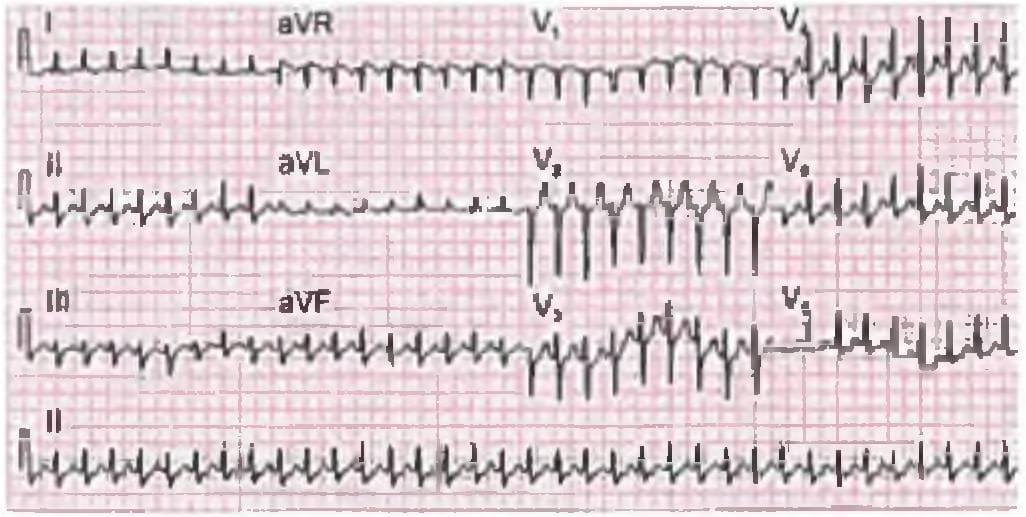
A 25-year-old female presented to ER unconscious. Her mother tells you about her having recurrent episodes of syncopal episodes. Her BP is 80/60 mm Hg and you order an ECG. Treatment is? (Recent Question 2019)
Detailed Solution: Question 20

The heart rate measures 200 beats per minute with a normal axis. There is evidence of narrow complex tachycardia accompanied by hidden P waves. Additionally, widespread ST segment depression is observed in both limb and chest leads. The patient is experiencing AV nodal re-entrant tachycardia or paroxysmal supraventricular tachycardia.

  • As the patient is unconscious and displays hypotension,
  • cardioversion should be performed to reinstate normal sinus rhythm.

Test: Arrhythmias and Emergency Medicine- 1 - Question 21

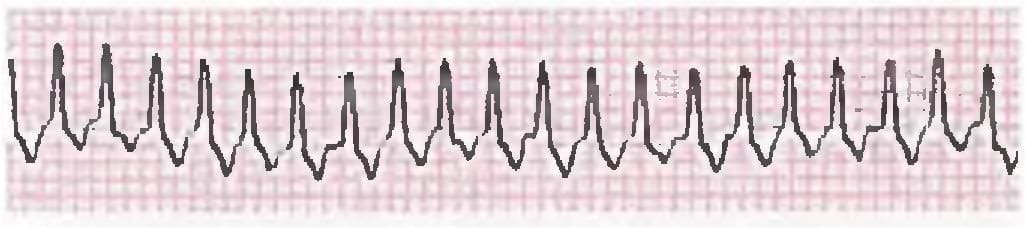
Comment on the diagnosis of the patient? (Recent Question 2019)
Detailed Solution: Question 21
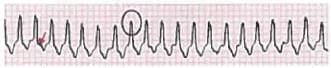
The ECG indicates a heart rate of 200/min along with broad complex tachycardia.

  • Notching at the nadir of the S wave, referred to as the Josephson sign (indicated by an arrow), is observed.
  • The rabbit ear appearance (marked by a circle) is seen at the peak of the R wave.


These characteristics are associated with ventricular tachycardia.

  • Choice B is expected to yield a sinusoidal pattern.
  • Choice C would result in twitching ventricles.
  • Choice D produces electrical alternans.

Test: Arrhythmias and Emergency Medicine- 1 - Question 22

Which of the following is assoclated with AV block? (Recent Pattern 2018)

Detailed Solution: Question 22

Metabolic/endocrine factors contributing to Atrioventricular Block include:

  • Hyperkalemia
  • Adrenal insufficiency
  • Hypermagnesemia
  • Hypothyroidism

Test: Arrhythmias and Emergency Medicine- 1 - Question 23

Implantable cardioverter defibrillator is useful in? (Recent Pattern 2018)

Detailed Solution: Question 23
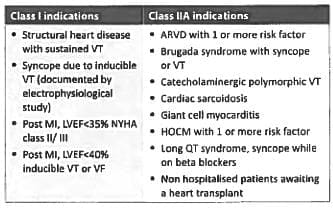
Arrhythmogenic right ventricular dysplasia can impact either of the two ventricles and is a defect of desmosomal proteins. It results in epsilon waves on an ECG and may provoke ventricular tachycardia (VT). Therefore, the use of an implantable cardioverter-defibrillator (ICD) is recommended to avert sudden death.
Brugada syndrome is defined by an ST segment elevation exceeding 0.2 mV, featuring a coved ST segment and negative T waves in more than one anterior precordial lead. Patients with this condition can experience polymorphic VT in the absence of structural heart disease, necessitating an ICD.
After 40 days or more following an actual episode of myocardial infarction (MI), patients with an ejection fraction (EF) of less than 35% who exhibit inducible VT in an electrophysiological laboratory are considered candidates for an ICD. The indications for ICD include:

Test: Arrhythmias and Emergency Medicine- 1 - Question 24

Heart block is seen with all except? (Recent Pattern 2018)

Detailed Solution: Question 24

Coronary heart disease may result in ischaemic injury to the conduction system. The existence of non-caseating granulomas in sarcoidosis causes harm to the conduction system. Myxedema cardiomyopathy is linked with a reversible type of heart block that reacts positively to thyroxine replacement. Therefore, by the process of elimination, the answer is Cushing syndrome.

Test: Arrhythmias and Emergency Medicine- 1 - Question 25

What is the correct sequence of events according to BLS? (AIMS Nov 2017)

Detailed Solution: Question 25
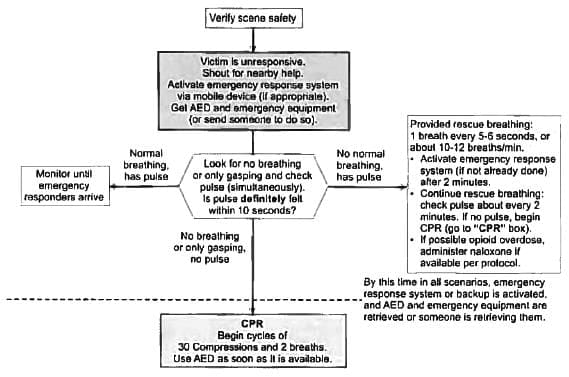
The initial step of the BLS algorithm is outlined in the question (Highlighted Text).

  • BLS Healthcare Provider
  • Adult Cardiac Arrest Algorithm - 2015 Update

Test: Arrhythmias and Emergency Medicine- 1 - Question 26

A patient has presented with complaints of amblyopin, episodes of palpitations and occasional exertional chest pain. ECG shows ventricular extra systoles. Which of the following is the probable cause? (AIIMS May 2017)

Detailed Solution: Question 26

Amblyopia is a crucial factor that excludes options A, C, and D. The presence of cardiovascular symptoms alongside amblyopia suggests nicotine poisoning. The characteristics of chronic nicotine poisoning include:
  • Respiratory system: Symptoms resembling asthma, including coughing
  • GIT: Diarrhoea, peptic ulcer disease (PUD), nausea with vomiting
  • CVS: Angina, arrhythmias, coronary artery disease (CAD), extrasystoles, hypertension
  • Eyes: Amblyopia and potential blindness
  • Women: Osteoporosis, pregnancy-induced hypertension (PIH), preterm labour, and congenital malformations
Nicotine poisoning can arise from:
  • Nicotine sulfate used in insecticides
  • Green tobacco sickness (affecting tobacco harvesters handling wet tobacco leaves)
  • Incorrect usage of nicotine patches
  • Ingesting nicotine chewing gum

Test: Arrhythmias and Emergency Medicine- 1 - Question 27

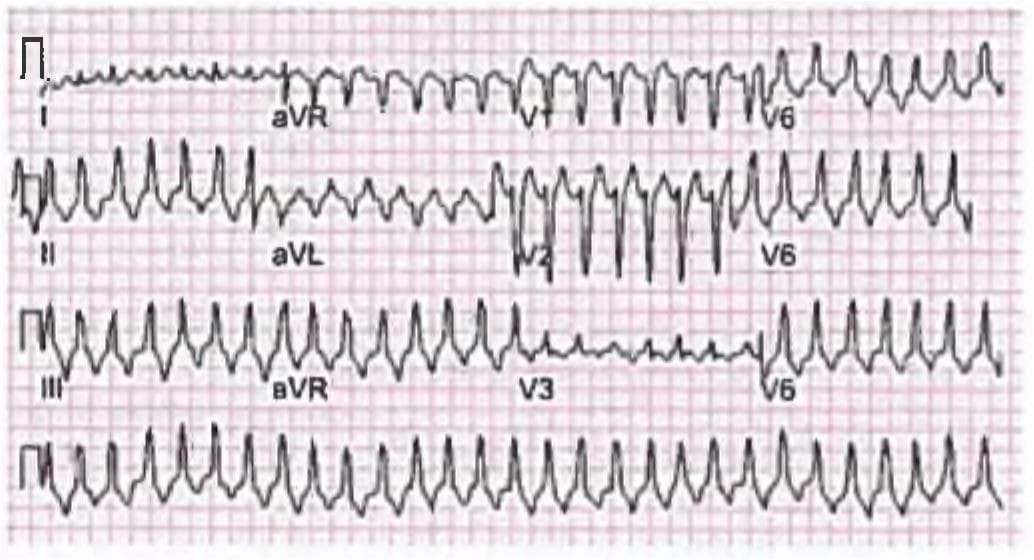
This 50-year-old patient developed syncope after having a coffee. ECG was done. Which is the most appropriate therapy for a patient suffering from the condition shown below? (AIIMS May 2017)
Detailed Solution: Question 27

The ECG displays a heart rate of 200 beats per minute with a normal axis. A broad qRS complex measuring 160 msec is observed. Additionally, the R wave exhibits a rabbit ear appearance, which is characteristic of Ventricular tachycardia.

According to ACLS guidelines, qRS synchronous electrical cardioversion is indicated for Ventricular tachycardia under the following circumstances:

  • Presence of hypotension
  • Impaired consciousness
  • Pulmonary oedema

Amiodarone is the preferred drug of choice for stable VT.

Test: Arrhythmias and Emergency Medicine- 1 - Question 28

Which of the following statements about premature ventricular beat is false? (Recent Pattern 2014-15)

Detailed Solution: Question 28

PVC is a relatively frequent occurrence where the heartbeat originates from Purkinje fibres in the ventricles instead of the SA node. The electrical activities of the heart, as recorded by the electrocardiogram, enable a PVC to be easily differentiated from a normal heartbeat, appearing as a broad complex qRS.
  • Although a PVC can indicate reduced oxygenation to the myocardium, they are often benign and may occur in otherwise healthy hearts.
  • The prevalence of PVCs tends to increase with age.
  • A PVC may be experienced as a 'skipped beat' or sensed as palpitations in the chest.
In a PVC, the ventricles contract prior to the atria optimally filling the ventricles with blood, leading to inefficient circulation. However, isolated PVC arrhythmias generally do not present a risk and can be asymptomatic in healthy individuals.

Test: Arrhythmias and Emergency Medicine- 1 - Question 29

All of the following features can differentiate between ventricular tachycardia and supraventricular tachycardia except: (Recent Pattern 2014-15)

Detailed Solution: Question 29
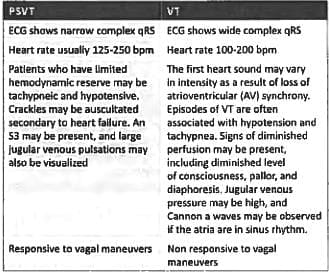

The electrocardiographic characteristics of various SVTs include:

  • Sinus tachycardia: Heart rate over 100 bpm; P waves resemble those of sinus rhythm.
  • Inappropriate sinus tachycardia (IST): Similar findings to sinus tachycardia; P waves resemble those of sinus rhythm.
  • Sinus nodal reentrant tachycardia (SNRT): P waves resemble those of sinus rhythm; abrupt onset and offset.
  • Atrial tachycardia: Heart rate between 120 and 250 bpm; P-wave morphology differs from sinus rhythm; typically long RP interval; AV block does not terminate the tachycardia.
  • Multifocal atrial tachycardia: Heart rate between 100 and 200 bpm; three or more distinct P-wave morphologies.
  • Atrial flutter: Atrial rate of 200 to 300 bpm; flutter waves; AV conduction ratio of 2:1 or 4:1.
  • Atrial fibrillation: Irregularly irregular rhythm; absence of discernible P waves.
  • AV Nodal Reentrant Tachycardia (AVNRT): Heart rate of 150 to 200 bpm; P wave located either within the QRS complex or shortly after it; short RP interval in typical AVNRT and long RP interval in atypical AVNRT.
  • AV reentrant tachycardia (AVRT): Heart rate of 150 to 250 bpm; narrow QRS complex in orthodromic conduction and wide QRS in antidromic conduction; diagnosis ruled out by AV block during SVT; P wave appears after the QRS complex.

Test: Arrhythmias and Emergency Medicine- 1 - Question 30

Feature of Torsades de pointes is: (Recent Pattern 2014-15)

Detailed Solution: Question 30

Torsade de pointes: It resembles ventricular fibrillation but is actually ventricular tachycardia with a changing axis. This condition arises from a prolonged QT interval. Treatment options include:
  • Correcting electrolyte imbalances
  • Administering Mg sulfate
  • Utilising overdrive pacing

50 docs|64 tests
Information about Test: Arrhythmias and Emergency Medicine- 1 Page
In this test you can find the Exam questions for Test: Arrhythmias and Emergency Medicine- 1 solved & explained in the simplest way possible. Besides giving Questions and answers for Test: Arrhythmias and Emergency Medicine- 1, EduRev gives you an ample number of Online tests for practice
50 docs|64 tests
Download as PDF