NEET PG Exam  >  NEET PG Test  >  Medicine  >  Test: Bronchial Asthma - NEET PG MCQ

Bronchial Asthma - Free MCQ Practice Test with solutions, NEET PG Medicine


MCQ Practice Test & Solutions: Test: Bronchial Asthma (30 Questions)

You can prepare effectively for NEET PG Medicine with this dedicated MCQ Practice Test (available with solutions) on the important topic of "Test: Bronchial Asthma". These 30 questions have been designed by the experts with the latest curriculum of NEET PG 2026, to help you master the concept.

Test Highlights:

  • - Format: Multiple Choice Questions (MCQ)
  • - Duration: 30 minutes
  • - Number of Questions: 30

Sign up on EduRev for free to attempt this test and track your preparation progress.

Test: Bronchial Asthma - Question 1

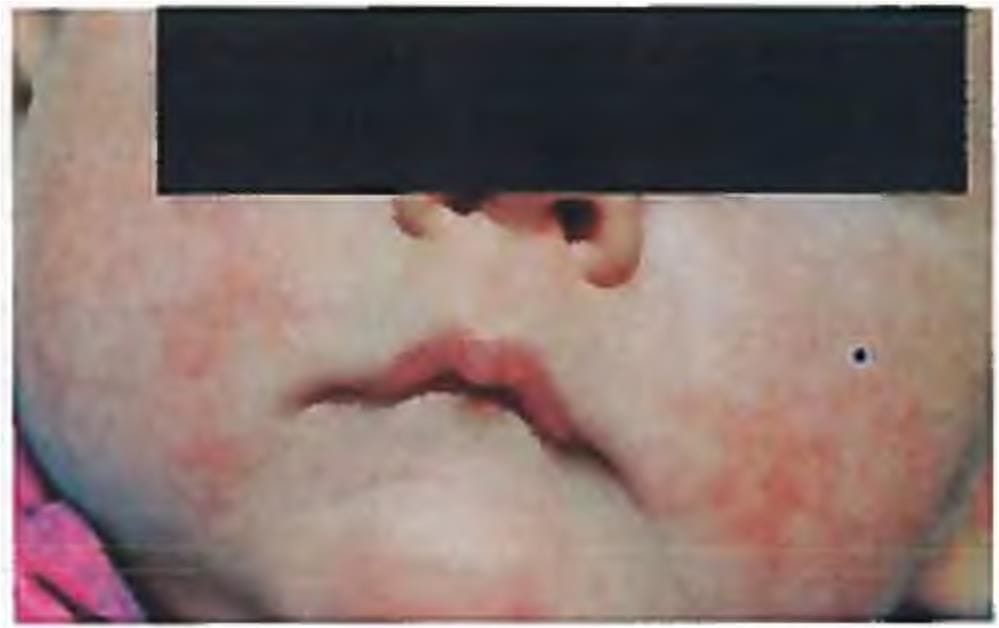
A one-year old child presents with the following lesion on the face. His mother has a history of bronchial asthma. What is the diagnosis? (Recent Question 2019)
Detailed Solution: Question 1

  • The image shows an eczematous lesion with xerosis on the face of the child whose mother is an asthmatic. This points to diagnosis of atopic dermatitis.
  • The essential features (which must be present) are as follows:
    • Pruritus
    • Eczema with typical morphology and age-specific patterns (facial/neck/extensor involvement in children, flexural involvement in any age group, sparing the groin and axillary regions)
  • Chronic or Relapsing history

Test: Bronchial Asthma - Question 2

A known asthmatic, presented to the emergency with severe exacerbation not relieved by Salbutamol. The patient was given corticosteroids and aminophylline. What is the rationale of giving corticosteroids? (AIIMS Nov 2017)

Detailed Solution: Question 2

  • Corticosteroids do not have any bronchodilator activity and have no impact on mucociliary clearance. Hence choice C and D are ruled out.
  • Sensitization of Adenosine receptors would lead to increase in bronchospasm, inflammation and mucus secretion.
  • Mechanism of action of Corticosteroids in asthma is;
    • ICS reduce eosinophils in airways and sputum
    • Upregulation of Beta 2 receptors
    • Decrease in recruitment of inflammatory cells
    • Reduction of mucus production
    • Reduction of microvascular permeability.

Hence they would facilitate the action of bronchodilators
Inhaled steroids are the most effective controllers in management of asthma and benefit athamatics of any age and severity.

Test: Bronchial Asthma - Question 3

Which of the following is not required in case a second puff is to be taken from an inhaler? (AIIMS Nov 2016)

Detailed Solution: Question 3

Recommendation for correct inhaler technique:

  • Remove cap
  • Check dose counter (if applicable)
  • Hold inhaler upright and shake well
  • Breathe out gently, away from the inhaler
  • Put mouthpiece between teeth without biting and close lips to form good seal
  • Start to breathe in slowly through mouth and, at the same time, press down firmly on canister
  • Continue to breathe is slowly and deep
  • Hold breath for about 5 seconds or as long as comfortable
  • While holding breath, remove inhaler 
  • Breathe out gently, away from the inhaler
  • If an extra dose is needed, repeat steps
  • Replace cap
  • When the patient has finished taking all the dosage, then rinse the mouth with water and spit out the water This is important especially In case of steroid Inhaler.

Test: Bronchial Asthma - Question 4

The following are indications for assisted ventilation in acute severe asthma EXCEPT? (APPG 2016)

Detailed Solution: Question 4

  • PEFR of 50 - 60% indicates moderate asthma.
  • Indication for intubation in asthma exacerbation is poor response to oxygen with salbulamol ebulisation and oral steroids. The definition of poor response is
    • FEVl < 40%
    • pCO> 45mmHg
    • Features of carbon dioxide narcosis
    • Hypoxia defined as pO< 60mm Hg

Test: Bronchial Asthma - Question 5

Which of the following features of severity are used in immediate assessment of acute severe asthma? (UPSC 2015)

  1. Pulse rate >110 per min
  2. Pulsus paradoxus
  3. Unable to speak in sentences

Select the correct answer using the code given below:

Detailed Solution: Question 5
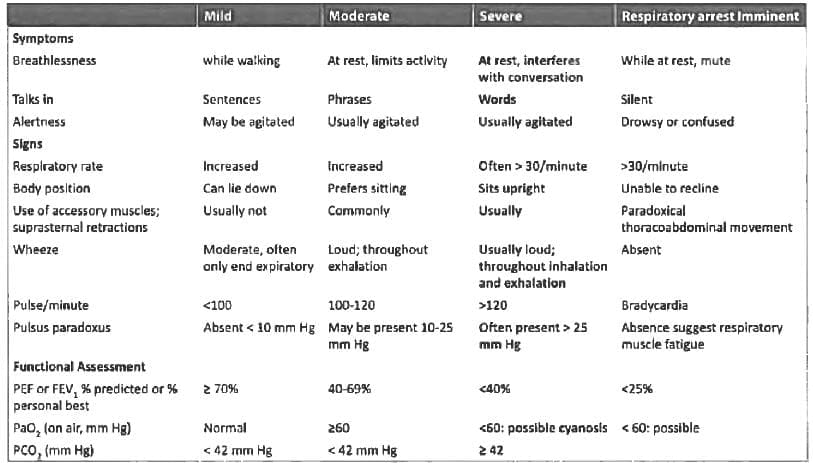
"Pulsus paradoxsus may be present in acute severe asthma but is rarely a useful clinical sign". 
Guidelines for Assessment of Severity of Asthma Exacerbations in Adults

Test: Bronchial Asthma - Question 6

Which one of the following is not recommended in immediate treatment of acute severe asthma? (UPSC 2015)

Detailed Solution: Question 6

Methylxanthines are not recommended for therapy of acute severe asthma exacerbation owing to limited efficacy. In fact the toxicity caused by the drug in patients already on theophylline is more often seen rather than beneficial effects.

  • Mucolytics worsen cough - Anxiolytic drugs are contraindicated in severe asthma exacerbations.

Test: Bronchial Asthma - Question 7

The following are main diagnostic criteria for allergic bronchopulmonary aspergillosis except: (APPG 2015)

Detailed Solution: Question 7

ABPA represents a hypersensitivity reaction to A. fumigatus and occurs in -1% of patients with asthma and 15% of adults with cystic fibrosis. Central bronchiectasis is characteristic, but patients may present before it becomes apparent.
Clinical features of ABPA

  • Bronchial obstruction with mucous plugs leading to breathlessness and repeated bouts of prolonged coughing.
  • Thick sputum casts, usually brown or dear.
  • Eosinophilia
  • Chest X ray shows presence of pulmonary infiltrates
  • CT chest shows central bronchiectasis
  • The cardinal diagnostic tests include an
    • Elevated serum level of total IgE (usually >1000 IU/mL),
    • Positive skin-prick test to A. fumigatus extract
    • Detection of Aspergillus-specific IgE and IgG (precipitating) antibodies.

Test: Bronchial Asthma - Question 8

FEV1/FVC is reduced in case of?

Detailed Solution: Question 8

  • In asthma spirometry confirms airflow limitation with a reduced FEV1, FEV1/FVC ratio, and PEF. (Reversibility is demonstrated by a >12% and 200-mL increase in FEV1 15 minutes after an inhaled short-acting beta2-agonist or in some patients by a 2 to 4 week trial of oral corticosteroids.) (prednisone or prednisolone 30-40 mg daily)
  • Most forms of ILD have FEV1/FVC ratio which is normal or increased. In Restrictive defects total lung capacity (TLC), functional residual capacity, and residual volume are reduced.

Test: Bronchial Asthma - Question 9

Thickening of pulmonary alveolar capillary membrane is seen in? (Bihar PG 2015)

Detailed Solution: Question 9

  • Alveolar membrane thickening/remodelling is seen in asthma.
  • Reid’s index in chronic bronchitis is based on thickness of glands in airway wall to airway wall thickness.

Test: Bronchial Asthma - Question 10

All are true about Aspirin sensitive asthma except? (Recent Question 2015-16)

Detailed Solution: Question 10

  • Aspirin-sensitive asthma is associated with severe rhinosinusitis and recurrent nasal polyposis.
  • The complex pathogenesis of aspirin-sensitive asthma involves chronic eosinophilic inflammatory changes, with evidence of increased mast cell activation.
  • Aspirin-sensitive asthma is an underdiagnosed condition affecting up to 20% of the adult asthmatic population.
  • It is associated with more severe asthma,requires increased use of inhaled and oral corticosteroids, more presentations to hospital and a risk of life-threatening reactions with aspirin.
  • The cyclo-oxygenase pathways play a major role in the respiratory reactions that develop after aspirin ingestion.

Test: Bronchial Asthma - Question 11

What is the full form of ARIA (Recent Question 2015-16)

Detailed Solution: Question 11

ARIA stands for Allergic Rhinits Induced Asthma

Test: Bronchial Asthma - Question 12

Allergic broncho-pulmonary Aspergillosis presents with all except: (Recent Question 2015-16)

Detailed Solution: Question 12

  • A.B.P.A allergic brochopulmonary Aspergillosis is hypersensitivity to the antigens on cell wall of aspergillus fumigatus. The clinical profile is an asthmatic patient presenting with passage of browinish plugs in the sputum.
  • CXR shows fleeting pulmonary opacities and absolute eosinophil count is increased. Eosinophilia is a feature of asthma anyway but not eosinophiluria
  • HRCT shows presence of central bronchiectasis.
  • Treatment of choice for ABPA is steroids.
  • Remember: Eosinophiluria is a feature of allergic interstitial nephritis

Test: Bronchial Asthma - Question 13

Central bronchiectasis is seen with

Detailed Solution: Question 13

  • ABPA represents a hypersensitivity reaction to A. fumigatus; and leads to central bronchiectasis.
  • ABPA occurs in ~1% of patients with asthma and in up to 15% of adults with cystic fibrosis; occasional cases are reported in patients with neither of the latter.
  • The cardinal diagnostic tests include an elevated serum level of total IgE (usually > 1000 IU/mL), a positive skin prick test to A, fumigalus extract, or detection of Aspereillus-specific IgE and IgG (precipitating) antibodies.

Test: Bronchial Asthma - Question 14

Which drugs are not used in severe persistent Asthma:  (Recent Question 2015-16)

Detailed Solution: Question 14

  • Oral corticosteroids are given in very severe persistent asthma and not severe persistent asthma.
  • L.A.B.A with inhaled high dose steroids is used for management of severe persistent asthma. S.A.B.A is used as and when required.

Test: Bronchial Asthma - Question 15

Drug of choice for treatment of type 2 Brittle Asthma is? (Recent Question 2015-16)

Detailed Solution: Question 15

  • Type 2 Brittle asthma, are symptom free patients developing sudden onset acute attack of asthma requiring mechanical ventilation or even death. These patients should ideally keep an autoinjector of epinephrine.
  • Type 1 Brittle asthma is characterized by > 40% variation in P.E.F.R for > 50% of time. It is managed with L.A.B.A + high dose inhaled corticosteroids and oral steroids. Long term continuous subcutaneous infusion of β2, agonists like terbutaline is also given.

Test: Bronchial Asthma - Question 16

Child known case of bronchial asthma comes with respiratory rate 48/min, cannot speak 2 words, occasional wheeze and oxygen saturation of 95%. You give 3 doses of salbutamol nebulisation then he started to speak a sentence but saturation falls to 85%. Cause is? (AIIMS Nov 2014)

Detailed Solution: Question 16

  • Oxygen saturation (SaO2) levels may not reflect progressive alveolar hypoventilation, and the SaO2, may initially fall during therapy because β2-agonists produce both bronchodilation and vasodilation and may initially increase intrapulmonary shunting.
  • The main catch point in this question is that salbutamol is given without oxygen. (Nebulization without oxygen which is a common practice).
  • It is always essential to give salbutamol nebulization through high flow oxygen. (Standard practice).
  • In status asthmaticus most children will have some degree of mucus plugging, atelectasis, ventilation perfusion mismatch and hypoxemia. In those lung segments with atelectasis, compensatory hypoxic pulomary vasoconstriction is often present. Treatment with inhaled beta agonists may induce generalized pulmonary vasodilation and as a result exacerbate ventilation perfusion mismatch and worsen hypoxemia. Oxygen should be a part of management for all children with status asthmaticus.
  • Inference: Giving only salbutamol nebulization without oxygen can aggravate hypoxemia because of increase in dead space ventilation and VP mismatch.

Test: Bronchial Asthma - Question 17

Consider the following statements:
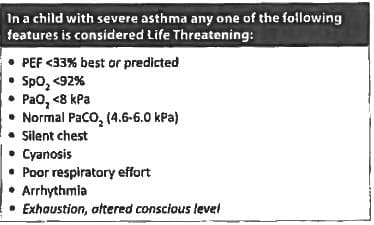
Life threatening features of acute-severe asthma in children include?

  1. Altered sensorium
  2. Pulsus paradoxus
  3. Audible wheeze in both inspiration and expiration
  4. Oxygen saturation 92-95%

Which of these statements is/ are correct? (UPSC 2010)

Detailed Solution: Question 17

Test: Bronchial Asthma - Question 18

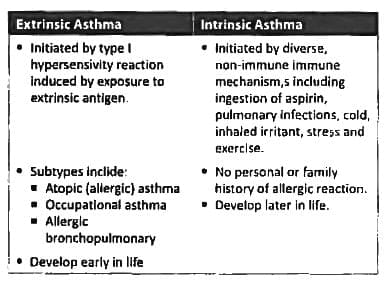
Aspirin sensitive asthma is associated with: (Recent Pattern 2014-15)

Detailed Solution: Question 18

  • 10% of asthmatics have negative skin tests to common inhalant allergens and normal serum concentrations of IgE.
  • These patients, with non-atopic or intrinsic asthma, usually show later onset of disease (adult-onset asthma) commonly have concomitant nasal polyps, and may be aspirin- sensitive. They usually have more severe, persistent asthma.

Test: Bronchial Asthma - Question 19

A pediatric asthmatic patient presents with a severe attack of acute wheezing and breathlessness and drowsiness. Arterial blood gas analysis done after one hour of treatment with oxygen, nebulised salbutamol and intravenous corticosteroids show pH 7.26, PaO₂ of 60 mm Hg and PaCO₂ of 60 mm Hg. The next step in treatment should be: (AIPG 2011)

Detailed Solution: Question 19

  • The child is drowsy with pCO2 of 60 mm Hg inspite of 1 hour of treatment and is progressing to impending respiratory failure.
  • Nelson says “Mechanical ventilation aims to achieve adequate oxygenation while tolerating mild to moderate hypercapnia (pCO2 50 - 70 mm Hg) to minimize barotrauma".
  • Volume-cycled ventilators, using short inspiratory and long expiratory times, 10 - 15 mL/kg tidal volume, 8 - 15 breaths/ min, peak pressures <60 cm H2O , and without positive end-expiralory pressure are starting mechanical ventilation parameters that can achieve these goals. Considering the nature of asthma exacerbations leading to respiratory failure, those of rapid or abrupt onset tend to resolve quickly (hours to 2 days).

Test: Bronchial Asthma - Question 20

Consider the following statement:
Early onset extrinsic episodic asthma is characterized by:

  1. Family history of eczema or rhinitis
  2. Development of an early and late asthmatic reaction mediated by mast cells
  3. T lymphocytes that release cytokine like interleukin-4

Which of these statements are correct? (UPSC 2014)

Detailed Solution: Question 20

IL-4 mediates proinflammatory functions in asthma, including induction of IgE isotype switch and promotion of eosinophil transmigration across endothelium.

Test: Bronchial Asthma - Question 21

In bronchial asthma following pulmonary function abnormalities are present except: (Recent Pattern 2014-15)

Detailed Solution: Question 21

A prototype obstructive airway disease is acute asthma where the, luminal narrowing due to smooth muscle constriction and inflammation and thickening within the small- and mediumsized bronchi raise frictional resistance and reduce airflow. The following changes are seen in puimonary function testing for these patients.

  1. Total lung capacity (TLC) usually remains normal (although elevated TLC is sometimes seen in long-standing asthma), but FRC may be dynamically elevated.
  2. RV is often increased due to exaggerated airway closure at low lung volumes, and this elevation of RV reduces FVC and insiratory capacity
  3. Because centra! airways are narrowed, airways resistance is usually elevated. Mild arterial hypoxemia is often present due to perfusion of relatively undervcntilated alveoli distal to obstructed airways (and is responsive to oxygen supplementation).

Test: Bronchial Asthma - Question 22

Consider the following statements:
The features of severe asthma include

  1. Central cyanosis
  2. Agitated behaviour
  3. Pulsus paradoxus
  4. Heart rate less than 60/minute

Which of these statements are correct? (UPSC 2013)

Detailed Solution: Question 22

In severe exacerbations patients may be so breathless that they are unable to complete sentences and may become cyanotic.
Examination usually shows

  • Increased ventilation, hyperinflation, and tachycardia.
  • Pulsus paradoxus may be present, but this is rarely a useful clinical sign. There is a marked fall in spirometric values and PEE
  • Arterial blood gases on air show hypoxemia and pCO2 is usually low due to hyperventilation.
  • A normal or rising pCO2 is an indication of impending respiratory failure and requires immediate monitoring and therapy.
  • A chest roentgenogram is not informative, but may show pneumonia or pneumothorax.

Test: Bronchial Asthma - Question 23

Best for treatment of Exercise induced asthma? (Recent Pattern 2014-15)

Detailed Solution: Question 23

  • Exercise induced asthma may be prevented by prior administration of beta2-agonists and antileukotricnes, but is best prevented by regular treatment with ICS, which reduce the population of surface mast cells required for this response 
  • The mechanism of exercise induced asthma is linked to hyperventilation, which results in increased osmolality in airway lining fluid and triggers mast cell mediator release, resulting in bronchoconstriction.
  • Exercise induced asthma (EIA) typically begins after exercise has ended, and recovers spontaneously within about 30 minutes. EIA is worse in cold, dry climates than in hot, humid conditions. It is, therefore, more common in sports such as cross-country running in cold weather, overland skiing, and ice hockey than in swimming.

Test: Bronchial Asthma - Question 24

In severe bronchial asthma, true is: (Recent Pattern 2014-15)

Detailed Solution: Question 24

In severe exacerbations, the greater extent of airways obstruction causes labored breathing and respiratory distress manifested as

  1. Inspiratory and expiratory wheezing
  2. Increased prolongation of exhalation
  3. Poor air entry
  4. Suprasternal and intercostal retractions
  5. Nasal flaring
  6. Accessory respiratory muscle use
  7. Sometimes, airflow may be so limited that wheezing cannot be heard.

Test: Bronchial Asthma - Question 25

Which of the following is given in the maintenance of severe persistent asthma: (Recent Question 2015-16)

Detailed Solution: Question 25
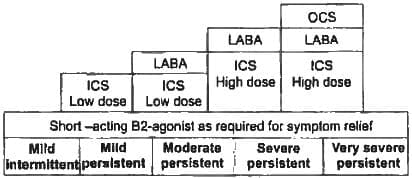
  • LABA improve asthma control and reduce exacerbations when added to ICS, which allows asthma to be controlled at lower doses of corticosteroids.
  • LABAs should not be given in the absence of ICS therapy as they do not control the underlying inflammation.
  • This observation has led to the widespread use of fixed combination inhalers that contain a corticosteroid and a LABA, which have proved to be highly effective in the control of asthma.

Test: Bronchial Asthma - Question 26

All of the following are useful for treating acute bronchial asthma in children except: (Recent Pattern 2014-15)

Detailed Solution: Question 26

Cromolyn sodium inhibits the release of histamine, leukotrienes, and other mediators from sensitized mast cells exposed to specific antigens. It has no intrinsic antiinflammatory, antihistamine, or vasoconstrictive effects.

Test: Bronchial Asthma - Question 27

All of the following diseases are associated with peripheral blood eosinophilia except: (Recent Pattern 2014-15)

Detailed Solution: Question 27

Choice A is associated with asthma which is an allergic condition.
Choice B is associated c parasites and hence eosinophilia is seen
Choice D is called eosinophilic granulomatosis with polyangilis.

Test: Bronchial Asthma - Question 28

The major diagnostic criteria for Allergic Bronchopulmonary Aspergillosis would include all the following except: (Recent Pattern 2014-15)

Detailed Solution: Question 28

Allergic bronchopulmonary aspergillosis
ABPA is defined by abnormalities including the following:

  1. Asthma
  2. Eoslnophilia
  3. A positive skin test result for A fumigatus
  4. Serum IgE level > 1000 lU/dL
  5. Positive test results for Aspergillus precipltins (primarily IgG but also IgA and IgM)
  6. Minor criteria for diagnosis Include positive Aspergillus radioallergosorbent assay test results and sputum culture

Other Investigations

  • Chest radiography results in ABPA may vary from fleeting pulmonary infiltrates to mucoid impaction to central bronchiectasis.
  • CT scanning is helpful for belter defining bronchiectasis, and images may show that apparent tobulaled masses are mucus filled dilated bronchi. Areas of atelectasis related to bronchial obstruction from mucoid impaction may be present.

Test: Bronchial Asthma - Question 29

Commonly used route of administration for Omalizumab in asthma is: (Recent Pattern 2014-15)

Detailed Solution: Question 29

Omalizumab is indicated for moderate to severe persistent asthma in patients with a positive skin test or in vitro reactivity to a perennial aeroallergen and symptoms that are inadequately controlled with inhaled corticosteroids 150-375 mg SC q2-4 Weeks

Test: Bronchial Asthma - Question 30

Curschmann's Spirals in sputum is seen in: (Recent Pattern 2014-15)

Detailed Solution: Question 30

Curschmann’s spirals refers to spiral shaped mucus plugs in airways of asthmatics. They are often seen in association with Crcola bodies and Charcot Leyden crystals.

50 docs|64 tests
Information about Test: Bronchial Asthma Page
In this test you can find the Exam questions for Test: Bronchial Asthma solved & explained in the simplest way possible. Besides giving Questions and answers for Test: Bronchial Asthma, EduRev gives you an ample number of Online tests for practice
50 docs|64 tests
Download as PDF