NEET PG Exam  >  NEET PG Test  >  Medicine  >  Test: Bleeding from GIT & Diseases of Esophagus- 1 - NEET PG MCQ

Bleeding from GIT & Diseases of Esophagus- 1 - Free MCQ Practice Test


MCQ Practice Test & Solutions: Test: Bleeding from GIT & Diseases of Esophagus- 1 (20 Questions)

You can prepare effectively for NEET PG Medicine with this dedicated MCQ Practice Test (available with solutions) on the important topic of "Test: Bleeding from GIT & Diseases of Esophagus- 1". These 20 questions have been designed by the experts with the latest curriculum of NEET PG 2026, to help you master the concept.

Test Highlights:

  • - Format: Multiple Choice Questions (MCQ)
  • - Duration: 20 minutes
  • - Number of Questions: 20

Sign up on EduRev for free to attempt this test and track your preparation progress.

Test: Bleeding from GIT & Diseases of Esophagus- 1 - Question 1

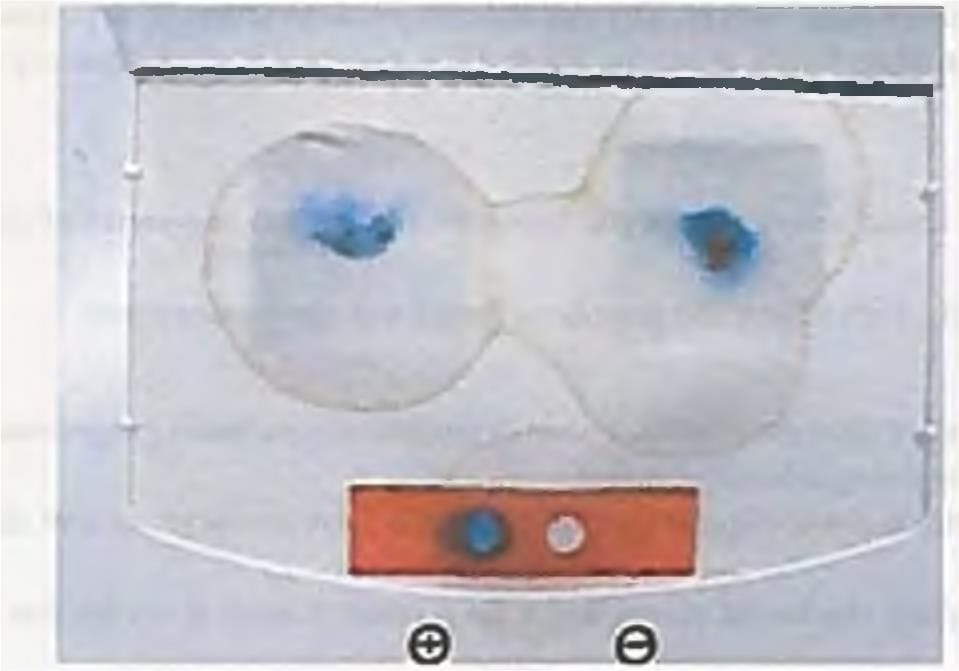
The test shown below has been performed on a stool sample producing blue colour. Comment on the test being done. GIT/ bleeding from git (Recent Question 2019)
Detailed Solution: Question 1
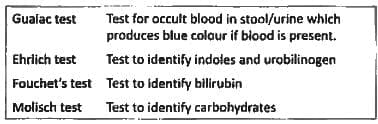
The image shows a positive test for stool for occult blood also known as Guaiac test. The stool sample to be tested is applied on the strip followed by application of hydrogen peroxide. When the hydrogen peroxide is dripped on to the guaiac paper, it oxidizes the α-guaiaconic acid to a blue coloured quinone.

Test: Bleeding from GIT & Diseases of Esophagus- 1 - Question 2

Which is the most common site for chronic gastric ulcer? (Recent Pattern 2018)

Detailed Solution: Question 2
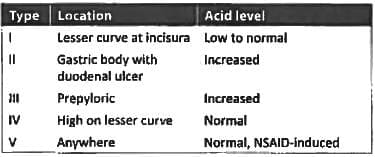
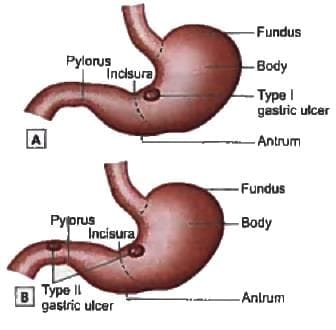
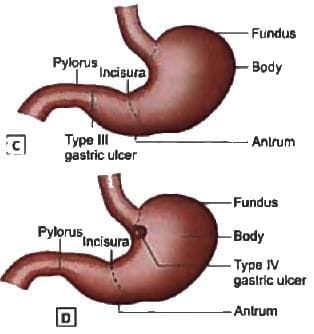
Type 1 Gastric ulcer is Located near the incisura on the lesser curvature and comprises 60% of all benign gastric ulcers. They are associated with normal to low acid production.
H. pylori have been found to be associated with these ulcers though it occurs even in those who have history of infection.
Modified Johnson classification for gastric ulcers
Type 1 Gastric ulcer is the most common type of gastric ulcer
Table: Gastric ulcer types


Test: Bleeding from GIT & Diseases of Esophagus- 1 - Question 3

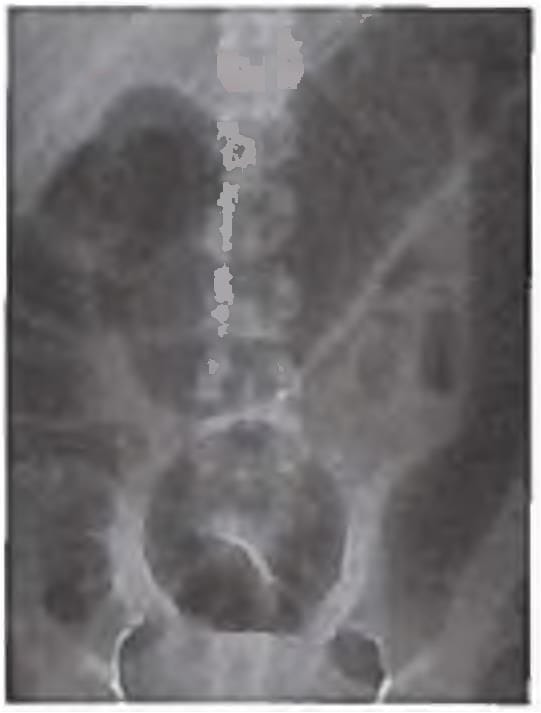
A patient presents with complaints of fever and abdominal distention. He is having history of bloody diarrhoea off and on for previous 6 months. X ray abdomen is shown below. What is the diagnosis? (AIIMS May 2017)
Detailed Solution: Question 3

  • The image shows peripheral placed bowel dilatations with loss of haustrations. It indicates large bowel dilatation.
  • When transverse colon/ascending colon diameter is > 6 cm it indicates development of toxic megacolon.
  • It occurs in patients of UC and can be triggered by electrolyte abnormalities and narcotics.

Main causes of toxic megacoion:

  1. Ulcerative colitis
  2. Crohns' disease
  3. Pseudomembranous colitis
  4. Amoebic colitis
  5. Chagas disease

Pneumato sis intestinalis is characterised by presence of intra-mural bowel gas and is seen in necrotising enterocolitis.

Test: Bleeding from GIT & Diseases of Esophagus- 1 - Question 4

All are true about persistent calibre artery except? (Recent Question 2016-17)

Detailed Solution: Question 4

  • Persistent calibre artery is called Dieulafoy's lesion. It is a large calibre arteriole that runs beneath the gut mucosa and bleeds via pinpoint mucosal erosion.
  • For management of bleeding in Dieulafoy's lesion, endoscopic therapy like thermal coagulation or band ligation is effective.
  • In case of failure to control bleeding with above methods, angiographic embolization is used.
  • Deep enteroscopy is used in patients with diffuse small bowel bleeding like vascular ectasia.

Test: Bleeding from GIT & Diseases of Esophagus- 1 - Question 5

Among the following the least common cause of acute upper GI bleeding is? (APPG 2015)

Detailed Solution: Question 5
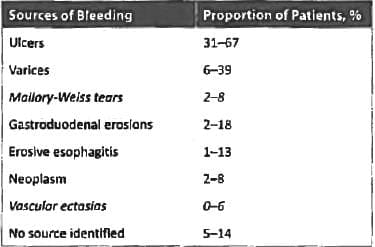

Less frequent causes of UGIB include

  1. Erosive duodenitis
  2. Neoplasms
  3. Aortoenteric fistulas
  4. Vascular lesions [including hereditary hemorrhagic telangiectasias (Osler-Weber-Rendu)]
  5. Gastric antral vascular ectasia (“watermelon stomach’’)
  6. Dieulafoy's lesion (in which an aberrant vessel in the mucosa bleeds from a pinpoint mucosal defect)
  7. Prolapse gastropathy (prolapse of proximal stomach into esophagus with retching, especially in alcoholics)
  8. Hemobilia
  9. Hemosuccus pancreaticus (bleeding from the bile duct or pancreatic duct)

Test: Bleeding from GIT & Diseases of Esophagus- 1 - Question 6

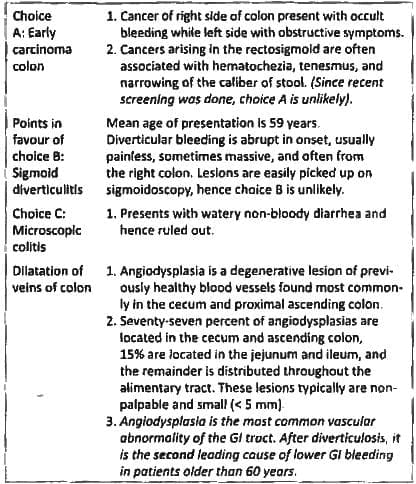
50 year old man became dizzy while passing stool and noticed fresh blood in stool. Previous stool examination for routine screening of carcinoma colon was normal. What is the most likely cause of bleed? (AIIMS Nov 2014)

Detailed Solution: Question 6
Test: Bleeding from GIT & Diseases of Esophagus- 1 - Question 7

Which indicates least chances of re-bleeding after hematemesis episode: (Recent Pattern 2014-15)

Detailed Solution: Question 7
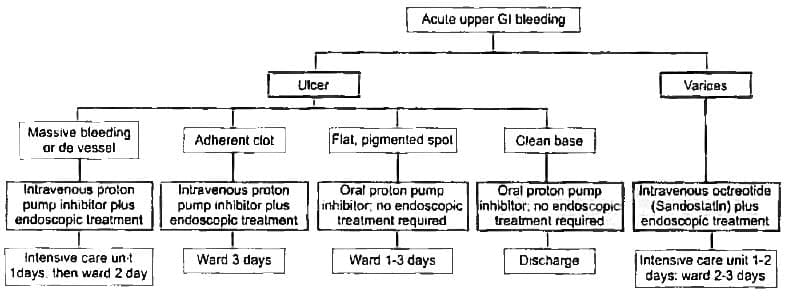
Most patients of hematemesis have a rebleed with in the next 3 days of an episode. UGIE is diagnostic as well as prognostic as a clean based ulcer has a least chance of re-bleed while visible bleeding vessel has the highest chances.

Test: Bleeding from GIT & Diseases of Esophagus- 1 - Question 8

Most common site of dieulafoys lesion is: (Recent Pattern 2015-16)

Detailed Solution: Question 8

Dieulafoy's Lesions are characterized by a single large tortuous arteriole in the submucosa which does not undergo normal branching or a branch with caliber of 1-5 mm (more than 10 times the normal diameter of mucosal capillaries). The lesion bleeds into the gastrointestinal tract through a minute defect in the mucosa which is not a primary ulcer of the mucosa but an erosion likely caused in the submucosal surface by protrusion of the pulsatile arteriole.

  • Approximately 75% of Dieulafoy’s lesions occur in the upper part of the stomach within 6 cm of the gastroesophageal junction, most commonly in the lesser curvature.
  •  Extragastric lesions are seen in duodenum (the most common location 14%) followed by the colon (5%), surgical anastamoses (5%), the jejunum (1%) and the esophagus (1%),

Test: Bleeding from GIT & Diseases of Esophagus- 1 - Question 9

Most common cause of hematochezia in children? (Recent Pattern 2014-15)

Detailed Solution: Question 9

Lower Gl bleeding in children

  • Neonate = anal fissure
  • 1 month - 1year = anal fissure
    • 1 year - 2 years = polyp
    • 2 years = polyp

Test: Bleeding from GIT & Diseases of Esophagus- 1 - Question 10

Rockall score is used for prognosis of patients of: (Recent Pattern 2014-15)

Detailed Solution: Question 10

  • Rockall risk scoring system attempts to identify patients at risk of adverse outcome following acute upper gastrointestinal bleeding.
  • The scoring system uses clinical criteria (increasing age, comorbidity, shock) as well as endoscopic finding (diagnosis, stigmata of acute bleeding).
  • A convenient mnemonic is ABCDE i.e. Age, Blood pressure fall (shock), Co-morbidity, Diagnosis and Evidence of bleeding.

Test: Bleeding from GIT & Diseases of Esophagus- 1 - Question 11

Feline Oesophagus is seen in? (Recent Pattern 2018)

Detailed Solution: Question 11

  • The presence of multiple corrugated rings and linear furrows all through a narrowed oesophagus is called feline oesophagus. This is seen in eosinophilic esophagitis.
  • Histological confirmation of eosinophilic esophagitis is made with demonstration of 15 eosinophils per HPF.

Test: Bleeding from GIT & Diseases of Esophagus- 1 - Question 12

Which is the best investigation for Dysphagia Lusoria? (Recent Question 2016-17)

Detailed Solution: Question 12

  • Normally the aortic arch and left main bronchus cause smooth external indentation of oesophagus.
  • However in case of dysphagia lusoria since the patient has aberrant right subclavian artery originating from the left sided aortic arch, the vessel will have to reach the right axilla by crossing the oesophagus at oblique angle.
  • The diagnosis is best made in the arterial phase of CT chest where the vessel reading is observed.
  • Dysphagia aortica is due to compression of distal esophagus by ectasia or aneurysm of the descending thoracic aorta.

Test: Bleeding from GIT & Diseases of Esophagus- 1 - Question 13

Diffuse esophageal spasm is best diagnosed by? (Bihar PG 2015)

Detailed Solution: Question 13

  • Manometry is used to diagnose motility disorders (achalasia, diffuse esophageal spasm) and to assess peristaltic integrity prior to the surgery for reflux disease.
  • Esophageal manometry, or motility testing, entails positioning a pressure sensing catheter within the esophagus and then observing the contractility following test swallows.
  • The upper and lower esophageal sphincters appear as zones of high pressure that relax on swallowing while the inter-sphincteric esophagus exhibits peristaltic contractions.

Test: Bleeding from GIT & Diseases of Esophagus- 1 - Question 14

Diffuse oesophageal spasm treatment is? (JIPMER Nov 2015)

Detailed Solution: Question 14
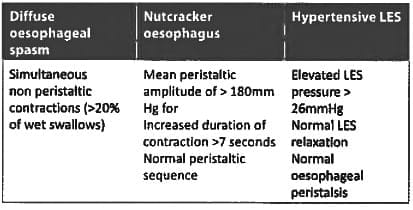
Diffuse esophageal Spasm is managed with following Interventions:

  1. Nitrates and CCB
  2. Hydralazine
  3. Botulinum toxin
  4. Anxiolytics
  5. Long myotomy or esophagectomy for severe weight loss or unbearable pain

Test: Bleeding from GIT & Diseases of Esophagus- 1 - Question 15

All of the following is true regarding G.E.R.D except? (JIPMER Nov 2014)

Detailed Solution: Question 15

  • Mechanisms of GERD:
    • Transient LES relaxations
    • LES hypotension
    • Anatomic distortion of the esophagogastric junction inclusive of hiatus hernia
  • The acid can reflux can lead to chemical tracheitis leading to nocturnal cough and bronchospasm.
  • GERD is often diagnosed in the absence of endoscopic esophagitis, which would otherwise define the disease. In setting of partially treated disease ambulatory 24 hours pH monitoring is done and the outcome is expressed as the percentage of the day that the pH was less than 4 (indicative of recent acid reflux), with values exceeding 5% indicative of GERD.

Test: Bleeding from GIT & Diseases of Esophagus- 1 - Question 16

Incorrect about Zenkers diverticulum? (Recent Question 2015-16)

Detailed Solution: Question 16

  • Zenker's diverticulum, aka pharyngoesophageal diverticulum is a diverticulum of the mucosa of the pharynx, just above the cricopharyngeal muscle. It is a false diverticulum.
  • Pharyngo-oesophageal wall herniates through the point of least resistance (known as Killians triangle).
  • Zenker diverticulum often causes clinical manifestations such as dysphagia, and sense of a lump in the neck, regurgitation, cough, halitosis, infection, involuntary gurgling noises when swallowing.

Test: Bleeding from GIT & Diseases of Esophagus- 1 - Question 17

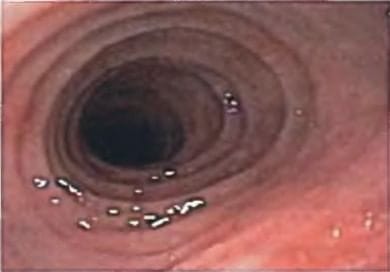
Identify the endoscopic image? (Recent Question 2017)
Detailed Solution: Question 17

The endoscopic view shows corrugation or rings appearance which is suggestive of diagnosis of eosinophilic esophagitis.
To confirm the diagnosis of eosinophilic esophagitis

  1. Presence of 15 or more eosinophils per high power field (HPF) on esophageal biopsy
  2. Exclusion of other disorders associated with similar clinical, histological, or endoscopic features, especially GERD

Test: Bleeding from GIT & Diseases of Esophagus- 1 - Question 18

Gold standard test for achalasia cardia? (Recent 2015-16)

Detailed Solution: Question 18

  • In long-standing achalasia, the esophagus may assume a sigmoid configuration. The diagnostic criteria for achalasia with esophageal manometry are impaired LES relaxation and absent peristalsis.
  • High-resolution manometry has somewhat advanced this diagnosis; three subtypes of achalasia are differentiated based on the pattern of pressurization in the nonperistaltic esophagus.
  • Because manometry identifies early disease before esophageal dilatation and food retention, it is the most sensitive diagnostic test.

Test: Bleeding from GIT & Diseases of Esophagus- 1 - Question 19

Which of the following is located in Laimer's triangle:  (Recent Pattern 2014-15)

Detailed Solution: Question 19

Cervical esophageal diverticulum (Zenker Diverticulum) is located in Killian-Laimer triangle which is located inferior to the cricopharyngeus in the posterior midline above the confluence of the longitudinal layer of esophageal muscle. Laimer’s triangle is covered only by the circular layer of esophageal muscle.

Test: Bleeding from GIT & Diseases of Esophagus- 1 - Question 20

Esophageal tear is best detected with: (Recent Pattern 2014-15)

Detailed Solution: Question 20

  • Endoscopy technique is the procedure of choice for both diagnosis and therapy of these lesions. Endoscopic diagnosis of a Mallory-Weiss tear is readily made by identifying active bleeding, an adherent clot, or a fibrin crust over a mucosal split within or near the gastroesophageal junction.
  • A contact thermal modality, such as multipolar electrocoagulation (MPEC) or heater probe, with or without epinephrine injection, is typically used to treat an actively bleeding Mallory-Weiss tear.
  • Angiotherapy with either selective vasopressin infusion or embolization of the left gastric artery can be performed in patients whose lesions have failed to respond to endoscopic therapy or who are at high risk of endoscopic complications.

50 docs|64 tests
Information about Test: Bleeding from GIT & Diseases of Esophagus- 1 Page
In this test you can find the Exam questions for Test: Bleeding from GIT & Diseases of Esophagus- 1 solved & explained in the simplest way possible. Besides giving Questions and answers for Test: Bleeding from GIT & Diseases of Esophagus- 1, EduRev gives you an ample number of Online tests for practice
50 docs|64 tests
Download as PDF