NEET PG Exam  >  NEET PG Test  >  Topic Wise MCQs  >  Test: Inflammatory Bowel Disease, Premalignant Lesions of GIT & Diarrhea - NEET PG MCQ

Inflammatory Bowel Disease, Premalignant Lesions of GIT & Diarrhea - Free


MCQ Practice Test & Solutions: Test: Inflammatory Bowel Disease, Premalignant Lesions of GIT & Diarrhea (25 Questions)

You can prepare effectively for NEET PG Topic Wise MCQs for NEET PG with this dedicated MCQ Practice Test (available with solutions) on the important topic of "Test: Inflammatory Bowel Disease, Premalignant Lesions of GIT & Diarrhea". These 25 questions have been designed by the experts with the latest curriculum of NEET PG 2026, to help you master the concept.

Test Highlights:

  • - Format: Multiple Choice Questions (MCQ)
  • - Duration: 25 minutes
  • - Number of Questions: 25

Sign up on EduRev for free to attempt this test and track your preparation progress.

Test: Inflammatory Bowel Disease, Premalignant Lesions of GIT & Diarrhea - Question 1

What is the earliest radiological finding of ulcerative colitis on single contrast barium enema? (Recent Question 2016-17)

Detailed Solution: Question 1

  • The earliest radiological change in UC on single contrast barium enema is fine mucosal granularity.
  • Collar button ulcers and oedematous, thickened haustrations are seen with disease progression. Loss of haustrations is seen with long standing disease.

Test: Inflammatory Bowel Disease, Premalignant Lesions of GIT & Diarrhea - Question 2

DOC of acute exacerbation of ulcerative colitis? (Recent 2015-16)

Detailed Solution: Question 2

  • Ulcerative colitis is a chronic relapsing and remitting inflammatory disorder that can generally be managed successfully with maintenance oral medications.
  • However, approximately 15% of patients with ulcerative colitis will develop a severe exacerbation and require hospitalization. While many patients with acute severe ulcerative colitis will respond to a short course of intravenous corticosteroids like methylprednisolone once daily.
  • In these patients with steroid-refractory colitis, the choice is between rescue medical therapy with cyclosporin or infliximab, or surgery. Well-timed rescue medical therapy is generally safe.
  • Acute severe UC can be defined according to the original criteria set forth by Truelove and Witts:
    Six or more stools per day with either
    • Body temperature of more than 37.8ºC
    • Pulse rate of more than 90 bpm
    • Large amounts of blood per stool
    • Hemoglobin level ofless than 10.5 g/dl
    • Erythrocyte sedimentation rate (ESR) of more than 30 mm/h

Test: Inflammatory Bowel Disease, Premalignant Lesions of GIT & Diarrhea - Question 3

All are complications of ulcerative colitis, except: (Recent Pattern 2014-15)


Detailed Solution: Question 3

Fistula formation is a hallmark feature of Crohn’s, since the transmural inflammation is the norm in Crohn's disease. In ulcerative colitis it is always a partial thickness involvement and hence the fistula is not formed.

Test: Inflammatory Bowel Disease, Premalignant Lesions of GIT & Diarrhea - Question 4

Best screening test for Crohn's disease is: (Recent Pattern 2014-15)

Detailed Solution: Question 4

  • ASCA-positive (anti-sacharomyces cerevisae antibody) seen with 70% of CD and 15% of UC patients.
  • p-ANCA positivity is found in about 60-70% of UC patients and 5-10% of CD patients
  • Fecal calprotectin levels correlate well with histologic inflammation, predict relapses, and delect pouchitis

Test: Inflammatory Bowel Disease, Premalignant Lesions of GIT & Diarrhea - Question 5

Invariably involved site in ulcerative colitis: (Recent Pattern 2014-15)

Detailed Solution: Question 5

Most common site involved in ulcerative colitis is the rectum. Rectum is usually spared in Crohn’s disease.

Test: Inflammatory Bowel Disease, Premalignant Lesions of GIT & Diarrhea - Question 6

Treatment of choice in intractable ulcerative colitis: (Recent Pattern 2014-15)

Detailed Solution: Question 6

Since UC is a mucosal disease, the rectal mucosa can be dissected and removed down to the dentate line of the anus or about 2 cm proximal to this landmark. The ileum is fashioned into a pouch that serves as a neorectum. This ileal pouch is then sutured circumferentially to the anus in an end to end fashion. If performed carefully, this operation preserves the anal sphincter and maintains continence. The overall operative morbidity is 10%, with the major complication being bowel obstruction.
Indications for surgery in ulcerative colitis

  1. Intractable disease
  2. Fulminant disease
  3. Toxic megacolon
  4. Colonic perforation
  5. Massive colonic hemorrhage
  6. Extracolonic disease
  7. Colonic obstruction
  8. Colon cancer prophylaxis
  9. Colon dysplasia or cancer

Test: Inflammatory Bowel Disease, Premalignant Lesions of GIT & Diarrhea - Question 7

Treatment of choice in ulcerative colitis is: (Recent Pattern 2014-15)

Detailed Solution: Question 7

5-ASA is the active metabolite of sulfasalazine which exerts anti-inflammatory action. The mainstay of therapy for mild to moderate UC is sulfasalazine and the other 5 ASA agents. These agents are effective at inducing and maintaining remission in UC. They may have a limited role in inducing remission in CD but no clear role in maintenance of CD. The most convincing evidence for the use of sulfasalazine is treatment of active Crohn’s disease involving the colon.

Test: Inflammatory Bowel Disease, Premalignant Lesions of GIT & Diarrhea - Question 8

Best treatment of refractory peri-anal fistula in crohn's disease: (Recent Pattern 2014-15)

Detailed Solution: Question 8

Infliximab is effective in CD patients with refractory perianal and enterocutaneous fistulas, with 68% response rate (50% reduction in fistula drainage) and a 50% complete remission rate. Reinfusion, typically every 8 weeks, is necessary to continue therapeutic benefits in many patients.

Test: Inflammatory Bowel Disease, Premalignant Lesions of GIT & Diarrhea - Question 9

Which of the following is the established biological therapy for Crohn’s disease? (Recent Pattern 2014-15) 

Detailed Solution: Question 9

Tumor Necrosis Factor (TNF) is a key inflammatory cytokine and mediator of intestinal inflammation. The expression of TNF is increased in IBD. Infliximab is a chimeric mouse-human monoclonal antibody against TNF that is extremely effective in Crohn's disease. Recently adalimumab has also been approved for treatment of moderate to severe crohn disease.
Newer Immunosuppressive Agents for IBD

  1. Tacrolimus
  2. Mycophenolate mofetil
  3. 6-Thioguanlne
  4. Thalidomide
  5. The α4 integrin-specific humanized monoclonal antibody, natalizumab, prevents the migration of leukocytes into the parenchyma and blocks their activation in inflammatory sites.

Test: Inflammatory Bowel Disease, Premalignant Lesions of GIT & Diarrhea - Question 10

A highly sensitive and specific marker for detecting intestinal inflammation in ulcerative colitis is? (APPG 2014)

Detailed Solution: Question 10

  • Fecal lactoferrin is a highly sensitive and specific marker for detecting intestinal inflammation.
  • Fecal calprotectin levels correlate well with histologic inflammation, predict relapses, and detect pouchitis.
  • Leukocytosis may be present but is not a specific indicator of disease activity. Proctitis or procto sigmoiditis rarely causes a rise in CRP.

Test: Inflammatory Bowel Disease, Premalignant Lesions of GIT & Diarrhea - Question 11

Ulcterative colitis associated features include all, except: (Recent Pattern 2014-15)

Detailed Solution: Question 11

Bloody diarrhea is the hallmark feature of ulcerative colitis. 
Extracolonk manifestations: include:

  1. Erythema nodosum
  2. Pyoderma gangrenosum
  3. Episcleritis
  4. Iritis
  5. Thrombo-embolic events
  6. Oligo-articular, non deforming arthritis. {Most common}

In patients who are HLA B27-seropositive, there may be anterior uveitis or ankylosing spondylitis which is independent of colitis activity.

Test: Inflammatory Bowel Disease, Premalignant Lesions of GIT & Diarrhea - Question 12

Chronic inflammatory bowel disease is associated with: (Recent Pattern 2014-15)

Detailed Solution: Question 12

The extra-intestinal involvement of ulcerative colitis is primary sclerosing cholangitis Primary sclerosing cholangitis is a disorder characterized by both intrahepatic and extrahepatic bile duct inflammation and flbrosis, frequently leading to biliary cirrhosis and hepatic failure. PSC occurs less often in patients with CD.

Test: Inflammatory Bowel Disease, Premalignant Lesions of GIT & Diarrhea - Question 13

Mutation of STK 11 and LKB 1 gene is associated with? (JIPMER 2014)

Detailed Solution: Question 13

  • STK11 is a tumor suppressor gene, in that its over-expression can induce a growth arrest of a cell at the G1 phase of the cell cycle and that somatic inactivation of the unaffected allele of STK11 is often observed in polyps and cancers from patients with Peutz-Jeghers syndrome.
  • The second gene involved in Peutz-Jeghers polyps is caused by germ-line mutations in the LKB1 gene.
  • Loss of the APC tumor suppressor gene in FAP and Gardner syndrome give rise to hundreds of adenomas that progress to form cancers.
  • MALT lymphoma at (11 ; 18) translocation is common (the translocation creates a fusion gene between the apoptosis inhibitor BCL-2 gene in chromosome 11 and the MLT gene in chromosome 18.

Test: Inflammatory Bowel Disease, Premalignant Lesions of GIT & Diarrhea - Question 14

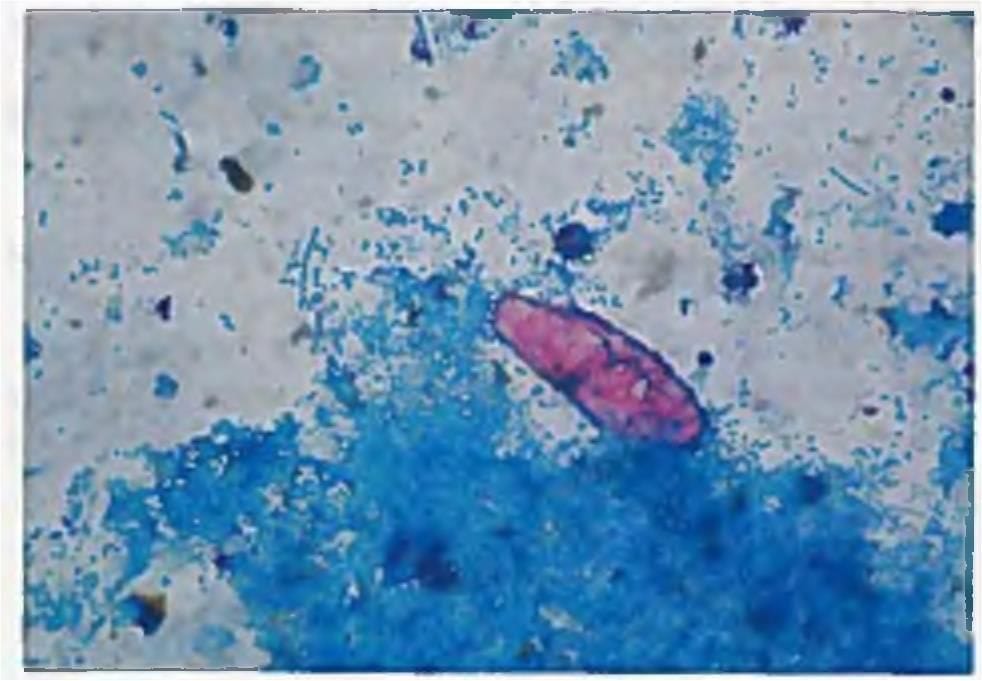
A known HIV positive patient on cART presents with diarrhea of 6 months duration. Stoll microscopy shows cysts of 10-30 um and kinyoun stain positive. What is the probable diagnosis? (AIIMS May 2018)
Detailed Solution: Question 14
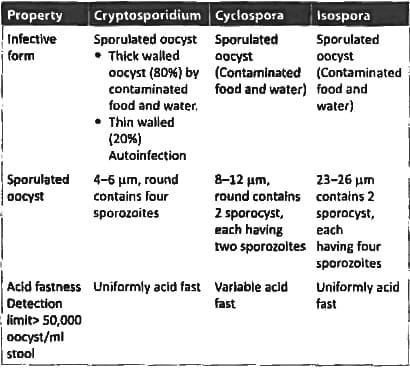
  • AIDS Positive patients usually have Cryptosporidium diarrhea.
  • The pointer in the question against that diagnosis is size of sporulaled cyst which is given to be 10-30 μm where as in Cryptosporidium the sporulated oocyst is 4-6 μm. Hence the diagnosis is Cysloisospora which was formerly called as isospora.
  • For treatment of cysloisospora cotrimoxazo le is used whereas in Cryptosporidium, nitazoxanide is used.

Test: Inflammatory Bowel Disease, Premalignant Lesions of GIT & Diarrhea - Question 15

A 22-year old presents with diarrhea and intolerance to dairy products. On investigation he was found to have lactose deficiency. Agent least likely to cause lactose intolerance among these is? (AIIMS May 2018)

Detailed Solution: Question 15

The amount of lactose in ice-cream is surprisingly lesser than yoghurt. Yoghurt is better tolerated than milk.

Test: Inflammatory Bowel Disease, Premalignant Lesions of GIT & Diarrhea - Question 16

In a hospitalized patient on multiple antibiotics with diarrhea, the best method of diagnosis for Clostridium difficile infection is? (AIIMS Nov 2017)

Detailed Solution: Question 16

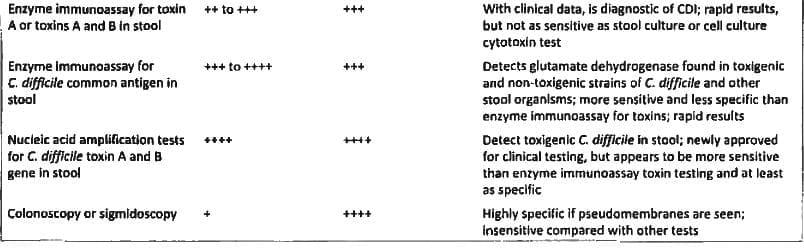
  • Nucleic acid amplification lest for C. Difficile toxin A or B gene in stool is more sensitive and specific than enzyme immunoassay toxin testing.
  • NAAT for toxin and not for genes is used for diagnosis.
  • Diagnosis of CDI is based on
    • Diarrhea (> 3 unformed stools per day for > 2 days)
    • Toxin A or B detected in stool by PCR or culture or pseudo-membranes seen in stool.

Table: Relative sensitivity and specificity of diagnostic tests for Clostridium difficile infection (CDI)

Test: Inflammatory Bowel Disease, Premalignant Lesions of GIT & Diarrhea - Question 17

All are features of bile acid diarrhoea except? (Recent Question 2016-17)

Detailed Solution: Question 17

  • The primary functions of bile acids are to enhance the dietary lipid digestion by promoting the bile flow, solubilize cholesterol and phospholipids.
  • In setting of ileal disease or ileal resection, bile acids are unabsorbed. These bile acids lead to stimulation of chloride secretion and lead to bile acid diarrhea. Hence the diarrhea will not respond to low fat diet.
  • It is also called choleretic enteropathy and rather responds to cholestyramine.
  • Steatorrhea does not occur in bile acid diarrhea since bile acid production increases to compensate for the rate of bile- acid losses.

Test: Inflammatory Bowel Disease, Premalignant Lesions of GIT & Diarrhea - Question 18

All are diagnostic criteria for irritable bowel syndrome except? (Recent Question 2016-17)

Detailed Solution: Question 18

The diagnostic criteria for irritable bowel syndrome is- Recurrent abdominal pain or discomfort for at least 3 days per month associated with >2 or more of the following features-

  1. Pain improvement with defecation
  2. Onset with change in form/appearance of stool
  3. Onset with change in frequency of stool

Nocturnal diarrhea or pain is not a feature of irritable bowel syndrome and is seen with Diabetic neuropathy. Bleeding is also not a feature.

Test: Inflammatory Bowel Disease, Premalignant Lesions of GIT & Diarrhea - Question 19

Most common cause for diarrhoea in adults associated with intake of Shell fish? (AIIMS Nov 2015)

Detailed Solution: Question 19
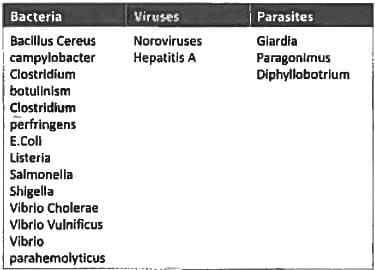
Shellfish can accumulate large number of noroviruses, which can lead to outbreaks of diarrheal illness. Large outbreaks occur after intake of inadequately cooked shellfish, such as oyster and clams. 

Test: Inflammatory Bowel Disease, Premalignant Lesions of GIT & Diarrhea - Question 20

Which diarrhea decreases after prolonged fasting?  (Recent 2015-16)

Detailed Solution: Question 20

Osmotic diarrhea stops with fasting, has a low pH, and is positive for reducing substances.

Test: Inflammatory Bowel Disease, Premalignant Lesions of GIT & Diarrhea - Question 21

A patient with chronic diarrhoea with abnormal D-xylose & Schilling test. What could be the diagnosis: (Recent Pattern 2014-15)

Detailed Solution: Question 21
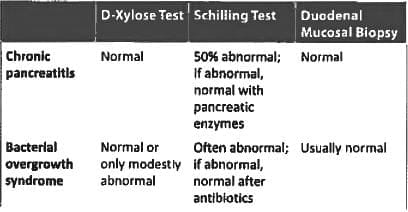
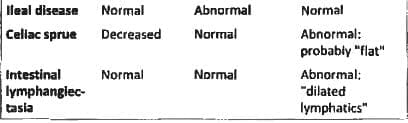
Since both are abnormal it indicates that there is a mucosal disease with impaired absorption of B12 which is a feature of bacterial overgrowth syndrome.
Result of Diagnostic Studies in Different Causes of Steatorrhea

Test: Inflammatory Bowel Disease, Premalignant Lesions of GIT & Diarrhea - Question 22

Diabetes induced diarrhea is best managed by which of the following? (Recent Pattern 2014-15)

Detailed Solution: Question 22

  • Clonidine, an alpha 2-adrenergic agonist, increases colonic compliance, has antisecretory effects, and has been effective for treating diabetic diarrhea
  • Diabelic diarrhea is a syndrome of unexplained persistent diarrhea in individuals with a longstanding history of diabetes. This may be due to autonomic neuropathy leading to abnormal motility and secretion of fluid in the colon. The most common is the irritable bowel syndrome.
  • Fiber supplementation with bran, Citrucel, Metamucil, or high-fiber foods may also thicken the consistency of the bowel movement and decrease watery diarrhea.

Test: Inflammatory Bowel Disease, Premalignant Lesions of GIT & Diarrhea - Question 23

Patient with congenital lactose deficiency will experience distension, flatulence and diarrhea on ingestion of: (Recent Pattern 2014-15)

Detailed Solution: Question 23

  • Lactose intolerant individuals have insufficient levels of lactase, an enzyme that catalyzes hydrolysis of lactose into glucose and galactose, in their digestive system. In most cases this causes symptoms which may include abdominal bloating and cramps, flatulence, diarrhea, nausea, borborygmi, or vomiting after consuming significant amounts of lactose.
  • Most accurate lactose intolerance test is a hydrogen breath test. After an overnight fast. 25 grams of lactose (in a solution with water) is swallowed. If the lactose cannot be digested, enteric bacteria metabolize it and produce hydrogen, which, along with methane, if produced, can be detected on the patient's breath by a clinical gas chromatograph or compact solid-state detector. The test takes about 2 to 3 hours to complete.

Test: Inflammatory Bowel Disease, Premalignant Lesions of GIT & Diarrhea - Question 24

All cause diarrhea except? (Recent Pattern 2014-15)

Detailed Solution: Question 24

  • Hypercalcemia increases the tone of sphincters of the gut leading to refractory constipation.
  • Autonomic dysfunction in diabetes explains the diarrhea.
  • Thyrotoxicosis leads to secretary diarrhea. More over bile acid physiology is also affected in thyrotoxicosis due to autoimmune damage to liver in Graves.
  • IBS has variable presentation between diarrhea and constipation.

Test: Inflammatory Bowel Disease, Premalignant Lesions of GIT & Diarrhea - Question 25

30 year male with chronic diarrhoea, anemia. Most likely associated with: (AIIMS May 07)

Detailed Solution: Question 25

Chronic diarrhoea and anaemia in a 30-year-old male are often linked to specific autoimmune conditions. In this case, the most relevant association is with:

  • Anti-endomysial antibody: This antibody is commonly found in conditions like coeliac disease, which can cause chronic diarrhoea and lead to malabsorption, resulting in anaemia.

Other antibodies listed, such as antimitochondrial, anti-smooth muscle, and antinuclear antibodies, are associated with different diseases but are less likely to explain these particular symptoms.

327 tests
Information about Test: Inflammatory Bowel Disease, Premalignant Lesions of GIT & Diarrhea Page
In this test you can find the Exam questions for Test: Inflammatory Bowel Disease, Premalignant Lesions of GIT & Diarrhea solved & explained in the simplest way possible. Besides giving Questions and answers for Test: Inflammatory Bowel Disease, Premalignant Lesions of GIT & Diarrhea, EduRev gives you an ample number of Online tests for practice
Download as PDF