
CAT Mini Mock Test - 2 Free Online Test 2026
Full Mock Test & Solutions: CAT Mini Mock Test - 2 (30 Questions)
You can boost your CAT 2026 exam preparation with this CAT Mini Mock Test - 2 (available with detailed solutions).. This mock test has been designed with the analysis of important topics, recent trends of the exam, and previous year questions of the last 3-years. All the questions have been designed to mirror the official pattern of CAT 2026 exam, helping you build speed, accuracy as per the actual exam.
Mock Test Highlights:
- - Format: Multiple Choice Questions (MCQ)
- - Duration: 60 minutes
- - Total Questions: 30
- - Analysis: Detailed Solutions & Performance Insights
- - Sections covered: Verbal and RC, DI and LR, Quantitative Aptitude
Sign up on EduRev for free and get access to these mock tests, get your All India Rank, and identify your weak areas to improve your marks & rank in the actual exam.

Direction: Read the following passage and answer the question that follows:
In the sleepy hamlet of Thorsby, a curious piece of folklore has been passed down for generations, centered around the figure of the "Green Lady." Legend has it that every century, on the eve of the summer solstice, the Green Lady emerges from the depths of the old forest, her emerald gown shimmering under the moonlight. While some claim she is a harbinger of good fortune, others whisper that her appearance foretells calamity.
The most intriguing aspect of the Green Lady's legend is its stubborn persistence in the local consciousness despite the lack of historical evidence. This peculiar phenomenon caught the attention of cultural anthropologist Dr. Emily Sutton, who embarked on a decade-long study to unravel the origins of this enduring myth. Dr. Sutton's research led her to ancient Celtic rituals, tales of lost travelers, and even the journal of a Victorian novelist who once resided in Thorsby. Her findings suggested that the Green Lady was not merely a figment of collective imagination but rather a tapestry woven from strands of various cultural narratives that had intersected in Thorsby over centuries.
As Dr. Sutton delved deeper, she discovered a pattern: the sightings of the Green Lady coincided with pivotal moments in Thorsby's history. These included years of bountiful harvests, unexpected natural disasters, and even the sudden influx of artists during the Romantic period. It appeared that the Green Lady's myth was intrinsically linked to the village's collective psyche, serving as a repository for their fears, hopes, and aspirations.
Dr. Sutton's work sparked a renewed interest in the Green Lady among the villagers. While some remained skeptical, others began to see the Green Lady not as a supernatural entity but as a symbol of their shared heritage and identity. The legend, once on the brink of being forgotten, was now celebrated as a unique aspect of Thorsby's cultural tapestry, illustrating how folklore can shape and be shaped by the communities that nurture it.
Q. The primary purpose of this passage is to:
In the sleepy hamlet of Thorsby, a curious piece of folklore has been passed down for generations, centered around the figure of the "Green Lady." Legend has it that every century, on the eve of the summer solstice, the Green Lady emerges from the depths of the old forest, her emerald gown shimmering under the moonlight. While some claim she is a harbinger of good fortune, others whisper that her appearance foretells calamity.
The most intriguing aspect of the Green Lady's legend is its stubborn persistence in the local consciousness despite the lack of historical evidence. This peculiar phenomenon caught the attention of cultural anthropologist Dr. Emily Sutton, who embarked on a decade-long study to unravel the origins of this enduring myth. Dr. Sutton's research led her to ancient Celtic rituals, tales of lost travelers, and even the journal of a Victorian novelist who once resided in Thorsby. Her findings suggested that the Green Lady was not merely a figment of collective imagination but rather a tapestry woven from strands of various cultural narratives that had intersected in Thorsby over centuries.
As Dr. Sutton delved deeper, she discovered a pattern: the sightings of the Green Lady coincided with pivotal moments in Thorsby's history. These included years of bountiful harvests, unexpected natural disasters, and even the sudden influx of artists during the Romantic period. It appeared that the Green Lady's myth was intrinsically linked to the village's collective psyche, serving as a repository for their fears, hopes, and aspirations.
Dr. Sutton's work sparked a renewed interest in the Green Lady among the villagers. While some remained skeptical, others began to see the Green Lady not as a supernatural entity but as a symbol of their shared heritage and identity. The legend, once on the brink of being forgotten, was now celebrated as a unique aspect of Thorsby's cultural tapestry, illustrating how folklore can shape and be shaped by the communities that nurture it.
Detailed Solution: Question 1
Direction: Read the following passage and answer the question that follows:
In the sleepy hamlet of Thorsby, a curious piece of folklore has been passed down for generations, centered around the figure of the "Green Lady." Legend has it that every century, on the eve of the summer solstice, the Green Lady emerges from the depths of the old forest, her emerald gown shimmering under the moonlight. While some claim she is a harbinger of good fortune, others whisper that her appearance foretells calamity.
The most intriguing aspect of the Green Lady's legend is its stubborn persistence in the local consciousness despite the lack of historical evidence. This peculiar phenomenon caught the attention of cultural anthropologist Dr. Emily Sutton, who embarked on a decade-long study to unravel the origins of this enduring myth. Dr. Sutton's research led her to ancient Celtic rituals, tales of lost travelers, and even the journal of a Victorian novelist who once resided in Thorsby. Her findings suggested that the Green Lady was not merely a figment of collective imagination but rather a tapestry woven from strands of various cultural narratives that had intersected in Thorsby over centuries.
As Dr. Sutton delved deeper, she discovered a pattern: the sightings of the Green Lady coincided with pivotal moments in Thorsby's history. These included years of bountiful harvests, unexpected natural disasters, and even the sudden influx of artists during the Romantic period. It appeared that the Green Lady's myth was intrinsically linked to the village's collective psyche, serving as a repository for their fears, hopes, and aspirations.
Dr. Sutton's work sparked a renewed interest in the Green Lady among the villagers. While some remained skeptical, others began to see the Green Lady not as a supernatural entity but as a symbol of their shared heritage and identity. The legend, once on the brink of being forgotten, was now celebrated as a unique aspect of Thorsby's cultural tapestry, illustrating how folklore can shape and be shaped by the communities that nurture it.
Q. According to Dr. Sutton's research, the sightings of the Green Lady in Thorsby were associated with:
In the sleepy hamlet of Thorsby, a curious piece of folklore has been passed down for generations, centered around the figure of the "Green Lady." Legend has it that every century, on the eve of the summer solstice, the Green Lady emerges from the depths of the old forest, her emerald gown shimmering under the moonlight. While some claim she is a harbinger of good fortune, others whisper that her appearance foretells calamity.
The most intriguing aspect of the Green Lady's legend is its stubborn persistence in the local consciousness despite the lack of historical evidence. This peculiar phenomenon caught the attention of cultural anthropologist Dr. Emily Sutton, who embarked on a decade-long study to unravel the origins of this enduring myth. Dr. Sutton's research led her to ancient Celtic rituals, tales of lost travelers, and even the journal of a Victorian novelist who once resided in Thorsby. Her findings suggested that the Green Lady was not merely a figment of collective imagination but rather a tapestry woven from strands of various cultural narratives that had intersected in Thorsby over centuries.
As Dr. Sutton delved deeper, she discovered a pattern: the sightings of the Green Lady coincided with pivotal moments in Thorsby's history. These included years of bountiful harvests, unexpected natural disasters, and even the sudden influx of artists during the Romantic period. It appeared that the Green Lady's myth was intrinsically linked to the village's collective psyche, serving as a repository for their fears, hopes, and aspirations.
Dr. Sutton's work sparked a renewed interest in the Green Lady among the villagers. While some remained skeptical, others began to see the Green Lady not as a supernatural entity but as a symbol of their shared heritage and identity. The legend, once on the brink of being forgotten, was now celebrated as a unique aspect of Thorsby's cultural tapestry, illustrating how folklore can shape and be shaped by the communities that nurture it.
Detailed Solution: Question 2

Direction: Read the following passage and answer the question that follows:
In the sleepy hamlet of Thorsby, a curious piece of folklore has been passed down for generations, centered around the figure of the "Green Lady." Legend has it that every century, on the eve of the summer solstice, the Green Lady emerges from the depths of the old forest, her emerald gown shimmering under the moonlight. While some claim she is a harbinger of good fortune, others whisper that her appearance foretells calamity.
The most intriguing aspect of the Green Lady's legend is its stubborn persistence in the local consciousness despite the lack of historical evidence. This peculiar phenomenon caught the attention of cultural anthropologist Dr. Emily Sutton, who embarked on a decade-long study to unravel the origins of this enduring myth. Dr. Sutton's research led her to ancient Celtic rituals, tales of lost travelers, and even the journal of a Victorian novelist who once resided in Thorsby. Her findings suggested that the Green Lady was not merely a figment of collective imagination but rather a tapestry woven from strands of various cultural narratives that had intersected in Thorsby over centuries.
As Dr. Sutton delved deeper, she discovered a pattern: the sightings of the Green Lady coincided with pivotal moments in Thorsby's history. These included years of bountiful harvests, unexpected natural disasters, and even the sudden influx of artists during the Romantic period. It appeared that the Green Lady's myth was intrinsically linked to the village's collective psyche, serving as a repository for their fears, hopes, and aspirations.
Dr. Sutton's work sparked a renewed interest in the Green Lady among the villagers. While some remained skeptical, others began to see the Green Lady not as a supernatural entity but as a symbol of their shared heritage and identity. The legend, once on the brink of being forgotten, was now celebrated as a unique aspect of Thorsby's cultural tapestry, illustrating how folklore can shape and be shaped by the communities that nurture it.
Q. Which of the following pieces of evidence, if true, would most strongly support Dr. Sutton's conclusion that the Green Lady is a symbol of Thorsby's shared heritage?
In the sleepy hamlet of Thorsby, a curious piece of folklore has been passed down for generations, centered around the figure of the "Green Lady." Legend has it that every century, on the eve of the summer solstice, the Green Lady emerges from the depths of the old forest, her emerald gown shimmering under the moonlight. While some claim she is a harbinger of good fortune, others whisper that her appearance foretells calamity.
The most intriguing aspect of the Green Lady's legend is its stubborn persistence in the local consciousness despite the lack of historical evidence. This peculiar phenomenon caught the attention of cultural anthropologist Dr. Emily Sutton, who embarked on a decade-long study to unravel the origins of this enduring myth. Dr. Sutton's research led her to ancient Celtic rituals, tales of lost travelers, and even the journal of a Victorian novelist who once resided in Thorsby. Her findings suggested that the Green Lady was not merely a figment of collective imagination but rather a tapestry woven from strands of various cultural narratives that had intersected in Thorsby over centuries.
As Dr. Sutton delved deeper, she discovered a pattern: the sightings of the Green Lady coincided with pivotal moments in Thorsby's history. These included years of bountiful harvests, unexpected natural disasters, and even the sudden influx of artists during the Romantic period. It appeared that the Green Lady's myth was intrinsically linked to the village's collective psyche, serving as a repository for their fears, hopes, and aspirations.
Dr. Sutton's work sparked a renewed interest in the Green Lady among the villagers. While some remained skeptical, others began to see the Green Lady not as a supernatural entity but as a symbol of their shared heritage and identity. The legend, once on the brink of being forgotten, was now celebrated as a unique aspect of Thorsby's cultural tapestry, illustrating how folklore can shape and be shaped by the communities that nurture it.
Detailed Solution: Question 3
Direction: Read the following passage and answer the question that follows:
In the sleepy hamlet of Thorsby, a curious piece of folklore has been passed down for generations, centered around the figure of the "Green Lady." Legend has it that every century, on the eve of the summer solstice, the Green Lady emerges from the depths of the old forest, her emerald gown shimmering under the moonlight. While some claim she is a harbinger of good fortune, others whisper that her appearance foretells calamity.
The most intriguing aspect of the Green Lady's legend is its stubborn persistence in the local consciousness despite the lack of historical evidence. This peculiar phenomenon caught the attention of cultural anthropologist Dr. Emily Sutton, who embarked on a decade-long study to unravel the origins of this enduring myth. Dr. Sutton's research led her to ancient Celtic rituals, tales of lost travelers, and even the journal of a Victorian novelist who once resided in Thorsby. Her findings suggested that the Green Lady was not merely a figment of collective imagination but rather a tapestry woven from strands of various cultural narratives that had intersected in Thorsby over centuries.
As Dr. Sutton delved deeper, she discovered a pattern: the sightings of the Green Lady coincided with pivotal moments in Thorsby's history. These included years of bountiful harvests, unexpected natural disasters, and even the sudden influx of artists during the Romantic period. It appeared that the Green Lady's myth was intrinsically linked to the village's collective psyche, serving as a repository for their fears, hopes, and aspirations.
Dr. Sutton's work sparked a renewed interest in the Green Lady among the villagers. While some remained skeptical, others began to see the Green Lady not as a supernatural entity but as a symbol of their shared heritage and identity. The legend, once on the brink of being forgotten, was now celebrated as a unique aspect of Thorsby's cultural tapestry, illustrating how folklore can shape and be shaped by the communities that nurture it.
Q. The passage implies that before Dr. Sutton's research, the legend of the Green Lady was:
In the sleepy hamlet of Thorsby, a curious piece of folklore has been passed down for generations, centered around the figure of the "Green Lady." Legend has it that every century, on the eve of the summer solstice, the Green Lady emerges from the depths of the old forest, her emerald gown shimmering under the moonlight. While some claim she is a harbinger of good fortune, others whisper that her appearance foretells calamity.
The most intriguing aspect of the Green Lady's legend is its stubborn persistence in the local consciousness despite the lack of historical evidence. This peculiar phenomenon caught the attention of cultural anthropologist Dr. Emily Sutton, who embarked on a decade-long study to unravel the origins of this enduring myth. Dr. Sutton's research led her to ancient Celtic rituals, tales of lost travelers, and even the journal of a Victorian novelist who once resided in Thorsby. Her findings suggested that the Green Lady was not merely a figment of collective imagination but rather a tapestry woven from strands of various cultural narratives that had intersected in Thorsby over centuries.
As Dr. Sutton delved deeper, she discovered a pattern: the sightings of the Green Lady coincided with pivotal moments in Thorsby's history. These included years of bountiful harvests, unexpected natural disasters, and even the sudden influx of artists during the Romantic period. It appeared that the Green Lady's myth was intrinsically linked to the village's collective psyche, serving as a repository for their fears, hopes, and aspirations.
Dr. Sutton's work sparked a renewed interest in the Green Lady among the villagers. While some remained skeptical, others began to see the Green Lady not as a supernatural entity but as a symbol of their shared heritage and identity. The legend, once on the brink of being forgotten, was now celebrated as a unique aspect of Thorsby's cultural tapestry, illustrating how folklore can shape and be shaped by the communities that nurture it.
Detailed Solution: Question 4
Directions: Answer the question based on the following passage.
The use of restorative justice programs within the criminal justice system is a relatively recent development that has started being used instead of the traditional retributive system that defines justice in a punitive way. There are many examples of restorative justice programs or changes in judicial procedure that illustrate the shift towards a restorative justice mentality within the criminal justice system generally. Providing closure for victims has become a goal of the criminal justice system and although there is not a concrete definition of closure it is generally accepted to be an emotional state related to peace, relief, or a sense of finality.
The victims should be "at the center of the criminal justice process" rather than lost somewhere on the periphery. This is just one of many ideas at the heart of the restorative justice movement. Judges have been viewed in the past as if they were some kind of mechanical calculator of justice that applied strict logic and rationality to the cases to determine how the law should be applied. That idea is slowly losing support as restorative justice and other victim centered programs emerge. There is even a subfield within law known as therapeutic jurisprudence that sees the law as a potential vehicle for victim therapy by recognizing that law is not about pure logic but experience and emotion.
Restorative justice questions the belief that punishment of the offender is obligatory to restore justice. It suggests that providing the victims with satisfaction by involving them in the justice process is far more beneficial. Offender punishment in restorative justice programs is more flexible and keys primarily on making the offender take accountability and feel certain emotions.
There is a different form of deontological ethics posited by W.D. Ross that relies on several prima facie duties to which all people should adhere; fidelity, reparation, gratitude, non-injury, beneficence, self-improvement, and justice. Restorative justice programs fall neatly into this form of ethics by focusing on offender guilt and accountability (fidelity); involving the victim to discover how the situation can be repaired (reparation); creating a sense of empathy between the two parties by establishing communication'; preventing a cycle of violence or revenge (beneficence); focusing on creating new behaviors in the accused (self-improvement); and reaching a decision that is believed to be doing justice by all parties involved.
Jackson (2009) explains that one goal of restorative justice is to hopefully create feelings of guilt and shame in the offender through the victim's expression of their feelings. Shame is more painful of an experience for an individual than guilt. Shame makes individuals want to run off and hide while guilt solicits motivation to confess, repair, and apologize. Shame creates a situation that naturally inhibits people from opening up and sharing their experiences with others.
Just taking a quick glance at the traits of shame and guilt respectively creates an intuitive response that perhaps guilt is better suited than shame for restorative justice programs. If shame makes an individual want to turn away and hide, then it is hard to see how a restorative justice program based on dialogue and communication would be effective. Guilt seems to have the opposite effect on empathy from shame, and leads to more empathy for others which in turn creates motivation for reparative actions.
Q. Which one of the following best describes the term 'therapeutic jurisprudence' as used in the second paragraph of the passage?
Detailed Solution: Question 5
Directions: Answer the question based on the following passage.
The use of restorative justice programs within the criminal justice system is a relatively recent development that has started being used instead of the traditional retributive system that defines justice in a punitive way. There are many examples of restorative justice programs or changes in judicial procedure that illustrate the shift towards a restorative justice mentality within the criminal justice system generally. Providing closure for victims has become a goal of the criminal justice system and although there is not a concrete definition of closure it is generally accepted to be an emotional state related to peace, relief, or a sense of finality.
The victims should be "at the center of the criminal justice process" rather than lost somewhere on the periphery. This is just one of many ideas at the heart of the restorative justice movement. Judges have been viewed in the past as if they were some kind of mechanical calculator of justice that applied strict logic and rationality to the cases to determine how the law should be applied. That idea is slowly losing support as restorative justice and other victim centered programs emerge. There is even a subfield within law known as therapeutic jurisprudence that sees the law as a potential vehicle for victim therapy by recognizing that law is not about pure logic but experience and emotion.
Restorative justice questions the belief that punishment of the offender is obligatory to restore justice. It suggests that providing the victims with satisfaction by involving them in the justice process is far more beneficial. Offender punishment in restorative justice programs is more flexible and keys primarily on making the offender take accountability and feel certain emotions.
There is a different form of deontological ethics posited by W.D. Ross that relies on several prima facie duties to which all people should adhere; fidelity, reparation, gratitude, non-injury, beneficence, self-improvement, and justice. Restorative justice programs fall neatly into this form of ethics by focusing on offender guilt and accountability (fidelity); involving the victim to discover how the situation can be repaired (reparation); creating a sense of empathy between the two parties by establishing communication'; preventing a cycle of violence or revenge (beneficence); focusing on creating new behaviors in the accused (self-improvement); and reaching a decision that is believed to be doing justice by all parties involved.
Jackson (2009) explains that one goal of restorative justice is to hopefully create feelings of guilt and shame in the offender through the victim's expression of their feelings. Shame is more painful of an experience for an individual than guilt. Shame makes individuals want to run off and hide while guilt solicits motivation to confess, repair, and apologize. Shame creates a situation that naturally inhibits people from opening up and sharing their experiences with others.
Just taking a quick glance at the traits of shame and guilt respectively creates an intuitive response that perhaps guilt is better suited than shame for restorative justice programs. If shame makes an individual want to turn away and hide, then it is hard to see how a restorative justice program based on dialogue and communication would be effective. Guilt seems to have the opposite effect on empathy from shame, and leads to more empathy for others which in turn creates motivation for reparative actions.
Q. Which of the following statements regarding restorative justice is true?
Detailed Solution: Question 6
Directions: Answer the question based on the following passage.
The use of restorative justice programs within the criminal justice system is a relatively recent development that has started being used instead of the traditional retributive system that defines justice in a punitive way. There are many examples of restorative justice programs or changes in judicial procedure that illustrate the shift towards a restorative justice mentality within the criminal justice system generally. Providing closure for victims has become a goal of the criminal justice system and although there is not a concrete definition of closure it is generally accepted to be an emotional state related to peace, relief, or a sense of finality.
The victims should be "at the center of the criminal justice process" rather than lost somewhere on the periphery. This is just one of many ideas at the heart of the restorative justice movement. Judges have been viewed in the past as if they were some kind of mechanical calculator of justice that applied strict logic and rationality to the cases to determine how the law should be applied. That idea is slowly losing support as restorative justice and other victim centered programs emerge. There is even a subfield within law known as therapeutic jurisprudence that sees the law as a potential vehicle for victim therapy by recognizing that law is not about pure logic but experience and emotion.
Restorative justice questions the belief that punishment of the offender is obligatory to restore justice. It suggests that providing the victims with satisfaction by involving them in the justice process is far more beneficial. Offender punishment in restorative justice programs is more flexible and keys primarily on making the offender take accountability and feel certain emotions.
There is a different form of deontological ethics posited by W.D. Ross that relies on several prima facie duties to which all people should adhere; fidelity, reparation, gratitude, non-injury, beneficence, self-improvement, and justice. Restorative justice programs fall neatly into this form of ethics by focusing on offender guilt and accountability (fidelity); involving the victim to discover how the situation can be repaired (reparation); creating a sense of empathy between the two parties by establishing communication'; preventing a cycle of violence or revenge (beneficence); focusing on creating new behaviors in the accused (self-improvement); and reaching a decision that is believed to be doing justice by all parties involved.
Jackson (2009) explains that one goal of restorative justice is to hopefully create feelings of guilt and shame in the offender through the victim's expression of their feelings. Shame is more painful of an experience for an individual than guilt. Shame makes individuals want to run off and hide while guilt solicits motivation to confess, repair, and apologize. Shame creates a situation that naturally inhibits people from opening up and sharing their experiences with others.
Just taking a quick glance at the traits of shame and guilt respectively creates an intuitive response that perhaps guilt is better suited than shame for restorative justice programs. If shame makes an individual want to turn away and hide, then it is hard to see how a restorative justice program based on dialogue and communication would be effective. Guilt seems to have the opposite effect on empathy from shame, and leads to more empathy for others which in turn creates motivation for reparative actions.
Q. Which of the following is not part of the prima facie duties that make up the deontological ethics posited by W. D. Ross?
Detailed Solution: Question 7
Directions: Answer the question based on the following passage.
The use of restorative justice programs within the criminal justice system is a relatively recent development that has started being used instead of the traditional retributive system that defines justice in a punitive way. There are many examples of restorative justice programs or changes in judicial procedure that illustrate the shift towards a restorative justice mentality within the criminal justice system generally. Providing closure for victims has become a goal of the criminal justice system and although there is not a concrete definition of closure it is generally accepted to be an emotional state related to peace, relief, or a sense of finality.
The victims should be "at the center of the criminal justice process" rather than lost somewhere on the periphery. This is just one of many ideas at the heart of the restorative justice movement. Judges have been viewed in the past as if they were some kind of mechanical calculator of justice that applied strict logic and rationality to the cases to determine how the law should be applied. That idea is slowly losing support as restorative justice and other victim centered programs emerge. There is even a subfield within law known as therapeutic jurisprudence that sees the law as a potential vehicle for victim therapy by recognizing that law is not about pure logic but experience and emotion.
Restorative justice questions the belief that punishment of the offender is obligatory to restore justice. It suggests that providing the victims with satisfaction by involving them in the justice process is far more beneficial. Offender punishment in restorative justice programs is more flexible and keys primarily on making the offender take accountability and feel certain emotions.
There is a different form of deontological ethics posited by W.D. Ross that relies on several prima facie duties to which all people should adhere; fidelity, reparation, gratitude, non-injury, beneficence, self-improvement, and justice. Restorative justice programs fall neatly into this form of ethics by focusing on offender guilt and accountability (fidelity); involving the victim to discover how the situation can be repaired (reparation); creating a sense of empathy between the two parties by establishing communication'; preventing a cycle of violence or revenge (beneficence); focusing on creating new behaviors in the accused (self-improvement); and reaching a decision that is believed to be doing justice by all parties involved.
Jackson (2009) explains that one goal of restorative justice is to hopefully create feelings of guilt and shame in the offender through the victim's expression of their feelings. Shame is more painful of an experience for an individual than guilt. Shame makes individuals want to run off and hide while guilt solicits motivation to confess, repair, and apologize. Shame creates a situation that naturally inhibits people from opening up and sharing their experiences with others.
Just taking a quick glance at the traits of shame and guilt respectively creates an intuitive response that perhaps guilt is better suited than shame for restorative justice programs. If shame makes an individual want to turn away and hide, then it is hard to see how a restorative justice program based on dialogue and communication would be effective. Guilt seems to have the opposite effect on empathy from shame, and leads to more empathy for others which in turn creates motivation for reparative actions.
Q. Restorative programs should invoke the feeling of guilt rather than shame in the accused, because:
Detailed Solution: Question 8
Directions: The passage given below is followed by four alternative summaries. Choose the option that best captures the essence of the passage.
In its most basic form, longtermism claims that the best option is that which is best for the far future. The thesis is typically justified by four premises - two empirical and two evaluative. The first premise states that there are, in expectation, an extremely large number of future people. The second premise states that we ought to adopt a zero rate of pure time preference (or impatience) such that we do not discount the well-being of these future people. The third premise claims that there are ways we can alter our established practices that will predictably influence the well-being of these future people. The final premise states that the best option is that which maximises well-being. Thus if we can expect a vast number of future generations, and if the well-being of a future person is weighted equally to that of a present-day person, then the value of an option that is best for the far future is likely to swamp the value of an option that is best for the short-term.
Detailed Solution: Question 9
Which of the following is the ODD ONE OUT? [TITA]
1. The Renaissance was a period of great cultural and artistic achievements that occurred in Europe from the 14th to the 17th century.
2. The Enlightenment was an intellectual and philosophical movement that dominated the world of ideas in Europe during the 18th century.
3. The Industrial Revolution, which began in the 18th century, transformed the way goods were produced and led to significant changes in social and economic organization.
4. Romanticism was an artistic and literary movement that originated in Europe in the late 18th century, emphasizing individualism, emotion, and the natural world.
5. Modernism is a cultural and artistic movement that emerged in the early 20th century, characterized by experimentation, abstraction, and a rejection of traditional values.
1. The Renaissance was a period of great cultural and artistic achievements that occurred in Europe from the 14th to the 17th century.
2. The Enlightenment was an intellectual and philosophical movement that dominated the world of ideas in Europe during the 18th century.
3. The Industrial Revolution, which began in the 18th century, transformed the way goods were produced and led to significant changes in social and economic organization.
4. Romanticism was an artistic and literary movement that originated in Europe in the late 18th century, emphasizing individualism, emotion, and the natural world.
5. Modernism is a cultural and artistic movement that emerged in the early 20th century, characterized by experimentation, abstraction, and a rejection of traditional values.
Detailed Solution: Question 10
Direction: Read the following passage and answer the question that follows:
What role can and should designers play in all this? Design has been a driving forces behind our prodigious waste streams in the past century. As the handmaidens of commerce, designers have been complicit in the throwaway economy: manufacturing planned obsolescence, promoting convenience culture, entombing products in layers of seductive packaging. In short, they’ve been doing what designers do best – creating desire. Paradoxically, even when designers achieve a sense of permanence, it is illusory; the iPhone seemingly achieved the Platonic ideal of the smartphone, only to be replaced year after year because of software innovations and the need to stimulate new sales. However, the culture of design is changing, and the outlook of young designers today is very different from that of their predecessors. Many have very little interest in producing more stuff, and are much more invested in understanding the extractive processes behind products and their afterlives. Shorn of blissful ignorance and only too alert to the mounting crisis around us, designers are reinventing themselves as material researchers, waste-stream investigators and students of global economic flows.
Q. Which of the following best summarizes the passage?
What role can and should designers play in all this? Design has been a driving forces behind our prodigious waste streams in the past century. As the handmaidens of commerce, designers have been complicit in the throwaway economy: manufacturing planned obsolescence, promoting convenience culture, entombing products in layers of seductive packaging. In short, they’ve been doing what designers do best – creating desire. Paradoxically, even when designers achieve a sense of permanence, it is illusory; the iPhone seemingly achieved the Platonic ideal of the smartphone, only to be replaced year after year because of software innovations and the need to stimulate new sales. However, the culture of design is changing, and the outlook of young designers today is very different from that of their predecessors. Many have very little interest in producing more stuff, and are much more invested in understanding the extractive processes behind products and their afterlives. Shorn of blissful ignorance and only too alert to the mounting crisis around us, designers are reinventing themselves as material researchers, waste-stream investigators and students of global economic flows.
Q. Which of the following best summarizes the passage?
Detailed Solution: Question 11
Direction: In a knockout tournament 64 players participated. These 64 players are seeded from 1 to 64 with seed 1 being the top seed and seed 64 being the bottom seed. The tournament is conducted in different stages.
In stage 1 seed 1 played with seed 64 and that match is named as match 1 of stage 1, seed 2 played with seed 63 and that match is named as match 2 of stage 1, and so on.
In stage 2, winner of match 1 and match 32 of stage 1 played against each other and that match is named as Match 1 of stage 2, then winner of match 2 and match 31 of stage 1 played against each other and that match is named as Match 2 of stage 2. And so, on
The same procedure is followed in further stages. Now answer the following question.
Q. How many stages are in the tournament?
In stage 1 seed 1 played with seed 64 and that match is named as match 1 of stage 1, seed 2 played with seed 63 and that match is named as match 2 of stage 1, and so on.
In stage 2, winner of match 1 and match 32 of stage 1 played against each other and that match is named as Match 1 of stage 2, then winner of match 2 and match 31 of stage 1 played against each other and that match is named as Match 2 of stage 2. And so, on
The same procedure is followed in further stages. Now answer the following question.
Detailed Solution: Question 12
Direction: In a knockout tournament 64 players participated. These 64 players are seeded from 1 to 64 with seed 1 being the top seed and seed 64 being the bottom seed. The tournament is conducted in different stages.
In stage 1 seed 1 played with seed 64 and that match is named as match 1 of stage 1, seed 2 played with seed 63 and that match is named as match 2 of stage 1, and so on.
In stage 2, winner of match 1 and match 32 of stage 1 played against each other and that match is named as Match 1 of stage 2, then winner of match 2 and match 31 of stage 1 played against each other and that match is named as Match 2 of stage 2. And so, on
The same procedure is followed in further stages. Now answer the following question.
Q. What is the total number of matches in the tournament?
In stage 1 seed 1 played with seed 64 and that match is named as match 1 of stage 1, seed 2 played with seed 63 and that match is named as match 2 of stage 1, and so on.
In stage 2, winner of match 1 and match 32 of stage 1 played against each other and that match is named as Match 1 of stage 2, then winner of match 2 and match 31 of stage 1 played against each other and that match is named as Match 2 of stage 2. And so, on
The same procedure is followed in further stages. Now answer the following question.
Detailed Solution: Question 13
Direction: In a knockout tournament 64 players participated. These 64 players are seeded from 1 to 64 with seed 1 being the top seed and seed 64 being the bottom seed. The tournament is conducted in different stages.
In stage 1 seed 1 played with seed 64 and that match is named as match 1 of stage 1, seed 2 played with seed 63 and that match is named as match 2 of stage 1, and so on.
In stage 2, winner of match 1 and match 32 of stage 1 played against each other and that match is named as Match 1 of stage 2, then winner of match 2 and match 31 of stage 1 played against each other and that match is named as Match 2 of stage 2. And so, on
The same procedure is followed in further stages. Now answer the following question.
Q. If seed 9 reached final then which one of the following could play with him in final?
In stage 1 seed 1 played with seed 64 and that match is named as match 1 of stage 1, seed 2 played with seed 63 and that match is named as match 2 of stage 1, and so on.
In stage 2, winner of match 1 and match 32 of stage 1 played against each other and that match is named as Match 1 of stage 2, then winner of match 2 and match 31 of stage 1 played against each other and that match is named as Match 2 of stage 2. And so, on
The same procedure is followed in further stages. Now answer the following question.
Detailed Solution: Question 14
Direction: In a knockout tournament 64 players participated. These 64 players are seeded from 1 to 64 with seed 1 being the top seed and seed 64 being the bottom seed. The tournament is conducted in different stages.
In stage 1 seed 1 played with seed 64 and that match is named as match 1 of stage 1, seed 2 played with seed 63 and that match is named as match 2 of stage 1, and so on.
In stage 2, winner of match 1 and match 32 of stage 1 played against each other and that match is named as Match 1 of stage 2, then winner of match 2 and match 31 of stage 1 played against each other and that match is named as Match 2 of stage 2. And so, on
The same procedure is followed in further stages. Now answer the following question.
Q. Which lowest seeded player can win the tournament without causing an upset by him?
In stage 1 seed 1 played with seed 64 and that match is named as match 1 of stage 1, seed 2 played with seed 63 and that match is named as match 2 of stage 1, and so on.
In stage 2, winner of match 1 and match 32 of stage 1 played against each other and that match is named as Match 1 of stage 2, then winner of match 2 and match 31 of stage 1 played against each other and that match is named as Match 2 of stage 2. And so, on
The same procedure is followed in further stages. Now answer the following question.
Detailed Solution: Question 15
Direction: In a knockout tournament 64 players participated. These 64 players are seeded from 1 to 64 with seed 1 being the top seed and seed 64 being the bottom seed. The tournament is conducted in different stages.
In stage 1 seed 1 played with seed 64 and that match is named as match 1 of stage 1, seed 2 played with seed 63 and that match is named as match 2 of stage 1, and so on.
In stage 2, winner of match 1 and match 32 of stage 1 played against each other and that match is named as Match 1 of stage 2, then winner of match 2 and match 31 of stage 1 played against each other and that match is named as Match 2 of stage 2. And so, on
The same procedure is followed in further stages. Now answer the following question.
Q. If seed 15 won the tournament then what is the minimum number of upsets caused by him?
In stage 1 seed 1 played with seed 64 and that match is named as match 1 of stage 1, seed 2 played with seed 63 and that match is named as match 2 of stage 1, and so on.
In stage 2, winner of match 1 and match 32 of stage 1 played against each other and that match is named as Match 1 of stage 2, then winner of match 2 and match 31 of stage 1 played against each other and that match is named as Match 2 of stage 2. And so, on
The same procedure is followed in further stages. Now answer the following question.
Detailed Solution: Question 16
In 2000, what was the ratio of the number of dead males to dead females among those being tracked?
Detailed Solution: Question 17
How many people who were being tracked and who were between 30 and 40 years of age in 1980 survived until 2010?
Detailed Solution: Question 18
How many individuals who were being tracked and who were less than 30 years of age in 1980 survived until 2020?
Detailed Solution: Question 19
How many of the males who were being tracked and who were between 20 and 30 yearsof age in 1980 died in the period 2000 to 2010?
Detailed Solution: Question 20
Detailed Solution: Question 21
Detailed Solution: Question 22
Salaries of Ravi and Sumit are in the ratio 2 : 3. If the 'salary of each' one of them is increased by Rs. 4000, the new ratio becomes 40 : 57. What is Sumit's present salary?
The strength of a salt solution is p% if 100 ml of the solution contains p grams of salt. If three salt solutions A, B, C are mixed in the proportion 1 : 2 : 3, then the resulting solution has strength 20%. If instead the proportion is 3 : 2 : 1, then the resulting solution has strength 30%. A fourth solution, D, is produced by mixing B and C in the ratio 2 : 7. The ratio of the strength of D to that of A is
Detailed Solution: Question 24
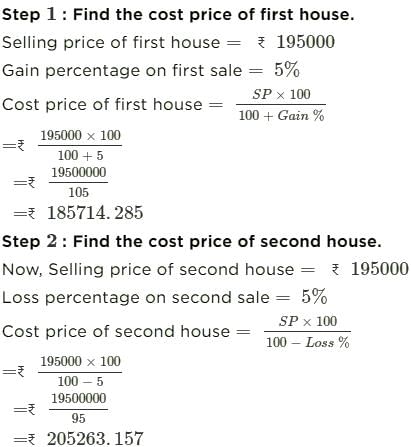
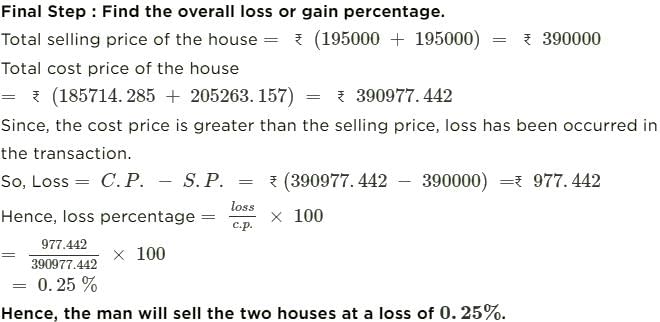
A man sells two houses at the rate of ₹1.95 lac each. He gains 5% on one and on other, he lost 5% find his gain or loss percent in the whole transaction.
Detailed Solution: Question 25
In covering a distance of 30 km, Arun takes 2 hours more than Anil. If Arun doubles his speed, then he would take 1 hour less than Anil. What is Arun's speed?
Detailed Solution: Question 26
A train of 300 m is travelling with the speed of 45 km/h when it passes point A completely. At the same time, a motorbike starts from point A with the speed of 70 km/h. When it exactly reaches the middle point of the train, the train increases its speed to 60 km/h and motorbike reduces its speed to 65 km/h. How much distance will the motorbike travel while passing the train completely?
Detailed Solution: Question 27
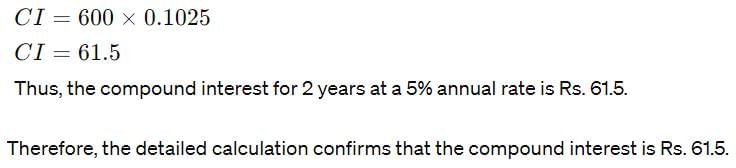
If the simple interest on a sum of money for 2 years at 5% per annum is Rs. 60, what is the compound interest on the same at the same rate and for the same time?
Detailed Solution: Question 28


8 girls and 12 boys can finish work in 10 days while 6 girls and 8 boys can finish it in 14 days. Find the time taken by the one girl alone that by one boy alone to finish the work.
Detailed Solution: Question 29

If we listed all numbers from 100 to 10,000, how many times would the digit 3 be printed?
Detailed Solution: Question 30
33 videos|20 docs|65 tests |
