KVS PGT/TGT/PRT Exam  >  KVS PGT/TGT/PRT Test  >  KVS Librarian Exam Mock Test Series 2026  >  KVS Librarian Tier 2 Mock Test- 3 - KVS PGT/TGT/PRT MCQ

KVS Librarian Exam Tier 2 Mock Test- 3 Free Online Test 2026


Full Mock Test & Solutions: KVS Librarian Tier 2 Mock Test- 3 (60 Questions)

You can boost your KVS PGT/TGT/PRT 2026 exam preparation with this KVS Librarian Tier 2 Mock Test- 3 (available with detailed solutions).. This mock test has been designed with the analysis of important topics, recent trends of the exam, and previous year questions of the last 3-years. All the questions have been designed to mirror the official pattern of KVS PGT/TGT/PRT 2026 exam, helping you build speed, accuracy as per the actual exam.

Mock Test Highlights:

  • - Format: Multiple Choice Questions (MCQ)
  • - Duration: 150 minutes
  • - Total Questions: 60
  • - Analysis: Detailed Solutions & Performance Insights

Sign up on EduRev for free and get access to these mock tests, get your All India Rank, and identify your weak areas to improve your marks & rank in the actual exam.

KVS Librarian Tier 2 Mock Test- 3 - Question 1

How is a Community Information System (CIS) different from other information systems?

Detailed Solution: Question 1

The Correct answer is It is community-driven, involving local stakeholders.
Explanation:

  • A key characteristic of a CIS is that it is community-driven, meaning that the community plays a central role in both the creation and use of the information system. It involves local stakeholders in identifying the types of information needed, the tools for data collection, and the ways in which the information will be used and shared.
    • A CIS is community-driven, meaning the community plays a key role.
    • Local stakeholders are involved in identifying information needs.
    • It addresses multiple sectors, including health, governance, and development, not just education.
    • It is not solely managed by the government.

KVS Librarian Tier 2 Mock Test- 3 - Question 2

Indira Gandhi Rashtriya Manav Sangrahalaya (IGRMS) was established in

Detailed Solution: Question 2

The Correct answer is 1979.
Explanation

  • The IGRMS in Bhopal—India’s largest ethnographic museum—spans 200 acres on Shyamla Hills beside the Upper Lake.
  • Established in 1979 (land granted after a 1970 Indian Science Congress proposal), it chronicles humanity’s journey through time and space via:
    • Open-Air Exhibits: Tribal Habitat, Coastal Village, Desert Village, Himalayan Village, Rock Art Heritage, Mythological Trail, River Valley Culture, Aiyyanar Shrine Complex, Traditional Technology Park.
    • Indoor Galleries: Veethi-Sankul and Bhopal Gallery.
    • Rotating Shows: Temporary, travelling, special, and online exhibitions.
    • Regional Centre: Serves South India from Mysore, Karnataka.
  • Beyond ethnography, IGRMS pursues scientific research—ethno‐sciences, traditional architecture, rural and urban planning, germplasm preservation, resource‐sharing patterns, and ecological conservation—integrating traditional knowledge with contemporary challenges.

KVS Librarian Tier 2 Mock Test- 3 - Question 3

Dr. S.R. Ranganathan has given details of the various jobs performed in a library in his

Detailed Solution: Question 3

The correct answer is "Library Administration".
Explanation

  • Five Laws of Library Sciences:
    • ​​Dr. S.R., Ranganathan proposed the Five Laws of Library Science in 1931.
    • The Five Laws are considered a first step towards putting library work on a scientific basis.
      • First Law- Books are for use
      • Second Law- Every reader his/her book
      • Third Law- Every book its reader
      • Fourth Law- Save the time of the reader
      • Fifth Law- Library is a growing organism
  • Colon Classification:
    • Colon classification (CC) is a system of library classification developed by S.R. Ranganathan in 1933.
    • The First edition of It was published in 1933.
    • It was the first ever faceted (or analytic-synthetic) classification.
  • ​​Classified Catalogue Code:
    • The Classified Catalogue Code (CCC) was formulated by S. R. Ranganathan in 1934
    • It is a user-oriented code that provides rules for subject entries and exhaustive rules for the choice and rendering of bibliographic items for descriptive cataloging.
  • Library Administration:
    • Ranganathan taught library administration to students and broke down the entire administration of the library into about one thousand components.
    • The result was a treatise entitled the 'Library Administration'.
    • It was published in 1935 and contained applications of various principles of administration.
    • Some of the concepts which he realized were - Functional Planning, Job Analysis, Job description, Time Frame, Regular and repetitive duties which he later termed as routines, maintenance and designing of library records and their standardization, budgeting, Three card system, Charging System and Library Standards, etc.

KVS Librarian Tier 2 Mock Test- 3 - Question 4

_______ supports 'Data Science Journal*.

Detailed Solution: Question 4

The Correct answer is the Committee on Data of the International Science Council (CODATA)
Explanation

  • The Data Science Journal is supported by organizations like the CODATA International Data Policy Committee (IDPC)
  • The Data Science Journal (DSJ), established in 2002, advances understanding of how data practices shape research and knowledge.
  • As data generation and handling have grown exponentially, DSJ explores their impact on research methods, science policy, and data infrastructure.
  • A key aim of the journal is to promote the ethical, efficient, and impactful use of data across disciplines.
  • It is a peer-reviewed, open-access journal relevant to all scientific fields and the empirical humanities.

Other Related Points

  • Committee on Data for Science and Technology (CODATA):
    • CODATA,the Committee on Data for Science and Technology, is an interdisciplinary Scientific Committee of the International Council for Science (lCSU).
    • It was founded in 1972 as an interdisciplinary Scientific Committee of the ICSU with the mission to "promote and globally facilitate the collection, assessment, and dissemination of dependable numerical information crucial to science and technology."
    • CODATA has several publications, which include \CODATA Newsletter, Conference Proceedings, Books and Monographs, Special Reports on CODATA activities and CODATA Bulletins in various subject areas.
  • Indian Reference Stations (INRES):
    • Indian Reference Stations (INRES) are ground-based components of India’s GAGAN (GPS-Aided GEO Augmented Navigation) system.
    • Spread across 15 key locations, INRES units collect GPS satellite data and transmit it to the Indian Master Control Centre (INMCC).
    • The INMCC processes this data to generate corrections, significantly enhancing GPS accuracy and reliability—especially for aviation within Indian airspace.

Other Related Points

  • International Data Week (IDW) 2025 will be held for the first time in Australia, from 13–16 October in Brisbane/Meanjin, hosted by the Australian Research Data Commons.
  • This biennial event is a global collaboration between CODATA, the Research Data Alliance (RDA), and the World Data System (WDS).

KVS Librarian Tier 2 Mock Test- 3 - Question 5

Which FAIR principle emphasized the importance of making data prepared for future research and processing

Detailed Solution: Question 5

The Correct answer is Reusability.
Explanation

  • FAIR stands for findable, accessible, interoperable, and reusable.
  • The objective is to ensure that open data can be freely utilized, modified, and shared by anyone for any purpose, as defined by The Open Definition.
  • Since their introduction in 2016, the FAIR Principles have gained widespread recognition and have been adopted as standards for data management, infrastructure development, and service delivery.

Findable:

  • This entails making your data discoverable by both humans and computers through robust metadata and persistent identifiers (DOIs).

Accessible:

  • Your data and/or metadata should be accessible and downloadable by both humans and computers.

Interoperable:

  • To facilitate the discovery of new insights, research data should be easily integrated with other datasets, applications, and workflows by both humans and computer systems.

Reusable:

  • Research data should be prepared for future research and processing, enabling findings to be replicated and used to develop new research questions.

KVS Librarian Tier 2 Mock Test- 3 - Question 6

Which of the following is the main objective of library cataloging?

Detailed Solution: Question 6
The correct answer is All of the above.
Explanation

  • Library cataloging is a crucial function in libraries, aimed at organizing resources to make them easily accessible.
  • Saving time of the readers: By organizing books and other materials, cataloging helps readers find what they need quickly, enhancing their overall experience.
  • Saving time of the staff: A well-maintained catalog allows library staff to efficiently manage and locate resources, improving their productivity.
  • Securing every document for its readers: Proper cataloging ensures that all documents are accounted for and can be easily retrieved, maintaining the integrity of the library’s collection.

Other Related Points
Specific Objectives of Library Cataloguing:

  • Access to Information
  • Organization of Collections
  • User Assistance
  • Information Retrieval
  • Collection Development
  • Resource Sharing
  • Preservation of Information

KVS Librarian Tier 2 Mock Test- 3 - Question 7

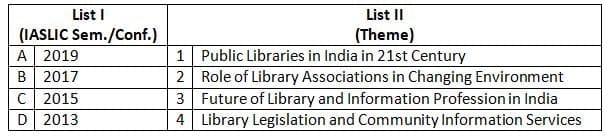
Match the LIST-I with LIST-II

Detailed Solution: Question 7

The Correct answer is A-3, B-1, C-4, D-2.
Explanation
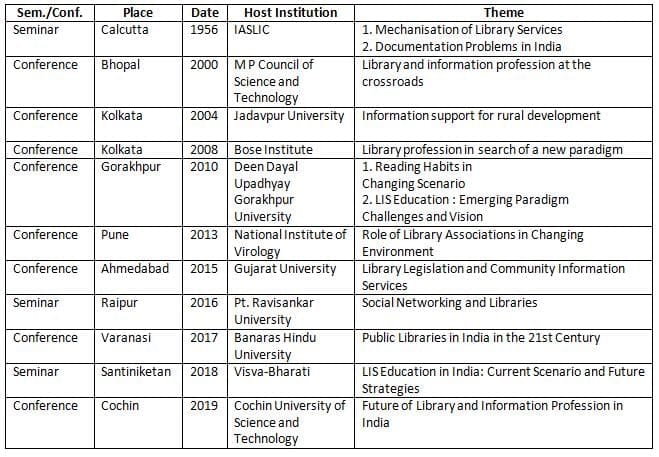
List of IASLIC Seminars/Conferences

KVS Librarian Tier 2 Mock Test- 3 - Question 8

Which of the following is true?
A. The Chicago Manual of Style (CMOS), established in 1906 by the University of Chicago Press, is a prominent
American English style guide
B. ​IEEE Style, established by the Institute for Electrical and Electronics Engineers (IEEE), is a citation format used in
various fields of engineering, computer science, and information technology.
C. APA Style began in 1929 when psychologists, anthropologists, and business managers created straightforward
guidelines to standardize scientific writing and improve readability.
D. ​MathSciNet is an online bibliographic database established by the Indian Mathematical Society in 1996.

Detailed Solution: Question 8
The Correct answer is A, B and C
Explanation

  • The Chicago Manual of Style:
    • The Chicago Manual of Style (CMOS), established in 1906 by the University of Chicago Press, is a prominent American English style guide.
    • With 17 editions, the latest released in 2017, it has long served as a standard for writing and citation practices in the publishing industry.
    • It features two primary documentation systems: notes bibliography, and author-date.
    • The choice between them is often influenced by subject matter and source nature, with the notes and bibliography style being favored in the humanities, such as literature, history, and the arts, where bibliographic information is presented in notes and a bibliography.
    • The Chicago Manual of Style was first published in 1906 under the title Manual of Style: Being a compilation of the typographical rules in force at the University of Chicago Press, to which are appended specimens of type in use.
    • The Chicago Manual of Style underwent a significant update with its 12th edition in 1969.
  • APA style:
    • ​APA Style is defined by the 7th edition of the Publication Manual of the American Psychological Association.
    • APA is used in Education, Psychology, and Sciences.
    • APA Style provides a foundation for effective scholarly communication for example- Research Papers.
  • IEEE Style:
    • IEEE Style, established by the Institute for Electrical and Electronics Engineers (IEEE), is a citation format used in various fields of engineering, computer science, and information technology.
    • It involves in-text citations indicated by numbered square brackets, corresponding to the full citation in a numerically organized reference list at the paper's conclusion.
    • The references are listed by number, not alphabetically. Detailed examples can be found in the IEEE Editorial Style Manual.
  • MathSciNet:
    • MathSciNet is an online bibliographic database established by the American Mathematical Society in 1996.
    • It encompasses the entire content of the journal Mathematical Reviews (MR) dating back to 1940.
    • This comprehensive resource includes an extensive author database, cross-referenced links to other MR entries, citations, complete journal records, and direct links to the original research articles.

KVS Librarian Tier 2 Mock Test- 3 - Question 9

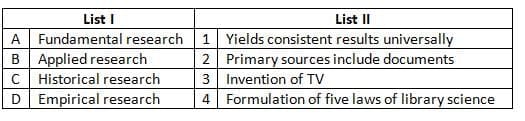
Match the LIST-I with LIST-II

Detailed Solution: Question 9

The Correct answer is A-4, B-3, C-2, D-1.
Explanation

  • Fundamental Research:
    • Fundamental research primarily focuses on developing theories and generalizations.
    • Its goal is to discover facts that can have varied applications, enhancing the existing knowledge in a particular field or industry.
    • This research type spans across multiple domains, aiming to question traditional practices or introduce innovative concepts.
    • The objective is to present the research findings in accessible language, using logical conclusions drawn from the study.
    • Examples of fundamental research encompass the Formulation of five laws of library science.
  • ​Applied Research:
    • Applied research is centered on tackling specific issues faced by society, businesses, or industrial organizations.
    • It usually concentrates on a particular domain while generalizing its findings.
    • This research type treats variables as constants, making the methods easily discernible.
    • Applied research is frequently conducted in a non-systematic manner by businesses, government bodies, or individuals aiming to address specific challenges.
    • For instance, the Invention of TV falls under the category of applied research.
  • Historical Research:
    • Historical research is an investigative method that entails the examination and analysis of past events, occurrences, and developments to acquire a more profound understanding of how they have influenced the present and future.
    • Researchers explore primary and secondary sources, including documents, artifacts, records, and historical accounts, to reconstruct historical contexts, trends, and narratives.
    • This methodology strives to reveal insights, patterns and influences that have played a role in the development of societies, cultures, institutions, and ideas across different eras.
    • It involves the collection of primary and secondary sources of information, such as documents, artifacts, and oral histories.
  • Empirical Research:
    • Empirical research is characterized by drawing conclusions strictly from tangible and verifiable evidence obtained through concrete empirical means.
    • This evidence can be collected using both quantitative market research and qualitative market research methods.
    • It consistently produces results that are universally applicable and adheres to the principles of the scientific method.

KVS Librarian Tier 2 Mock Test- 3 - Question 10

Which of the following types of RFID tags can be rewritten multiple times and is commonly chosen by most libraries?

Detailed Solution: Question 10

The Correct answer is Read/write tags.
Explanation
Components of an RFID System:

  • A comprehensive RFID system consists of three main components:
  • RFID Tags: These tags are programmed with unique information and contain an antenna and microchip with at least 64 bits of capacity. Types of tags include:
    • Read-Only Tags: Encoded during manufacture and not rewritable, containing basic item identification.
    • WORM (Write-Once-Read-Many) Tags: Programmed by the user organization but not rewritable later, allowing additional non-changeable information.
    • Read/Write Tags: Information can be added or changed, preferred by most libraries for flexibility.
  • Readers/Sensors: Devices designed to detect and read tags, obtaining the stored information and sending it to a server.
    • Types of readers include:
      • Staff Workstations: Used for circulation desk activities.
      • Patron Self-Charging Stations: Allow patrons to check out materials independently.
      • Exit Sensors: Detect tags at exits to verify whether items are authorized for removal.
      • Bookdrop Readers: Automatically discharge materials as they pass through.
      • Portable Scanners: Used for inventory management, locating missing or misplaced items.
  • Server/Docking Station:
    • Acts as the communication hub among various components, interfacing with the library’s automated system.
    • Receives data from readers and communicates with the circulation database.
    • Contains software, including APIs, for seamless integration and transaction databases for report generation.
  • Tagging Materials:
    • Libraries may use volunteers for tagging to reduce time and costs, requiring minimal training.
    • Tags should be consistently placed, preferably inside the back cover for quick installation.
    • Phased implementation is common due to the size of collections.
    • Retrospective conversion of existing barcoded items takes 15-30 seconds per item, while pre-programmed tags for new acquisitions are faster.
  • System Cost:
    • Circulation desk readers typically cost around Rs. 1,00,000 each.
    • RFID exit sensors, although similar in appearance to traditional sensors, contain advanced technology for reading tag information and activating alarms if necessary.

KVS Librarian Tier 2 Mock Test- 3 - Question 11

Which of the following is NOT true?

Detailed Solution: Question 11

The Correct answer is ​Science and Applications Theory says Every subject is assigned only one place in the classification, regardless of its various aspects.
Explanation
J.D. Brown (1862-1914):

  • J.D. Brown, an English librarian, made a small but significant contribution to the General Theory of Library Classification.
  • He developed three classification schemes.
  • The first, the Guinn-Brown Scheme (1894), created in collaboration with J.H. Quinn, had limited impact.
  • Three years later, in 1897, Brown introduced the Adjustable Classification, which also proved inadequate.
  • Brown’s most notable work, Subject Classification, was first published in 1906, with subsequent editions in 1914 and 1939, edited by J.D. Stewart.
  • Brown also proposed two significant principles:
    • One Place Theory: Every subject is assigned only one place in the classification, regardless of its various aspects.
    • Science and Applications Theory: Brown advocated for placing each subject as close as possible to the science it originated from.

​E.C. Richardson (1860-1939):

  • E.C. Richardson, the first librarian of Hartford Theological Seminary and later the librarian at Princeton University, is recognized as one of the earliest classificationists to establish a systematic approach to library classification.
  • In 1910, he published Classification, Theoretical and Practical, the first textbook on classification, which later influenced W.C.B. Sayers.
  • Richardson introduced several key principles, called Criteria of Classification, to guide the creation of a classification system:
    • Order of Things: Classification should reflect the natural order of things, arranged in a historical sequence.
    • Detailed Division: Classes should be subdivided as much as possible.
    • Similarity and Difference: Entities should be organized based on their likeness and unlikeness.
    • Use-Driven Classification: Since books are collected and administered for use, the primary motivation behind classification is their intended use.
    • Notation System: A classification scheme should have a notation system that allows for indefinite subdivisions, ideally using a mixed symbol with a decimal base and mnemonic features.

KVS Librarian Tier 2 Mock Test- 3 - Question 12

Which of the following is not a dependency factor for studying audio games?

Detailed Solution: Question 12

The correct answer is ​Written information.
Explanation
Refer to these Lines;

  • Current audio games can be studied with three dependency factors (A) dependency on verbal information, (B) dependency on interaction mechanisms based on timing, and (C) dependency on the interaction mechanisms of exploration.
    • In the passage, the author discusses the study of audio games and outlines three dependency factors that are crucial for understanding them. These factors include:
    • Dependency on verbal information: This implies the reliance on spoken or auditory cues and information in the context of audio games.
    • Dependency on interaction mechanisms based on timing: This refers to the significance of timing-related interactions in audio games, emphasizing the temporal aspect of gameplay.
    • Dependency on the interaction mechanisms of exploration: This highlights the importance of exploration-related interactions in audio games, suggesting that the way players navigate and explore the game environment is a key factor.

KVS Librarian Tier 2 Mock Test- 3 - Question 13

The Science Direct database was developed in __________.

Detailed Solution: Question 13

The Correct answer is ​1997.
Explanation
Science Direct:

  • ScienceDirect is a web-based full-text database that provides access to a large bibliographic database of scientific and medical publications.
  • ScienceDirect database is produced by Elsevier on March 1997.
  • The journals produced in the Science Direct database are categorized into four main sections:
    • Physical Sciences and Engineering
    • Life Sciences
    • Health Sciences
    • Social Sciences and Humanities
  • It provides free article abstracts and full text on a subscription basis.
  • Search Features:
    • Basic search: By keyword, journal/book title, volume, and page number
    • Advanced search: Includes abstract, author name, author affiliation, keywords, ISSN/ISBN
    • No subject heading knowledge required (e.g., MeSH or Emtree not needed)

KVS Librarian Tier 2 Mock Test- 3 - Question 14

Information retrieval systems (IRS) handle various sources of information and cater to diverse user requirements. Their functions include:
(A). Identifying Relevant Information Sources
(B). Analyzing Content
(C) Indexing Content(D). Matching Queries with Databases

Detailed Solution: Question 14

The Correct answer is A, B, C and D.
Explanation

  • Information retrieval systems (IRS) handle various sources of information and cater to diverse user requirements. Their functions include
    • Identifying Relevant Information Sources:
      • Challenge: Identifying sources relevant to users' interests, particularly in a web environment where the user base is global.
    • Analyzing Content:
      • Task: Analyzing documents' content despite the growing size, volume, and variety.
      • Tools: Automated web crawling programs, known as spiders, perform this task.
    • Indexing Content:
      • Objective: Representing analyzed content to align with user queries.
      • Method: Creating one or more index files automatically, a complex task given the volume and diversity of content.
    • Query Analysis:
      • Process: Analyzing and representing user queries in a form suitable for database matching.
      • Enhancements: Sophisticated search interfaces offering features like dictionary and thesaurus support, automatic spell checkers, and predefined search statements.
    • Matching Queries with Databases:
      • Function: Using complex retrieval models to determine the similarity between user queries and stored documents.
    • Retrieving Relevant Information:
      • Tools: Employing various tools and techniques to assess and rank the relevance of retrieved items.
    • Continuous System Improvement:
      • Adaptation: Updating all system aspects to keep up with rapid developments in information and communication technologies, as well as evolving user needs and societal changes.

KVS Librarian Tier 2 Mock Test- 3 - Question 15

Which of the following is true?
A. GO FAIR is a bottom-up, community-driven initiative that supports the implementation of FAIR data principles
B. GO TRAIN pillar Focuses on policy, incentives, and cultural transformation to promote FAIR data and Open
Science.
C. GO BUILD: Coordinates the technical development of FAIR standards, best practices, and infrastructure.
D. Internet of FAIR Data and Services is Inspired by the internet’s hourglass model

Detailed Solution: Question 15
The Correct answer is A, C, and D.
Explanation

  • GO FAIR Initiative:
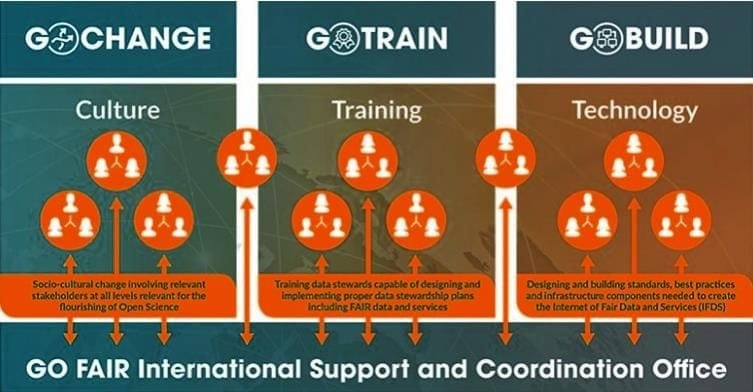
    • GO FAIR is a bottom-up, community-driven initiative that supports the implementation of FAIR data principles—making data Findable, Accessible, Interoperable, and Reusable.
    • It fosters collaboration among individuals, institutions, and organizations through Implementation Networks (INs), organized around three core activity pillars:
    • GO CHANGE: Focuses on policy, incentives, and cultural transformation to promote FAIR data and Open Science.
    • GO TRAIN: Develops training programs and builds skills for data stewards responsible for implementing FAIR-aligned data management plans.
    • GO BUILD: Coordinates the technical development of FAIR standards, best practices, and infrastructure.

  • Internet of FAIR Data and Services (IFDS):
    • The IFDS aims to function like the current internet—open, decentralized, and governed by minimal, strict standards.
    • Inspired by the internet’s hourglass model (e.g., protocols like HTTP), IFDS promotes scalable, transparent data and service sharing, allowing diverse public and private stakeholders to participate equally.
    • Once core standards and rules are in place, providers can immediately begin developing prototype applications, helping build an open, interoperable digital ecosystem based on FAIR principles.

KVS Librarian Tier 2 Mock Test- 3 - Question 16

When was the Association of Special Libraries Information Bureaux (ASLIB) founded?

Detailed Solution: Question 16

The Correct answer is 1924.
Explanation

  • ASLIB:
    • The Association for Information Management was a British association of special libraries and information centers.
    • It was founded in England in 1924 as the Association of Special Libraries and Information Bureaux.
    • The British Society for International Bibliography was merged into it in 1949
    • In the 1948 ASLIB conference at LamingtonSpa, Ranganathan introduced the term Librametery.
    • Publications include:
      • ASLIB Proceedings (monthly)
      • ASLIB Booklist (monthly)
      • ASLIB Information (monthly)
      • ASLIB Newsletter (monthly)
      • Index to Theses (annual)
      • Journal of Documentation (quarterly)
      • Netlink (3 issues)
    • The organization ceased functioning as an independent organization in 2010 when it became a division of Emerald Group Publishing.

KVS Librarian Tier 2 Mock Test- 3 - Question 17

What is the main advantage of the Citation Index according to Eugene Garfield ?

Detailed Solution: Question 17

The Correct answer is It provides complete case history of each reference.
Explanation

  • According to Eugene Garfield, the main advantage of the Citation Index is that it offers a complete case history of each reference this means that researchers can trace how often and where a work has been cited, providing insights into its impact and the development of ideas over time.
  • This feature is fundamental to understanding scholarly influence and academic networks.

Other Related Points

  • ALA Glossary of Library and Information Science (1983) defines Citation Index as an index consisting essentially of a list of works that have been cited in other, later works and a list of the works from which the citations have been collected.
  • Eugene Eli Garfield is called the father of the Citation Index

KVS Librarian Tier 2 Mock Test- 3 - Question 18

The development of audio games has

Detailed Solution: Question 18

The Correct answer is the Scope for the use of GPS.
Explanation
Refer to these Lines;

  • Researchers could have an important role to play in that expansion process, by contributing to developing innovative features like a more pleasant audio rendering, by projecting audio games from a futuristic point of view by using uncommon technology like GPS for instance and by participating in the elaboration of games which can interest both visually and visually impaired community.
    • The passage mentions that researchers could play an important role in the expansion of audio games by contributing to the development of innovative features, such as using uncommon technology like GPS.
    • Therefore, there is a scope for the use of GPS in the development of audio games, as suggested in the passage.
    • The other options are not supported by the information provided in the passage.

KVS Librarian Tier 2 Mock Test- 3 - Question 19

Arrange the steps of the data mining process in a proper logical sequence:
(I) Prepare data pattern
(II) Selection of suitable databases from dataware house
(III) Choose available analytical package
(IV) Select suitable algorithm

Detailed Solution: Question 19

The Correct answer is (I) (II) (IV) (III).
Explanation

  • Data Mining involves extracting knowledge from extensive data sets, and the term itself is somewhat misleading.
  • A more accurate name would be "knowledge mining," emphasizing the extraction of insights from large data volumes.
  • This computational process integrates methods from artificial intelligence, machine learning, statistics, and database systems to discover patterns in substantial data sets.
  • The primary objective of the data mining process is to extract information from data and present it in a comprehensible structure for further utilization.
  • It can also be defined as uncovering interesting, non-trivial, implicit, previously unknown, and potentially useful patterns or knowledge from vast data sets.
  • The field of data mining is rapidly advancing, focusing on developing techniques to assist managers and decision-makers in making intelligent use of extensive data repositories.
  • Alternative terms for Data Mining include:
    • Knowledge discovery (mining) in databases (KDD)
    • Knowledge extraction
    • Data/pattern analysis
    • Data archaeology
    • Data dredging
    • Information harvesting
    • Business intelligence
  • Steps In Data Mining:
    • Prepare Data Pattern:
      • This step involves cleaning, transforming, and organizing the raw data to make it suitable for analysis.
      • It includes handling missing values, removing duplicates, and transforming data into a format suitable for the chosen algorithm
    • Select Suitable Databases from the Data Warehouse:
      • Once the data is prepared, the relevant databases from the data warehouse are selected.
      • This step involves identifying and retrieving the specific datasets required for the analysis.
    • Select Suitable Algorithm:
      • With the prepared data and identified databases, the next step is to choose an appropriate algorithm for the specific data mining task.
      • The selection depends on the nature of the data and the goals of the analysis.
    • Choose an Available Analytical Package:
      • After selecting the algorithm, the final step is to choose a suitable analytical package or tool to implement the selected algorithm and perform the data mining analysis.
      • This could involve using software or programming languages that support the chosen algorithm.

KVS Librarian Tier 2 Mock Test- 3 - Question 20

In which state there is no provision of library cess in public library Acts?

Detailed Solution: Question 20
The correct answer is "Maharashtra".
Explanation

  • Maharashtra Public Library Act-
    • This act was brought in 1967.
    • It makes provisions for the constitution of the State Library Council by the Government.
    • It makes provision for the establishment of the State Central Library and a Divisional Library for each division.
    • There is no library cess. The government shall contribute to the library fund every year.
  • Tamil Nadu (Madras) Public Library Act-
    • This act was brought in 1948.
    • It was the first act introduced in Independent India.
    • It makes provision for the establishment of Public Libraries in the state.
    • It makes provision to appoint a Director of Public Libraries.
    • There is provision for library cess.
  • Karnataka Public Library Act-
    • This act was brought in 1965.
    • It makes provision for a State Library Authority with the Minister-in-charge of Education as chairman.
    • It makes provision for the establishment of the state central library and local libraries.
    • There is the provision of the levy of library cess in the form of a surcharge on all possible taxable units of the State revenues.
  • Andhra Pradesh Public Library Act-
    • This act was brought in 1960
    • It makes provision to collect library cess up to eight paise per rupee as a surcharge on house tax and property tax collected by local bodies.
    • It makes provision for the constitution of Andhra Pradesh Granthalaya Parishad with a nominated body by the Government.

Other Related Points
Dr. S.R. Ranganathan presented the model Library Act in 1930 at the All Asia Education Conference held at Banaras.

  • Later the act was revised as Model Public Libraries Act.

KVS Librarian Tier 2 Mock Test- 3 - Question 21

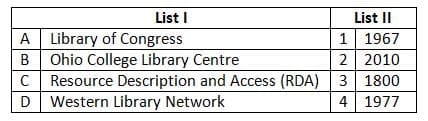
Match the LIST-I with LIST-II

Detailed Solution: Question 21

The Correct answer is A-3, B-1, C-2, D-4
Explanation
Library of Congress:

  • It is the National Library of the United States
  • It was established on 24 April 1800.
  • Its headquarter is in Washington DC, United States.
  • The Library of Congress is the research library that officially serves the United States Congress.
  • It is the largest and oldest library in the world.
  • The Library of Congress Classification Scheme (LCC) is a system of library classification developed by the Library of Congress.
    • ​​The classification was developed by James Hanson in 1897.
    • It is an enumerative classification scheme.
  • The Library of Congress Subject Headings (LCSH) comprises a thesaurus, a controlled vocabulary of subject headings, maintained by the United States Library of Congress, for use in bibliographic records.
    • It was first published in 1898, a year after the publication of the Library of Congress Classification.

Ohio College Library Centre:

  • OCLC, Inc., originally founded in 1967 as the Ohio College Library Center, is a nonprofit global library cooperative.
  • It supports libraries through shared technology services, research, and community programs.
  • OCLC is best known for maintaining WorldCat, the world’s largest online public access catalog, which is collaboratively developed by member libraries.
  • It also manages the Dewey Decimal Classification system.
  • Funded primarily by service fees from libraries (about $200 million annually as of 2016), OCLC helps libraries enhance access to information and support learning and innovation worldwide.

Western Library Network:

  • The Western Library Network (WLN) began as the Washington Library Network in the early 1970s and became fully operational by 1977.
  • In 1985, it was renamed to reflect its expanded regional presence beyond Washington state.

Resource Description and Access (RDA):

  • Resource Description and Access (RDA) is a descriptive cataloging standard introduced in June 2010.
  • It offers guidelines for creating bibliographic data and is designed for libraries, museums, archives, and similar institutions.
  • RDA replaced the Anglo-American Cataloguing Rules, Second Edition (AACR2).
  • RDA was developed following the 1997 International Conference on the Principles & Future Development of AACR in Toronto.
  • It is jointly published by the American Library Association (ALA), the Canadian Federation of Library Associations (CFLA), and the UK’s Chartered Institute of Library and Information Professionals (CILIP).

KVS Librarian Tier 2 Mock Test- 3 - Question 22

Among the following which Barcodes are the most widely used barcodes globally on all retail products except books & magazines?

Detailed Solution: Question 22
The Correct answer is EAN - 13.
Explanation

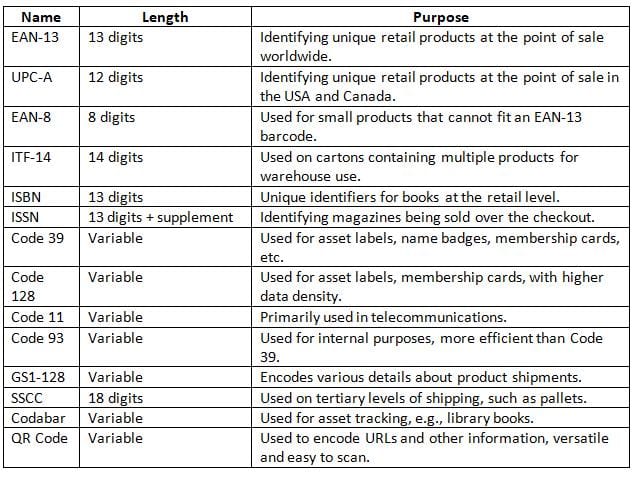
  • EAN - 13:
    • ​European Article Numbers (EAN barcodes) comprise of 13 digits.
    • They are used worldwide on all retail products except books and magazines.
    • They are the most widely used barcodes globally, except in the USA and Canada, where UPC-A (Universal Product Code) barcodes are more common.
    • In New Zealand, the EAN-13 is probably the barcode you need if you have products you wish to stock at a retail store.
    • Each EAN-13 is product-specific and encoded into a barcode image.
    • This means that when the barcode is scanned into store systems, price and inventory data related to your product is recorded by the retailer.
    • A different EAN-13 number, therefore, is required for each unique product.

Other Related Points
Here's a table summarizing the information about different types of barcodes, their length, and their purpos:

KVS Librarian Tier 2 Mock Test- 3 - Question 23

What does the Three-Legged Stool of Digital Preservation emphasize?

Detailed Solution: Question 23

The Correct answer is The balance between technology, organization, and resources.
Explanation

  • A core concept in digital preservation is the Three-Legged Stool of Digital Preservation, which includes Technology, Organization, and Resources.
    • The model stresses the need for a balance between Technology, Organization, and Resources.
    • It ensures that all components are considered together.
    • Over-reliance on one component (like technology) could lead to failure.
    • It does not focus on using only open-source tools.

Other Related Points

  • Three-Legged Stool Model of Digital Preservation:
    • Developed by Anne Kenney and Nancy McGovern during the Digital Preservation Management Workshops (2003–2006), the Three-Legged Stool model illustrates the three essential components of a sustainable digital preservation program:
      • Technology
      • Organization
      • Resources
    • The model emphasizes that all three "legs" must be equally supported—if one is missing or weak, the entire preservation effort is at risk of collapsing.
    • Digital preservation is not just about technology; it also requires strong organizational frameworks and consistent resource allocation.

KVS Librarian Tier 2 Mock Test- 3 - Question 24

Electronic Information for Libraries (EIFL) was founded in

Detailed Solution: Question 24

The Correct answer is 1999.
Explanation

  • EIFL is a global nonprofit organization headquartered in Vilnius, dedicated to facilitating access to digital information in developing and transitioning nations.
  • Established in 1999, EIFL initially focused on advocating for affordable access to commercial e-journals in Central and Eastern Europe.
  • Since then, it has expanded its reach, collaborating with libraries and consortia across over 60 countries in Africa, Asia, Europe, and Latin America.
  • In 2002, EIFL attained independent foundation status, registered in the Netherlands with operational headquarters in Rome, Italy.
  • Its initiatives now extend beyond e-journal access to encompass programs promoting knowledge accessibility for education, research, and community development.
  • EIFL is affiliated with several esteemed organizations, including the International Federation of Library Associations and Institutions (IFLA), International Coalition of Library Consortia (ICOLC), Healthcare Information For All (HIFA), African Library and Information Associations and Institutions (AfLIA).
  • Moreover, it holds a foundational role in the Confederation of Open Access Repositories (COAR) and advocates for copyright reform as a signatory of the Copyright for Creativity movement.

KVS Librarian Tier 2 Mock Test- 3 - Question 25

How do AI-driven chatbots improve library services?

Detailed Solution: Question 25

The Correct answer is By understanding user queries and providing relevant information.
Explanation

  • By integrating Natural Language Processing (NLP), these chatbots can better understand user queries and provide relevant recommendations or direct them to resources.
    • AI chatbots answer user questions instantly.
    • They use Natural Language Processing to understand queries.
    • They assist in navigation and recommend resources.
    • Chatbots do not replace library staff but supplement their role.

KVS Librarian Tier 2 Mock Test- 3 - Question 26

From which year UDC Consortium (UDCC) assumed ownership of UDC?

Detailed Solution: Question 26

The Correct answer is 1992
Explanation

  • The UDC is a sophisticated multilingual classification system used for indexing and retrieving information across all fields of knowledge.
  • It is highly flexible, suitable for organizing physical collections, and facilitates document browsing and searching.
  • Its logical hierarchical structure allows for the inclusion of new knowledge areas.
  • UDC uses a universal code of Arabic numerals and common punctuation marks.
  • UDC is globally used in over 40 languages and is employed in bibliographic services, documentation centers, and libraries in around 130 countries.
  • Initially managed by the International Federation for Information and Documentation (FID), the UDC is now overseen by the UDC Consortium (UDCC) since 1992.
  • The UDCC appoints an Editorial Team and an Advisory Board with international members to oversee and revise the content of UDC.

Other Related Points

  • The UDC Consortium (UDCC) is a non-profit organization founded by the International Federation for Documentation (FID) and publishers of various language editions of the Universal Decimal Classification (UDC).
  • Established on January 1, 1992, the Consortium aims to oversee the development and dissemination of the UDC to serve the best interests of its users.
  • The day-to-day administration and management of UDCC activities are handled by the UDCC office based at the Koninklijke Bibliotheek in The Hague.
  • UDCC is governed by an Executive Committee, with Irena Sešek (Slovenia) serving as Chair, Ana Stevanović (Serbia) as Vice-Chair, and Aida Slavic (UK) as the UDC Editor-in-Chief.
  • The UDC Editorial Team, consisting of associate editors coordinated by the editor-in-chief, is responsible for the development and maintenance of UDC content.
  • Revision and development of the scheme are carried out in collaboration with the UDC Advisory Board, comprising international classification specialists.

KVS Librarian Tier 2 Mock Test- 3 - Question 27

Laws of 'Statistical regularity' and 'Inertia' are concerned with

Detailed Solution: Question 27

The Correct answer is Sampling.
Explanation

  • The Laws of Sampling encompass two fundamental principles: the Law of Statistical Regularity and the Law of Inertia of Large Numbers.
  • These laws are pivotal in sampling investigations, where researchers study a selected subset of items to estimate the characteristics of the entire population.

The Law of Statistical Regularity:

  • This law, rooted in probability theory, posits that when a moderately large number of items are randomly selected from a population, they are likely to exhibit similar characteristics as the entire population.
  • Random selection ensures that each item has an equal chance of being chosen, making the sample a true representation of the population.
  • This principle underscores the importance of large sample size and random selection to accurately reflect population characteristics.

The Law of Inertia of Large Numbers:

  • This law, a corollary to the Law of Statistical Regularity, emphasizes that larger sample sizes lead to more stable and accurate conclusions.
  • It suggests that larger aggregates are less susceptible to variation compared to smaller ones.
  • While variation still exists in large numbers, it is significantly less pronounced, resulting in more reliable results.
  • The principle highlights the importance of increasing sample size to enhance accuracy and reliability.

KVS Librarian Tier 2 Mock Test- 3 - Question 28

What is the primary purpose of the OAIS Reference Model?

Detailed Solution: Question 28

The Correct answer is To offer a conceptual framework for digital preservation systems.
Explanation

  • The Open Archival Information Systems (OAIS) Reference Model is a conceptual framework for digital archives.
    • The OAIS model provides a conceptual framework.
    • It focuses on defining functional components and information objects for digital archives.
    • It helps in discussions across sectors.
    • The model is not a detailed instruction manual or focused on finances.

Other Related Points

  • OAIS stands for Open Archival Information System.
  • The OAIS information model includes several key components for the management and preservation of digital information.
  • One of the primary components is the Archival Information Package (AIP).
  • The AIP is designed to store sufficient information to ensure the long-term preservation of the digital objects.
  • It includes both the content information and the preservation description information (PDI).
  • The content information consists of the actual data being preserved and its associated metadata.
  • The PDI includes information necessary for the understanding and preservation of the content over time.

KVS Librarian Tier 2 Mock Test- 3 - Question 29

Identify the book that has not been authored by William A. Katz.

Detailed Solution: Question 29
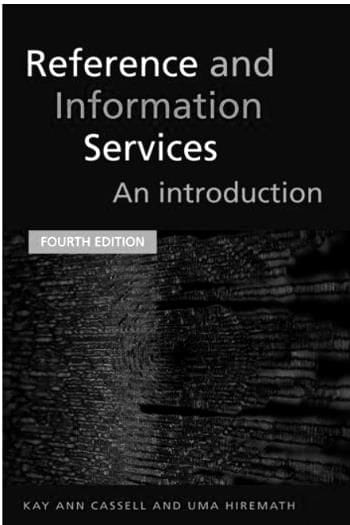
The Correct answer is Reference and Information services: An Introduction.
Explanation

  • Reference and Information Services: An Introduction is authored by Kay Ann Cassell, Uma Hiremath.

  • Books By William A. Katz:
    • Introduction to Reference Work
    • Dahl's History of the Book
    • Personnel Issues in Reference Services
    • Conflicts in Reference Services
    • Integrating Library Use Skills into the General Education Curriculum
    • Readers, Reading, and Librarians
    • Collection Development: Selection of Materials for Libraries
    • The Columbia Granger's Guide to Poetry Anthologies
    • Library Literature 7: The Best of 1976
    • Your Library: A Reference Guide (1979)

KVS Librarian Tier 2 Mock Test- 3 - Question 30

In the context of managing digital archives, what advantage does AI provide?

Detailed Solution: Question 30

The Correct answer is AI automates the digitization, storage, and retrieval of archived materials.
Explanation

  • AI also plays a key role in managing digital archives. By automating the process of digitizing, storing, and retrieving archived materials, AI reduces the need for physical storage and ensures that resources are easily accessible in the digital domain.
    • AI automates both digitizing and storing of materials.
    • It helps in the quick retrieval of digital content.
    • AI reduces physical storage needs while ensuring easy access.
    • It works across all stages of archive management, not just retrieval.

View more questions
10 tests
Information about KVS Librarian Tier 2 Mock Test- 3 Page
In this test you can find the Exam questions for KVS Librarian Tier 2 Mock Test- 3 solved & explained in the simplest way possible. Besides giving Questions and answers for KVS Librarian Tier 2 Mock Test- 3, EduRev gives you an ample number of Online tests for practice
Download as PDF