Bank Exams Exam  >  Bank Exams Test  >  IBPS PO Prelims & Mains Preparation  >  Practice Test 14: Reasoning Ability - Bank Exams MCQ

Practice Test 14: Reasoning Ability Bank Exams MCQs & solutions - Free


MCQ Practice Test & Solutions: Practice Test 14: Reasoning Ability (20 Questions)

You can prepare effectively for Bank Exams IBPS PO Prelims & Mains Preparation with this dedicated MCQ Practice Test (available with solutions) on the important topic of "Practice Test 14: Reasoning Ability". These 20 questions have been designed by the experts with the latest curriculum of Bank Exams 2026, to help you master the concept.

Test Highlights:

  • - Format: Multiple Choice Questions (MCQ)
  • - Duration: 20 minutes
  • - Number of Questions: 20

Sign up on EduRev for free to attempt this test and track your preparation progress.

Practice Test 14: Reasoning Ability - Question 1

Who among the following likes Green?

Detailed Solution: Question 1

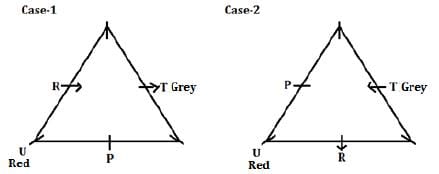
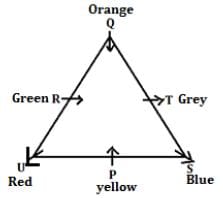
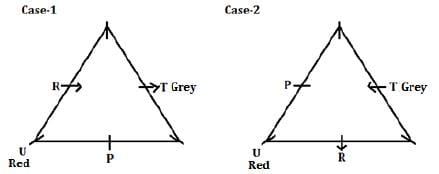
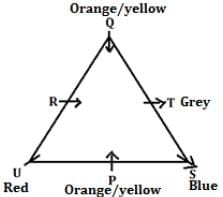
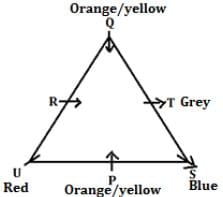
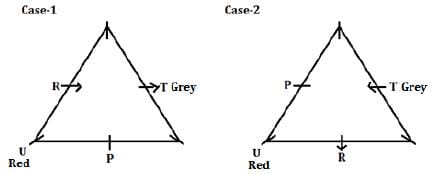
P sits second to the right of T and does not sit at the corner of the table. U sits immediate right of R and none of them is an immediate neighbour of T. The one who likes Red sits at the corner of the table but is not an immediate neighbour of T. R does not like Red. Only two persons sit between the one who likes Grey and the one who likes Red.

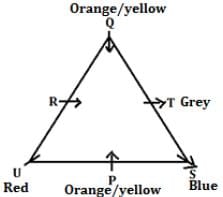
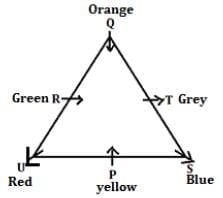
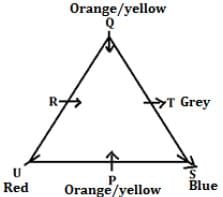
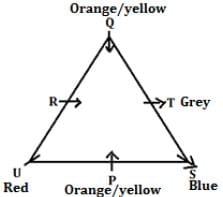
The one who likes Orange faces the one who likes Yellow. S likes Blue and faces outside the center. Q sits second to the left of S. Q is not an immediate neighbour of P who faces inside. So, from this case-2 gets eliminated.

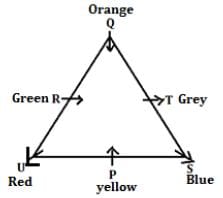
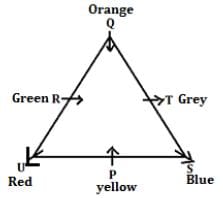
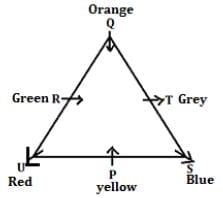
The one who likes Green and the one who likes yellow are not immediate neighbors. U faces same direction as T. So, the final arrangement is-

Practice Test 14: Reasoning Ability - Question 2

Who among the following sits 4th to the left of the one who is 2nd left of R?

Detailed Solution: Question 2
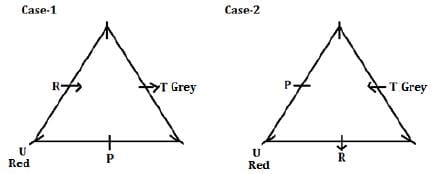
P sits second to the right of T and does not sit at the corner of the table. U sits immediate right of R and none of them is an immediate neighbour of T. The one who likes Red sits at the corner of the table but is not an immediate neighbour of T. R does not like Red. Only two persons sit between the one who likes Grey and the one who likes Red.

The one who likes Orange faces the one who likes Yellow. S likes Blue and faces outside the center. Q sits second to the left of S. Q is not an immediate neighbour of P who faces inside. So, from this case-2 gets eliminated.

The one who likes Green and the one who likes yellow are not immediate neighbors. U faces same direction as T. So, the final arrangement is-

Practice Test 14: Reasoning Ability - Question 3

P likes which of the following Color?

Detailed Solution: Question 3

P sits second to the right of T and does not sit at the corner of the table. U sits immediate right of R and none of them is an immediate neighbour of T. The one who likes Red sits at the corner of the table but is not an immediate neighbour of T. R does not like Red. Only two persons sit between the one who likes Grey and the one who likes Red.

The one who likes Orange faces the one who likes Yellow. S likes Blue and faces outside the center. Q sits second to the left of S. Q is not an immediate neighbour of P who faces inside. So, from this case-2 gets eliminated.

The one who likes Green and the one who likes yellow are not immediate neighbors. U faces same direction as T. So, the final arrangement is-

Practice Test 14: Reasoning Ability - Question 4

Who among the following sits second to the left of P?

Detailed Solution: Question 4
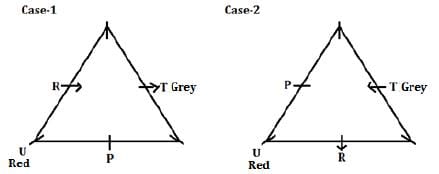
P sits second to the right of T and does not sit at the corner of the table. U sits immediate right of R and none of them is an immediate neighbour of T. The one who likes Red sits at the corner of the table but is not an immediate neighbour of T. R does not like Red. Only two persons sit between the one who likes Grey and the one who likes Red.

The one who likes Orange faces the one who likes Yellow. S likes Blue and faces outside the center. Q sits second to the left of S. Q is not an immediate neighbour of P who faces inside. So, from this case-2 gets eliminated.

The one who likes Green and the one who likes yellow are not immediate neighbors. U faces same direction as T. So, the final arrangement is-

Practice Test 14: Reasoning Ability - Question 5

Which of the following combination is correct?

Detailed Solution: Question 5
P sits second to the right of T and does not sit at the corner of the table. U sits immediate right of R and none of them is an immediate neighbour of T. The one who likes Red sits at the corner of the table but is not an immediate neighbour of T. R does not like Red. Only two persons sit between the one who likes Grey and the one who likes Red.

The one who likes Orange faces the one who likes Yellow. S likes Blue and faces outside the center. Q sits second to the left of S. Q is not an immediate neighbour of P who faces inside. So, from this case-2 gets eliminated.

The one who likes Green and the one who likes yellow are not immediate neighbors. U faces same direction as T. So, the final arrangement is-

Practice Test 14: Reasoning Ability - Question 6

Who among the following sits to the immediate left of M?

Detailed Solution: Question 6
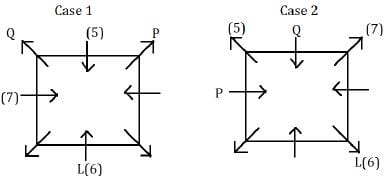
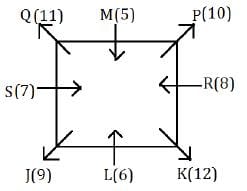
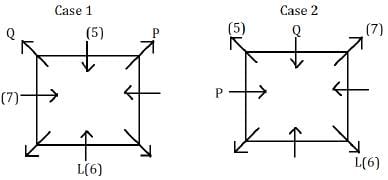
From the given statements, there are three students sit between L and class 5 student. Here, we get two possibilities i.e. Case 1 and Case 2. Class 5 student sits to the immediate left of P. Q sits 3rd to the left of L. Class 7 student is an immediate neighbour of Q.
Class 6 student sits 2nd to the right of class 7 student.

From the given statements, R who is in class 8, sits 3rd to the right of Q. S sits immediate right of J who is in class 9. Students of class 11 and 12 sits opposite to each other.
Student of class 10 sits 2nd to the right of class 11 student.
K who faces outside is not an immediate neighbour of Q.
Here, Case 2 is ruled out.
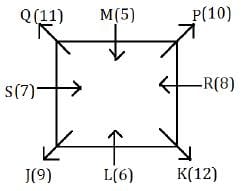
So, final arrangement will be:-

Practice Test 14: Reasoning Ability - Question 7

L is in which among the following class?

Detailed Solution: Question 7

From the given statements, there are three students sit between L and class 5 student. Here, we get two possibilities i.e. Case 1 and Case 2. Class 5 student sits to the immediate left of P. Q sits 3rd to the left of L. Class 7 student is an immediate neighbour of Q.
Class 6 student sits 2nd to the right of class 7 student.

From the given statements, R who is in class 8, sits 3rd to the right of Q. S sits immediate right of J who is in class 9. Students of class 11 and 12 sits opposite to each other.
Student of class 10 sits 2nd to the right of class 11 student.
K who faces outside is not an immediate neighbour of Q.
Here, Case 2 is ruled out.
So, final arrangement will be:-

Practice Test 14: Reasoning Ability - Question 8

How many students are sitting between P and the student of class 12 when counted in clockwise direction from P?

Detailed Solution: Question 8

From the given statements, there are three students sit between L and class 5 student. Here, we get two possibilities i.e. Case 1 and Case 2. Class 5 student sits to the immediate left of P. Q sits 3rd to the left of L. Class 7 student is an immediate neighbour of Q.
Class 6 student sits 2nd to the right of class 7 student.

From the given statements, R who is in class 8, sits 3rd to the right of Q. S sits immediate right of J who is in class 9. Students of class 11 and 12 sits opposite to each other.
Student of class 10 sits 2nd to the right of class 11 student.
K who faces outside is not an immediate neighbour of Q.
Here, Case 2 is ruled out.
So, final arrangement will be:-

Practice Test 14: Reasoning Ability - Question 9

Who among the following sits 2nd to the right of the student who sits 3rd to the left of M?

Detailed Solution: Question 9

From the given statements, there are three students sit between L and class 5 student. Here, we get two possibilities i.e. Case 1 and Case 2. Class 5 student sits to the immediate left of P. Q sits 3rd to the left of L. Class 7 student is an immediate neighbour of Q.
Class 6 student sits 2nd to the right of class 7 student.

From the given statements, R who is in class 8, sits 3rd to the right of Q. S sits immediate right of J who is in class 9. Students of class 11 and 12 sits opposite to each other.
Student of class 10 sits 2nd to the right of class 11 student.
K who faces outside is not an immediate neighbour of Q.
Here, Case 2 is ruled out.
So, final arrangement will be:-

Practice Test 14: Reasoning Ability - Question 10

Four of the following five are alike in certain way based from a group, find the one which does not belong to that group?

Detailed Solution: Question 10

From the given statements, there are three students sit between L and class 5 student. Here, we get two possibilities i.e. Case 1 and Case 2. Class 5 student sits to the immediate left of P. Q sits 3rd to the left of L. Class 7 student is an immediate neighbour of Q.
Class 6 student sits 2nd to the right of class 7 student.

From the given statements, R who is in class 8, sits 3rd to the right of Q. S sits immediate right of J who is in class 9. Students of class 11 and 12 sits opposite to each other.
Student of class 10 sits 2nd to the right of class 11 student.
K who faces outside is not an immediate neighbour of Q.
Here, Case 2 is ruled out.
So, final arrangement will be:-

Practice Test 14: Reasoning Ability - Question 11

A, B are married couple. X and Y are brothers. X is the brother of A.
How is Y related to B?

Detailed Solution: Question 11

A and B are husband and wife. Since X & Y are brothers and X is the brother of A, Y is also the brother of A. Thus, Y is the brother-in-law of B.

Practice Test 14: Reasoning Ability - Question 12

Deepak has a brother Anil. Deepak is the son of Prem. Aditya is Prem’s father. In terms of relationship,
what is Anil of Aditya?

Detailed Solution: Question 12
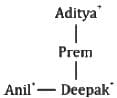
Anil is the brother of Deepak and Deepak is the son of Prem. So, Anil is the son of Prem. Now, Aditya is the father of Prem. Thus, Anil is the grandson of Aditya.

Practice Test 14: Reasoning Ability - Question 13

Directions: In each of the questions below are given some statements followed by two conclusions. You have to take the given statements to be true even if they seem to be at variance with commonly known facts. Read all the conclusions and then decide which of the given conclusions logically follows from the given statements disregarding commonly known facts.
Statements:
All Cricket are Ball.
All Ball are Milk.
Some Pencil are Ball.
Conclusions:
I. Some Pencil can be Cricket.
II. All Milk are definitely Cricket.

Detailed Solution: Question 13
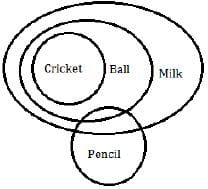
Practice Test 14: Reasoning Ability - Question 14

Directions: In each of the questions below are given some statements followed by two conclusions. You have to take the given statements to be true even if they seem to be at variance with commonly known facts. Read all the conclusions and then decide which of the given conclusions logically follows from the given statements disregarding commonly known facts.
Statements:
All lawn are park.
Some Home is not Park.
All Park is Office.
Conclusions:
I. Some Lawn is being Office is a possibility.
II. Some Lawn is Home.

Detailed Solution: Question 14
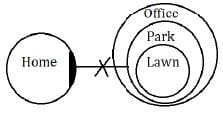
Practice Test 14: Reasoning Ability - Question 15

What is the shortest distance between the final position of Ashi and initial position of Joya?

Detailed Solution: Question 15
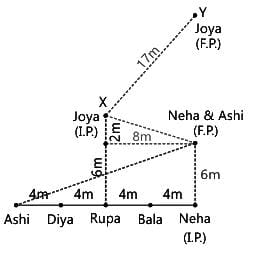
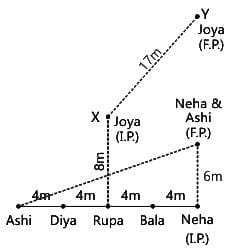
Following the figure we made using the given information we can say that the shortest distance between final position of Ashi and initial position of Joya = (82 + 22)1/2 m = 2√17 m
Hence, the correct answer is option A. 

Common Explanation:
Reference:
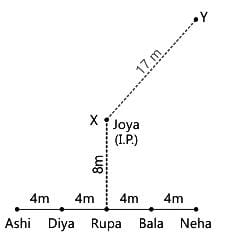
Ashi was standing at the left end of the line.
Two persons were standing between Ashi and Bala.
Diya stand second to the left of Bala. Rupa was an immediate neighbor of Diya.
Only one person stands between Rupa and Neha.

Inference:  
 
Using the given hints we can fix the positions of all the five persons standing in the row.
Reference:
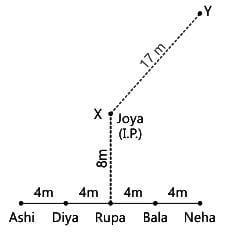
Joya starts walking from point X which was 8 m in north from Rupa.
Joya moves 17 m in north-east direction to reach point Y.
Point Y and Neha were inline vertically.

Inference:
Here, in the figure below the path of Joya is denoted by Red colour, and I.P. and F.P. means initial position and final position of the person. 
Reference:
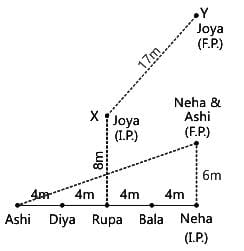
Neha moves 6 m in the north direction and stops at point Z.
Person Ashi moves in the direction to point Z.

Inference:
In the figure below, the path of Neha and Ashi is denoted by Blue and green colour respectively, and I.P. and F.P. means initial position and final position of the person. 

Practice Test 14: Reasoning Ability - Question 16

If Ashi had stopped at point T which is 5m north from Bala instead of point Z, then what would be the shortest distance between initial and final position of Ashi?

Detailed Solution: Question 16
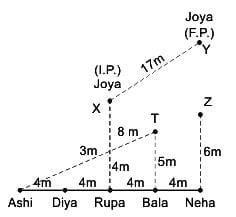
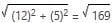
Following the figure we can say that the shortest distance between initial and final position of Ashi is 13 m.
Note- T is the final position of Ashi as per the question.
=
= 13
Hence option C is correct.
Common Explanation:
Reference:
Ashi was standing at the left end of the line.Two persons were standing between Ashi and Bala.Diya stand second to the left of Bala.Rupa was an immediate neighbor of Diya.Only one person stands between Rupa and Neha.
Inference: 
 
Using the given hints we can fix the positions of all the five persons standing in the row.
Reference:
Joya starts walking from point X which was 8 m in north from Rupa.Joya moves 17 m in north-east direction to reach point Y.Point Y and Neha were inline vertically.
Inference:
Here, in the figure below the path of Joya is denoted by Red colour, and I.P. and F.P. means initial position and final position of the person. 
Reference:
Neha moves 6 m in the north direction and stops at point Z.Person Ashi moves in the direction to point Z.
Inference:
In the figure below, the path of Neha and Ashi is denoted by Blue and green colour respectively, and I.P. and F.P. means initial position and final position of the person. 

Practice Test 14: Reasoning Ability - Question 17

Directions: The following questions are based on the five four digit number given below:
3475 2791 6458 1826 7583

If one is added to the last digit of each of the numbers in how many numbers thus formed will be the last digit be a perfect square (one is also perfect square).

Detailed Solution: Question 17

6,2,9,7,4 perfect square is 9 and 4

Practice Test 14: Reasoning Ability - Question 18

Directions: The following questions are based on the five four digit number given below:
3475 2791 6458 1826 7583

If the first and third digit of each of the numbers are interchanged what will be the sum of the third digit of the lowest number and the third digit of the highest number.

Detailed Solution: Question 18

after processing the series will be 7435, 9721, 5468, 2816, 8573 and desired result will be 1+2=3

Practice Test 14: Reasoning Ability - Question 19

Directions: In each of the following questions assuming the given statements to be true, find which of the following conclusion I and II given below is/are definitely true and give your answer accordingly.
Statements: H ≤ T, T > N, F < N, B ≥ F
Conclusions: I. F ≤ H II. F < T

Detailed Solution: Question 19

H ≤ T > N > F ≤ B, only II is true.

Practice Test 14: Reasoning Ability - Question 20

Directions: In each of the following questions assuming the given statements to be true, find which of the following conclusion I and II given below is/are definitely true and give your answer accordingly.
Statements: H ≤ T, T > N, F < N, B ≥ F
Conclusions: I. B = T II. B ≥ H

Detailed Solution: Question 20

H ≤ T > N > F ≤ B, none is true.

665 videos|1092 docs|379 tests
Information about Practice Test 14: Reasoning Ability Page
In this test you can find the Exam questions for Practice Test 14: Reasoning Ability solved & explained in the simplest way possible. Besides giving Questions and answers for Practice Test 14: Reasoning Ability, EduRev gives you an ample number of Online tests for practice
Download as PDF