Bank Exams Exam  >  Bank Exams Test  >  IBPS PO Prelims & Mains Preparation  >  Practice Test 16: Reasoning Ability - Bank Exams MCQ

Practice Test 16: Reasoning Ability Bank Exams MCQs & solutions - Free


MCQ Practice Test & Solutions: Practice Test 16: Reasoning Ability (20 Questions)

You can prepare effectively for Bank Exams IBPS PO Prelims & Mains Preparation with this dedicated MCQ Practice Test (available with solutions) on the important topic of "Practice Test 16: Reasoning Ability". These 20 questions have been designed by the experts with the latest curriculum of Bank Exams 2026, to help you master the concept.

Test Highlights:

  • - Format: Multiple Choice Questions (MCQ)
  • - Duration: 20 minutes
  • - Number of Questions: 20

Sign up on EduRev for free to attempt this test and track your preparation progress.

Practice Test 16: Reasoning Ability - Question 1

How many matches did Sweden play?

Detailed Solution: Question 1

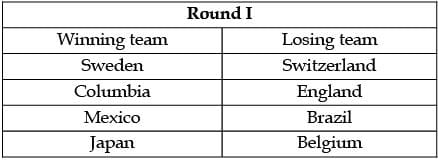
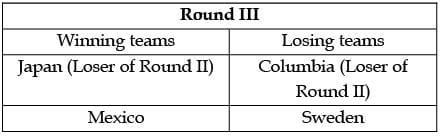
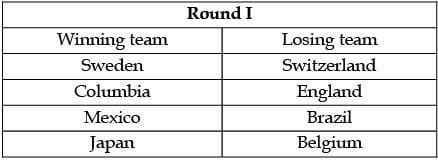
Total of nine matches were held and there were four rounds. Only the winning teams were allowed to play in the next level except in level III.
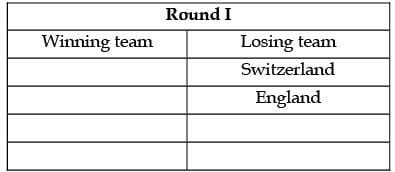
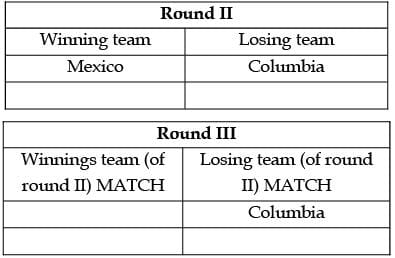
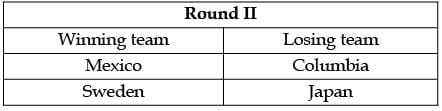
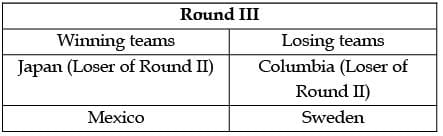
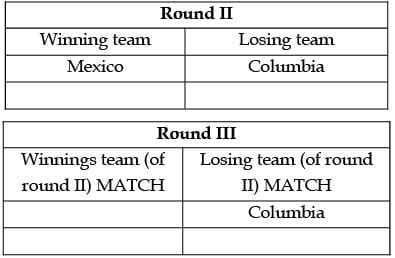
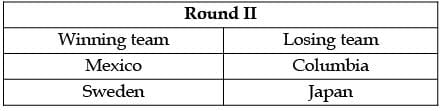
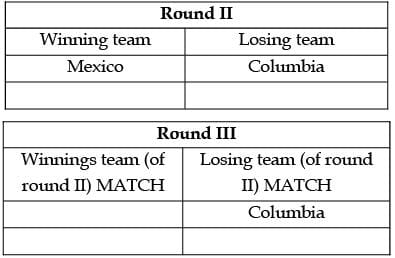
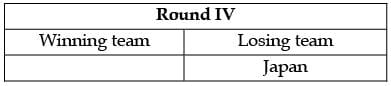
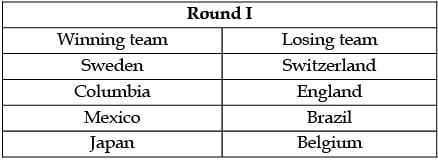
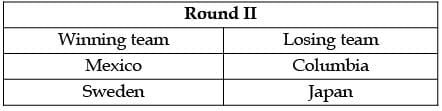
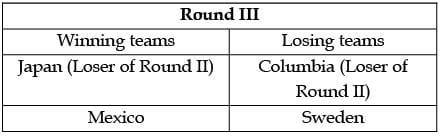
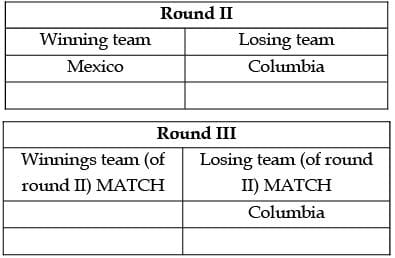
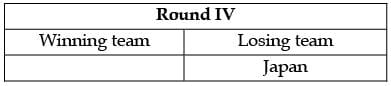
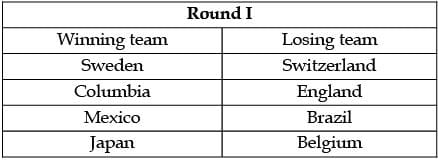
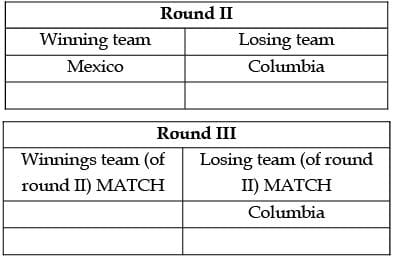
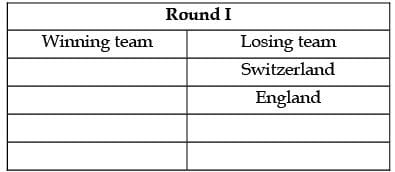
Japan was the runner up but lost in one more match except in last round. Four teams were eliminated in round 1, which includes Switzerland and England. One of the matches in round II was between Mexico and Columbia. One of the matches between the losing teams in round III had Columbia as participant, therefore Columbia lost in round II.
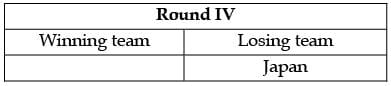
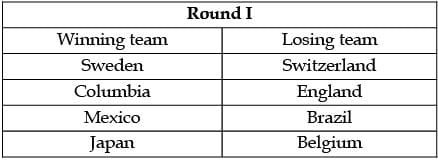
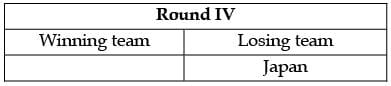
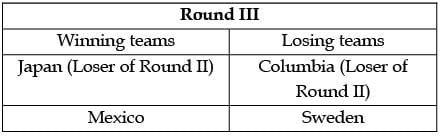
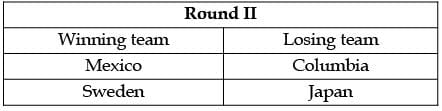
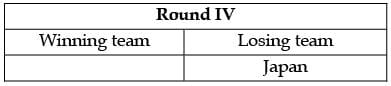
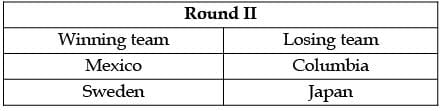
The following will be the arrangement of the matches:

Japan was one of teams which played in round II.

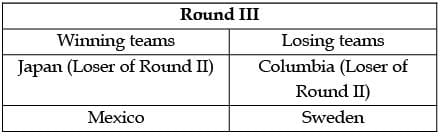
Sweden won in only two matches, which means it played till II or III round. But, since it won in only two matches therefore it cannot play in round IV. Therefore, Sweden won in round II against Japan. In round III, the winning team match was between Mexico and Columbia. Finally, the losing teams are Belgium, brazil, Switzerland and England. The winning team played with brazil in round I so, japan did not play with brazil in round I. The team which won by Belgium also won by Columbia but not in consecutive rounds, so japan played against Belgium in round I.

Also, since japan lost in 2 matches including round IV. Therefore, it lost in round II.
The winning team played with brazil in round I .Sweden won in only two matches, So the winner is Mexico and it played with brazil in round I.
The team which won against the runner up in round II did not play against England.

Practice Test 16: Reasoning Ability - Question 2

Which of the following is true regarding Columbia?

Detailed Solution: Question 2
Total of nine matches were held and there were four rounds. Only the winning teams were allowed to play in the next level except in level III.
Japan was the runner up but lost in one more match except in last round. Four teams were eliminated in round 1, which includes Switzerland and England. One of the matches in round II was between Mexico and Columbia. One of the matches between the losing teams in round III had Columbia as participant, therefore Columbia lost in round II.
The following will be the arrangement of the matches:

Japan was one of teams which played in round II.

Sweden won in only two matches, which means it played till II or III round. But, since it won in only two matches therefore it cannot play in round IV. Therefore, Sweden won in round II against Japan. In round III, the winning team match was between Mexico and Columbia. Finally, the losing teams are Belgium, brazil, Switzerland and England. The winning team played with brazil in round I so, japan did not play with brazil in round I. The team which won by Belgium also won by Columbia but not in consecutive rounds, so japan played against Belgium in round I.

Also, since japan lost in 2 matches including round IV. Therefore, it lost in round II.
The winning team played with brazil in round I .Sweden won in only two matches, So the winner is Mexico and it played with brazil in round I.
The team which won against the runner up in round II did not play against England.

Practice Test 16: Reasoning Ability - Question 3

Which of the following teams won the FIFA 2018?

Detailed Solution: Question 3
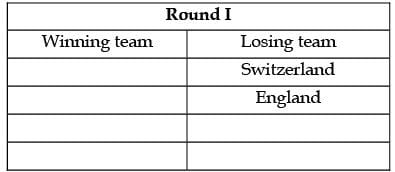
Total of nine matches were held and there were four rounds. Only the winning teams were allowed to play in the next level except in level III.
Japan was the runner up but lost in one more match except in last round. Four teams were eliminated in round 1, which includes Switzerland and England. One of the matches in round II was between Mexico and Columbia. One of the matches between the losing teams in round III had Columbia as participant, therefore Columbia lost in round II.
The following will be the arrangement of the matches:

Japan was one of teams which played in round II.

Sweden won in only two matches, which means it played till II or III round. But, since it won in only two matches therefore it cannot play in round IV. Therefore, Sweden won in round II against Japan. In round III, the winning team match was between Mexico and Columbia. Finally, the losing teams are Belgium, brazil, Switzerland and England. The winning team played with brazil in round I so, japan did not play with brazil in round I. The team which won by Belgium also won by Columbia but not in consecutive rounds, so japan played against Belgium in round I.

Also, since japan lost in 2 matches including round IV. Therefore, it lost in round II.
The winning team played with brazil in round I .Sweden won in only two matches, So the winner is Mexico and it played with brazil in round I.
The team which won against the runner up in round II did not play against England.

Practice Test 16: Reasoning Ability - Question 4

Which among the following teams played against the final winners in round II?

Detailed Solution: Question 4
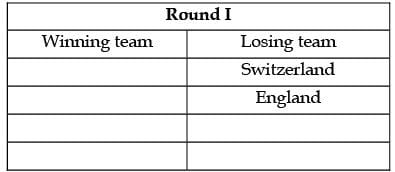
Total of nine matches were held and there were four rounds. Only the winning teams were allowed to play in the next level except in level III.
Japan was the runner up but lost in one more match except in last round. Four teams were eliminated in round 1, which includes Switzerland and England. One of the matches in round II was between Mexico and Columbia. One of the matches between the losing teams in round III had Columbia as participant, therefore Columbia lost in round II.
The following will be the arrangement of the matches:

Japan was one of teams which played in round II.

Sweden won in only two matches, which means it played till II or III round. But, since it won in only two matches therefore it cannot play in round IV. Therefore, Sweden won in round II against Japan. In round III, the winning team match was between Mexico and Columbia. Finally, the losing teams are Belgium, brazil, Switzerland and England. The winning team played with brazil in round I so, japan did not play with brazil in round I. The team which won by Belgium also won by Columbia but not in consecutive rounds, so japan played against Belgium in round I.

Also, since japan lost in 2 matches including round IV. Therefore, it lost in round II.
The winning team played with brazil in round I .Sweden won in only two matches, So the winner is Mexico and it played with brazil in round I.
The team which won against the runner up in round II did not play against England.

Practice Test 16: Reasoning Ability - Question 5

Which among the following team does not play in the round III?

Detailed Solution: Question 5
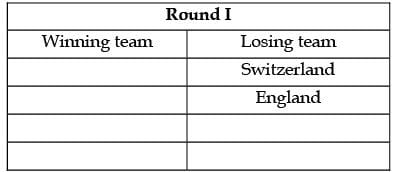
Total of nine matches were held and there were four rounds. Only the winning teams were allowed to play in the next level except in level III.
Japan was the runner up but lost in one more match except in last round. Four teams were eliminated in round 1, which includes Switzerland and England. One of the matches in round II was between Mexico and Columbia. One of the matches between the losing teams in round III had Columbia as participant, therefore Columbia lost in round II.
The following will be the arrangement of the matches:

Japan was one of teams which played in round II.

Sweden won in only two matches, which means it played till II or III round. But, since it won in only two matches therefore it cannot play in round IV. Therefore, Sweden won in round II against Japan. In round III, the winning team match was between Mexico and Columbia. Finally, the losing teams are Belgium, brazil, Switzerland and England. The winning team played with brazil in round I so, japan did not play with brazil in round I. The team which won by Belgium also won by Columbia but not in consecutive rounds, so japan played against Belgium in round I.

Also, since japan lost in 2 matches including round IV. Therefore, it lost in round II.
The winning team played with brazil in round I .Sweden won in only two matches, So the winner is Mexico and it played with brazil in round I.
The team which won against the runner up in round II did not play against England.

Practice Test 16: Reasoning Ability - Question 6

Which among the following box contains 42 pens?

Detailed Solution: Question 6
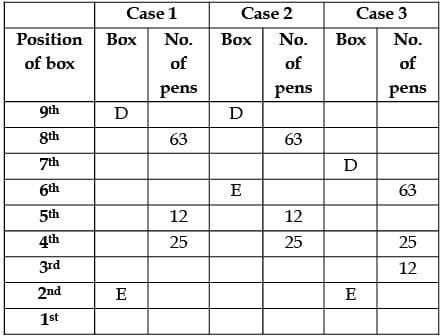
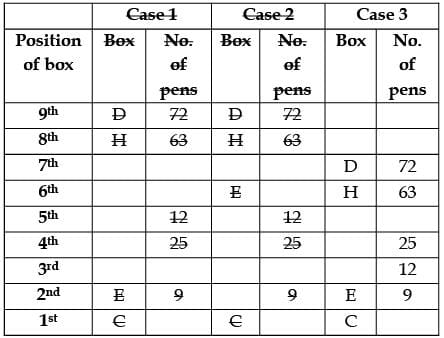
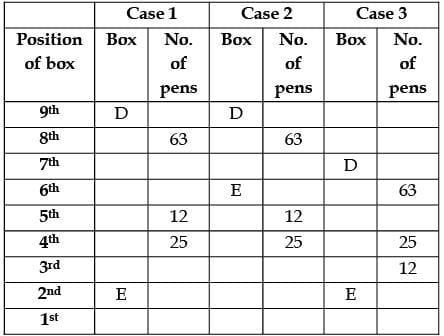
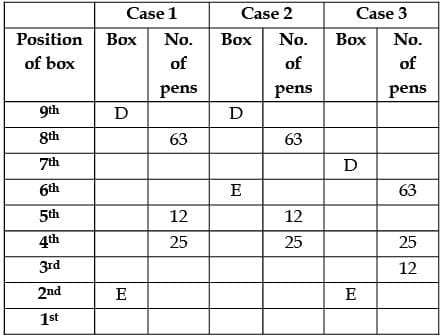
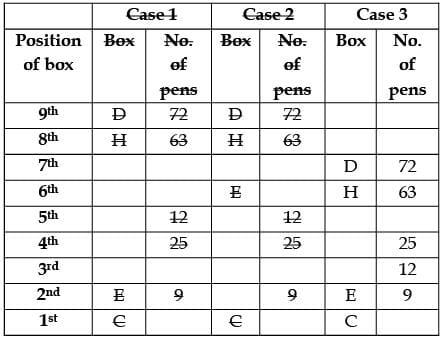
There is only one box is kept between box E and box having 25 pens. Box D is kept immediately above the box containing 63 pens. Box E does not contain 63 pens. Only three boxes are kept between box D and the box containing 12 pens. So, we have three cases i.e. Case 1, Case 2 and Case 3:

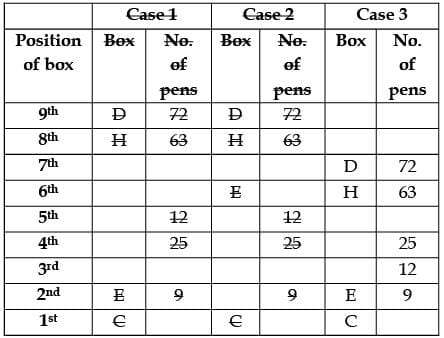
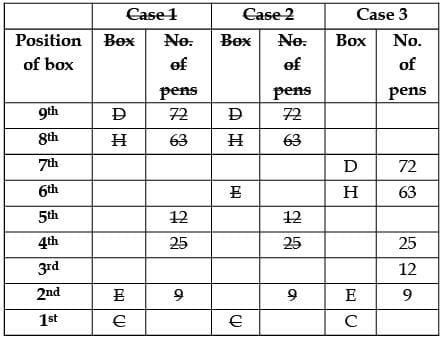
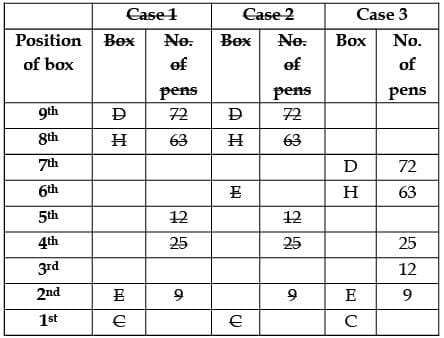
Only two boxes are kept between box H and the box having 12 pens. More than three boxes are kept between box C and box H. The box having pens which is a perfect square of 3 is kept immediately above box C. The number of pens in box D is equal to the sum of the number of pens in box H and the box which is placed at 2nd position. (i.e. Box H contains 63 pens and 2nd position box contains 9 pens so total number of pens in box D is =(63+9)=72 pens but it is given that 9th position box contains number of pens which is a multiple of 10). So, case 1 and case 2 get eliminated. 

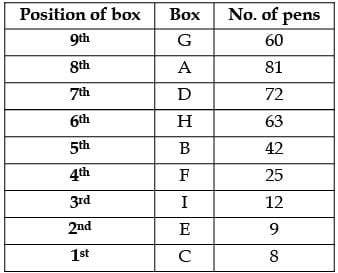
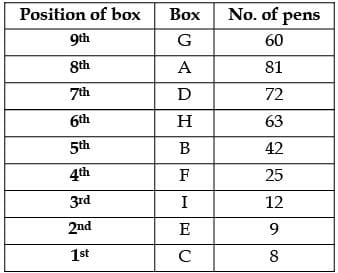
Only two boxes are kept between the box having 42 pens and box A. Box I is kept at the odd number position but immediately below box F. The number of pens in Box G is equal to the difference between the number of pens in box D and box I. Box B is kept above the box having 8 pens. Box G contains 21 less pens than box A contains.
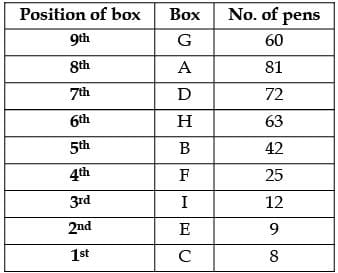
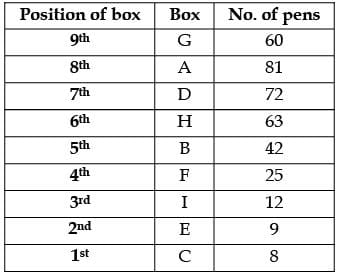
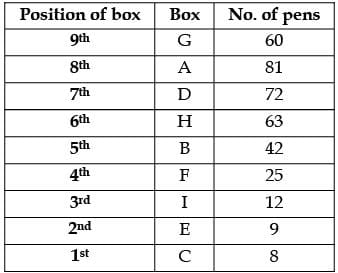
We have the final arrangement:

Practice Test 16: Reasoning Ability - Question 7

How many boxes are kept above box F?

Detailed Solution: Question 7

There is only one box is kept between box E and box having 25 pens. Box D is kept immediately above the box containing 63 pens. Box E does not contain 63 pens. Only three boxes are kept between box D and the box containing 12 pens. So, we have three cases i.e. Case 1, Case 2 and Case 3:

Only two boxes are kept between box H and the box having 12 pens. More than three boxes are kept between box C and box H. The box having pens which is a perfect square of 3 is kept immediately above box C. The number of pens in box D is equal to the sum of the number of pens in box H and the box which is placed at 2nd position. (i.e. Box H contains 63 pens and 2nd position box contains 9 pens so total number of pens in box D is =(63+9)=72 pens but it is given that 9th position box contains number of pens which is a multiple of 10). So, case 1 and case 2 get eliminated. 

Only two boxes are kept between the box having 42 pens and box A. Box I is kept at the odd number position but immediately below box F. The number of pens in Box G is equal to the difference between the number of pens in box D and box I. Box B is kept above the box having 8 pens. Box G contains 21 less pens than box A contains.
We have the final arrangement:

Practice Test 16: Reasoning Ability - Question 8

Number of boxes kept between box I and the box having 63 pens is same between the box B and the box?

Detailed Solution: Question 8
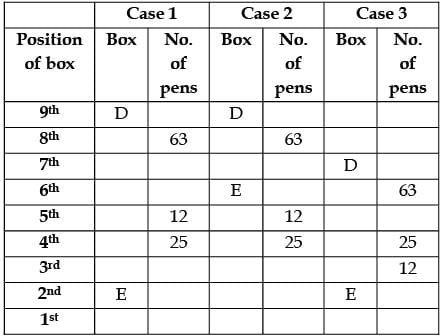
There is only one box is kept between box E and box having 25 pens. Box D is kept immediately above the box containing 63 pens. Box E does not contain 63 pens. Only three boxes are kept between box D and the box containing 12 pens. So, we have three cases i.e. Case 1, Case 2 and Case 3:

Only two boxes are kept between box H and the box having 12 pens. More than three boxes are kept between box C and box H. The box having pens which is a perfect square of 3 is kept immediately above box C. The number of pens in box D is equal to the sum of the number of pens in box H and the box which is placed at 2nd position. (i.e. Box H contains 63 pens and 2nd position box contains 9 pens so total number of pens in box D is =(63+9)=72 pens but it is given that 9th position box contains number of pens which is a multiple of 10). So, case 1 and case 2 get eliminated. 

Only two boxes are kept between the box having 42 pens and box A. Box I is kept at the odd number position but immediately below box F. The number of pens in Box G is equal to the difference between the number of pens in box D and box I. Box B is kept above the box having 8 pens. Box G contains 21 less pens than box A contains.
We have the final arrangement:

Practice Test 16: Reasoning Ability - Question 9

Box F contains how many pens?

Detailed Solution: Question 9

There is only one box is kept between box E and box having 25 pens. Box D is kept immediately above the box containing 63 pens. Box E does not contain 63 pens. Only three boxes are kept between box D and the box containing 12 pens. So, we have three cases i.e. Case 1, Case 2 and Case 3:

Only two boxes are kept between box H and the box having 12 pens. More than three boxes are kept between box C and box H. The box having pens which is a perfect square of 3 is kept immediately above box C. The number of pens in box D is equal to the sum of the number of pens in box H and the box which is placed at 2nd position. (i.e. Box H contains 63 pens and 2nd position box contains 9 pens so total number of pens in box D is =(63+9)=72 pens but it is given that 9th position box contains number of pens which is a multiple of 10). So, case 1 and case 2 get eliminated. 

Only two boxes are kept between the box having 42 pens and box A. Box I is kept at the odd number position but immediately below box F. The number of pens in Box G is equal to the difference between the number of pens in box D and box I. Box B is kept above the box having 8 pens. Box G contains 21 less pens than box A contains.
We have the final arrangement:

Practice Test 16: Reasoning Ability - Question 10

Total number of pens in the boxes A, G and I is?

Detailed Solution: Question 10
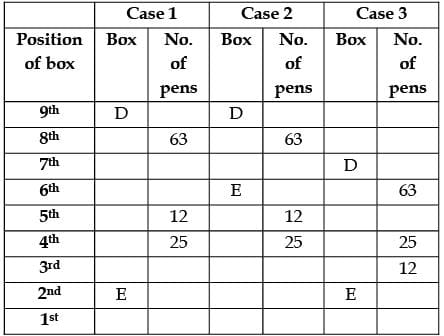
There is only one box is kept between box E and box having 25 pens. Box D is kept immediately above the box containing 63 pens. Box E does not contain 63 pens. Only three boxes are kept between box D and the box containing 12 pens. So, we have three cases i.e. Case 1, Case 2 and Case 3:

Only two boxes are kept between box H and the box having 12 pens. More than three boxes are kept between box C and box H. The box having pens which is a perfect square of 3 is kept immediately above box C. The number of pens in box D is equal to the sum of the number of pens in box H and the box which is placed at 2nd position. (i.e. Box H contains 63 pens and 2nd position box contains 9 pens so total number of pens in box D is =(63+9)=72 pens but it is given that 9th position box contains number of pens which is a multiple of 10). So, case 1 and case 2 get eliminated. 

Only two boxes are kept between the box having 42 pens and box A. Box I is kept at the odd number position but immediately below box F. The number of pens in Box G is equal to the difference between the number of pens in box D and box I. Box B is kept above the box having 8 pens. Box G contains 21 less pens than box A contains.
We have the final arrangement:

Practice Test 16: Reasoning Ability - Question 11

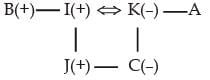
How is J related to C?

Detailed Solution: Question 11

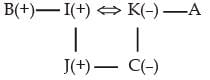
hence J is brother of C

Practice Test 16: Reasoning Ability - Question 12

How many female members are there in the family?

Detailed Solution: Question 12
Practice Test 16: Reasoning Ability - Question 13

Directions: In each of the questions below are given some statements followed by two conclusions. You have to take the given statements to be true even if they seem to be at variance with commonly known facts. Read all the conclusions and then decide which of the given conclusions logically follows from the given statements disregarding commonly known facts.
Statements: X < C < V = B ≤ N, V > L = O ≥ U
Conclusions: I. B ≤ O II. B < O

Detailed Solution: Question 13

I. B ≤ O (False) II. B < O (False)

Practice Test 16: Reasoning Ability - Question 14

Directions: In each of the questions below are given some statements followed by two conclusions. You have to take the given statements to be true even if they seem to be at variance with commonly known facts. Read all the conclusions and then decide which of the given conclusions logically follows from the given statements disregarding commonly known facts.
Statements: X = F < Y > H = I ? O, F ? E = R
Conclusions: I. Y > R II. Y ≥ R

Detailed Solution: Question 14

I. Y > R (False) II. Y ≥ R (False)

Practice Test 16: Reasoning Ability - Question 15

In a class of 41 children, Aditya’s rank is eight from top. Mamta is seven ranks below Aditya. What is Mamta rank from bottom?

Detailed Solution: Question 15

Mamta Rank from top = 8 + 7 = 15
From below her rank = (41 + 1 – 15) = 27

Practice Test 16: Reasoning Ability - Question 16

In a class of 34 children, Ajay’s rank from the top is twelth. Manoj is eight ranks below Ajay. What is Manoj’s rank from the bottom.

Detailed Solution: Question 16

Ajay rank from top = 12 + 8 = 20
Ajay rank from bottom = (34 + 1 – 20 ) = 35 – 20 = 15

Practice Test 16: Reasoning Ability - Question 17

In a row of boys, Aditya is seventh from the start and eleventh from the end. In another row of girl, Nutan is tenth from the start and twelth from the end. How many students are there in both the rows together?

Detailed Solution: Question 17

In first row = (7 + 11 – 1) = 17 students
In second row = (10 + 12 – 1) = 21 students
Total = 21 + 17 = 38 students

Practice Test 16: Reasoning Ability - Question 18

If FISH is written as EHRG in a certain code, how would JUNGLE be written in that code?

Detailed Solution: Question 18

Each letter in the word is moved one step backward to obtain the corresponding letter of the code.

Practice Test 16: Reasoning Ability - Question 19

Direction: Each of the following questions below consists of a question and two statements numbered I and II given below it. You have to decide whether the data provided in the statements are sufficient to answer the question. Read both the statements and give answer.

Which of the following five countries A, C, E, G and J is the biggest?
I. A is smaller than C. J is not the smallest.
II. E is smaller than A. G is not the biggest.

Detailed Solution: Question 19

From I: C > A, but J is not the smallest.
From II: A > E, but G is not the biggest.
From I and II: C > A > E. And it is not clear J and G’s position so we cannot determine which is the biggest country.

Practice Test 16: Reasoning Ability - Question 20

Direction: Each of the following questions below consists of a question and two statements numbered I and II given below it. You have to decide whether the data provided in the statements are sufficient to answer the question. Read both the statements and give answer.

In which direction is point K, with respect to point M?
I. Point J is south of point K. Point K is the west of point L.
II. Point L is the north to point M. Point J is the east of point M

Detailed Solution: Question 20

From I:

From II:

So, From I and From II it is not clear point K’s direction with respect point M.

665 videos|1092 docs|379 tests
Information about Practice Test 16: Reasoning Ability Page
In this test you can find the Exam questions for Practice Test 16: Reasoning Ability solved & explained in the simplest way possible. Besides giving Questions and answers for Practice Test 16: Reasoning Ability, EduRev gives you an ample number of Online tests for practice
Download as PDF