
Practice Test 19: Reasoning Ability Bank Exams MCQs & solutions - Free
MCQ Practice Test & Solutions: Practice Test 19: Reasoning Ability (20 Questions)
You can prepare effectively for Bank Exams IBPS PO Prelims & Mains Preparation with this dedicated MCQ Practice Test (available with solutions) on the important topic of "Practice Test 19: Reasoning Ability". These 20 questions have been designed by the experts with the latest curriculum of Bank Exams 2026, to help you master the concept.
Test Highlights:
- - Format: Multiple Choice Questions (MCQ)
- - Duration: 20 minutes
- - Number of Questions: 20
Sign up on EduRev for free to attempt this test and track your preparation progress.

Detailed Solution: Question 1
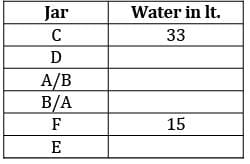
If jar D has twice quantity to Jar F then, what is exact quantity of water in jar D?
Detailed Solution: Question 2
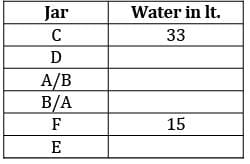

If box A has 16 litres of water then, what may be the possible quantity of water in jar D?
Detailed Solution: Question 3
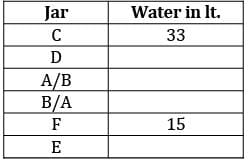
If jar B has 10 litres more water to jar F then, what is the sum of the quantity of water in Jar B and Jar C?
Detailed Solution: Question 4
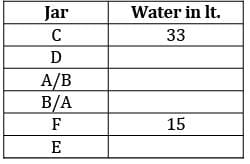
Detailed Solution: Question 5
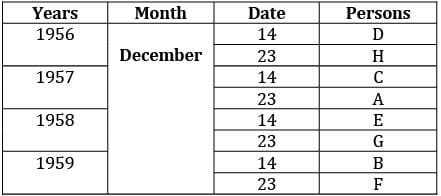
Detailed Solution: Question 6
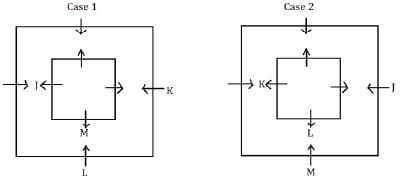
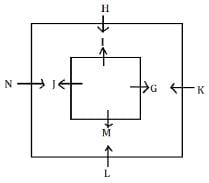
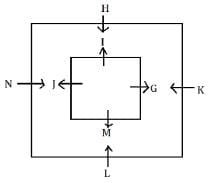
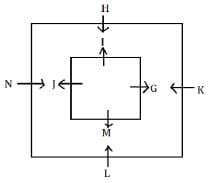
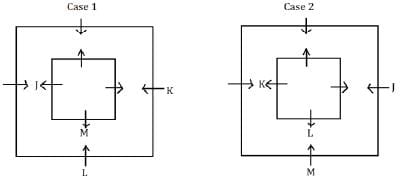
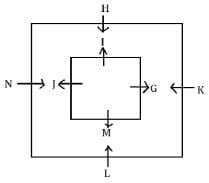
Who among the following sits to the immediate left of the person who faces H?
Detailed Solution: Question 7
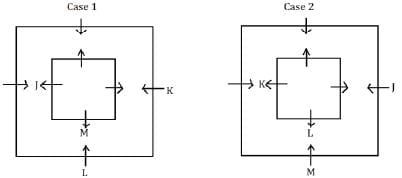
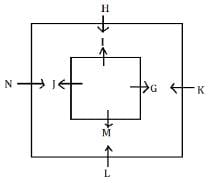
Who among the following sits 3rd to the right of the person who faces the person who sits to the immediate left of N?
Detailed Solution: Question 8
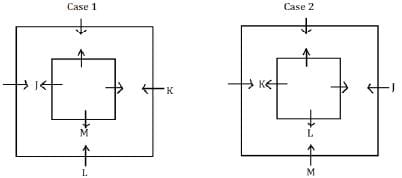
Detailed Solution: Question 9
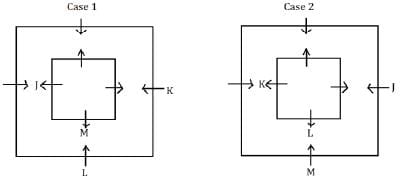
Four of the following five are alike in certain way based from a group, find the one which does not belong to that group?
Detailed Solution: Question 10
Detailed Solution: Question 11
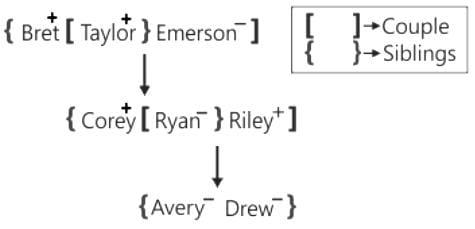
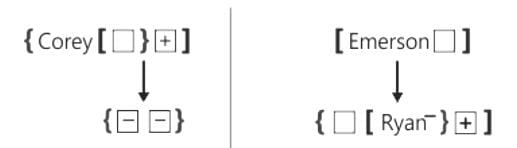
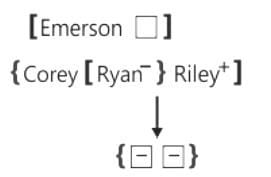
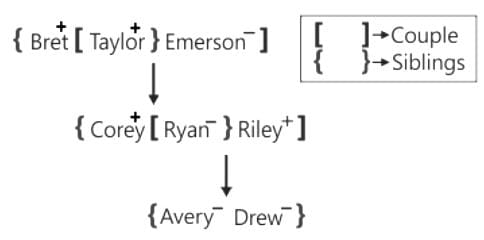
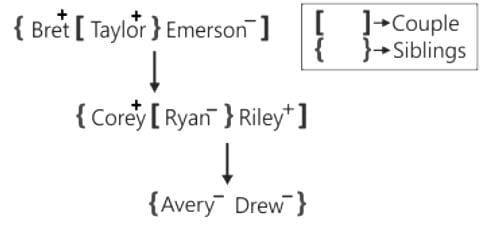
Who among the following persons belongs to the youngest generation of the family?
Detailed Solution: Question 12
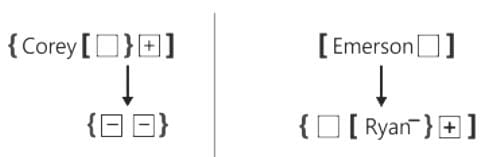
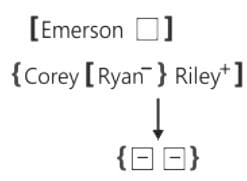
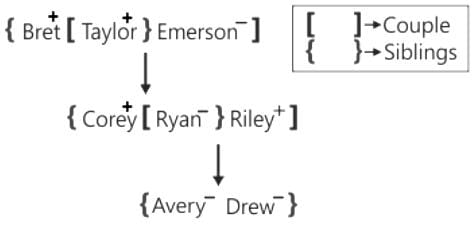
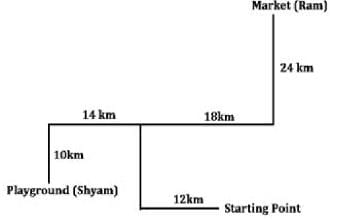
What is the shortest distance between Market and Playground?
Detailed Solution: Question 13
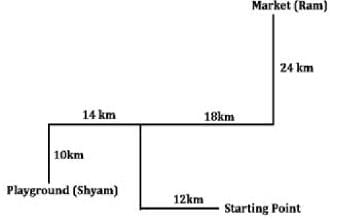
In which direction is Playground with respect to the point from which they start journey?
Detailed Solution: Question 14
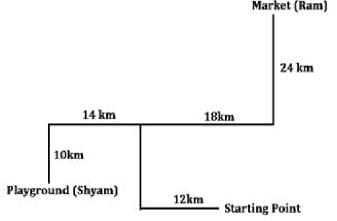
What is the shortest distance between starting point and Playground?
Detailed Solution: Question 15
What can be the code of 'Personal Questions'?
Detailed Solution: Question 16
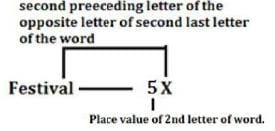
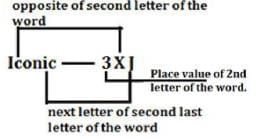
Direction: Each of the questions below, consist of a question and three statements numbered I, II and III.
You have to decide whether the data provided in the statements are sufficient to answer the question. Read the three statements and Give answer
Six persons i.e. P, Q, R, S, T, U were born either on 15th or on 20th of the different months i.e. June, July, august in same year but not necessarily in the same order. Who was born on 15th July?
Statement I: At least two persons were born between P and U. Q was born on 15th of the month.
Statement II: There are as many persons were born before U as after S. R didn’t born on 20th of the month.
Statement III: T was born before P and after Q. At most three persons were born between U and R.
You have to decide whether the data provided in the statements are sufficient to answer the question. Read the three statements and Give answer
Statement I: At least two persons were born between P and U. Q was born on 15th of the month.
Statement II: There are as many persons were born before U as after S. R didn’t born on 20th of the month.
Statement III: T was born before P and after Q. At most three persons were born between U and R.
Detailed Solution: Question 17
Direction: Each of the questions below, consist of a question and three statements numbered I, II and III.
You have to decide whether the data provided in the statements are sufficient to answer the question. Read the three statements and Give answer
A certain number of persons sit in a row facing north.
How many persons are sitting in a row?
Statement I: M sits 3rd to the right of N who sits next to P. Three persons sit between P and Q.
Statement II: R sits 3rd to the left of Q who sits next to J. J sits 3rd to right of K who sits at extreme end.
Statement III: L sits 2nd from extreme end. Three persons sit between L and P.
You have to decide whether the data provided in the statements are sufficient to answer the question. Read the three statements and Give answer
How many persons are sitting in a row?
Statement I: M sits 3rd to the right of N who sits next to P. Three persons sit between P and Q.
Statement II: R sits 3rd to the left of Q who sits next to J. J sits 3rd to right of K who sits at extreme end.
Statement III: L sits 2nd from extreme end. Three persons sit between L and P.
Detailed Solution: Question 18

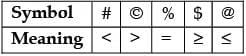
Directions: In the following questions, the symbols @, #, %, $ and © are used with the following meaning as illustrated below
'P#Q' means 'P is neither greater than nor equal to Q'
'P©Q' means 'P is neither equal to nor smaller than Q'
'P%Q' means 'P is neither smaller than nor greater than Q'
'P$Q' means 'P is not smaller than Q'
'P@Q' means 'P is not greater than Q'
Now in each of the following questions assuming the given statement to be true, find which of the three conclusions I, II and III given below them is/are true and give your answer accordingly.
Statements: J%L, T@L, L#M
Conclusions: I. M©L II. T#J III. T%J
'P#Q' means 'P is neither greater than nor equal to Q'
'P©Q' means 'P is neither equal to nor smaller than Q'
'P%Q' means 'P is neither smaller than nor greater than Q'
'P$Q' means 'P is not smaller than Q'
'P@Q' means 'P is not greater than Q'
Now in each of the following questions assuming the given statement to be true, find which of the three conclusions I, II and III given below them is/are true and give your answer accordingly.
Statements: J%L, T@L, L#M
Conclusions: I. M©L II. T#J III. T%J
Detailed Solution: Question 19
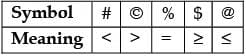
Directions: In the following questions, the symbols @, #, %, $ and © are used with the following meaning as illustrated below
'P#Q' means 'P is neither greater than nor equal to Q'
'P©Q' means 'P is neither equal to nor smaller than Q'
'P%Q' means 'P is neither smaller than nor greater than Q'
'P$Q' means 'P is not smaller than Q'
'P@Q' means 'P is not greater than Q'
Now in each of the following questions assuming the given statement to be true, find which of the three conclusions I, II and III given below them is/are true and give your answer accordingly.
Statements: K@T, L#M, K$L, L©R
Conclusions: I. T©M II. L©T III. T#R
'P#Q' means 'P is neither greater than nor equal to Q'
'P©Q' means 'P is neither equal to nor smaller than Q'
'P%Q' means 'P is neither smaller than nor greater than Q'
'P$Q' means 'P is not smaller than Q'
'P@Q' means 'P is not greater than Q'
Now in each of the following questions assuming the given statement to be true, find which of the three conclusions I, II and III given below them is/are true and give your answer accordingly.
Statements: K@T, L#M, K$L, L©R
Conclusions: I. T©M II. L©T III. T#R
Detailed Solution: Question 20
665 videos|1092 docs|379 tests |
