
J&K Bank Clerk Mock Test - 2 Free Online Test 2026
Full Mock Test & Solutions: J&K Bank Clerk Mock Test - 2 (100 Questions)
You can boost your Bank Exams 2026 exam preparation with this J&K Bank Clerk Mock Test - 2 (available with detailed solutions).. This mock test has been designed with the analysis of important topics, recent trends of the exam, and previous year questions of the last 3-years. All the questions have been designed to mirror the official pattern of Bank Exams 2026 exam, helping you build speed, accuracy as per the actual exam.
Mock Test Highlights:
- - Format: Multiple Choice Questions (MCQ)
- - Duration: 60 minutes
- - Total Questions: 100
- - Analysis: Detailed Solutions & Performance Insights
- - Sections covered: English Language, Numerical Ability, Reasoning Ability
Sign up on EduRev for free and get access to these mock tests, get your All India Rank, and identify your weak areas to improve your marks & rank in the actual exam.

The following passage given below has information based on which questions have been framed. Some words and phrases might also be highlighted. You must read the same carefully and answer the questions that follow:
The world is in a precarious position. Between the impact of COVID on the economies of the world, and the impact of war, the economies of the world have been squeezed, and the impact is beginning to hit. Many believe the worst is yet to come.
The impact of COVID on the world economies will still be counted a decade from now. We really do not know how this all has impacted us, except to know that the most marginalised sections of the world are even more vulnerable. Women in the labour force, as well as daily wage workers – both skilled and unskilled – have been impacted, as have been workers of the gig economy. Schools and healthcare have been hit, worldwide. As in-person education came to a screeching halt, many children lagged behind as they could not afford either smart devices or fast connections. It was hoped that 2022 would begin the recovery process with a focus on the most vulnerable sections of society. But that has taken a backseat to Russia’s imperial ambitions.
No sooner than the world began catching its breath in the aftermath of COVID, looking at how to build recovery in their economies, Putin invaded Ukraine and threw all calculations off-kilter. While COVID impacted global supply chains and manufacturing; the war in Ukraine has impacted the supply of two of the key resources that fuel the world – food, and energy. In 2020, Russia and Ukraine accounted for almost 30% of the world’s wheat production. The supply of wheat is in peril, as war lays waste to farmlands. There is a food crisis brewing, and countries are scrambling to find ways of feeding their populations in a cost-effective manner. But it is not just wheat production that is impacted. Since the start of the invasion and the war, the price of sunflower oil has gone up by over 40%. Ukraine supplies about 50% of the world's demand, and Russia about 25%. For India, 15% of our edible oil imports are sunflower oil. And this price hike is hitting. Combine this with a (A) steady increase in fuel prices, and cooking oil prices – you have the start of an economic (B) crises on your hands. Employment is still (C) nebulous – with a tremendous shortage of highly skilled talent, and a massive (D) glut of ordinary graduates. If you look at the data, the states with the most social disturbances – Bihar (21%), Rajasthan (29%), and Haryana (34%) – also have the most unemployment.
What is needed now is bold thinking. The need is not just to rekindle the economies, but societies facing chaos because of rising unemployment. The dignity of labour and the labourer has never been lower in the world. Graduates have never faced a bleaker future in the last 70+ years. What the economy needs right now, is not the throttling of demand but the creation of jobs, which will soak up the demand – and policies that enable this, not more interest rate hikes.
Q. What is the tone of the first line of the passage?
Detailed Solution: Question 1
The following passage given below has information based on which questions have been framed. Some words and phrases might also be highlighted. You must read the same carefully and answer the questions that follow:
The world is in a precarious position. Between the impact of COVID on the economies of the world, and the impact of war, the economies of the world have been squeezed, and the impact is beginning to hit. Many believe the worst is yet to come.
The impact of COVID on the world economies will still be counted a decade from now. We really do not know how this all has impacted us, except to know that the most marginalised sections of the world are even more vulnerable. Women in the labour force, as well as daily wage workers – both skilled and unskilled – have been impacted, as have been workers of the gig economy. Schools and healthcare have been hit, worldwide. As in-person education came to a screeching halt, many children lagged behind as they could not afford either smart devices or fast connections. It was hoped that 2022 would begin the recovery process with a focus on the most vulnerable sections of society. But that has taken a backseat to Russia’s imperial ambitions.
No sooner than the world began catching its breath in the aftermath of COVID, looking at how to build recovery in their economies, Putin invaded Ukraine and threw all calculations off-kilter. While COVID impacted global supply chains and manufacturing; the war in Ukraine has impacted the supply of two of the key resources that fuel the world – food, and energy. In 2020, Russia and Ukraine accounted for almost 30% of the world’s wheat production. The supply of wheat is in peril, as war lays waste to farmlands. There is a food crisis brewing, and countries are scrambling to find ways of feeding their populations in a cost-effective manner. But it is not just wheat production that is impacted. Since the start of the invasion and the war, the price of sunflower oil has gone up by over 40%. Ukraine supplies about 50% of the world's demand, and Russia about 25%. For India, 15% of our edible oil imports are sunflower oil. And this price hike is hitting. Combine this with a (A) steady increase in fuel prices, and cooking oil prices – you have the start of an economic (B) crises on your hands. Employment is still (C) nebulous – with a tremendous shortage of highly skilled talent, and a massive (D) glut of ordinary graduates. If you look at the data, the states with the most social disturbances – Bihar (21%), Rajasthan (29%), and Haryana (34%) – also have the most unemployment.
What is needed now is bold thinking. The need is not just to rekindle the economies, but societies facing chaos because of rising unemployment. The dignity of labour and the labourer has never been lower in the world. Graduates have never faced a bleaker future in the last 70+ years. What the economy needs right now, is not the throttling of demand but the creation of jobs, which will soak up the demand – and policies that enable this, not more interest rate hikes.
Q. What can be understood from the phrase ‘off-kilter’ as used in the passage?
Detailed Solution: Question 2

The following passage given below has information based on which questions have been framed. Some words and phrases might also be highlighted. You must read the same carefully and answer the questions that follow:
The world is in a precarious position. Between the impact of COVID on the economies of the world, and the impact of war, the economies of the world have been squeezed, and the impact is beginning to hit. Many believe the worst is yet to come.
The impact of COVID on the world economies will still be counted a decade from now. We really do not know how this all has impacted us, except to know that the most marginalised sections of the world are even more vulnerable. Women in the labour force, as well as daily wage workers – both skilled and unskilled – have been impacted, as have been workers of the gig economy. Schools and healthcare have been hit, worldwide. As in-person education came to a screeching halt, many children lagged behind as they could not afford either smart devices or fast connections. It was hoped that 2022 would begin the recovery process with a focus on the most vulnerable sections of society. But that has taken a backseat to Russia’s imperial ambitions.
No sooner than the world began catching its breath in the aftermath of COVID, looking at how to build recovery in their economies, Putin invaded Ukraine and threw all calculations off-kilter. While COVID impacted global supply chains and manufacturing; the war in Ukraine has impacted the supply of two of the key resources that fuel the world – food, and energy. In 2020, Russia and Ukraine accounted for almost 30% of the world’s wheat production. The supply of wheat is in peril, as war lays waste to farmlands. There is a food crisis brewing, and countries are scrambling to find ways of feeding their populations in a cost-effective manner. But it is not just wheat production that is impacted. Since the start of the invasion and the war, the price of sunflower oil has gone up by over 40%. Ukraine supplies about 50% of the world's demand, and Russia about 25%. For India, 15% of our edible oil imports are sunflower oil. And this price hike is hitting. Combine this with a (A) steady increase in fuel prices, and cooking oil prices – you have the start of an economic (B) crises on your hands. Employment is still (C) nebulous – with a tremendous shortage of highly skilled talent, and a massive (D) glut of ordinary graduates. If you look at the data, the states with the most social disturbances – Bihar (21%), Rajasthan (29%), and Haryana (34%) – also have the most unemployment.
What is needed now is bold thinking. The need is not just to rekindle the economies, but societies facing chaos because of rising unemployment. The dignity of labour and the labourer has never been lower in the world. Graduates have never faced a bleaker future in the last 70+ years. What the economy needs right now, is not the throttling of demand but the creation of jobs, which will soak up the demand – and policies that enable this, not more interest rate hikes.
Q. Which of the following has not been given as the repercussions of the ongoing war?
(i) Disruption in the global supply chains
(ii) There’s a food crisis due to inhibited agriculture exports
(iii) Employment has suffered a lot
Detailed Solution: Question 3
The following passage given below has information based on which questions have been framed. Some words and phrases might also be highlighted. You must read the same carefully and answer the questions that follow:
The world is in a precarious position. Between the impact of COVID on the economies of the world, and the impact of war, the economies of the world have been squeezed, and the impact is beginning to hit. Many believe the worst is yet to come.
The impact of COVID on the world economies will still be counted a decade from now. We really do not know how this all has impacted us, except to know that the most marginalised sections of the world are even more vulnerable. Women in the labour force, as well as daily wage workers – both skilled and unskilled – have been impacted, as have been workers of the gig economy. Schools and healthcare have been hit, worldwide. As in-person education came to a screeching halt, many children lagged behind as they could not afford either smart devices or fast connections. It was hoped that 2022 would begin the recovery process with a focus on the most vulnerable sections of society. But that has taken a backseat to Russia’s imperial ambitions.
No sooner than the world began catching its breath in the aftermath of COVID, looking at how to build recovery in their economies, Putin invaded Ukraine and threw all calculations off-kilter. While COVID impacted global supply chains and manufacturing; the war in Ukraine has impacted the supply of two of the key resources that fuel the world – food, and energy. In 2020, Russia and Ukraine accounted for almost 30% of the world’s wheat production. The supply of wheat is in peril, as war lays waste to farmlands. There is a food crisis brewing, and countries are scrambling to find ways of feeding their populations in a cost-effective manner. But it is not just wheat production that is impacted. Since the start of the invasion and the war, the price of sunflower oil has gone up by over 40%. Ukraine supplies about 50% of the world's demand, and Russia about 25%. For India, 15% of our edible oil imports are sunflower oil. And this price hike is hitting. Combine this with a (A) steady increase in fuel prices, and cooking oil prices – you have the start of an economic (B) crises on your hands. Employment is still (C) nebulous – with a tremendous shortage of highly skilled talent, and a massive (D) glut of ordinary graduates. If you look at the data, the states with the most social disturbances – Bihar (21%), Rajasthan (29%), and Haryana (34%) – also have the most unemployment.
What is needed now is bold thinking. The need is not just to rekindle the economies, but societies facing chaos because of rising unemployment. The dignity of labour and the labourer has never been lower in the world. Graduates have never faced a bleaker future in the last 70+ years. What the economy needs right now, is not the throttling of demand but the creation of jobs, which will soak up the demand – and policies that enable this, not more interest rate hikes.
Q. Which of the given words can be taken as the nearest in meaning to ‘rekindle’ as used above?
Detailed Solution: Question 4
Directions: The given sentence has been broken up into four different parts. The error, if any, will be in any one part of the sentence. Select the option which contains the part of the sentence which has an error (spelling, grammatical or contextual). If there is no error, choose option E.
It was indeed distressing (A)/that so many people (B)/are living in poverty (C)/in a land blessed with such abundant human and natural resources. (D)/No error (E)
Detailed Solution: Question 5
Direction: In the following questions, a sentence is given with five words marked as (A), (B), (C), (D) & (E), These words may or may not be placed in their places. Four options with different arrangements of these words are given. Mark the option with the correct arrangement as the answer. If there is no change required, mark ‘No rearrangement required’ as your answer.
Spain imposed (A)/one of the toughest (B)/lockdowns early (C)/on in the pandemic and then relaxed (D)/curbs over the summer. (E)
Detailed Solution: Question 6
Direction: In the following questions, a sentence is given with five words marked as (A), (B), (C), (D) & (E), These words may or may not be placed in their places. Four options with different arrangements of these words are given. Mark the option with the correct arrangement as the answer. If there is no change required, mark ‘No rearrangement required’ as your answer.
Mobile amount (A)/in India have mostly forgotten (B)/to keep a check on the users (C)/of data they cheap (D)/and they have consume (E), data packs to thank for this.
Detailed Solution: Question 7
The given statements have been taken from a paragraph but have not been given in their correct order. You are required to read them carefully and rearrange them in a proper sequence that forms a meaningful paragraph and then answer the questions that follow
A. The Wholesale Price Index suggested abnormal inflationary pressures on the common man.
B. Seasonal factors do intervene to push up prices to abnormal levels.
C. The data released by the government suggest inflation reached a shocking high of 15.08 per cent in April, up from 14.55 per cent in March.
D. The nation was outraged to see reports of lemons being sold for Rs 200 to Rs 300 a kg in many parts of the country but the story of prices wasn’t restricted to one item.
E. Even lemon can burn holes in the pocket once in a while.
Q. Which of the following sentences would be the last sentence after rearrangement?
Detailed Solution: Question 8
Direction: Read the passage and answer the following questions.
Many different factors affect how well we learn. While we can’t control all of these factors, there are many that we can. For example, fuel for our brain comes from calories in the food we eat. In fact, 20% of the calories we eat are used by our brain. Although not all calories help the brain, research suggests that some foods, such as egg yolk, whole grains, nuts, fish, dark leafy green vegetables, beans, strawberries, and blueberries might be especially good for concentration and memory.
Drinking enough water is also important. The brain is more than 70% water. If we don’t drink enough water, it affects our concentration. We need around six to eight glasses of non-sugary, non-alcoholic fluid each day. Moreover, studies suggest that the brain does not do well with sudden rushes of sugar, so sweet, fizzy drinks do not help the brain either. Remember also the importance of oxygen, which is carried to the brain by your blood. When you move your body, your blood flow increases and your brain gets more oxygen. Going for a walk, running, or riding a bike really help get oxygen to the brain, as do stretching and breathing deeply.
Besides exercise, rest is important. Getting enough rest boosts our mood and helps us concentrate. What’s more, when we are asleep, the brain practices what we did during the day. We actually learn in our sleep. If you have a hard time falling asleep, try listening to gentle music, thinking positive thoughts, or reading something funny to relax. Avoid video games and exciting TV shows in the hour before bedtime. Stress can also stop the brain from working at its best. Some people fight stress by imagining a beautiful box. When it’s time to concentrate on something, they imagine filling that box with all the things that give them stress. Then they imagine putting that box away until they have time to deal with whatever is inside.
Yet another way to boost your brainpower is to create an environment where you work well. Many people, for instance, work better in light from a window. Temperature can also make a difference. A room that is too warm might make you feel sleepy. Lots of people find it easier to concentrate in rooms that are tidy. Some people find it helpful to listen to music when they study while others prefer silence. Get rid of any distractions, whatever they may be. For example, turn off your cell phone and let people in your home know that you need to be left alone.
Q. What does the author suggest when one cannot fall asleep?
1. Eat nuts, fish, or beans
2. Listen to gentle music
3. Think positive thoughts
Detailed Solution: Question 9
Direction: Read the passage and answer the following questions.
Many different factors affect how well we learn. While we can’t control all of these factors, there are many that we can. For example, fuel for our brain comes from calories in the food we eat. In fact, 20% of the calories we eat are used by our brain. Although not all calories help the brain, research suggests that some foods, such as egg yolk, whole grains, nuts, fish, dark leafy green vegetables, beans, strawberries, and blueberries might be especially good for concentration and memory.
Drinking enough water is also important. The brain is more than 70% water. If we don’t drink enough water, it affects our concentration. We need around six to eight glasses of non-sugary, non-alcoholic fluid each day. Moreover, studies suggest that the brain does not do well with sudden rushes of sugar, so sweet, fizzy drinks do not help the brain either. Remember also the importance of oxygen, which is carried to the brain by your blood. When you move your body, your blood flow increases and your brain gets more oxygen. Going for a walk, running, or riding a bike really help get oxygen to the brain, as do stretching and breathing deeply.
Besides exercise, rest is important. Getting enough rest boosts our mood and helps us concentrate. What’s more, when we are asleep, the brain practices what we did during the day. We actually learn in our sleep. If you have a hard time falling asleep, try listening to gentle music, thinking positive thoughts, or reading something funny to relax. Avoid video games and exciting TV shows in the hour before bedtime. Stress can also stop the brain from working at its best. Some people fight stress by imagining a beautiful box. When it’s time to concentrate on something, they imagine filling that box with all the things that give them stress. Then they imagine putting that box away until they have time to deal with whatever is inside.
Yet another way to boost your brainpower is to create an environment where you work well. Many people, for instance, work better in light from a window. Temperature can also make a difference. A room that is too warm might make you feel sleepy. Lots of people find it easier to concentrate in rooms that are tidy. Some people find it helpful to listen to music when they study while others prefer silence. Get rid of any distractions, whatever they may be. For example, turn off your cell phone and let people in your home know that you need to be left alone.
Q. When does the brain get more oxygen?
Detailed Solution: Question 10
Direction: Read the passage and answer the following questions.
Many different factors affect how well we learn. While we can’t control all of these factors, there are many that we can. For example, fuel for our brain comes from calories in the food we eat. In fact, 20% of the calories we eat are used by our brain. Although not all calories help the brain, research suggests that some foods, such as egg yolk, whole grains, nuts, fish, dark leafy green vegetables, beans, strawberries, and blueberries might be especially good for concentration and memory.
Drinking enough water is also important. The brain is more than 70% water. If we don’t drink enough water, it affects our concentration. We need around six to eight glasses of non-sugary, non-alcoholic fluid each day. Moreover, studies suggest that the brain does not do well with sudden rushes of sugar, so sweet, fizzy drinks do not help the brain either. Remember also the importance of oxygen, which is carried to the brain by your blood. When you move your body, your blood flow increases and your brain gets more oxygen. Going for a walk, running, or riding a bike really help get oxygen to the brain, as do stretching and breathing deeply.
Besides exercise, rest is important. Getting enough rest boosts our mood and helps us concentrate. What’s more, when we are asleep, the brain practices what we did during the day. We actually learn in our sleep. If you have a hard time falling asleep, try listening to gentle music, thinking positive thoughts, or reading something funny to relax. Avoid video games and exciting TV shows in the hour before bedtime. Stress can also stop the brain from working at its best. Some people fight stress by imagining a beautiful box. When it’s time to concentrate on something, they imagine filling that box with all the things that give them stress. Then they imagine putting that box away until they have time to deal with whatever is inside.
Yet another way to boost your brainpower is to create an environment where you work well. Many people, for instance, work better in light from a window. Temperature can also make a difference. A room that is too warm might make you feel sleepy. Lots of people find it easier to concentrate in rooms that are tidy. Some people find it helpful to listen to music when they study while others prefer silence. Get rid of any distractions, whatever they may be. For example, turn off your cell phone and let people in your home know that you need to be left alone.
Q. According to the passage, the word 'boosts' refers to:
Detailed Solution: Question 11
What value should come in the place of (?) in the following number series.
7, 9, 12, 17, ?, 35
Detailed Solution: Question 12
What value should come in the place of (?) in the following number series.
7, 14, 56, 112, 448, ?
Detailed Solution: Question 13
A alone completes the work in 24 days and the efficiency of A is 25% more than that of B. C alone completes the work in 40 days. If A, B and C together started the work and after 8 days A left from the work, in how many days B and C together can complete the remaining work?
Detailed Solution: Question 14
The ratio of speed of a man to a train is 2 :7. The length of the train is 490 m and crosses the same man standing on the platform in 5 seconds. Find the time taken by the man to cross a 420 m long stationary train?
Detailed Solution: Question 15
Study the following information carefully and answer the given questions.
The given table chart shows the total number of food trucks in five different cities i.e. A, B, C, D and E in 2000 and also given the ratio of the total number of food trucks to food carts in these five different cities in 2000.
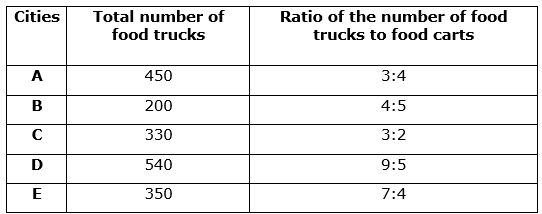
Q. Find the ratio of the total number of food carts in city B to the difference between the total number of food trucks in city A and B.
Detailed Solution: Question 16
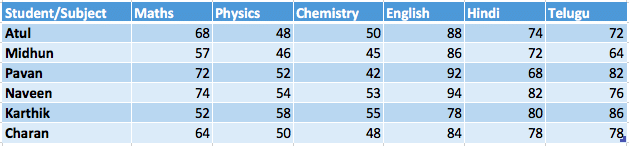
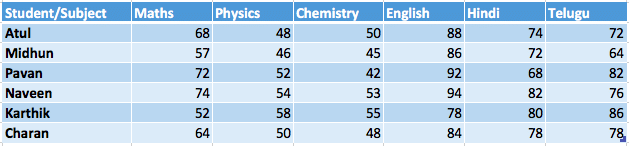
Direction: The following table provides the information on the marks scored by six students in six subjects.
The following table gives the information on the maximum marks in each subject.
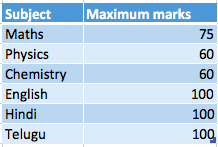
Q. The total of the marks obtained by Pavan is what percentage less than the total maximum marks?
Detailed Solution: Question 17
Direction: The following table provides the information on the marks scored by six students in six subjects.
The following table gives the information on the maximum marks in each subject.
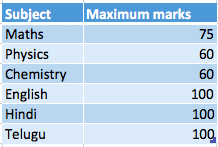
Q. Who among the six students scored the highest total marks?
Detailed Solution: Question 18
Following question contains two equations as I and II. You have to solve both equations and determine the relationship between them and give answer as,
I) x2– 19x + 84 = 0
II) y2 – 25y + 156 = 0
Detailed Solution: Question 19
Study the following information carefully and answer the questions given below.
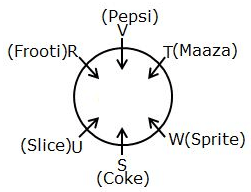
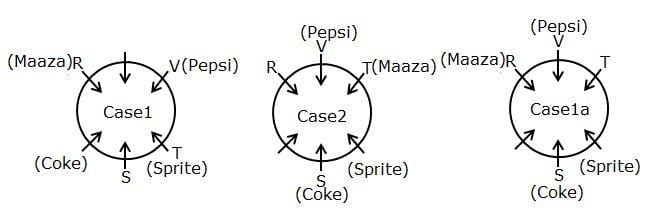
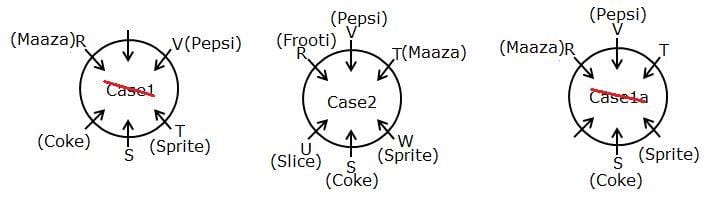
Six persons R, S, T, U, V and W are sitting around a circular table and facing inside, but not necessarily in the same order. Each person drinks different beverages viz. Slice, Pepsi, Sprite, Maaza, Coke and Frooti.
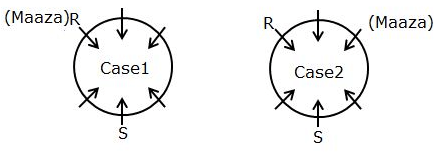
Only one person sits between S and the one who drinks Maaza. R sits second to the left of S who does not drink Slice. The one who drinks Sprite sits opposite to R. The one who drinks Coke sits third to the right of the one who drinks Pepsi. T sits immediate left of V who faces the one who drinks Coke. U does not drink Sprite but sits to the immediate right of the one who drinks Frooti. W does not sit adjacent to the one who drinks Frooti.
Q. Who among the following person faces the one who drinks Sprite?
Detailed Solution: Question 20
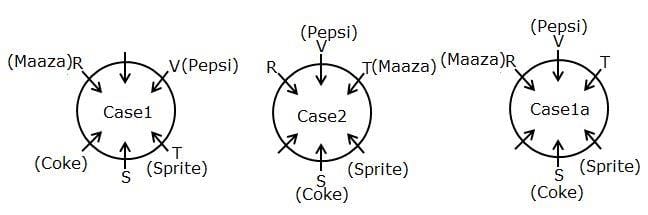
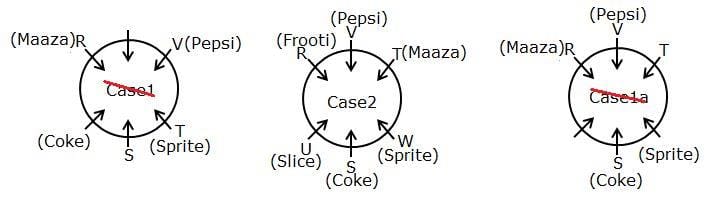
Study the following information carefully and answer the questions given below.
Six persons R, S, T, U, V and W are sitting around a circular table and facing inside, but not necessarily in the same order. Each person drinks different beverages viz. Slice, Pepsi, Sprite, Maaza, Coke and Frooti.
Only one person sits between S and the one who drinks Maaza. R sits second to the left of S who does not drink Slice. The one who drinks Sprite sits opposite to R. The one who drinks Coke sits third to the right of the one who drinks Pepsi. T sits immediate left of V who faces the one who drinks Coke. U does not drink Sprite but sits to the immediate right of the one who drinks Frooti. W does not sit adjacent to the one who drinks Frooti.
Q. T drinks which among the following Beverage?
Detailed Solution: Question 21
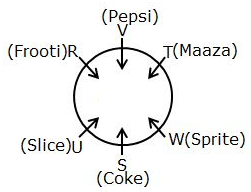
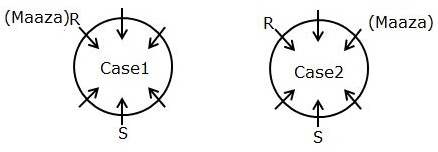
Direction: In these questions, relationship between different elements is shown in the statements. These statements are followed by two conclusions.
Statements: S < T, U > V, U ≥ T
Conclusion:
i) S < V
ii) T = V
Detailed Solution: Question 22
Direction: In these questions, relationship between different elements is shown in the statements. These statements are followed by two conclusions.
Statement: F ≤ G < Q = T ≤ R
Conclusion:
i) Q = R
ii) R > Q
Detailed Solution: Question 23
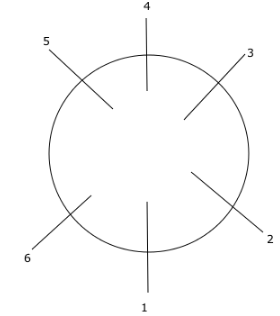
Direction: Six friends A, B, C, D, E and F are sitting around a circular table facing the center of the table. Further, the following information is also known
* B sits second to the right of A.
* F and D sit opposite to each other.
* C is not a neighbor of B.
Q. How many different seating arrangements are possible with the given information?
Detailed Solution: Question 24
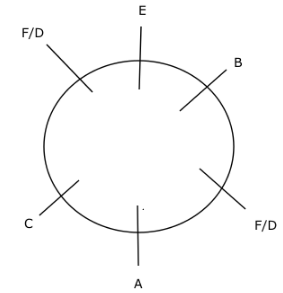
Direction: Six friends A, B, C, D, E and F are sitting around a circular table facing the center of the table. Further, the following information is also known
* B sits second to the right of A.
* F and D sit opposite to each other.
* C is not a neighbor of B.
Q. What is the position of E with respect to C?
Detailed Solution: Question 25
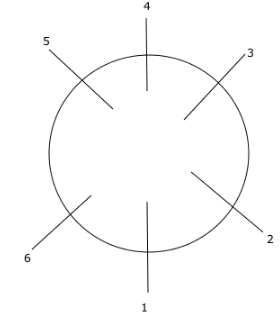
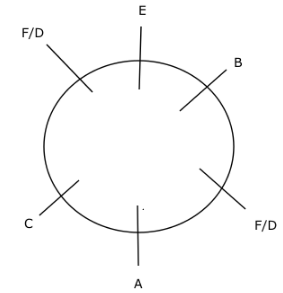
Study the following information carefully and answer the questions given below.
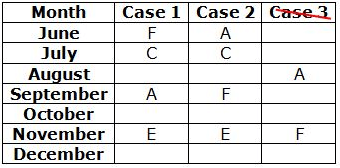
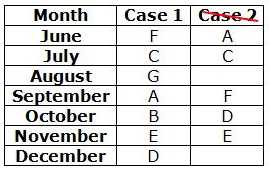
Seven persons - A, B, C, D, E, F and G were born in seven different months of the same year viz., June, July, August, September, October, November and December, but not necessarily in the same order.
F was born in the month having an even number of days. Only two persons were born between F and A, who was not born in December. E was born after October. Only three persons were born between C and E. C was not born in August. Neither G nor B was born immediately after F. B was born before D but after G.
Q. Who among the following person was born in August?
Detailed Solution: Question 26
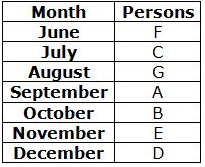
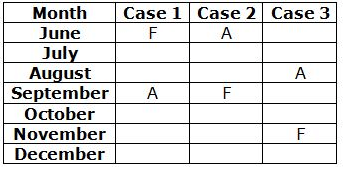
Study the following information carefully and answer the questions given below.
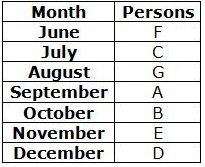
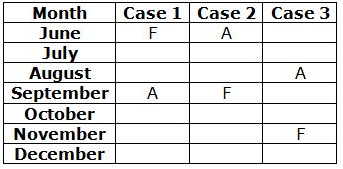
Seven persons - A, B, C, D, E, F and G were born in seven different months of the same year viz., June, July, August, September, October, November and December, but not necessarily in the same order.
F was born in the month having an even number of days. Only two persons were born between F and A, who was not born in December. E was born after October. Only three persons were born between C and E. C was not born in August. Neither G nor B was born immediately after F. B was born before D but after G.
Q. Who among the following person was born two months after F?
Detailed Solution: Question 27
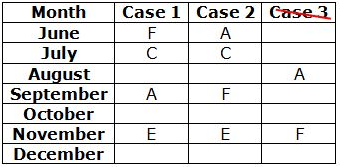
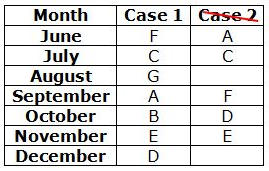
Study the following information carefully and answer the questions given below.
CUT HAT LEG ROW WAR
If all the letters are arranged in alphabetical order from left to right within each word, then how many words will remain unchanged?
Detailed Solution: Question 28
Direction: Observe the arrangement given below and answer the following questions:
ZD # R 3 8 7 @ 6 8 4 4 A 8 M% E $
Q. Which of the following element is seventh to the left of tenth element from the right end?
Detailed Solution: Question 29
Study the following information carefully and answer the questions given below.
CUT HAT LEG ROW WAR
Q. If the vowels of all the words are changed to the next letter and the consonants of all the words are changed to the previous letter as per the English alphabetical series, then how many words will have no vowel?
Detailed Solution: Question 30
