


All Exams > UPSC > Weekly Tests for UPSC Preparation > All Questions
All questions of June Week 2 for UPSC CSE Exam
The Stone Age people had the first domestic- a)Asses
- b)Sheep
- c)Horses
- d)Dogs
Correct answer is option 'D'. Can you explain this answer?
The Stone Age people had the first domestic
a)
Asses
b)
Sheep
c)
Horses
d)
Dogs
 | Poonam Reddy answered |
The animals which were first domesticated are sheep and goats. The domestication started roughly about 11000 years ago.

Consider the following statements regarding features of the Consistent Assembly:
1. Indian Independence Act of 1947 maintained that the Constituent Assembly was a fully sovereign body.
2. Constituent Assembly composed representatives of Princely states which were nominated by the people of the princely states.
3. Seats allocated to each British province were divided among all communities, in proportion to their population.
Which of the above statements is/are not correct?- a)3 only
- b)1 and 3 only
- c)2 only
- d)1, 2 and 3
Correct answer is option 'C'. Can you explain this answer?
Consider the following statements regarding features of the Consistent Assembly:
1. Indian Independence Act of 1947 maintained that the Constituent Assembly was a fully sovereign body.
2. Constituent Assembly composed representatives of Princely states which were nominated by the people of the princely states.
3. Seats allocated to each British province were divided among all communities, in proportion to their population.
Which of the above statements is/are not correct?
1. Indian Independence Act of 1947 maintained that the Constituent Assembly was a fully sovereign body.
2. Constituent Assembly composed representatives of Princely states which were nominated by the people of the princely states.
3. Seats allocated to each British province were divided among all communities, in proportion to their population.
Which of the above statements is/are not correct?
a)
3 only
b)
1 and 3 only
c)
2 only
d)
1, 2 and 3
 | Malavika Sengupta answered |
Incorrect Statement in Features of the Consistent Assembly:
1. Indian Independence Act of 1947 maintained that the Constituent Assembly was a fully sovereign body.
Explanation:
This statement is correct. The Indian Independence Act of 1947 declared that the Constituent Assembly was a fully sovereign body to frame the Constitution of India.
2. Constituent Assembly composed representatives of Princely states which were nominated by the people of the princely states.
Explanation:
This statement is incorrect. The representatives of Princely states were not nominated by the people of the princely states. They were nominated by the rulers of the princely states.
3. Seats allocated to each British province were divided among all communities, in proportion to their population.
Explanation:
This statement is correct. Seats allocated to each British province were divided among all communities in proportion to their population.
Therefore, the correct answer is option (c) 2 only.
1. Indian Independence Act of 1947 maintained that the Constituent Assembly was a fully sovereign body.
Explanation:
This statement is correct. The Indian Independence Act of 1947 declared that the Constituent Assembly was a fully sovereign body to frame the Constitution of India.
2. Constituent Assembly composed representatives of Princely states which were nominated by the people of the princely states.
Explanation:
This statement is incorrect. The representatives of Princely states were not nominated by the people of the princely states. They were nominated by the rulers of the princely states.
3. Seats allocated to each British province were divided among all communities, in proportion to their population.
Explanation:
This statement is correct. Seats allocated to each British province were divided among all communities in proportion to their population.
Therefore, the correct answer is option (c) 2 only.
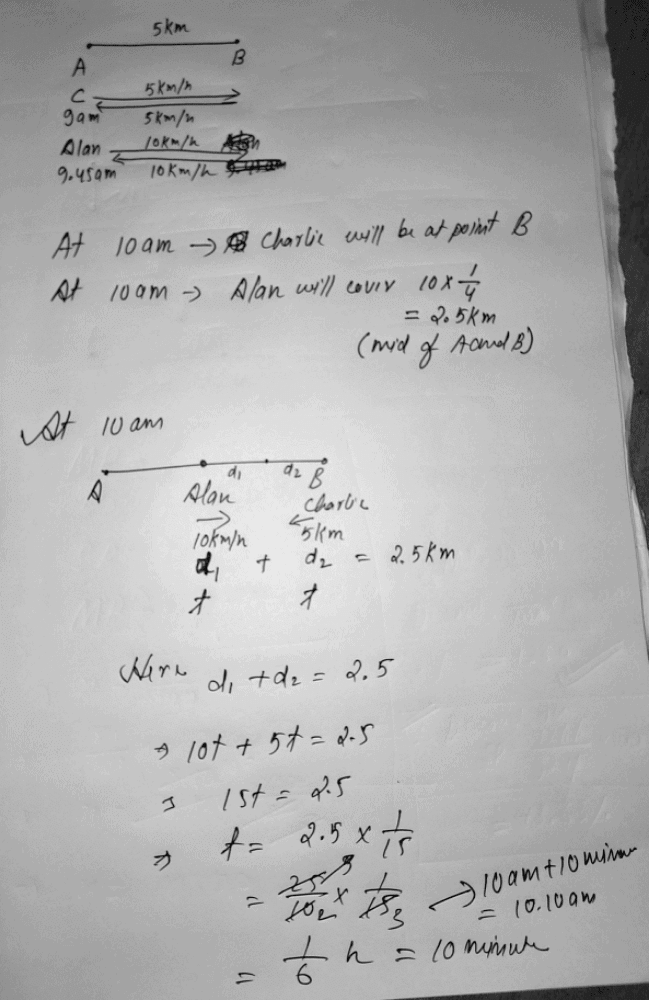
Charlie and Alan run a race between points A and B, 5 km apart. Charlie starts at 9 a.m. from A at a speed of 5 km/hr, reaches B, and returns to A at the same speed. Alan starts at 9:45 a.m. from A at a speed of 10 km/hr, reaches B and comes back to A at the same speed. At what time do Charlie and Alan first meet each other?- a)10 a.m.
- b)10:20 a.m.
- c)10:10 a.m
- d)10:30 a.m.
Correct answer is option 'C'. Can you explain this answer?
Charlie and Alan run a race between points A and B, 5 km apart. Charlie starts at 9 a.m. from A at a speed of 5 km/hr, reaches B, and returns to A at the same speed. Alan starts at 9:45 a.m. from A at a speed of 10 km/hr, reaches B and comes back to A at the same speed. At what time do Charlie and Alan first meet each other?
a)
10 a.m.
b)
10:20 a.m.
c)
10:10 a.m
d)
10:30 a.m.
| | Madhujya Chutia answered |
P can do a work in the same time in which Q and R together can do it. If P and Q work together, the work can be completed in 10 days. R alone needs 50 days to complete the same work. then Q alone can do it in
- a)30 days
- b)25 days
- c)20 days
- d)15 days
Correct answer is option 'B'. Can you explain this answer?
a)
30 days
b)
25 days
c)
20 days
d)
15 days
 | Future Foundation Institute answered |
Let distance between the two places = d km
Let total time taken by faster horse = t hr
⇒ Total time taken by slower horse = (t + 5) hr,
Let total time taken by faster horse = t hr
⇒ Total time taken by slower horse = (t + 5) hr,
Therefore,
speed of the faster horse = d/t km/hr
speed of the slower horse = d/(t + 5) km/hr
The two horses meet each other in 3 hour 20 min i.e. in 3(1/3) hr = 10/3 hr
In this time, total distance travelled by both the horses together is d.
speed of the faster horse = d/t km/hr
speed of the slower horse = d/(t + 5) km/hr
The two horses meet each other in 3 hour 20 min i.e. in 3(1/3) hr = 10/3 hr
In this time, total distance travelled by both the horses together is d.
∴ d/(t+5) * 10/3 + d/t * 10/3 = d
⇒ 10/(3(t+5)) + 10/3t = 1
⇒ 10t + 10(t+5) = 3t(t+5)
⇒ 20t + 50 = 3t2 + 15t
⇒ 3t2 − 5t − 50 = 0
⇒ 3t2 + 10t − 15t − 50 = 0
⇒ t(3t + 10) − 5(3t + 10) = 0
⇒ (3t + 10)(t − 5) = 0
⇒ t = 5 (ignoring -ve value)
⇒ 10/(3(t+5)) + 10/3t = 1
⇒ 10t + 10(t+5) = 3t(t+5)
⇒ 20t + 50 = 3t2 + 15t
⇒ 3t2 − 5t − 50 = 0
⇒ 3t2 + 10t − 15t − 50 = 0
⇒ t(3t + 10) − 5(3t + 10) = 0
⇒ (3t + 10)(t − 5) = 0
⇒ t = 5 (ignoring -ve value)
Thus, Total time taken by slower horse = 5 + 5 = 10 hr
So Option B is correct
Sheldon had to cover a distance of 60 km. However, he started 6 minutes later than his scheduled time and raced at a speed 1 km/h higher than his originally planned speed and reached the finish at the time he would reach it if he began to race strictly at the appointed time and raced with the assumed speed. Find the speed at which he travelled during the journey described.- a)25 km/h
- b)10 km/h
- c)6 km/h
- d)15 km/h
Correct answer is option 'A'. Can you explain this answer?
Sheldon had to cover a distance of 60 km. However, he started 6 minutes later than his scheduled time and raced at a speed 1 km/h higher than his originally planned speed and reached the finish at the time he would reach it if he began to race strictly at the appointed time and raced with the assumed speed. Find the speed at which he travelled during the journey described.
a)
25 km/h
b)
10 km/h
c)
6 km/h
d)
15 km/h
 | Asf Institute answered |
Solve this question through options.
⇒ For instance, if he travelled at 25 km/h, his original speed would have been 24 km/h.
⇒ The time difference can be seen to be 6 minutes in this case = 60 / 24 – 60 / 25 = 0.1 hrs = 6 mins
⇒ For instance, if he travelled at 25 km/h, his original speed would have been 24 km/h.
⇒ The time difference can be seen to be 6 minutes in this case = 60 / 24 – 60 / 25 = 0.1 hrs = 6 mins
Thus, 25 km/h is the correct answer.
So Option A is correct
P is able to do a piece of work in 15 days and Q can do the same work in 20 days. If they can work together for 4 days, what is the fraction of work left?- a)8/15
- b)7/15
- c)11/15
- d)2/11
Correct answer is option 'A'. Can you explain this answer?
a)
8/15
b)
7/15
c)
11/15
d)
2/11
 | Academic Studio answered |
Since P to R is double the distance of P to Q,
Therefore, it is evident that the time taken from P to R and back would be double the time taken from P to Q and back (i.e. double of 6.5 hours = 13 hours).
Therefore, it is evident that the time taken from P to R and back would be double the time taken from P to Q and back (i.e. double of 6.5 hours = 13 hours).
Since going from P to R takes 9 hours, coming back from R to P would take 4 hours i.e. 13- 9 = 4
So Option A is correct
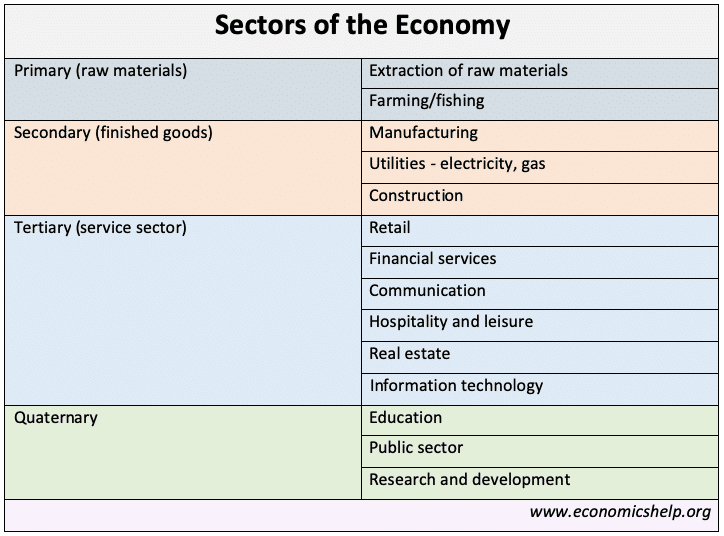
Consider the following statements regarding the sectors of Indian economy.
1. Agriculture provides direct employment to more than 50 % people of the country.
2. The service sector is the biggest contributor to India’s economy.
3. Manufacturing activities contribute more to Indian economy than the primary sector.
4. Mining comes under primary sector.
Which of the above given statements is/ are correct? - a)1 and 2
- b)2 and 4
- c)2 ,3 and 4
- d)1 , 2 and 4
Correct answer is option 'B'. Can you explain this answer?
Consider the following statements regarding the sectors of Indian economy.
1. Agriculture provides direct employment to more than 50 % people of the country.
2. The service sector is the biggest contributor to India’s economy.
3. Manufacturing activities contribute more to Indian economy than the primary sector.
4. Mining comes under primary sector.
Which of the above given statements is/ are correct?
1. Agriculture provides direct employment to more than 50 % people of the country.
2. The service sector is the biggest contributor to India’s economy.
3. Manufacturing activities contribute more to Indian economy than the primary sector.
4. Mining comes under primary sector.
Which of the above given statements is/ are correct?
a)
1 and 2
b)
2 and 4
c)
2 ,3 and 4
d)
1 , 2 and 4
 | Sahil Khanna answered |
Correct Answer:- B (2,4)
Explanation: The economy is divided into three broad categories—agriculture (which includes broader activities such as mining, utilities, and construction), manufacturing, and services. Services has been, by far, the biggest contributor to GDP, accounting for over 68 percent in 2018.
The Primary sector of the economy includes any industry involved in the extraction and production of raw materials, such as farming, logging, hunting, fishing, and mining. The primary sector tends to make up a larger portion of the economy in developing countries than it does in developed countries.
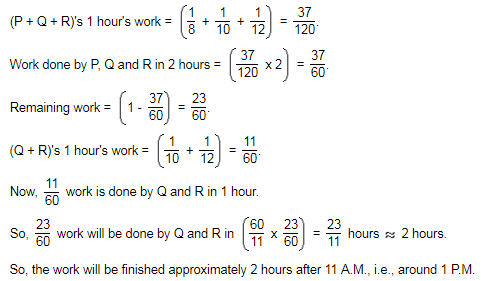
Machine P can print one lakh books in 8 hours. Machine Q can print the same number of books in 10 hours while machine R can print the same in 12 hours. All the machines started printing at 9 A.M. Machine P is stopped at 11 A.M. and the remaining two machines complete work. Approximately at what time will the printing of one lakh books be completed?
- a)3 pm
- b)2 pm
- c)1:00 pm
- d)11 am
Correct answer is option 'C'. Can you explain this answer?
a)
3 pm
b)
2 pm
c)
1:00 pm
d)
11 am
 | Kiran Mehta answered |
Consider the following statements about the pyramid of numbers - upright:1. The number of individuals decreases from lower level to higher trophic level.2. Grasses occupy the lowest trophic level because of their biomass.Which of these statements is/are correct?- a)2 Only
- b)1 Only
- c)Both 1 and 2
- d)Neither 1 nor 2
Correct answer is option 'B'. Can you explain this answer?
Consider the following statements about the pyramid of numbers - upright:
1. The number of individuals decreases from lower level to higher trophic level.
2. Grasses occupy the lowest trophic level because of their biomass.
Which of these statements is/are correct?
a)
2 Only
b)
1 Only
c)
Both 1 and 2
d)
Neither 1 nor 2
 | Dhruba Menon answered |
Pyramid of numbers:
It depicts the numbers of individual organisms at different trophic levels of the food chain.
It is helpful to calculate the changes observed in the number of organisms in each trophic level.
An upright pyramid of numbers, the number of individuals decreases from the lower level to the higher level.
This type of pyramid is usually found in the grassland ecosystem and the pond ecosystem.
T
he grass in a grassland ecosystem occupies the lowest trophic level because of its abundance
We can identify which level is in the endangered zone and need to be saved. But its limitation is we cannot count a number of all organisms accurately.
Consider the following statements regarding the Committees of the Constituent Assembly:
1. Only the members of the assembly could become the chairman of these committees.
2. Mahatma Gandhi was the chairman of the Advisory Committee on Fundamental Rights, Minorities and Tribal and Excluded Areas.
Which of the above statements is/are not correct?- a)1 only
- b)Both 1 and 2
- c)2 only
- d)Neither 1 nor 2
Correct answer is option 'C'. Can you explain this answer?
Consider the following statements regarding the Committees of the Constituent Assembly:
1. Only the members of the assembly could become the chairman of these committees.
2. Mahatma Gandhi was the chairman of the Advisory Committee on Fundamental Rights, Minorities and Tribal and Excluded Areas.
Which of the above statements is/are not correct?
1. Only the members of the assembly could become the chairman of these committees.
2. Mahatma Gandhi was the chairman of the Advisory Committee on Fundamental Rights, Minorities and Tribal and Excluded Areas.
Which of the above statements is/are not correct?
a)
1 only
b)
Both 1 and 2
c)
2 only
d)
Neither 1 nor 2
 | Meera Singh answered |
Statement 1: Only the members of the assembly could become the chairman of these committees.
This statement is correct. The Committees of the Constituent Assembly were comprised of members of the assembly, and typically, one of the members would be elected as the chairman of each committee.
Sardar Vallabhbhai Patel was the chairman of advisory committee of fundamental rights and minorities by the constituent assembly
This statement is correct. The Committees of the Constituent Assembly were comprised of members of the assembly, and typically, one of the members would be elected as the chairman of each committee.
Sardar Vallabhbhai Patel was the chairman of advisory committee of fundamental rights and minorities by the constituent assembly
To complete a work, A takes 50% more time than B. If together they take 18 days to complete the work, how much time shall B take to do it?- a)30 days
- b)35 days
- c)40 days
- d)45 days
Correct answer is option 'A'. Can you explain this answer?
To complete a work, A takes 50% more time than B. If together they take 18 days to complete the work, how much time shall B take to do it?
a)
30 days
b)
35 days
c)
40 days
d)
45 days
 | Rajesh Khatri answered |
We have,
B = 3/2*A
→
A = 2/3*B
One day's work, (A+B) = 1/18
(2/3*B+B) = 1/18
5/3*B = 1/18
One day's work of B = 3/90
B alone can complete the work in,
= 90/3
= 30 days.
P can finish a work in 18 days. Q can finish the same work in 15 days. Q worked for 10 days and left the job. how many days does P alone need to finish the remaining work?
- a)8
- b)5
- c)4
- d)6
Correct answer is option 'D'. Can you explain this answer?
a)
8
b)
5
c)
4
d)
6
 | Spectrum Coaching Institute answered |
Initial distance = 25 dog leaps
Per-minute dog makes 5 dog leaps and cat makes 6 cat leaps = 3 dog leaps
⇒ Relative speed = 2 dog leaps / minutes
⇒ An initial distance of 25 dog leaps would get covered in 12.5 minutes.
Per-minute dog makes 5 dog leaps and cat makes 6 cat leaps = 3 dog leaps
⇒ Relative speed = 2 dog leaps / minutes
⇒ An initial distance of 25 dog leaps would get covered in 12.5 minutes.
So Option D is correct
Who was the chief draftsman of the constitution in the Constituent Assembly?- a)B.N. Rau
- b)S. N Mukherjee
- c)H.V.R Iyengar
- d)Prem Bihari Narain
Correct answer is option 'B'. Can you explain this answer?
Who was the chief draftsman of the constitution in the Constituent Assembly?
a)
B.N. Rau
b)
S. N Mukherjee
c)
H.V.R Iyengar
d)
Prem Bihari Narain
| | Ameya Malik answered |
The chief draftsman of the constitution in the Constituent Assembly was B.R. Ambedkar.
Explanation:
- B.R. Ambedkar was a prominent leader and a member of the Constituent Assembly which was formed to draft the constitution of India.
- He played a crucial role in the drafting of the constitution and was the chief architect of the constitution.
- He was appointed as the chairman of the drafting committee which was responsible for preparing the first draft of the constitution.
- Ambedkar was a prolific writer and his extensive knowledge of constitutional law helped him in drafting the constitution.
- He worked tirelessly for almost two years to prepare the draft of the constitution and presented it to the Constituent Assembly on 4th November 1947.
- The constitution was finally adopted on 26th January 1950 and came into effect on that day.
- B.R. Ambedkar is often referred to as the father of the Indian Constitution and his contribution to the drafting of the constitution is widely recognized.
Explanation:
- B.R. Ambedkar was a prominent leader and a member of the Constituent Assembly which was formed to draft the constitution of India.
- He played a crucial role in the drafting of the constitution and was the chief architect of the constitution.
- He was appointed as the chairman of the drafting committee which was responsible for preparing the first draft of the constitution.
- Ambedkar was a prolific writer and his extensive knowledge of constitutional law helped him in drafting the constitution.
- He worked tirelessly for almost two years to prepare the draft of the constitution and presented it to the Constituent Assembly on 4th November 1947.
- The constitution was finally adopted on 26th January 1950 and came into effect on that day.
- B.R. Ambedkar is often referred to as the father of the Indian Constitution and his contribution to the drafting of the constitution is widely recognized.
Chetan is thrice as efficient as Mamta and together they can finish a piece of work in 60 days. Mamta will take how many days to finish this work alone?- a)80
- b)160
- c)240
- d)320
Correct answer is option 'C'. Can you explain this answer?
Chetan is thrice as efficient as Mamta and together they can finish a piece of work in 60 days. Mamta will take how many days to finish this work alone?
a)
80
b)
160
c)
240
d)
320
| | Ritika Choudhury answered |
- Chetan is thrice as efficient as Mamta.
- Let, Mamta takes 3x days and Chetan takes x days to complete the work.
- ∴ 1/x + 1/3x = 1/60 ⇒ x = 80.
- ∴ Mamta will take 80 × 3 = 240 days to complete the work.
6 men and 8 women can complete a work in 10 days. 26 men and 48 women can finish the same work in 2 days. 15 men and 20 women can do the same work in - days.
- a)4 days
- b)6 days
- c)2 days
- d)8 days
Correct answer is option 'A'. Can you explain this answer?
a)
4 days
b)
6 days
c)
2 days
d)
8 days
| | Vikas Choudhury answered |
Let work done by 1 man in 1 day = m and work done by 1 woman in 1 day = b
Work done by 6 men and 8 women in 1 day = 1/10
=> 6m + 8b = 1/10
=> 60m + 80b = 1 (1)
Work done by 26 men and 48 women in 1 day = 1/2
=> 26m + 48b =1/2
=> 52m + 96b = 1 (2)
Solving equation 1 and equation 2. We get m = 1/100 and b = 1/200
Work done by 15 men and 20 women in 1 day
= 15/100 + 20/200 =1/4
=> Time taken by 15 men and 20 women in doing the work = 4 days
Consider the following statements about the pyramid of biomass:1. Individuals in his trophic level are weighed instead of being counted.2. The Biomass of producers is at the bottom.Which of these statements is/are correct?- a)1 Only
- b)2 Only
- c)Both 1 and 2
- d)Neither 1 nor 2
Correct answer is option 'C'. Can you explain this answer?
Consider the following statements about the pyramid of biomass:
1. Individuals in his trophic level are weighed instead of being counted.
2. The Biomass of producers is at the bottom.
Which of these statements is/are correct?
a)
1 Only
b)
2 Only
c)
Both 1 and 2
d)
Neither 1 nor 2
| | Kavita Mehta answered |
Both statements are correct.
1. In a pyramid of biomass, the weight (biomass) of all individuals in each trophic level is considered instead of counting the number of individuals. This gives a more accurate representation of the energy available in each trophic level, as larger organisms typically have more energy stored in their tissues.
2. The pyramid of biomass is structured with producers at the bottom, representing the largest amount of biomass in the ecosystem. Producers (e.g., plants) convert sunlight into energy through photosynthesis and form the base of the food chain. As energy transfers up the trophic levels through consumption, energy is lost in the form of waste and heat, resulting in a decrease in biomass as you move up the pyramid. This is why the biomass of producers is at the bottom of the pyramid, as they represent the largest amount of available energy in the ecosystem.
1. In a pyramid of biomass, the weight (biomass) of all individuals in each trophic level is considered instead of counting the number of individuals. This gives a more accurate representation of the energy available in each trophic level, as larger organisms typically have more energy stored in their tissues.
2. The pyramid of biomass is structured with producers at the bottom, representing the largest amount of biomass in the ecosystem. Producers (e.g., plants) convert sunlight into energy through photosynthesis and form the base of the food chain. As energy transfers up the trophic levels through consumption, energy is lost in the form of waste and heat, resulting in a decrease in biomass as you move up the pyramid. This is why the biomass of producers is at the bottom of the pyramid, as they represent the largest amount of available energy in the ecosystem.
Who put forward the idea of a Constituent Assembly for India for the first time?- a)B.R. Ambedkar
- b)S.N. Mukherjee
- c)M.N. Roy
- d)K. M. Munshi
Correct answer is option 'C'. Can you explain this answer?
Who put forward the idea of a Constituent Assembly for India for the first time?
a)
B.R. Ambedkar
b)
S.N. Mukherjee
c)
M.N. Roy
d)
K. M. Munshi
| | Kabir Verma answered |
The idea of a Constituent Assembly for India was put forward for the first time by M. N. Roy, a pioneer of the communist movement in India, in 1934.
Which of the following is not a feature of capitalism?
1. Limited role of the government in economic activities.
2. Freedom of competition
3. Efficiency, innovation and creativity
4. Classless society- a)2 and 3
- b)1 and 4
- c)0nly 3
- d)Only 4
Correct answer is option 'D'. Can you explain this answer?
Which of the following is not a feature of capitalism?
1. Limited role of the government in economic activities.
2. Freedom of competition
3. Efficiency, innovation and creativity
4. Classless society
1. Limited role of the government in economic activities.
2. Freedom of competition
3. Efficiency, innovation and creativity
4. Classless society
a)
2 and 3
b)
1 and 4
c)
0nly 3
d)
Only 4
| | Suresh Reddy answered |
Achieving a classless society is a feature of command economy.
Consider the following statements:Statement-I:
In a grazing food chain, the primary producers (plants) form the base of the food chain, with primary consumers feeding on them and subsequent trophic levels following.Statement-II:
Detritus food chains start with decaying organic matter, progressing through microorganisms, detritivores, and then other predators.Which one of the following is correct in respect of the above statements?- a)Both Statement-I and Statement-II are correct, but Statement-II does not explain Statement-I
- b)Both Statement-I and Statement-II are correct and Statement-II explains Statement-I
- c)Statement-I is correct, but Statement-II is incorrect
- d)Statement-I is incorrect, but Statement-II is correct
Correct answer is option 'A'. Can you explain this answer?
Consider the following statements:
Statement-I:
In a grazing food chain, the primary producers (plants) form the base of the food chain, with primary consumers feeding on them and subsequent trophic levels following.
In a grazing food chain, the primary producers (plants) form the base of the food chain, with primary consumers feeding on them and subsequent trophic levels following.
Statement-II:
Detritus food chains start with decaying organic matter, progressing through microorganisms, detritivores, and then other predators.
Detritus food chains start with decaying organic matter, progressing through microorganisms, detritivores, and then other predators.
Which one of the following is correct in respect of the above statements?
a)
Both Statement-I and Statement-II are correct, but Statement-II does not explain Statement-I
b)
Both Statement-I and Statement-II are correct and Statement-II explains Statement-I
c)
Statement-I is correct, but Statement-II is incorrect
d)
Statement-I is incorrect, but Statement-II is correct
 | Valor Academy answered |
- Statement-I: This statement is correct. In a grazing food chain, the primary producers (plants) form the base of the food chain. The primary consumers (herbivores) feed on these primary producers, followed by secondary and tertiary consumers that feed on the primary consumers and each other.
- Statement-II: This statement is also correct. A detritus food chain begins with decaying organic matter (detritus), which is broken down by microorganisms. Detritivores (organisms that feed on decaying matter, such as earthworms) then consume the decomposed material, and higher-level predators feed on them. This describes a distinct food chain, different from the grazing food chain.
Statement-II describes how a detritus food chain works, beginning with decaying organic matter, whereas Statement-I describes a grazing food chain that begins with living plant material. Both statements are correct, but Statement-II does not explain Statement-I. They describe different types of food chains within ecosystems.
Thus, both statements are correct, but Statement-II offers a different perspective on ecological food chains without explaining Statement-I.
Therefore, the correct answer is Option A.
Therefore, the correct answer is Option A.
Which of the following is true with regard to food security?- a)Food security exists when government maintains buffer stock of grains for next five years.
- b)Government imposes ban on grains exports for maintaining sufficient stock.
- c)Government encourges to produce organic foods for better and secure health.
- d)Food security exists when all people, at all time have access to sufficient, safe and nutritious food.
Correct answer is option 'D'. Can you explain this answer?
Which of the following is true with regard to food security?
a)
Food security exists when government maintains buffer stock of grains for next five years.
b)
Government imposes ban on grains exports for maintaining sufficient stock.
c)
Government encourges to produce organic foods for better and secure health.
d)
Food security exists when all people, at all time have access to sufficient, safe and nutritious food.
| | Priya Menon answered |
Food security means availability, accessibility and affordability of food to all people at all times.
- Poor households are more vulnerable to food insecurity whenever there is a problem with the production or distribution of food crops.
- Food security depends on the Public Distribution System (PDS) and government vigilance and action at times, when this security is threatened.
Which of the following is/are not included in the GDP?
1. Pensions
2. Scholarships
3. Subsidies
4. Remittances
Select the correct answer from the options given below:- a)1, 2 and 3
- b)2, 3 and 4
- c)1, 2 and 4
- d)1, 2, 3 and 4
Correct answer is option 'D'. Can you explain this answer?
Which of the following is/are not included in the GDP?
1. Pensions
2. Scholarships
3. Subsidies
4. Remittances
Select the correct answer from the options given below:
1. Pensions
2. Scholarships
3. Subsidies
4. Remittances
Select the correct answer from the options given below:
a)
1, 2 and 3
b)
2, 3 and 4
c)
1, 2 and 4
d)
1, 2, 3 and 4
 | Sandeep Iyer answered |
Transfer payments such as pensions, scholarships, subsidies etc are excluded from GDP calculations because there is no production of any goods or services in exchange of such payments. Remittances (Money sent home from emigrants working abroad) are also not included in the GDP. This is because, in GDP estimations, only those goods and services produced within a country are included.
Identify the incorrect statement/s
1. Capitalism allows private property
2. Communism allows for free market
3. Capitalism, in theory, spreads wealth evenly
4. Communism encourages entrepreneurship
Options:- a)Only 3
- b)2 and 4 only
- c)2 , 3 and 4
- d)Only 4
Correct answer is option 'C'. Can you explain this answer?
Identify the incorrect statement/s
1. Capitalism allows private property
2. Communism allows for free market
3. Capitalism, in theory, spreads wealth evenly
4. Communism encourages entrepreneurship
Options:
1. Capitalism allows private property
2. Communism allows for free market
3. Capitalism, in theory, spreads wealth evenly
4. Communism encourages entrepreneurship
Options:
a)
Only 3
b)
2 and 4 only
c)
2 , 3 and 4
d)
Only 4
 | Manoj Nair answered |
Incorrect Statements about Capitalism and Communism
Capitalism and communism are two different economic systems that have been widely debated and compared. They have different principles and objectives that affect the way businesses and individuals operate within the economy. The incorrect statements about capitalism and communism are:
2. Communism allows for free market
3. Capitalism, in theory, spreads wealth evenly
4. Communism encourages entrepreneurship
Explanation:
1. Capitalism allows private property:
- Private property is the foundation of capitalism. In a capitalist economy, individuals have the right to own and control property, including businesses, factories, and land. This right to private property is protected by law and is essential for the functioning of a market economy.
2. Communism allows for free market:
- This statement is incorrect. Communism is a type of economic system where the government owns and controls all property and resources. There is no private ownership, and the government decides what gets produced and how it is distributed. There is no free market in communism.
3. Capitalism, in theory, spreads wealth evenly:
- This statement is incorrect. Capitalism is based on the principle of individualism, where the pursuit of self-interest drives economic activity. While capitalism can generate wealth, it does not guarantee that this wealth will be distributed evenly. In fact, capitalism often results in income inequality, where a small percentage of the population holds a significant portion of the wealth.
4. Communism encourages entrepreneurship:
- This statement is incorrect. In communism, the government controls all economic activity, including entrepreneurship. There is no incentive for individuals to start their own businesses or innovate since the government controls all resources and production.
Conclusion:
In conclusion, while capitalism and communism are two different economic systems, they both have their strengths and weaknesses. It is essential to understand the fundamental principles of both systems to make informed decisions about economic policies and strategies.
Capitalism and communism are two different economic systems that have been widely debated and compared. They have different principles and objectives that affect the way businesses and individuals operate within the economy. The incorrect statements about capitalism and communism are:
2. Communism allows for free market
3. Capitalism, in theory, spreads wealth evenly
4. Communism encourages entrepreneurship
Explanation:
1. Capitalism allows private property:
- Private property is the foundation of capitalism. In a capitalist economy, individuals have the right to own and control property, including businesses, factories, and land. This right to private property is protected by law and is essential for the functioning of a market economy.
2. Communism allows for free market:
- This statement is incorrect. Communism is a type of economic system where the government owns and controls all property and resources. There is no private ownership, and the government decides what gets produced and how it is distributed. There is no free market in communism.
3. Capitalism, in theory, spreads wealth evenly:
- This statement is incorrect. Capitalism is based on the principle of individualism, where the pursuit of self-interest drives economic activity. While capitalism can generate wealth, it does not guarantee that this wealth will be distributed evenly. In fact, capitalism often results in income inequality, where a small percentage of the population holds a significant portion of the wealth.
4. Communism encourages entrepreneurship:
- This statement is incorrect. In communism, the government controls all economic activity, including entrepreneurship. There is no incentive for individuals to start their own businesses or innovate since the government controls all resources and production.
Conclusion:
In conclusion, while capitalism and communism are two different economic systems, they both have their strengths and weaknesses. It is essential to understand the fundamental principles of both systems to make informed decisions about economic policies and strategies.
Which of the following is a viral disease?- a)Malaria
- b)Tuberculosis
- c)Influenza
- d)Cholera
Correct answer is option 'C'. Can you explain this answer?
a)
Malaria
b)
Tuberculosis
c)
Influenza
d)
Cholera
 | Upsc Toppers answered |
Influenza is a viral disease caused by the influenza virus. It is commonly known as the flu.
Which type of leprosy treatment uses a combination of rifampicin, clofazimine, and dapsone?- a)Multidrug therapy (MDT)
- b)Monotherapy
- c)Antibiotic therapy
- d)Immunotherapy
Correct answer is option 'A'. Can you explain this answer?
a)
Multidrug therapy (MDT)
b)
Monotherapy
c)
Antibiotic therapy
d)
Immunotherapy
| | Academic Studio answered |
Multidrug therapy (MDT) is used to treat leprosy and typically involves a combination of rifampicin, clofazimine, and dapsone, depending on the classification of the disease.
Who was appointed as the constitutional advisor to the Constituent Assembly?- a)Dr K.M. Munshi
- b)Dr B.R. Ambedkar
- c)N. Madhava Rau
- d)B.N. Rau
Correct answer is option 'D'. Can you explain this answer?
Who was appointed as the constitutional advisor to the Constituent Assembly?
a)
Dr K.M. Munshi
b)
Dr B.R. Ambedkar
c)
N. Madhava Rau
d)
B.N. Rau
| | Meera Kapoor answered |
B.N. Rau was appointed as the constitutional advisor (Legal advisor) to the Constituent Assembly. Dr B R Ambedkar was the Chairman of the Constituent Assembly while Dr K M Munshi and N Madhava Rau were members of the Drafting Committee.
The ‘August Offer’ of 1940 accepted which of these important demands of the Indian National Congress leadership?- a)Rejection of the idea of partition of India
- b)Establishing a system of provincial elections and giving them greater autonomy
- c)Constituent Assembly of India elected based on adult franchise
- d)Withdrawal of involvement of Indian troops in the Second World War
Correct answer is option 'C'. Can you explain this answer?
The ‘August Offer’ of 1940 accepted which of these important demands of the Indian National Congress leadership?
a)
Rejection of the idea of partition of India
b)
Establishing a system of provincial elections and giving them greater autonomy
c)
Constituent Assembly of India elected based on adult franchise
d)
Withdrawal of involvement of Indian troops in the Second World War
| | Vikram Verma answered |
In 1938, Jawaharlal Nehru, on behalf the INC declared that ‘the Constitution of free India must be framed, without outside interference, by a Constituent Assembly elected based on adult franchise’. This demand was accepted by the British Government under its August Offer of 1940.
What is the term used to describe the flow of energy from producers to top consumers in an ecosystem?- a)Energy cycle
- b)Energy transfer
- c)Energy movement
- d)Energy flow
Correct answer is option 'D'. Can you explain this answer?
What is the term used to describe the flow of energy from producers to top consumers in an ecosystem?
a)
Energy cycle
b)
Energy transfer
c)
Energy movement
d)
Energy flow
| | Aarya Dey answered |
Understanding Energy Flow in Ecosystems
Energy flow describes how energy moves through an ecosystem, from producers to various consumer levels, ultimately reaching top consumers or apex predators. This concept is vital for understanding ecological dynamics and food web interactions.
Producers: The Foundation
- Producers, primarily plants and some microorganisms, harness sunlight through photosynthesis to create energy-rich organic compounds.
- They form the base of the food chain, providing the initial energy source for other organisms.
Primary Consumers: The Herbivores
- Primary consumers, or herbivores, feed on producers. They convert the energy stored in plants into forms usable by higher trophic levels.
- Examples include deer, rabbits, and insects that rely directly on plant material for sustenance.
Secondary and Tertiary Consumers: The Carnivores
- Secondary consumers are carnivores that eat primary consumers, while tertiary consumers are those that feed on secondary consumers.
- This creates a hierarchy where energy is transferred from one level to the next, with each transfer resulting in energy loss due to metabolic processes.
The Energy Pyramid
- Energy flow can be visualized as an energy pyramid, where energy decreases at higher trophic levels.
- Typically, only about 10% of the energy at one level is available to the next, highlighting the inefficiency of energy transfer.
Conclusion
Overall, option 'D', "Energy flow," accurately encapsulates this dynamic process, illustrating how energy is transferred through an ecosystem, affecting population dynamics and ecosystem stability. Understanding energy flow is crucial for environmental science and ecology, offering insights into the sustainability of ecosystems.
Energy flow describes how energy moves through an ecosystem, from producers to various consumer levels, ultimately reaching top consumers or apex predators. This concept is vital for understanding ecological dynamics and food web interactions.
Producers: The Foundation
- Producers, primarily plants and some microorganisms, harness sunlight through photosynthesis to create energy-rich organic compounds.
- They form the base of the food chain, providing the initial energy source for other organisms.
Primary Consumers: The Herbivores
- Primary consumers, or herbivores, feed on producers. They convert the energy stored in plants into forms usable by higher trophic levels.
- Examples include deer, rabbits, and insects that rely directly on plant material for sustenance.
Secondary and Tertiary Consumers: The Carnivores
- Secondary consumers are carnivores that eat primary consumers, while tertiary consumers are those that feed on secondary consumers.
- This creates a hierarchy where energy is transferred from one level to the next, with each transfer resulting in energy loss due to metabolic processes.
The Energy Pyramid
- Energy flow can be visualized as an energy pyramid, where energy decreases at higher trophic levels.
- Typically, only about 10% of the energy at one level is available to the next, highlighting the inefficiency of energy transfer.
Conclusion
Overall, option 'D', "Energy flow," accurately encapsulates this dynamic process, illustrating how energy is transferred through an ecosystem, affecting population dynamics and ecosystem stability. Understanding energy flow is crucial for environmental science and ecology, offering insights into the sustainability of ecosystems.
Consider the following statements. 1. When two corries cut back on opposite sides of a mountain, knife-edged ridges are formed called aretes 2. Where three or more cirques cut back together, their ultimate recession will form an angular horn or pyramidal Which of these statements are not correct?- a)1 only
- b)2 only
- c)Both of them
- d)Neither of them
Correct answer is option 'D'. Can you explain this answer?
Consider the following statements.
1. When two corries cut back on opposite sides of a mountain, knife-edged ridges are formed called aretes
2. Where three or more cirques cut back together, their ultimate recession will form an angular horn or pyramidal
Which of these statements are not correct?
a)
1 only
b)
2 only
c)
Both of them
d)
Neither of them
 | Anita Desai answered |
Arêtes and pyramidal peaks: When two corries cut back on opposite sides of a mountain, knife-edged ridges are formed called aretes (a French word). A well-known British example of an arête is the Striding Edge on Helvellyn in Westmorland. Where three or more cirques cut back together, their ultimate recession will form an angular horn or pyramidal peak.
A and B together can do a piece of work in 50 days. If A is 40% less efficient than B, in how many days can A working alone complete 60% of the work?- a)70
- b)110
- c)80
- d)105
Correct answer is option 'C'. Can you explain this answer?
A and B together can do a piece of work in 50 days. If A is 40% less efficient than B, in how many days can A working alone complete 60% of the work?
a)
70
b)
110
c)
80
d)
105
| | Shilpa Choudhury answered |
Given:
A and B together can do a piece of work in 50 days.
A is 40% less efficient than B
Concept used:
Total work = Efficiency of the workers × time taken by them
Calculation:
Let the efficiency of B be 5a
So, efficiency of A = 5a × 60%
⇒ 3a
So, total efficiency of them = 8a
Total work = 8a × 50
⇒ 400a
Now,
60% of the work = 400a × 60%
⇒ 240a
Now,
Required time = 240a/3a
⇒ 80 days
∴ A can complete 60% of the work working alone in 80 days.
Consider the following statement regarding changes made by the Indian Independence Act of 1947 in the position of Constituent Assembly.a. The Constituent Assembly was made a fully sovereign body.b. The Constituent Assembly became the first Parliament of free India.c. When the Constituent Assembly met as the Legislative body it was chaired by Dr. Rajendr Prasad.d. The total strength of the Constituent Assembly came down to 299 as against 389.- a)Statements a, b and c are correct
- b)Statements b, c and d are correct
- c)Statements a, b and d are correct
- d)Statements a, c and d are correct
Correct answer is option 'C'. Can you explain this answer?
Consider the following statement regarding changes made by the Indian Independence Act of 1947 in the position of Constituent Assembly.
a. The Constituent Assembly was made a fully sovereign body.
b. The Constituent Assembly became the first Parliament of free India.
c. When the Constituent Assembly met as the Legislative body it was chaired by Dr. Rajendr Prasad.
d. The total strength of the Constituent Assembly came down to 299 as against 389.
a)
Statements a, b and c are correct
b)
Statements b, c and d are correct
c)
Statements a, b and d are correct
d)
Statements a, c and d are correct
 | Mihir Mehta answered |
The correct answer is option 'C' - Statements a, b, and d are correct.
Explanation:
a. The Constituent Assembly was made a fully sovereign body:
The Indian Independence Act of 1947 granted full sovereignty to the Constituent Assembly of India. This means that the Constituent Assembly had the power to frame the Constitution of India and make decisions without interference from any external authority.
b. The Constituent Assembly became the first Parliament of free India:
After India gained independence from British rule on August 15, 1947, the Constituent Assembly of India functioned as the interim Parliament of the country. It performed the functions of a legislature, making laws and regulations for the newly independent India.
c. When the Constituent Assembly met as the Legislative body, it was chaired by Dr. Rajendra Prasad:
This statement is not correct. Dr. Rajendra Prasad was the President of the Constituent Assembly of India, but he did not chair the assembly when it met as the legislative body. The role of the Chairman of the Constituent Assembly was separate from the President's role.
d. The total strength of the Constituent Assembly came down to 299 as against 389:
The Indian Independence Act of 1947 led to the partition of India, resulting in the creation of two separate countries - India and Pakistan. As a result, the Constituent Assembly of India saw a reduction in its strength. Before the partition, the total strength of the Constituent Assembly was 389 members, but after the partition, it came down to 299 members.
In conclusion, statements a, b, and d are correct. The Constituent Assembly of India was made a fully sovereign body, it functioned as the first Parliament of free India, and its total strength decreased to 299 members after the partition.
Explanation:
a. The Constituent Assembly was made a fully sovereign body:
The Indian Independence Act of 1947 granted full sovereignty to the Constituent Assembly of India. This means that the Constituent Assembly had the power to frame the Constitution of India and make decisions without interference from any external authority.
b. The Constituent Assembly became the first Parliament of free India:
After India gained independence from British rule on August 15, 1947, the Constituent Assembly of India functioned as the interim Parliament of the country. It performed the functions of a legislature, making laws and regulations for the newly independent India.
c. When the Constituent Assembly met as the Legislative body, it was chaired by Dr. Rajendra Prasad:
This statement is not correct. Dr. Rajendra Prasad was the President of the Constituent Assembly of India, but he did not chair the assembly when it met as the legislative body. The role of the Chairman of the Constituent Assembly was separate from the President's role.
d. The total strength of the Constituent Assembly came down to 299 as against 389:
The Indian Independence Act of 1947 led to the partition of India, resulting in the creation of two separate countries - India and Pakistan. As a result, the Constituent Assembly of India saw a reduction in its strength. Before the partition, the total strength of the Constituent Assembly was 389 members, but after the partition, it came down to 299 members.
In conclusion, statements a, b, and d are correct. The Constituent Assembly of India was made a fully sovereign body, it functioned as the first Parliament of free India, and its total strength decreased to 299 members after the partition.
Constitution of India was passed and adopted on:- a)24 January 1950
- b)26 January 1950
- c)26 November 1949
- d)29 August 1947
Correct answer is option 'C'. Can you explain this answer?
Constitution of India was passed and adopted on:
a)
24 January 1950
b)
26 January 1950
c)
26 November 1949
d)
29 August 1947
| | Rounak Kapoor answered |
Constitution of India was passed and adopted on 26th November 1949. This date is celebrated as Constitution Day or Samvidhan Divas in India. Here's a brief explanation:
Constitution Making Process:
- The Constitution of India was drafted by a Constituent Assembly that was formed in 1946 under the Cabinet Mission Plan.
- The Constituent Assembly was headed by Dr. Rajendra Prasad and had members from various political parties and regions.
- The drafting committee was headed by Dr. B.R. Ambedkar and had seven other members.
Adoption of the Constitution:
- The Constitution was adopted by the Constituent Assembly on 26th November 1949 after almost three years of deliberations, debates and modifications.
- The Constitution had a preamble, 395 articles and 8 schedules.
- The members of the Constituent Assembly signed two copies of the Constitution, one in English and one in Hindi.
- The Constitution came into effect on 26th January 1950, which is celebrated as Republic Day in India.
Significance of the Constitution:
- The Constitution of India is the supreme law of the land that provides a framework for governance, rights and duties of citizens and the functioning of the government.
- It is one of the longest written Constitutions in the world that reflects the diversity and unity of India.
- The Constitution has been amended several times over the years to keep pace with the changing times and needs of the society.
Conclusion:
The Constitution of India is a living document that reflects the aspirations and ideals of the people of India. It has played a crucial role in shaping India's democracy, secularism and unity in diversity. The adoption of the Constitution on 26th November 1949 is a significant milestone in India's history that is celebrated every year as Constitution Day.
Constitution Making Process:
- The Constitution of India was drafted by a Constituent Assembly that was formed in 1946 under the Cabinet Mission Plan.
- The Constituent Assembly was headed by Dr. Rajendra Prasad and had members from various political parties and regions.
- The drafting committee was headed by Dr. B.R. Ambedkar and had seven other members.
Adoption of the Constitution:
- The Constitution was adopted by the Constituent Assembly on 26th November 1949 after almost three years of deliberations, debates and modifications.
- The Constitution had a preamble, 395 articles and 8 schedules.
- The members of the Constituent Assembly signed two copies of the Constitution, one in English and one in Hindi.
- The Constitution came into effect on 26th January 1950, which is celebrated as Republic Day in India.
Significance of the Constitution:
- The Constitution of India is the supreme law of the land that provides a framework for governance, rights and duties of citizens and the functioning of the government.
- It is one of the longest written Constitutions in the world that reflects the diversity and unity of India.
- The Constitution has been amended several times over the years to keep pace with the changing times and needs of the society.
Conclusion:
The Constitution of India is a living document that reflects the aspirations and ideals of the people of India. It has played a crucial role in shaping India's democracy, secularism and unity in diversity. The adoption of the Constitution on 26th November 1949 is a significant milestone in India's history that is celebrated every year as Constitution Day.
Who is the Chief architect of the Constitution of India?- a)S.N. Mukherjee
- b)B.N. Rau
- c)B.R. Ambedkar
- d)H.V.R. Iyengar
Correct answer is option 'C'. Can you explain this answer?
Who is the Chief architect of the Constitution of India?
a)
S.N. Mukherjee
b)
B.N. Rau
c)
B.R. Ambedkar
d)
H.V.R. Iyengar
| | Meera Singh answered |
Dr B.R. Ambedkar, the then Law Minister, who piloted the Draft Constitution in the Assembly is considered as the Chief architect of the Indian Constitution. S.N. Mukherjee was the Chief Draftsman of the Indian Constitution.
Consider the following statements:1. In most terrestrial ecosystems, the pyramid of biomass typically has a large base of primary producers with smaller trophic levels on top.2. In many aquatic ecosystems, the pyramid of biomass tends to be inverted.3. An energy pyramid can be inverted under certain conditions, similar to the pyramid of biomass.Which of the statements given above is/are correct?- a)1 Only
- b)1 and 2 Only
- c)1 and 3 Only
- d)1, 2 and 3
Correct answer is option 'B'. Can you explain this answer?
Consider the following statements:
1. In most terrestrial ecosystems, the pyramid of biomass typically has a large base of primary producers with smaller trophic levels on top.
2. In many aquatic ecosystems, the pyramid of biomass tends to be inverted.
3. An energy pyramid can be inverted under certain conditions, similar to the pyramid of biomass.
Which of the statements given above is/are correct?
a)
1 Only
b)
1 and 2 Only
c)
1 and 3 Only
d)
1, 2 and 3
 | T.S Academy answered |
Statement 1 is correct. In most terrestrial ecosystems, the pyramid of biomass has a large base of primary producers with smaller trophic levels on top, reflecting the greater biomass of plants compared to herbivores and carnivores.
Statement 2 is correct. In many aquatic ecosystems, the pyramid of biomass can be inverted, meaning that the biomass of primary producers (phytoplankton) is less than that of the higher trophic levels (zooplankton and fish). This inversion occurs because the primary producers reproduce and are consumed rapidly, maintaining a lower biomass.
Statement 3 is incorrect. The energy pyramid always remains upright because energy flow in an ecosystem follows the laws of thermodynamics, with energy decreasing at each successive trophic level due to inefficiencies in energy transfer.
Therefore, the correct answer is Option B: 1 and 2 Only.
Consider the following statements.1. The peaks of the loftier mountains project above the surface as nunataks2. When the ice sheets reach right down to the sea they often extend outwards into the polar waters and float as ice shelves3. They terminate in precipitous cliffs. When they break into individual blocks, these are called icebergs.Which of these statements is/are correct?- a)1 and 2 only
- b)2 and 3 only
- c)1 and 3 only
- d)All of them
Correct answer is option 'C'. Can you explain this answer?
Consider the following statements.
1. The peaks of the loftier mountains project above the surface as nunataks
2. When the ice sheets reach right down to the sea they often extend outwards into the polar waters and float as ice shelves
3. They terminate in precipitous cliffs. When they break into individual blocks, these are called icebergs.
Which of these statements is/are correct?
a)
1 and 2 only
b)
2 and 3 only
c)
1 and 3 only
d)
All of them
| | Vijay Kumar answered |
- The peaks of the loftier mountains project above the surface as nunataks. When the ice sheets reach the sea, they often extend outwards into the polar waters and float as ice shelves.
- They terminate in precipitous cliffs. When they break into individual blocks, these are called icebergs.
The rate of the erosion by glaciation is determined by the:1. Velocity of the flow2. Gradient of the slope3. Temperature of the iceChoose from the following options.- a)1 and 2 only
- b)2 and 3 only
- c)1 and 3 only
- d)All of them
Correct answer is option 'D'. Can you explain this answer?
The rate of the erosion by glaciation is determined by the:
1. Velocity of the flow
2. Gradient of the slope
3. Temperature of the ice
Choose from the following options.
a)
1 and 2 only
b)
2 and 3 only
c)
1 and 3 only
d)
All of them
| | Lekshmi Yadav answered |
Velocity of the flow:
- The rate of erosion by glaciation is influenced by the velocity of the flow of the glacier. Faster-flowing glaciers tend to erode more efficiently as they can pick up and carry larger quantities of debris, leading to more significant erosion.
- Glaciers with higher flow velocities have more power to erode the landscapes they move through, carving out valleys, smoothing surfaces, and shaping the land.
Gradient of the slope:
- The slope gradient plays a crucial role in determining the rate of erosion by glaciation. Steeper slopes tend to experience more rapid erosion as the force of the moving glacier is concentrated on a smaller surface area, leading to increased abrasion and plucking.
- Glaciers flowing down steep slopes can erode more vigorously, creating deep valleys and sharp features as they carve through the landscape.
Temperature of the ice:
- The temperature of the ice in a glacier can also impact the rate of erosion. Colder ice tends to be harder and less prone to melting, allowing it to maintain its shape and erosive capabilities for more extended periods.
- Warmer ice, on the other hand, may melt more easily, reducing the glacier's ability to erode effectively. The temperature of the ice can also affect the amount of meltwater present, which can further enhance erosion processes.
Therefore, all three factors - velocity of the flow, gradient of the slope, and temperature of the ice - play essential roles in determining the rate of erosion by glaciation. By understanding and considering these factors, scientists can better predict and analyze the impact of glaciers on the landscape.
- The rate of erosion by glaciation is influenced by the velocity of the flow of the glacier. Faster-flowing glaciers tend to erode more efficiently as they can pick up and carry larger quantities of debris, leading to more significant erosion.
- Glaciers with higher flow velocities have more power to erode the landscapes they move through, carving out valleys, smoothing surfaces, and shaping the land.
Gradient of the slope:
- The slope gradient plays a crucial role in determining the rate of erosion by glaciation. Steeper slopes tend to experience more rapid erosion as the force of the moving glacier is concentrated on a smaller surface area, leading to increased abrasion and plucking.
- Glaciers flowing down steep slopes can erode more vigorously, creating deep valleys and sharp features as they carve through the landscape.
Temperature of the ice:
- The temperature of the ice in a glacier can also impact the rate of erosion. Colder ice tends to be harder and less prone to melting, allowing it to maintain its shape and erosive capabilities for more extended periods.
- Warmer ice, on the other hand, may melt more easily, reducing the glacier's ability to erode effectively. The temperature of the ice can also affect the amount of meltwater present, which can further enhance erosion processes.
Therefore, all three factors - velocity of the flow, gradient of the slope, and temperature of the ice - play essential roles in determining the rate of erosion by glaciation. By understanding and considering these factors, scientists can better predict and analyze the impact of glaciers on the landscape.
Consider the following pairs:1. Lionel Robbins: Defined economics as the study of managing limited resources.2. Economics: Often called the "dismal science."3. Economic activities: Only involve non-monetary transactions.4. Humanities: Economics is interconnected with other disciplines within humanities.How many pairs given above are correctly matched?- a)Only one pair
- b)Only two pairs
- c)Only three pairs
- d)All four pairs
Correct answer is option 'C'. Can you explain this answer?
Consider the following pairs:
1. Lionel Robbins: Defined economics as the study of managing limited resources.
2. Economics: Often called the "dismal science."
3. Economic activities: Only involve non-monetary transactions.
4. Humanities: Economics is interconnected with other disciplines within humanities.
How many pairs given above are correctly matched?
a)
Only one pair
b)
Only two pairs
c)
Only three pairs
d)
All four pairs
| | Nandini Iyer answered |
Understanding the Pairs
Let's analyze each of the pairs given:
1. Lionel Robbins: Defined economics as the study of managing limited resources.
- This statement is correct. Lionel Robbins indeed defined economics in terms of scarcity and choice, emphasizing the management of limited resources to meet unlimited wants.
2. Economics: Often called the "dismal science."
- This is also correct. The term "dismal science" is often attributed to economics due to its focus on the limitations and challenges posed by scarcity and choice, as well as its often pessimistic outlook on human behavior and economic outcomes.
3. Economic activities: Only involve non-monetary transactions.
- This statement is incorrect. Economic activities encompass both monetary and non-monetary transactions. While some economic activities may not involve money directly (like barter), many do involve monetary exchanges.
4. Humanities: Economics is interconnected with other disciplines within humanities.
- This is correct. Economics intersects with various fields within the humanities, such as sociology, psychology, and political science, influencing and being influenced by these disciplines.
Conclusion
In summary, the correct pairs are 1, 2, and 4. Thus, three pairs are accurately matched.
Correct Answer: Only three pairs
This aligns with option 'C'.
Let's analyze each of the pairs given:
1. Lionel Robbins: Defined economics as the study of managing limited resources.
- This statement is correct. Lionel Robbins indeed defined economics in terms of scarcity and choice, emphasizing the management of limited resources to meet unlimited wants.
2. Economics: Often called the "dismal science."
- This is also correct. The term "dismal science" is often attributed to economics due to its focus on the limitations and challenges posed by scarcity and choice, as well as its often pessimistic outlook on human behavior and economic outcomes.
3. Economic activities: Only involve non-monetary transactions.
- This statement is incorrect. Economic activities encompass both monetary and non-monetary transactions. While some economic activities may not involve money directly (like barter), many do involve monetary exchanges.
4. Humanities: Economics is interconnected with other disciplines within humanities.
- This is correct. Economics intersects with various fields within the humanities, such as sociology, psychology, and political science, influencing and being influenced by these disciplines.
Conclusion
In summary, the correct pairs are 1, 2, and 4. Thus, three pairs are accurately matched.
Correct Answer: Only three pairs
This aligns with option 'C'.
Consider the following statements:Statement-I:
Economics is the study of how societies use resources to produce valuable commodities and distribute them among different people.Statement-II:
Economics studies how individuals, firms, governments, and organizations make choices that determine a society's resource utilization.Which one of the following is correct in respect of the above statements?- a)Both Statement-I and Statement-II are correct and Statement-II explains Statement-I
- b)Both Statement-I and Statement-II are correct, but Statement-II does not explain Statement-I
- c)Statement-I is correct, but Statement-II is incorrect
- d)Statement-I is incorrect, but Statement-II is correct
Correct answer is option 'A'. Can you explain this answer?
Consider the following statements:
Statement-I:
Economics is the study of how societies use resources to produce valuable commodities and distribute them among different people.
Economics is the study of how societies use resources to produce valuable commodities and distribute them among different people.
Statement-II:
Economics studies how individuals, firms, governments, and organizations make choices that determine a society's resource utilization.
Economics studies how individuals, firms, governments, and organizations make choices that determine a society's resource utilization.
Which one of the following is correct in respect of the above statements?
a)
Both Statement-I and Statement-II are correct and Statement-II explains Statement-I
b)
Both Statement-I and Statement-II are correct, but Statement-II does not explain Statement-I
c)
Statement-I is correct, but Statement-II is incorrect
d)
Statement-I is incorrect, but Statement-II is correct
| | Aurora Knowledge answered |
Both Statement-I and Statement-II are accurate in describing the field of economics. Statement-I emphasizes the essence of economics in terms of resource utilization and distribution among individuals, while Statement-II elaborates on the decision-making processes involving various entities that influence how resources are utilized within a society. Statement-II further elucidates how the choices made by individuals, firms, governments, and organizations impact the overall resource allocation and utilization within a community. Thus, both statements are correct, and Statement-II logically explains Statement-I in the context of economic studies.
Which type of economy is also called ‘dual economy’?- a)Free market economy
- b)Socialist economy
- c)Communist economy
- d)Mixed economy
Correct answer is option 'D'. Can you explain this answer?
Which type of economy is also called ‘dual economy’?
a)
Free market economy
b)
Socialist economy
c)
Communist economy
d)
Mixed economy
| | Alok Sengupta answered |
A dual economy refers to the existence of two distinct types of economic segments within an economy.
Mixed Economy = Market economy + Command economy.
Mixed Economy = Market economy + Command economy.
Consider the following:
1. Depreciation is the reduction in the value of capital assets due to wear and tear.
2. Different capital assets have different depreciation rates.
3. Depreciation rates of similar capital assets are same in different countries.
Which of the above given statements is/are correct? - a)1 and 2
- b)2 only
- c)3 only
- d)1,2 and 3
Correct answer is option 'A'. Can you explain this answer?
Consider the following:
1. Depreciation is the reduction in the value of capital assets due to wear and tear.
2. Different capital assets have different depreciation rates.
3. Depreciation rates of similar capital assets are same in different countries.
Which of the above given statements is/are correct?
1. Depreciation is the reduction in the value of capital assets due to wear and tear.
2. Different capital assets have different depreciation rates.
3. Depreciation rates of similar capital assets are same in different countries.
Which of the above given statements is/are correct?
a)
1 and 2
b)
2 only
c)
3 only
d)
1,2 and 3
| | Kavita Mehta answered |
Every asset undergoes depreciation. Government (Ministry of commerce and industry) announces the rates by which assets depreciate. Different rate of depreciation is set by different countries depending on their geography, climate, economic conditions etc.
Consider the following statements:Statement-I:
A mixed economic system emerged in the late 1930s with market economies adopting policies from non-market economies to recover from the Depression.Statement-II:
The World Bank recognized the necessity of state intervention in the economy, deviating from its previous stance in support of free market principles.Which one of the following is correct in respect of the above statements?- a)Both Statement-I and Statement-II are correct and Statement-II explains Statement-I
- b)Both Statement-I and Statement-II are correct, but Statement-II does not explain Statement-I
- c)Statement-I is correct, but Statement-II is incorrect
- d)Statement-I is incorrect, but Statement-II is correct
Correct answer is option 'A'. Can you explain this answer?
Consider the following statements:
Statement-I:
A mixed economic system emerged in the late 1930s with market economies adopting policies from non-market economies to recover from the Depression.
A mixed economic system emerged in the late 1930s with market economies adopting policies from non-market economies to recover from the Depression.
Statement-II:
The World Bank recognized the necessity of state intervention in the economy, deviating from its previous stance in support of free market principles.
The World Bank recognized the necessity of state intervention in the economy, deviating from its previous stance in support of free market principles.
Which one of the following is correct in respect of the above statements?
a)
Both Statement-I and Statement-II are correct and Statement-II explains Statement-I
b)
Both Statement-I and Statement-II are correct, but Statement-II does not explain Statement-I
c)
Statement-I is correct, but Statement-II is incorrect
d)
Statement-I is incorrect, but Statement-II is correct
| | Aurora Knowledge answered |
Statement-I correctly outlines the emergence of the mixed economic system in the late 1930s, where market economies integrated policies from non-market economies to recover from economic downturns like the Great Depression. This is historically accurate.
Statement-II accurately reflects the shift in the World Bank's stance towards recognizing the importance of state intervention in the economy, departing from its previous emphasis on free market principles. The World Bank's acknowledgment of the necessity of state involvement aligns with the evolution of economic systems towards a blend of market and non-market principles, as seen in mixed economies.
Therefore, both statements are correct, and Statement-II logically complements and explains the emergence of mixed economies following the Depression.
Consider the following pairs:1. Gaseous Cycle - Carbon Cycle2. Sedimentary Cycle - Nitrogen Cycle3. Gaseous Cycle - Water Cycle (Hydrologic Cycle)4. Sedimentary Cycle - Phosphorus CycleHow many pairs given above are correctly matched?- a)Only one pair
- b)Only two pairs
- c)Only three pairs
- d)All four pairs
Correct answer is option 'C'. Can you explain this answer?
Consider the following pairs:
1. Gaseous Cycle - Carbon Cycle
2. Sedimentary Cycle - Nitrogen Cycle
3. Gaseous Cycle - Water Cycle (Hydrologic Cycle)
4. Sedimentary Cycle - Phosphorus Cycle
How many pairs given above are correctly matched?
a)
Only one pair
b)
Only two pairs
c)
Only three pairs
d)
All four pairs
| | Valor Academy answered |
1. Gaseous Cycle - Carbon Cycle: Correct- The Carbon Cycle is a gaseous cycle where carbon dioxide circulates between the atmosphere and living organisms.
2. Sedimentary Cycle - Nitrogen Cycle: Incorrect- The Nitrogen Cycle is primarily a gaseous cycle, involving the atmosphere as a major reservoir.
3. Gaseous Cycle - Water Cycle (Hydrologic Cycle): Correct- The Water Cycle is a gaseous cycle driven by solar energy, involving processes like evaporation and precipitation.
4. Sedimentary Cycle - Phosphorus Cycle: Correct- The Phosphorus Cycle is a sedimentary cycle, as phosphorus is primarily stored in the earth's crust.
Thus, pairs 1, 3, and 4 are correctly matched, while pair 2 is incorrectly matched. Hence, only two pairs are correctly matched.
Which economic system led to increase in inequality, class conflicts and economic depressions?- a)Capitalism
- b)Communism
- c)Mixed economy
- d)Both a and b
Correct answer is option 'A'. Can you explain this answer?
Which economic system led to increase in inequality, class conflicts and economic depressions?
a)
Capitalism
b)
Communism
c)
Mixed economy
d)
Both a and b
 | Preethi Chauhan answered |
Capitalism is the economic system that led to an increase in inequality, class conflicts, and economic depressions.
Explanation:
Capitalism is an economic system in which private individuals or businesses own and control the means of production and distribution of goods and services. The main goal of capitalism is to maximize profits and accumulate wealth. This system has been criticized for its negative effects on society, including the following:
1. Inequality: Capitalism often leads to a widening gap between the rich and the poor. The wealthy individuals or businesses have more resources and opportunities to accumulate wealth, while the poor struggle to make ends meet. This results in unequal access to resources, education, healthcare, and other basic needs.
2. Class conflicts: The unequal distribution of wealth and resources often leads to class conflicts between the rich and the poor. The rich use their power and influence to maintain their position and protect their interests, while the poor struggle to gain equal rights and opportunities.
3. Economic depressions: Capitalism is prone to economic cycles of growth and recession. During economic booms, businesses and individuals accumulate wealth and invest in new projects. However, during economic downturns, businesses may fail, jobs may be lost, and the economy may contract. This results in economic depressions that can have severe impacts on society.
In conclusion, capitalism is an economic system that has led to an increase in inequality, class conflicts, and economic depressions. While it has some benefits, such as promoting innovation and entrepreneurship, it also has negative effects on society that need to be addressed.
Explanation:
Capitalism is an economic system in which private individuals or businesses own and control the means of production and distribution of goods and services. The main goal of capitalism is to maximize profits and accumulate wealth. This system has been criticized for its negative effects on society, including the following:
1. Inequality: Capitalism often leads to a widening gap between the rich and the poor. The wealthy individuals or businesses have more resources and opportunities to accumulate wealth, while the poor struggle to make ends meet. This results in unequal access to resources, education, healthcare, and other basic needs.
2. Class conflicts: The unequal distribution of wealth and resources often leads to class conflicts between the rich and the poor. The rich use their power and influence to maintain their position and protect their interests, while the poor struggle to gain equal rights and opportunities.
3. Economic depressions: Capitalism is prone to economic cycles of growth and recession. During economic booms, businesses and individuals accumulate wealth and invest in new projects. However, during economic downturns, businesses may fail, jobs may be lost, and the economy may contract. This results in economic depressions that can have severe impacts on society.
In conclusion, capitalism is an economic system that has led to an increase in inequality, class conflicts, and economic depressions. While it has some benefits, such as promoting innovation and entrepreneurship, it also has negative effects on society that need to be addressed.
Consider the following pairs:1. Gross Domestic Product (GDP) : Total value of all final goods and services produced within a nation's boundaries during a one-year period2. Net Domestic Product (NDP) : GDP adjusted for exports and imports3. Gross National Product (GNP) : GDP plus net factor income from abroad4. Net National Product (NNP) : GNP minus depreciationHow many pairs given above are correctly matched?- a)Only one pair
- b)Only two pairs
- c)Only three pairs
- d)All four pairs
Correct answer is option 'C'. Can you explain this answer?
Consider the following pairs:
1. Gross Domestic Product (GDP) : Total value of all final goods and services produced within a nation's boundaries during a one-year period
2. Net Domestic Product (NDP) : GDP adjusted for exports and imports
3. Gross National Product (GNP) : GDP plus net factor income from abroad
4. Net National Product (NNP) : GNP minus depreciation
How many pairs given above are correctly matched?
a)
Only one pair
b)
Only two pairs
c)
Only three pairs
d)
All four pairs
| | Academic Studio answered |
1. Gross Domestic Product (GDP) : Total value of all final goods and services produced within a nation's boundaries during a one-year period
- This is correctly matched. GDP indeed measures the total value of all final goods and services produced within a country's borders in a given year.
2. Net Domestic Product (NDP) : GDP adjusted for exports and imports
- This is incorrectly matched. NDP is actually GDP minus depreciation, not adjusted for exports and imports.
3. Gross National Product (GNP) : GDP plus net factor income from abroad
- This is correctly matched. GNP is calculated by adding the GDP to the net income received from abroad.
4. Net National Product (NNP) : GNP minus depreciation
- This is correctly matched. NNP is derived by subtracting depreciation from GNP.
Thus, pairs 1, 3, and 4 are correctly matched, while pair 2 is not.
Answer: Option C
Consider the following statements about GDP at market cost
1. GDP at market cost will increase if the government increases indirect taxes on goods and services.
2. GDP at market cost will increase if the government decreases indirect taxes on goods and services.
3. GDP at market cost will be constant irrespective of changes in indirect tax rates.
Identify the correct answer from the options given below:- a)1 only
- b)2 only
- c)All of the above
- d)None of the above
Correct answer is option 'A'. Can you explain this answer?
Consider the following statements about GDP at market cost
1. GDP at market cost will increase if the government increases indirect taxes on goods and services.
2. GDP at market cost will increase if the government decreases indirect taxes on goods and services.
3. GDP at market cost will be constant irrespective of changes in indirect tax rates.
Identify the correct answer from the options given below:
1. GDP at market cost will increase if the government increases indirect taxes on goods and services.
2. GDP at market cost will increase if the government decreases indirect taxes on goods and services.
3. GDP at market cost will be constant irrespective of changes in indirect tax rates.
Identify the correct answer from the options given below:
a)
1 only
b)
2 only
c)
All of the above
d)
None of the above
| | Debanshi Desai answered |
Understanding GDP at Market Cost
GDP at market cost refers to the total economic output of a country, adjusted for indirect taxes and subsidies. It reflects the market value of all final goods and services produced within a nation.
Statement Analysis
1. GDP at market cost will increase if the government increases indirect taxes on goods and services.
- Explanation: When indirect taxes (such as sales tax and VAT) are increased, the prices of goods and services rise. This inflationary effect increases the market value of GDP, leading to a higher calculation of GDP at market cost. Thus, this statement is correct.
2. GDP at market cost will increase if the government decreases indirect taxes on goods and services.
- Explanation: A decrease in indirect taxes generally leads to lower prices for goods and services. This would reduce the market value of GDP, not increase it. Hence, this statement is incorrect.
3. GDP at market cost will be constant irrespective of changes in indirect tax rates.
- Explanation: This statement suggests that GDP at market cost remains unaffected by any changes in tax rates, which is misleading. Changes in indirect tax rates directly influence the market prices of goods and services, thereby affecting GDP at market cost. Thus, this statement is also incorrect.
Conclusion
Based on the analysis, only the first statement is true. Therefore, the correct answer is option 'A' - only statement 1 is correct.
This highlights the significant role that indirect taxes play in the calculation of GDP at market cost, influencing economic indicators and policymaking.
GDP at market cost refers to the total economic output of a country, adjusted for indirect taxes and subsidies. It reflects the market value of all final goods and services produced within a nation.
Statement Analysis
1. GDP at market cost will increase if the government increases indirect taxes on goods and services.
- Explanation: When indirect taxes (such as sales tax and VAT) are increased, the prices of goods and services rise. This inflationary effect increases the market value of GDP, leading to a higher calculation of GDP at market cost. Thus, this statement is correct.
2. GDP at market cost will increase if the government decreases indirect taxes on goods and services.
- Explanation: A decrease in indirect taxes generally leads to lower prices for goods and services. This would reduce the market value of GDP, not increase it. Hence, this statement is incorrect.
3. GDP at market cost will be constant irrespective of changes in indirect tax rates.
- Explanation: This statement suggests that GDP at market cost remains unaffected by any changes in tax rates, which is misleading. Changes in indirect tax rates directly influence the market prices of goods and services, thereby affecting GDP at market cost. Thus, this statement is also incorrect.
Conclusion
Based on the analysis, only the first statement is true. Therefore, the correct answer is option 'A' - only statement 1 is correct.
This highlights the significant role that indirect taxes play in the calculation of GDP at market cost, influencing economic indicators and policymaking.
Which type of diabetes is characterized by deficient insulin production and typically requires daily insulin injections?- a)Type 1 diabetes
- b)Type 2 diabetes
- c)Gestational diabetes
- d)Diabetes insipidus
Correct answer is option 'A'. Can you explain this answer?
a)
Type 1 diabetes
b)
Type 2 diabetes
c)
Gestational diabetes
d)
Diabetes insipidus
| | Valor Academy answered |
Type 1 diabetes is characterized by deficient insulin production and usually requires daily insulin injections or the use of an insulin pump. It is not preventable with current knowledge.
The ‘Objectives Resolution’ was passed in:- a)Lahore Session of the Indian National Congress
- b)Constituent Assembly
- c)All Parties Conference called after the Cabinet Mission Plan
- d)A Meeting which declared the Mountbatten Plan
Correct answer is option 'B'. Can you explain this answer?
The ‘Objectives Resolution’ was passed in:
a)
Lahore Session of the Indian National Congress
b)
Constituent Assembly
c)
All Parties Conference called after the Cabinet Mission Plan
d)
A Meeting which declared the Mountbatten Plan
| | Meera Singh answered |
On December 13, 1946, Jawahar Lal Nehru moved the ‘Objective Resolution’ in the Constituent Assembly which was unanimously adopted by the assembly on January 22, 1947. The important provisions of the Resolution were:
- This Constituent Assembly declares it's firm and solemn resolve to proclaim India as the Independent Sovereign Republic and to draw up for her future governance a Constitution.
- Wherein the territories comprising present times British India, the territories that now form the Indian State and such other parts of India as are outside India and the States as well as other territories as are willing to be constituted into independent sovereign India, shall be a Union of them all
- Wherein the said territories, whether with their present boundaries or with such others as may be determined by the Constituent Assembly and thereafter according to the law of the Constitution, shall possess and retain with the residuary powers and exercise all powers and functions of the Government and administration implied in the Union or resulting therefrom
- Wherein all power and authority of Sovereign Independent India, its constituent parts and organs of Government are derived from the people
- Wherein shall be guaranteed and secured to all the people of India justice, social, economic and political; equality of status of opportunity, and before the law; freedom of thought, expression, belief, faith, worship, vocation, association and action, subject to the law and public morality
- Wherein adequate safeguards shall be provided for minorities, backward and tribal areas and depressed and other backward classes
- Whereby shall be maintained the integrity of the territory of the Republic and its sovereign rights on land, sea and air according to justice and the law of civilized nations
- This ancient land attains its rightful and honoured place in the world and makes its full and willing contribution to the promotion of world peace and the welfare of mankind.
Who was chosen as the interim President of the Constituent Assembly in its first meeting held on December 9, 1946?- a)Pandit Jawaharlal Nehru
- b)Sachchidanand Sinha
- c)H.C. Mukherjee
- d)B. R. Ambedkar
Correct answer is option 'B'. Can you explain this answer?
Who was chosen as the interim President of the Constituent Assembly in its first meeting held on December 9, 1946?
a)
Pandit Jawaharlal Nehru
b)
Sachchidanand Sinha
c)
H.C. Mukherjee
d)
B. R. Ambedkar
| | Yash Sen answered |
Dr Sachchidanand Sinha was elected as the temporary/interim President of the Assembly. Later, Dr Rajendra Prasad was elected as the President of the Assembly.
H.C. Mukherjee and V.T. Krishnamachari were elected as the Vice-Presidents of the Assembly.
H.C. Mukherjee and V.T. Krishnamachari were elected as the Vice-Presidents of the Assembly.
The Constitution as adopted on November 26, 1949, had:- a)Preamble, 395 Articles and 8 Schedules
- b)Preamble, 396 Articles and 8 Schedules
- c)Preamble, 395 Articles and 9 Schedules
- d)Preamble, 396 Articles and 9 Schedules
Correct answer is option 'A'. Can you explain this answer?
The Constitution as adopted on November 26, 1949, had:
a)
Preamble, 395 Articles and 8 Schedules
b)
Preamble, 396 Articles and 8 Schedules
c)
Preamble, 395 Articles and 9 Schedules
d)
Preamble, 396 Articles and 9 Schedules
| | Jyoti Mehta answered |
The Constitution as adopted on November 26, 1949, contained a Preamble, 395 Articles and 8 Schedules. The Preamble was enacted after the entire Constitution was already enacted.
Two pipes, when working one at a time, can fill a cistern in 3 hours and 4 hours, respectively while a third pipe can drain the cistern empty in 8 hours. All the three pipes were opened together when the cistern was 1/12 full. How long did it take for the cistern to be completely full?- a)2 hours
- b)1 hour 45 minutes
- c)2 hour 11 minutes
- d)2 hour 10 minutes
Correct answer is option 'A'. Can you explain this answer?
Two pipes, when working one at a time, can fill a cistern in 3 hours and 4 hours, respectively while a third pipe can drain the cistern empty in 8 hours. All the three pipes were opened together when the cistern was 1/12 full. How long did it take for the cistern to be completely full?
a)
2 hours
b)
1 hour 45 minutes
c)
2 hour 11 minutes
d)
2 hour 10 minutes
 | EduRev CLAT answered |
Let the total amount of work in filling a cistern be 24 units. (LCM of 3, 4 and 8)
Work done by pipe 1 in 1 hour = 24/3 = 8 units.
Work done by pipe 2 in 1 hour = 24/4 = 6 units.
Work done by pipe 3 in 1 hour = 24/ (-8) = -3 units
Total work done in 1 hour = 8 + 6 – 3 = 11 units
The time required to complete 11/12th of the work = 11/12 × 24/ 11 = 2 hours
∴ The correct answer is 2 hours.
X can do a piece of work in 20 days. He worked at it for 5 days and then Y finished it in 15 days. In how many days can X and Y together finish the work?- a)12 days
- b)15 days
- c)10 days
- d)5 days
Correct answer is option 'C'. Can you explain this answer?
X can do a piece of work in 20 days. He worked at it for 5 days and then Y finished it in 15 days. In how many days can X and Y together finish the work?
a)
12 days
b)
15 days
c)
10 days
d)
5 days
| | Rahul Mehta answered |
- X’s five day work = 5/20 = 1/4. Remaining work = 1 – 1/4 = 3/4.
- This work was done by Y in 15 days. Y does 3/4th of the work in 15 days, he will finish the work in 15 × 4/3 = 20 days.
- X & Y together would take 1/20 + 1/20 = 2/20 = 1/10 i.e. 10 days to complete the work.
Chapter doubts & questions for June Week 2 - Weekly Tests for UPSC Preparation 2026 is part of UPSC CSE exam preparation. The chapters have been prepared according to the UPSC CSE exam syllabus. The Chapter doubts & questions, notes, tests & MCQs are made for UPSC CSE 2026 Exam. Find important definitions, questions, notes, meanings, examples, exercises, MCQs and online tests here.
Chapter doubts & questions of June Week 2 - Weekly Tests for UPSC Preparation in English & Hindi are available as part of UPSC CSE exam. Download more important topics, notes, lectures and mock test series for UPSC CSE Exam by signing up for free.
