


All Exams > SSC CHSL > General Knowledge > All Questions
All questions of Basic General Knowledge for SSC CHSL Exam
Can you explain the answer of this question below:Grand Central Terminal, Park Avenue, New York is the world's
- A:
largest railway station
- B:
highest railway station
- C:
longest railway station
- D:
None of the above
The answer is a.
Grand Central Terminal, Park Avenue, New York is the world's
largest railway station
highest railway station
longest railway station
None of the above
 | Arshiya Mehta answered |
Grand Central Terminal, Park Avenue, New York is the world's largest railway Station. It has 44 platforms with 67 tracks.

Can you explain the answer of this question below:Entomology is the science that studies
- A:Behavior of human beings
- B:Insects
- C:The origin and history of technical and scientific terms
- D:The formation of rocks
The answer is b.
Entomology is the science that studies
 | Vijay Bansal answered |
Entomology is the study of insects and their relationship to humans, the environment, and other organisms. Entomologists make great contributions to such diverse fields as agriculture, chemistry, biology, human/animal health, molecular science, criminology, and forensics. The study of insects serves as the basis for developments in biological and chemical pest control, food and fiber production and storage, pharmaceuticals epidemiology, biological diversity, and a variety of other fields of science.
Guwahati High Court is the judicature of- a)Nagaland
- b)Arunachal Pradesh
- c)Assam
- d)All of the above
Correct answer is 'D'. Can you explain this answer?
Guwahati High Court is the judicature of
a)
Nagaland
b)
Arunachal Pradesh
c)
Assam
d)
All of the above
 | Alok Verma answered |
It was originally known as the High Court of Assam and Nagaland, but renamed as Gauhati High Court in 1971 by the North East Areas (Reorganisation) Act, 1971. It has largest jurisdiction in terms of states, with its area covering the states of Assam, Arunachal Pradesh, Nagaland, and Mizoram.
Eritrea, which became the 182nd member of the UN in 1993, is in the continent of- a)Asia
- b)Africa
- c)Europe
- d)Australia
Correct answer is option 'B'. Can you explain this answer?
Eritrea, which became the 182nd member of the UN in 1993, is in the continent of
a)
Asia
b)
Africa
c)
Europe
d)
Australia
 | Rhea Banerjee answered |
Eritrea is a northeast African country on the Red Sea coast. It shares borders with Ethiopia, Sudan and Djibouti. The capital city, Asmara, is known for its Italian colonial buildings, like St. Joseph's Cathedral, as well as art deco structures. Italian, Egyptian and Turkish architecture in Massawa reflect the port city's colorful history. Notable buildings here include St. Mariam Cathedral and the Imperial Palace.
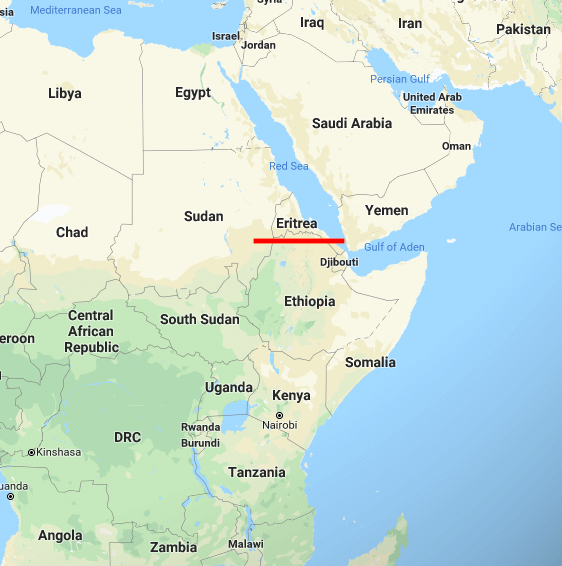
Hitler party which came into power in 1933 is known as- a)Labour Party
- b)Nazi Party
- c)Ku-Klux-Klan
- d)Democratic Party
Correct answer is option 'B'. Can you explain this answer?
Hitler party which came into power in 1933 is known as
a)
Labour Party
b)
Nazi Party
c)
Ku-Klux-Klan
d)
Democratic Party
| | Arshiya Mehta answered |
The votes that the Nazis received in the 1932 elections established the Nazi Party as the largest parliamentary faction of the Weimar Republic government. Hitler was appointed as Chancellor of Germany on 30 January 1933.
Gauhati High Court is the judicature of- a)Nagaland
- b)Arunachal Pradesh
- c)Assam
- d)All of the above
Correct answer is option 'D'. Can you explain this answer?
Gauhati High Court is the judicature of
a)
Nagaland
b)
Arunachal Pradesh
c)
Assam
d)
All of the above
| | Vikas Choudhury answered |
It was originally known as the High Court of Assam and Nagaland, but renamed as Gauhati High Court in 1971 by the North East Areas (Reorganisation) Act, 1971. It has largest jurisdiction in terms of states, with its area covering the states of Assam, Arunachal Pradesh, Nagaland, and Mizoram.
G-15 is an economic grouping of- a)First World Nations
- b)Second World Nations
- c)Third World Nations
- d)Fourth World Nations
Correct answer is option 'C'. Can you explain this answer?
G-15 is an economic grouping of
a)
First World Nations
b)
Second World Nations
c)
Third World Nations
d)
Fourth World Nations
 | Chirag Mukherjee answered |
The Group of 15 (G-15) is an informal forum set up to foster cooperation and provide input for other international groups, such as the World Trade Organization and the Group of Eight. It was established at the Ninth Non-Aligned Movement Summit Meeting in Belgrade, Yugoslavia, in September 1989, and is composed of countries from Latin America, Africa, and Asia with a common goal of enhanced growth and prosperity. The G-15 focuses on cooperation among developing countries in the areas of investment, trade, and technology. Membership has since expanded to 17 countries, but the name has remained unchanged. Chile, Iran and Kenya have since joined the Group of 15, whereas Yugoslavia is no longer part of the group; Peru, a founding member-state, decided to leave the G-15 in 2011.
In a normal human being, how much time does food take to reach the end of the intestine for complete absorption?- a)About 8 hours
- b)About 12 hours
- c)About 16 hours
- d)About 18 hours
Correct answer is option 'B'. Can you explain this answer?
In a normal human being, how much time does food take to reach the end of the intestine for complete absorption?
a)
About 8 hours
b)
About 12 hours
c)
About 16 hours
d)
About 18 hours
| | Vinod Mehta answered |
In a normal human being, food take about 12 hours to reach the end of the intestine for complete absorption. Food then enters your large intestine (colon) for further digestion, absorption of water and, finally, elimination of undigested food.
Entomology is the science that studies- a)Behavior of human beings
- b)Insects
- c)The origin and history of technical and scientific terms
- d)The formation of rocks
Correct answer is option 'B'. Can you explain this answer?
Entomology is the science that studies
a)
Behavior of human beings
b)
Insects
c)
The origin and history of technical and scientific terms
d)
The formation of rocks
| | Anaya Patel answered |
Entomology: The branch of zoology concerned with the study of insects.
For which of the following disciplines is Nobel Prize awarded?- a)Physics and Chemistry
- b)Physiology or Medicine
- c)Literature, Peace and Economics
- d)All of the above
Correct answer is option 'D'. Can you explain this answer?
For which of the following disciplines is Nobel Prize awarded?
a)
Physics and Chemistry
b)
Physiology or Medicine
c)
Literature, Peace and Economics
d)
All of the above
 | Shilpa Choudhary answered |
Since 1901, the Nobel Prize has been awarded in the fields of physics, chemistry, physiology or medicine, literature and peace, while a memorial prize in economic sciences was added in 1968.
For which of the following disciplines is Nobel Prize awarded?- a)Physics and Chemistry
- b)Physiology or Medicine
- c)Literature, Peace and Economics
- d)All of the above
Correct answer is option 'D'. Can you explain this answer?
For which of the following disciplines is Nobel Prize awarded?
a)
Physics and Chemistry
b)
Physiology or Medicine
c)
Literature, Peace and Economics
d)
All of the above
 | Nikita Singh answered |
Since 1901, the Nobel Prize has been awarded in the fields of
► Physics
► Chemistry
► Physiology
► Medicine
► Literature
► Peace
While a memorial prize in economic sciences was added in 1968.
► Physics
► Chemistry
► Physiology
► Medicine
► Literature
► Peace
While a memorial prize in economic sciences was added in 1968.
Epsom (England) is the place associated with- a)Horse racing
- b)Polo
- c)Shooting
- d)Snooker
Correct answer is option 'A'. Can you explain this answer?
Epsom (England) is the place associated with
a)
Horse racing
b)
Polo
c)
Shooting
d)
Snooker
 | Rajesh Khatri answered |
Epsom is a market town in Surrey, England, 13.6 miles (21.9 km) south south-west of London, located between Ashtead and Ewell. The town straddles chalk downland (Epsom Downs) and the upper Thanet Formation. Epsom Downs Racecourse holds The Derby, now a generic name for sports competitions in English-speaking countries.
When different parties share power to form a government, it is called?[2010, 2011 (T-1)]- a)Majoritarian
- b)Federal
- c)Community
- d)Coalition
Correct answer is option 'D'. Can you explain this answer?
When different parties share power to form a government, it is called?
[2010, 2011 (T-1)]
a)
Majoritarian
b)
Federal
c)
Community
d)
Coalition
 | Shaurya patil answered |
Coalition Government
A coalition government is formed when two or more political parties come together to share power and form a government. In a coalition government, no single party has a majority in the legislature, and therefore, they must work together to pass legislation and govern the country.
Advantages of Coalition Government
1. Representation of diverse groups: A coalition government represents a diverse range of political opinions and interests. This can lead to more inclusive policies that take into account the needs of different groups within society.
2. Stability: A coalition government is often more stable than a single-party government because it requires parties to work together to achieve common goals.
3. Compromise: Coalition governments require parties to compromise and work together to pass legislation. This can lead to more moderate policies that are supported by a larger segment of the population.
Disadvantages of Coalition Government
1. Conflict: Coalition governments can be prone to conflict between parties, which can lead to gridlock and an inability to pass legislation.
2. Lack of accountability: In a coalition government, it can be difficult to hold individual parties accountable for their actions and policies.
3. Weak leadership: When power is shared between multiple parties, it can be difficult to have strong and decisive leadership.
Conclusion
Coalition governments are a common form of government in many countries. They have both advantages and disadvantages, and their success depends on the ability of parties to work together and compromise to achieve common goals.
A coalition government is formed when two or more political parties come together to share power and form a government. In a coalition government, no single party has a majority in the legislature, and therefore, they must work together to pass legislation and govern the country.
Advantages of Coalition Government
1. Representation of diverse groups: A coalition government represents a diverse range of political opinions and interests. This can lead to more inclusive policies that take into account the needs of different groups within society.
2. Stability: A coalition government is often more stable than a single-party government because it requires parties to work together to achieve common goals.
3. Compromise: Coalition governments require parties to compromise and work together to pass legislation. This can lead to more moderate policies that are supported by a larger segment of the population.
Disadvantages of Coalition Government
1. Conflict: Coalition governments can be prone to conflict between parties, which can lead to gridlock and an inability to pass legislation.
2. Lack of accountability: In a coalition government, it can be difficult to hold individual parties accountable for their actions and policies.
3. Weak leadership: When power is shared between multiple parties, it can be difficult to have strong and decisive leadership.
Conclusion
Coalition governments are a common form of government in many countries. They have both advantages and disadvantages, and their success depends on the ability of parties to work together and compromise to achieve common goals.
Who was the first Indian Chief of Army Staff of the Indian Army ?- a)Gen. K.M. Cariappa
- b)Vice-Admiral R.D. Katari
- c)Gen. Maharaja Rajendra Sinhji
- d)None of the above
Correct answer is option 'A'. Can you explain this answer?
Who was the first Indian Chief of Army Staff of the Indian Army ?
a)
Gen. K.M. Cariappa
b)
Vice-Admiral R.D. Katari
c)
Gen. Maharaja Rajendra Sinhji
d)
None of the above
| | Suresh Khanna answered |
General Kodandera Madappa Cariappa was the first Indian Chief of Army Staff of the Indian Army. He took office on January 15, 1949, succeeding the last British Commander-in-Chief of India, General Sir Roy Bucher. General Cariappa was appointed to this position after India gained independence from British rule in 1947. He played a significant role in the integration of the Indian Army and the modernization of its forces. Cariappa served as the Chief of Army Staff until his retirement on January 14, 1953.
In cricket, a run taken when the ball passes the batsman without touching his bat or body is called- a)leg bye
- b)bye
- c)bosie
- d)drive
Correct answer is option 'B'. Can you explain this answer?
In cricket, a run taken when the ball passes the batsman without touching his bat or body is called
a)
leg bye
b)
bye
c)
bosie
d)
drive
| | Varun Kapoor answered |
In the sport of cricket, a bye is a run scored by the batting team when the ball has not been hit by the batsman and the ball has not hit the batsman's body.
FFC in India stands for- a)Foreign Finance Corporation
- b)Film Finance Corporation
- c)Federation of Football Council
- d)None of the above
Correct answer is option 'B'. Can you explain this answer?
FFC in India stands for
a)
Foreign Finance Corporation
b)
Film Finance Corporation
c)
Federation of Football Council
d)
None of the above
| | Varun Kapoor answered |
Full Faith and Credit Clause of the United States Constitution. Flood Forecasting Centre (UK) Film Finance Corporation Australia, a defunct agency of the Australian government. Federal Flood Commission, an agency of the Pakistani government.
FRS stands for- a)Fellow Research System
- b)Federation of Regulation Society
- c)Fellow of Royal Society
- d)None of the above
Correct answer is option 'C'. Can you explain this answer?
FRS stands for
a)
Fellow Research System
b)
Federation of Regulation Society
c)
Fellow of Royal Society
d)
None of the above
 | Samarth Choudhury answered |
Fellowship of the Royal Society is an award granted to individuals that the Royal Society of London judges to have made a 'substantial contribution to the improvement of natural knowledge, including mathematics, engineering science and medical science'.
Grand Central Terminal, Park Avenue, New York is the world's- a)largest railway station
- b)highest railway station
- c)longest railway station
- d)None of the above
Correct answer is option 'A'. Can you explain this answer?
Grand Central Terminal, Park Avenue, New York is the world's
a)
largest railway station
b)
highest railway station
c)
longest railway station
d)
None of the above
 | Swati Das answered |
GCT is the largest train station in the world in terms of area occupied and number of platforms. The terminal is spread over 49 acres and has 44 platforms.
Golden Temple, Amritsar is India's- a)largest Gurdwara
- b)oldest Gurudwara
- c)Both option A and B are correct
- d)None of the above
Correct answer is option 'A'. Can you explain this answer?
Golden Temple, Amritsar is India's
a)
largest Gurdwara
b)
oldest Gurudwara
c)
Both option A and B are correct
d)
None of the above
| | Sounak Khanna answered |
Gurudwara Sri Harmandir Sahib, Punjab (Golden Temple)
Gurudwara Sri Harmandir Sahib is most famous of all Gurudwaras of India and is located in Amritsar. The foundation of this Gurudwara was laid by Guru Arjan Singh, the 5th Guru of Sikhism, in 1588.
Famous sculptures depicting art of love built some time in 950 AD to 1050 AD area)Khajuraho templesb)Jama Masjidc)Sun templed)Mahabalipuram templesCorrect answer is option 'A'. Can you explain this answer?
| | Vikas Choudhury answered |
The Khajuraho Group of Monuments is a group of Hindu and Jain temples in Madhya Pradesh, India. They are one of the UNESCO World Heritage Sites in India. The temples are famous for their Nagara-style architectural symbolism and their erotic sculptures.
Most Khajuraho temples were built between 950 and 1050 CE by the Chandela dynasty. The Khajuraho group of temples were built together but were dedicated to two schools of Hinduism and to Jainism - suggesting a tradition of acceptance and respect for diverse religious views among Hindus and Jains.
Fastest shorthand writer was- a)Dr. G. D. Bist
- b)J.R.D. Tata
- c)J.M. Tagore
- d)Khudada Khan
Correct answer is option 'A'. Can you explain this answer?
Fastest shorthand writer was
a)
Dr. G. D. Bist
b)
J.R.D. Tata
c)
J.M. Tagore
d)
Khudada Khan
| | Varun Kapoor answered |
Dr. G. D. Bist, Guinness Record Holder, the first-ever Ph.D. in Stenography in the world.
He had achieved a highest speed of 250 w.p.m. in Shorthand.
G-15 is an economic grouping of- a)First World Nations
- b)Second World Nations
- c)Third World Nations
- d)Fourth World Nations
Correct answer is option 'C'. Can you explain this answer?
G-15 is an economic grouping of
a)
First World Nations
b)
Second World Nations
c)
Third World Nations
d)
Fourth World Nations
| | Varun Kapoor answered |
Act as a catalyst for greater cooperation between leading developing countries. The Group of 15 (G-15) is an informal forum set up to foster cooperation and provide input for other international groups, such as the World Trade Organization (WTO) and the Group of Seven.The G-15 focuses on cooperation among developing countries in the areas of investment, trade, and technology.
Each year World Red Cross and Red Crescent Day is celebrated on- a)May 8
- b)May 18
- c)June 8
- d)June 18
Correct answer is option 'A'. Can you explain this answer?
Each year World Red Cross and Red Crescent Day is celebrated on
a)
May 8
b)
May 18
c)
June 8
d)
June 18
| | Sanjay Rana answered |
World Red Cross and Red Crescent Day is an annual celebration of the principles of the International Red Cross and Red Crescent Movement. World Red Cross Red Crescent Day is celebrated on 8 May each year. This date is the anniversary of the birth of Henry Dunant (born 8 May 1828), the founder of International Committee of the Red Cross (ICRC) and the recipient of the first Nobel Peace Prize.
Heavy Water Project (Talcher) and Fertilizer plant (Paradeep) are famous industries of- a)Orissa
- b)Tamil nadu
- c)Andhra Pradesh
- d)Kerala
Correct answer is option 'A'. Can you explain this answer?
Heavy Water Project (Talcher) and Fertilizer plant (Paradeep) are famous industries of
a)
Orissa
b)
Tamil nadu
c)
Andhra Pradesh
d)
Kerala
 | Poonam Reddy answered |
Talcher Heavy Water Plant. Facility Status: Owned and operated by the DAE's Heavy Water Board (HWB), the Talcher Heavy Water Plant in Orissa state is linked to a fertilizer factory owned by the Fertilizer Corporation of India.
In which of the following pairs, the two substances forming the pair are chemically most dissimilar?- a)Sugar and paper
- b)Butter and paraffin wax
- c)Chalk and marble
- d)Charcoal and diamond
Correct answer is option 'B'. Can you explain this answer?
In which of the following pairs, the two substances forming the pair are chemically most dissimilar?
a)
Sugar and paper
b)
Butter and paraffin wax
c)
Chalk and marble
d)
Charcoal and diamond
| | Sanjay Rana answered |
In Butter and paraffin wax, the two substances forming the pair are chemically most dissimilar. Butter is an unsaturated compound or an olefin in contrast to wax which is a saturated compound. So butter will show more reactivity for reactants. As such, they show different chemical nature.
Friction can be reduced by changing from- a)sliding to rolling
- b)rolling to sliding
- c)potential energy to kinetic energy
- d)dynamic to static
Correct answer is option 'A'. Can you explain this answer?
Friction can be reduced by changing from
a)
sliding to rolling
b)
rolling to sliding
c)
potential energy to kinetic energy
d)
dynamic to static
| | Saanvi Mehta answered |
Reducing FrictionFriction is the force that opposes motion when two surfaces are in contact with each other. It can be reduced by changing certain factors. The following are the ways in which friction can be reduced:1. Sliding to RollingFriction can be reduced by changing the way the surfaces interact with each other. Sliding surfaces have a lot of friction because they are in direct contact with each other, which creates a lot of resistance. In contrast, rolling surfaces have less friction because they only touch at a few points, which reduces the amount of resistance. 2. Dynamic to StaticDynamic friction occurs when two surfaces are in motion relative to each other. This type of friction is higher than static friction, which occurs when two surfaces are not moving relative to each other. By changing from dynamic to static friction, the amount of resistance can be reduced.3. Potential Energy to Kinetic EnergyFriction can also be reduced by changing the type of energy that is being used. Potential energy is the energy that is stored in an object, while kinetic energy is the energy that is being used to move an object. By changing from potential to kinetic energy, the amount of friction can be reduced because the object is already in motion.ConclusionIn summary, friction can be reduced by changing the way surfaces interact with each other, changing the type of energy being used, and changing from dynamic to static friction. By reducing friction, we can increase efficiency and reduce wear and tear on surfaces.
Headquarters of UNO are situated at- a)New York, USA
- b)Hague (Netherlands)
- c)Geneva
- d)Paris
Correct answer is option 'A'. Can you explain this answer?
Headquarters of UNO are situated at
a)
New York, USA
b)
Hague (Netherlands)
c)
Geneva
d)
Paris
| | Anjali Kapoor answered |
The headquarters of the United Nations is a complex in New York City. The complex has served as the official headquarters of the United Nations since its completion in 1952. It is located in the Turtle Bay neighborhood of Manhattan, on spacious grounds overlooking the East River.
Durand Cup is associated with the game of- a)Cricket
- b)Football
- c)Hockey
- d)Volleyball
Correct answer is option 'B'. Can you explain this answer?
Durand Cup is associated with the game of
a)
Cricket
b)
Football
c)
Hockey
d)
Volleyball
| | Sravya Bose answered |
The Durand Cup is a prestigious football tournament of India and is the oldesttournament in Asia and 3rd oldest in the world after Football Association Cup of England and Scotland Football Association Cup.
First International Peace Congress was held in London in- a)1564 AD
- b)1798 AD
- c)1843 AD
- d)1901 AD
Correct answer is option 'C'. Can you explain this answer?
First International Peace Congress was held in London in
a)
1564 AD
b)
1798 AD
c)
1843 AD
d)
1901 AD
| | Akshara Chavan answered |
The First International Peace Congress was held in London in 1843 AD. It was an important event in the history of peace movements around the world. Here are some details about the Congress:
Background
- The Congress was organized by a group of pacifists who were concerned about the warlike tendencies of European nations.
- They wanted to promote the idea of peaceful coexistence and international cooperation.
Participants
- The Congress had delegates from various European countries, including France, Germany, Belgium, Italy, and Switzerland.
- Some of the notable participants were Victor Hugo, Giuseppe Mazzini, and Frédéric Passy.
Agenda
- The Congress discussed various issues related to peace, such as disarmament, arbitration, and the establishment of an international court of justice.
- The delegates also condemned war as a means of resolving conflicts and called for the promotion of education and culture as a way to foster peace.
Outcomes
- The Congress led to the formation of the first International Peace Association, which aimed to promote peace and disarmament around the world.
- The Congress also inspired other peace movements and organizations, such as the International Peace Bureau, which was founded in 1891.
Significance
- The First International Peace Congress was a landmark event in the history of peace movements.
- It reflected the growing awareness among people about the need for peaceful coexistence and the futility of war.
- The ideas and initiatives discussed at the Congress laid the foundation for future peace efforts and organizations.
Background
- The Congress was organized by a group of pacifists who were concerned about the warlike tendencies of European nations.
- They wanted to promote the idea of peaceful coexistence and international cooperation.
Participants
- The Congress had delegates from various European countries, including France, Germany, Belgium, Italy, and Switzerland.
- Some of the notable participants were Victor Hugo, Giuseppe Mazzini, and Frédéric Passy.
Agenda
- The Congress discussed various issues related to peace, such as disarmament, arbitration, and the establishment of an international court of justice.
- The delegates also condemned war as a means of resolving conflicts and called for the promotion of education and culture as a way to foster peace.
Outcomes
- The Congress led to the formation of the first International Peace Association, which aimed to promote peace and disarmament around the world.
- The Congress also inspired other peace movements and organizations, such as the International Peace Bureau, which was founded in 1891.
Significance
- The First International Peace Congress was a landmark event in the history of peace movements.
- It reflected the growing awareness among people about the need for peaceful coexistence and the futility of war.
- The ideas and initiatives discussed at the Congress laid the foundation for future peace efforts and organizations.
During the first crusade, crusaders reached Jerusalem and captured it in- a)1000 AD
- b)1099 AD
- c)1200 AD
- d)1515 AD
Correct answer is option 'B'. Can you explain this answer?
During the first crusade, crusaders reached Jerusalem and captured it in
a)
1000 AD
b)
1099 AD
c)
1200 AD
d)
1515 AD
| | Poulomi Nair answered |
The First Crusade and the Capture of Jerusalem
The First Crusade was launched in 1096 by Pope Urban II with the aim of retaking the Holy Land from the Muslim forces who had controlled it for centuries. After several years of fighting, the crusaders finally reached Jerusalem in 1099.
Capture of Jerusalem
The crusaders laid siege to the city for several weeks before finally breaching the walls and entering the city. They engaged in a brutal massacre of the Muslim and Jewish inhabitants, killing men, women, and children indiscriminately.
The Christian soldiers then established a new government in the city, with Godfrey of Bouillon as its first ruler. They also began the construction of new churches and other Christian monuments, including the Church of the Holy Sepulchre.
Impact of the Capture
The capture of Jerusalem was a significant moment in the history of the Crusades and of Christianity. It marked the first time in centuries that the city had been under Christian control, and it established a foothold for future crusader campaigns in the region.
However, the capture of Jerusalem also had significant consequences for the Muslim world. It was seen as a grave insult and a violation of their religious and cultural heritage, and it helped to fuel centuries of conflict between Christians and Muslims in the region.
Conclusion
In conclusion, the first crusade was launched in 1096, and after several years of fighting, the crusaders finally reached Jerusalem in 1099. They captured the city after a brutal siege and massacre, establishing a new Christian government and beginning the construction of new Christian monuments. The capture of Jerusalem had significant consequences for both Christians and Muslims and helped to shape the course of history in the region for centuries to come.
The First Crusade was launched in 1096 by Pope Urban II with the aim of retaking the Holy Land from the Muslim forces who had controlled it for centuries. After several years of fighting, the crusaders finally reached Jerusalem in 1099.
Capture of Jerusalem
The crusaders laid siege to the city for several weeks before finally breaching the walls and entering the city. They engaged in a brutal massacre of the Muslim and Jewish inhabitants, killing men, women, and children indiscriminately.
The Christian soldiers then established a new government in the city, with Godfrey of Bouillon as its first ruler. They also began the construction of new churches and other Christian monuments, including the Church of the Holy Sepulchre.
Impact of the Capture
The capture of Jerusalem was a significant moment in the history of the Crusades and of Christianity. It marked the first time in centuries that the city had been under Christian control, and it established a foothold for future crusader campaigns in the region.
However, the capture of Jerusalem also had significant consequences for the Muslim world. It was seen as a grave insult and a violation of their religious and cultural heritage, and it helped to fuel centuries of conflict between Christians and Muslims in the region.
Conclusion
In conclusion, the first crusade was launched in 1096, and after several years of fighting, the crusaders finally reached Jerusalem in 1099. They captured the city after a brutal siege and massacre, establishing a new Christian government and beginning the construction of new Christian monuments. The capture of Jerusalem had significant consequences for both Christians and Muslims and helped to shape the course of history in the region for centuries to come.

Lal Bahadur Shastri is also known as- a)Lalaji
- b)Man of Peace
- c)Nehru ji
- d)None of these
Correct answer is option 'B'. Can you explain this answer?
Lal Bahadur Shastri is also known as
a)
Lalaji
b)
Man of Peace
c)
Nehru ji
d)
None of these
| | Gauri Menon answered |
Lal Bahadur Shastri was the second Prime Minister of India, who served from 1964 to 1966. He was a prominent leader of the Indian National Congress and played a significant role in the country's struggle for independence. He was known for his simplicity, honesty, and commitment to the welfare of the people.
Man of Peace:
Lal Bahadur Shastri is known as the "Man of Peace" because of his efforts to promote peace and harmony among different communities and nations. He was a strong advocate of non-violence and believed in resolving conflicts through peaceful means. He was deeply inspired by the teachings of Mahatma Gandhi and worked tirelessly to promote his principles of non-violence and truth.
Contribution to India:
Lal Bahadur Shastri played a significant role in India's development and progress. During his tenure as the Prime Minister, he implemented several policies and programs that aimed to uplift the poor and marginalized sections of the society. He introduced the famous slogan "Jai Jawan Jai Kisan" which means "Hail the Soldier, Hail the Farmer" to encourage the people to work towards the betterment of the country.
Shastri was also responsible for the Green Revolution, which aimed to increase agricultural production and improve food security in the country. He introduced several measures to boost agricultural productivity, including the use of high-yielding seeds, fertilizers, and irrigation facilities. As a result, India became self-sufficient in food production and was able to feed its growing population.
Conclusion:
Lal Bahadur Shastri was a great leader and a true patriot who dedicated his entire life to the service of the nation. His contributions to India's progress and development will always be remembered, and he will continue to inspire generations to come.
Man of Peace:
Lal Bahadur Shastri is known as the "Man of Peace" because of his efforts to promote peace and harmony among different communities and nations. He was a strong advocate of non-violence and believed in resolving conflicts through peaceful means. He was deeply inspired by the teachings of Mahatma Gandhi and worked tirelessly to promote his principles of non-violence and truth.
Contribution to India:
Lal Bahadur Shastri played a significant role in India's development and progress. During his tenure as the Prime Minister, he implemented several policies and programs that aimed to uplift the poor and marginalized sections of the society. He introduced the famous slogan "Jai Jawan Jai Kisan" which means "Hail the Soldier, Hail the Farmer" to encourage the people to work towards the betterment of the country.
Shastri was also responsible for the Green Revolution, which aimed to increase agricultural production and improve food security in the country. He introduced several measures to boost agricultural productivity, including the use of high-yielding seeds, fertilizers, and irrigation facilities. As a result, India became self-sufficient in food production and was able to feed its growing population.
Conclusion:
Lal Bahadur Shastri was a great leader and a true patriot who dedicated his entire life to the service of the nation. His contributions to India's progress and development will always be remembered, and he will continue to inspire generations to come.
Garampani sanctuary is located at- a)Junagarh, Gujarat
- b)Diphu, Assam
- c)Kohima, Nagaland
- d)Gangtok, Sikkim
Correct answer is option 'B'. Can you explain this answer?
Garampani sanctuary is located at
a)
Junagarh, Gujarat
b)
Diphu, Assam
c)
Kohima, Nagaland
d)
Gangtok, Sikkim
| | Arshiya Mehta answered |
Garampani Wildlife Sanctuary is a 6.05-square-kilometre (2.34 sq mi) wildlife sanctuary located in Karbi Anglong district, Assam, India. It is 25 km (16 mi) from Golaghat. It is one of the oldest sanctuaries containing hot water spring and waterfalls and surrounded by Nambor Sanctuary having 51 rare species of orchid.
The nearest Airport Dimapur is 55 km and Jorhat Airport is 85 km away. The road distances from nearest Towns : from Golaghat is 35 km, from Diphu is 92 km, from Guwahati is 330 km and Kaziranga is 45 km away. The best time to visit is November to April.
Mother Teresa received the Magsaysay Award in 1962 in the area of- a)Community leadership
- b)public service
- c)journalism and literature
- d)international understanding
Correct answer is option 'D'. Can you explain this answer?
Mother Teresa received the Magsaysay Award in 1962 in the area of
a)
Community leadership
b)
public service
c)
journalism and literature
d)
international understanding
 | Ujwal Sengupta answered |
Mother Teresa received the Magsaysay Award in 1962 in the area of international understanding.
Explanation:
The Magsaysay Award is an annual award established in 1957 by the trustees of the Rockefeller Brothers Fund based in New York City. The award is named after Ramon Magsaysay, the seventh President of the Philippines who died in a plane crash in 1957. The award is given to individuals and organizations in Asia who have achieved excellence in their respective fields and have made significant contributions to society.
Mother Teresa, also known as Saint Teresa of Calcutta, was a Catholic nun who dedicated her life to serving the poor, sick, and dying in the slums of Kolkata, India. She founded the Missionaries of Charity, a religious congregation dedicated to the care of the sick and the destitute.
In 1962, Mother Teresa was awarded the Magsaysay Award in the area of international understanding for her selfless service to humanity. The citation of the award read, "For her unselfish work for the poorest of the poor in India, and her devotion to the principle of non-violence."
Mother Teresa went on to receive many other awards and honors, including the Nobel Peace Prize in 1979, for her humanitarian work. She is remembered as one of the most iconic figures of the 20th century, who inspired millions of people around the world with her message of love and compassion.
Explanation:
The Magsaysay Award is an annual award established in 1957 by the trustees of the Rockefeller Brothers Fund based in New York City. The award is named after Ramon Magsaysay, the seventh President of the Philippines who died in a plane crash in 1957. The award is given to individuals and organizations in Asia who have achieved excellence in their respective fields and have made significant contributions to society.
Mother Teresa, also known as Saint Teresa of Calcutta, was a Catholic nun who dedicated her life to serving the poor, sick, and dying in the slums of Kolkata, India. She founded the Missionaries of Charity, a religious congregation dedicated to the care of the sick and the destitute.
In 1962, Mother Teresa was awarded the Magsaysay Award in the area of international understanding for her selfless service to humanity. The citation of the award read, "For her unselfish work for the poorest of the poor in India, and her devotion to the principle of non-violence."
Mother Teresa went on to receive many other awards and honors, including the Nobel Peace Prize in 1979, for her humanitarian work. She is remembered as one of the most iconic figures of the 20th century, who inspired millions of people around the world with her message of love and compassion.
First China War was fought between- a)China and Britain
- b)China and France
- c)China and Egypt
- d)China and Greek
Correct answer is option 'A'. Can you explain this answer?
First China War was fought between
a)
China and Britain
b)
China and France
c)
China and Egypt
d)
China and Greek
| | Vikas Choudhury answered |
Anglo-Chinese War, the First Opium War was fought between the Chinese Qing Dynasty and the British. The war lasted for three years, beginning in 1839 and ending in 1842. It was a war that began due to the trading environment between the two countries and resulted with Britain gaining control over the island of Hong Kong.
Escape velocity of a rocket fired from the earth towards the moon is a velocity to get rid of the- a)Earth's gravitational pull
- b)Moon's gravitational pull
- c)Centripetal force due to the earth's rotation
- d)Pressure of the atmosphere
Correct answer is option 'A'. Can you explain this answer?
Escape velocity of a rocket fired from the earth towards the moon is a velocity to get rid of the
a)
Earth's gravitational pull
b)
Moon's gravitational pull
c)
Centripetal force due to the earth's rotation
d)
Pressure of the atmosphere
| | Kaavya Basak answered |
It is due to earth's gravitational field .
it is the min. velocity required for an object atbearth's surface so that it just escapes the earth's gravitational field.
- Escape velocity at earth surface=11.2km/sec.
it is the min. velocity required for an object atbearth's surface so that it just escapes the earth's gravitational field.
- Escape velocity at earth surface=11.2km/sec.
The study of Ancient societies is called- a)Anthropology
- b)History
- c)Archaeology
- d)Enthnology
- e)None of these
Correct answer is option 'C'. Can you explain this answer?
The study of Ancient societies is called
a)
Anthropology
b)
History
c)
Archaeology
d)
Enthnology
e)
None of these
| | Anshul Ghosh answered |
Archaeology is the science which studies ancient societies based on their material remains. Through the analysis of objects and those works constructed by ancient peoples, this science can arrive at conclusions about their culture and their ways of life.
Gravity settling chambers are used in industries to removea)SOxb)NOxc)suspended particulate matterd)COCorrect answer is option 'C'. Can you explain this answer?
| | Aruna Singh answered |
Since particles are suspended at a height, a combination of gravity of earth and artificial gravity of the chamber helps to get the particles down on an surface which will then be cleaned and thus getting rid of the particulate matter.
In which of the following organs of human body does maximum absorption of food take place?- a)Gullet
- b)Large intestine
- c)Small intestine
- d)Stomach
Correct answer is option 'C'. Can you explain this answer?
In which of the following organs of human body does maximum absorption of food take place?
a)
Gullet
b)
Large intestine
c)
Small intestine
d)
Stomach
| | VARTIKA AGNIHOTRI answered |
Small intestine(90%food absorption) because of capillaries present in villi(present in small intestine) which increase the surface area for absorption.
DRDL stands for- a)Defence Research and Development Laboratary
- b)Department of Research and Development Laboratory
- c)Differential Research and Documentation Laboratary
- d)None of the above
Correct answer is option 'A'. Can you explain this answer?
DRDL stands for
a)
Defence Research and Development Laboratary
b)
Department of Research and Development Laboratory
c)
Differential Research and Documentation Laboratary
d)
None of the above
| | Ishani Khanna answered |
Defence Research and Development Laboratory (DRDL) is a Missile System laboratory - under the Defence Research and Development Organisation - with thrust on design, development and flight evaluation of various types of Missile Systems for the Indian armed forces.
In which year of First World War Germany declared war on Russia and France?- a)1914
- b)1915
- c)1916
- d)1917
Correct answer is option 'A'. Can you explain this answer?
In which year of First World War Germany declared war on Russia and France?
a)
1914
b)
1915
c)
1916
d)
1917
 | Kaushal Agrawal answered |
August 12, 1914 - Great Britain and France declare war on Austria-Hungary. Serbia is invaded by Austria-Hungary. August 17, 1914 - Russia invades Germany, attacking into East Prussia, forcing the outnumbered Germans there to fall back.
Habeas Corpus Act 1679- a)states that no one was to be imprisoned without a writ or warrant stating the charge against him
- b)provided facilities to a prisoner to obtain either speedy trial or release in bail
- c)safeguarded the personal liberties of the people against arbitrary imprisonment by the king's orders
- d)All of the above
Correct answer is option 'D'. Can you explain this answer?
Habeas Corpus Act 1679
a)
states that no one was to be imprisoned without a writ or warrant stating the charge against him
b)
provided facilities to a prisoner to obtain either speedy trial or release in bail
c)
safeguarded the personal liberties of the people against arbitrary imprisonment by the king's orders
d)
All of the above
| | Vikas Choudhury answered |
The Habeas Corpus Act 1679 is an Act of Parliament in England (31 Cha. 2 c. 2) during the reign of King Charles II. It was passed by what became known as the Habeas Corpus Parliament to define and strengthen the ancient prerogative writ of habeas corpus, which required a court to examine the lawfulness of a prisoner's detention and thus prevent unlawful or arbitrary imprisonment.
Federation Cup, World Cup, Allywyn International Trophy and Challenge Cup are awarded to winners of- a)Tennis
- b)Volleyball
- c)Basketball
- d)Cricket
Correct answer is option 'B'. Can you explain this answer?
Federation Cup, World Cup, Allywyn International Trophy and Challenge Cup are awarded to winners of
a)
Tennis
b)
Volleyball
c)
Basketball
d)
Cricket
| | Rajesh Khatri answered |
Federation Cup, World Cup, Allywyn International Trophy and Challenge Cup are awarded to winners of Volleyball .
Volleyball is playd with 6 team member for each.
It was first played on 1964 in the Olympics.
During eleventh Antarctic Expedition in Nov. 1991/March 1992 ____ was installed.- a)SODAR (SOnic Detection And Ranging)
- b)Second Permanent Station 'Maitree'
- c)First permanent station 'Dakshin Gangotri'
- d)None of the above
Correct answer is option 'A'. Can you explain this answer?
During eleventh Antarctic Expedition in Nov. 1991/March 1992 ____ was installed.
a)
SODAR (SOnic Detection And Ranging)
b)
Second Permanent Station 'Maitree'
c)
First permanent station 'Dakshin Gangotri'
d)
None of the above
| | Aruna Singh answered |
SODAR (Sonic Detection And Ranging), also written as sodar, is a meteorological instrument also known as a wind profiler which measures the scattering of sound waves by atmospheric turbulence.
Lime is sometimes applied to soil in order to- a)increase the alkalinity of the soil
- b)increase the acidity of the soil
- c)restore nitrates to the soil
- d)make the soil more porous
Correct answer is option 'A'. Can you explain this answer?
Lime is sometimes applied to soil in order to
a)
increase the alkalinity of the soil
b)
increase the acidity of the soil
c)
restore nitrates to the soil
d)
make the soil more porous
| | Vaishnavi Choudhary answered |
Why is lime applied to soil?
Lime is a soil amendment that is often used to improve soil quality and promote healthy plant growth. The application of lime to soil can provide a variety of benefits, including:
1. Increasing soil pH: Lime is a basic substance that can help to increase the pH of acidic soils. This is important because many plants prefer a slightly alkaline soil environment, with a pH between 6.0 and 7.5. By raising the pH of the soil, lime can make it more hospitable to a wider range of plants.
2. Reducing soil acidity: In addition to raising the pH of acidic soils, lime can also help to reduce the overall acidity of the soil. This can help to prevent the leaching of essential nutrients, such as calcium and magnesium, from the soil.
3. Improving nutrient availability: Lime can help to unlock essential nutrients in the soil, making them more available to plants. This is because many nutrients, such as nitrogen and phosphorus, are only soluble in slightly acidic to neutral soil environments.
4. Enhancing soil structure: Lime can help to improve the structure of soil by increasing its porosity and reducing compaction. This can improve drainage and aeration, leading to healthier root growth and better overall plant performance.
5. Controlling soil-borne diseases: Lime has been shown to have a suppressive effect on certain soil-borne diseases, such as clubroot and Fusarium wilt. This can help to reduce the incidence of these diseases and improve overall plant health.
In summary, lime is applied to soil in order to increase the alkalinity of the soil and provide a variety of other benefits, including improving nutrient availability, enhancing soil structure, and controlling soil-borne diseases.
Lime is a soil amendment that is often used to improve soil quality and promote healthy plant growth. The application of lime to soil can provide a variety of benefits, including:
1. Increasing soil pH: Lime is a basic substance that can help to increase the pH of acidic soils. This is important because many plants prefer a slightly alkaline soil environment, with a pH between 6.0 and 7.5. By raising the pH of the soil, lime can make it more hospitable to a wider range of plants.
2. Reducing soil acidity: In addition to raising the pH of acidic soils, lime can also help to reduce the overall acidity of the soil. This can help to prevent the leaching of essential nutrients, such as calcium and magnesium, from the soil.
3. Improving nutrient availability: Lime can help to unlock essential nutrients in the soil, making them more available to plants. This is because many nutrients, such as nitrogen and phosphorus, are only soluble in slightly acidic to neutral soil environments.
4. Enhancing soil structure: Lime can help to improve the structure of soil by increasing its porosity and reducing compaction. This can improve drainage and aeration, leading to healthier root growth and better overall plant performance.
5. Controlling soil-borne diseases: Lime has been shown to have a suppressive effect on certain soil-borne diseases, such as clubroot and Fusarium wilt. This can help to reduce the incidence of these diseases and improve overall plant health.
In summary, lime is applied to soil in order to increase the alkalinity of the soil and provide a variety of other benefits, including improving nutrient availability, enhancing soil structure, and controlling soil-borne diseases.
Kiran Bedi received Magsaysay Award for government service in- a)1992
- b)1993
- c)1994
- d)1995
Correct answer is option 'C'. Can you explain this answer?
Kiran Bedi received Magsaysay Award for government service in
a)
1992
b)
1993
c)
1994
d)
1995
| | Juhi Patel answered |
Kiran Bedi received the Magsaysay Award for government service in 1994.
Explanation:
The Ramon Magsaysay Award is an annual award given to individuals or organizations in Asia who manifest the same selfless service and transformative influence that distinguished the late Philippine President Ramon Magsaysay. Kiran Bedi received the award in the government service category in 1994 for her contributions to the Indian police service.
Some of her notable achievements that led to her receiving the award include:
- Introduction of various innovative measures to improve the functioning of the Tihar Jail in Delhi, including yoga and meditation programs for inmates.
- Initiating community policing programs to bridge the gap between the police and the public.
- Leading the United Nations police contingent in Kosovo to help establish law and order in the war-torn region.
Overall, Kiran Bedi's dedication and innovative approach to public service made her a deserving recipient of the Magsaysay Award in 1994.
Explanation:
The Ramon Magsaysay Award is an annual award given to individuals or organizations in Asia who manifest the same selfless service and transformative influence that distinguished the late Philippine President Ramon Magsaysay. Kiran Bedi received the award in the government service category in 1994 for her contributions to the Indian police service.
Some of her notable achievements that led to her receiving the award include:
- Introduction of various innovative measures to improve the functioning of the Tihar Jail in Delhi, including yoga and meditation programs for inmates.
- Initiating community policing programs to bridge the gap between the police and the public.
- Leading the United Nations police contingent in Kosovo to help establish law and order in the war-torn region.
Overall, Kiran Bedi's dedication and innovative approach to public service made her a deserving recipient of the Magsaysay Award in 1994.
Film and TV institute of India is located at- a)Pune (Maharashtra)
- b)Rajkot (Gujarat)
- c)Pimpri (Maharashtra)
- d)Perambur (Tamilnadu)
Correct answer is option 'A'. Can you explain this answer?
Film and TV institute of India is located at
a)
Pune (Maharashtra)
b)
Rajkot (Gujarat)
c)
Pimpri (Maharashtra)
d)
Perambur (Tamilnadu)
| | Sneha Kumar answered |
The Film and Television Institute of India (FTII) is an autonomous institute under the Ministry of Information and Broadcasting of the Government of India and aided by the Central Government of India. It is situated on the premises of the erstwhile Prabhat Film Company in Pune.
India's first Technicolor film ____ in the early 1950s was produced by ____- a)'Jhansi Ki Rani', Sohrab Modi
- b)'Jhansi Ki Rani', Sir Syed Ahmed
- c)'Mirza Ghalib', Sohrab Modi
- d)'Mirza Ghalib', Munshi Premchand
Correct answer is option 'A'. Can you explain this answer?
India's first Technicolor film ____ in the early 1950s was produced by ____
a)
'Jhansi Ki Rani', Sohrab Modi
b)
'Jhansi Ki Rani', Sir Syed Ahmed
c)
'Mirza Ghalib', Sohrab Modi
d)
'Mirza Ghalib', Munshi Premchand
| | Shanaya Bajaj answered |
The opening credits of Sohrab Modi’s 1953 film Jhansi Ki Ranifeatures one other accreditation in three languages—the phrase “Color by Technicolor”. It is ironic that despite that unassailable claim to fame (as one of the first technicolor films in India), only a B/W pan-and-scan version of the film survives. Starring Mehtab as the titular queen, and Modi as her mentor Rajguru, the film covers several of the signposts historically associated with the feisty architect of a valiant military campaign against the British in 1858.
Guarantee to an exporter that the importer of his goods will pay immediately for the goods ordered by him, is known as- a)Letter of Credit (L/C)
- b)laissezfaire
- c)inflation
- d)None of the above
Correct answer is option 'A'. Can you explain this answer?
Guarantee to an exporter that the importer of his goods will pay immediately for the goods ordered by him, is known as
a)
Letter of Credit (L/C)
b)
laissezfaire
c)
inflation
d)
None of the above
| | Vikas Choudhury answered |
In modern business practice, a letter of credit is a written undertaking from a bank to pay a beneficiary against the delivery of a specified set of documents.
Chapter doubts & questions for Basic General Knowledge - General Knowledge 2026 is part of SSC CHSL exam preparation. The chapters have been prepared according to the SSC CHSL exam syllabus. The Chapter doubts & questions, notes, tests & MCQs are made for SSC CHSL 2026 Exam. Find important definitions, questions, notes, meanings, examples, exercises, MCQs and online tests here.
Chapter doubts & questions of Basic General Knowledge - General Knowledge in English & Hindi are available as part of SSC CHSL exam. Download more important topics, notes, lectures and mock test series for SSC CHSL Exam by signing up for free.
General Knowledge152 videos|263 tests |
