


All Exams > Electrical Engineering (EE) > 6 Months Preparation for GATE Electrical > All Questions
All questions of Power System Stability for Electrical Engineering (EE) Exam


Which is the conventional source of energy?- a)Solar
- b)Radio-active substances
- c)Geothermal
- d)Wind
Correct answer is option 'B'. Can you explain this answer?
Which is the conventional source of energy?
a)
Solar
b)
Radio-active substances
c)
Geothermal
d)
Wind
 | Juhi Joshi answered |
Conventional source of energy are: Water, Coal, Gas, radioactive substances. Non-conventional source of energy are: Wind, Solar energy, Geothermal.
In which part of the thermal power plant, the steam pressure is less than that of atmosphere?- a)Boiler
- b)Turbine
- c)Superheater
- d)Condenser
Correct answer is option 'D'. Can you explain this answer?
In which part of the thermal power plant, the steam pressure is less than that of atmosphere?
a)
Boiler
b)
Turbine
c)
Superheater
d)
Condenser
 | Zoya Sharma answered |
Condenser in a steam power plant has lowest operating pressure.
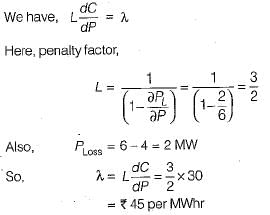
A generator is supplying a load. An incremental change in load of 4 MW requires generation to be increased by 6 MW. The cost at plant bus is ₹ 30/MWhr. The incremental cost at the receiving end is- a)₹ 30/MWhr
- b)₹ 5/MWhr
- c)₹ 33.4/MWhr
- d)₹ 6.0/MWhr
Correct answer is option 'B'. Can you explain this answer?
A generator is supplying a load. An incremental change in load of 4 MW requires generation to be increased by 6 MW. The cost at plant bus is ₹ 30/MWhr. The incremental cost at the receiving end is
a)
₹ 30/MWhr
b)
₹ 5/MWhr
c)
₹ 33.4/MWhr
d)
₹ 6.0/MWhr
 | Raj Desai answered |
The power output from a hydro-electric power plant doesn’t depend on- a)discharge
- b)head
- c)type of turbine
- d)system efficiency
Correct answer is option 'C'. Can you explain this answer?
The power output from a hydro-electric power plant doesn’t depend on
a)
discharge
b)
head
c)
type of turbine
d)
system efficiency
 | Sanskriti Desai answered |
Power output of a hydroelectric plant
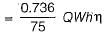
Here,
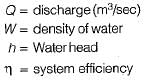
Here,
In case of HVDC system, there is- a)both skin effect and corona loss
- b)skin effect but no corona loss
- c)corona loss but no skin effect
- d)neither corona loss nor skin effect
Correct answer is option 'C'. Can you explain this answer?
In case of HVDC system, there is
a)
both skin effect and corona loss
b)
skin effect but no corona loss
c)
corona loss but no skin effect
d)
neither corona loss nor skin effect
 | Lakshmi Desai answered |
Corona loss and skin effect are two important phenomena that occur in high voltage direct current (HVDC) systems. The correct answer to the question is option 'C', which states that there is corona loss but no skin effect in a HVDC system. Let's explain this answer in detail:
1. Corona Loss:
- Corona loss is the power loss that occurs due to the ionization of the surrounding air around the conductors in a high voltage system.
- In HVDC systems, the voltage levels are very high, which increases the likelihood of corona discharge.
- When the electric field intensity exceeds a certain threshold, the air molecules around the conductor break down and become ionized, resulting in a corona discharge.
- This corona discharge leads to power loss and can cause interference with communication systems.
- Corona loss is more significant in AC systems compared to DC systems because the polarity reversal in AC systems helps in the recovery of the ionized air molecules.
- However, in HVDC systems, the polarity remains constant, which leads to a continuous corona loss.
2. Skin Effect:
- Skin effect is the tendency of alternating current (AC) to flow near the surface of a conductor, causing the effective cross-sectional area available for current flow to decrease.
- Skin effect occurs due to the self-induced magnetic field generated by the current flowing through the conductor.
- The magnetic field repels the current from the center of the conductor, causing it to concentrate near the surface.
- Skin effect is significant in AC systems, where the current alternates direction periodically.
- In DC systems, the current flows in one direction, and there is no significant skin effect.
Therefore, in the case of HVDC systems:
- There is corona loss because of the high voltage levels and continuous polarity, which leads to corona discharge and power loss.
- There is no skin effect because the DC current flows in one direction, and there is no significant alternating magnetic field that causes the current to concentrate near the surface of the conductor.
Hence, option 'C' is the correct answer, which states that there is corona loss but no skin effect in HVDC systems.
1. Corona Loss:
- Corona loss is the power loss that occurs due to the ionization of the surrounding air around the conductors in a high voltage system.
- In HVDC systems, the voltage levels are very high, which increases the likelihood of corona discharge.
- When the electric field intensity exceeds a certain threshold, the air molecules around the conductor break down and become ionized, resulting in a corona discharge.
- This corona discharge leads to power loss and can cause interference with communication systems.
- Corona loss is more significant in AC systems compared to DC systems because the polarity reversal in AC systems helps in the recovery of the ionized air molecules.
- However, in HVDC systems, the polarity remains constant, which leads to a continuous corona loss.
2. Skin Effect:
- Skin effect is the tendency of alternating current (AC) to flow near the surface of a conductor, causing the effective cross-sectional area available for current flow to decrease.
- Skin effect occurs due to the self-induced magnetic field generated by the current flowing through the conductor.
- The magnetic field repels the current from the center of the conductor, causing it to concentrate near the surface.
- Skin effect is significant in AC systems, where the current alternates direction periodically.
- In DC systems, the current flows in one direction, and there is no significant skin effect.
Therefore, in the case of HVDC systems:
- There is corona loss because of the high voltage levels and continuous polarity, which leads to corona discharge and power loss.
- There is no skin effect because the DC current flows in one direction, and there is no significant alternating magnetic field that causes the current to concentrate near the surface of the conductor.
Hence, option 'C' is the correct answer, which states that there is corona loss but no skin effect in HVDC systems.
The critical clearing angle of a power system is related to- a)reactive power limit
- b)short circuit limit
- c)steady state stability limit
- d)transient stability limit
Correct answer is option 'D'. Can you explain this answer?
The critical clearing angle of a power system is related to
a)
reactive power limit
b)
short circuit limit
c)
steady state stability limit
d)
transient stability limit
| | Kunal Sharma answered |
tcr and δcr are related to transient stability limit. The fault in a power system must be cleared before δ reaches δcr and before tcr.
If the initial acceleration power of a 100 MVA, 50 Hz synchronous generator having H= 5 MJ/MVA is Xpu, the initial acceleration in elec-deg/s2 and the inertia constant in M J-s/ele-deg respectively will be - a)31.4X, 18
- b)1800X, 0.056
- c)X/1800, 0.056
- d)X/31.4, 18
Correct answer is option 'B'. Can you explain this answer?
If the initial acceleration power of a 100 MVA, 50 Hz synchronous generator having H= 5 MJ/MVA is Xpu, the initial acceleration in elec-deg/s2 and the inertia constant in M J-s/ele-deg respectively will be
a)
31.4X, 18
b)
1800X, 0.056
c)
X/1800, 0.056
d)
X/31.4, 18
| | Maulik Choudhury answered |
From swing equation,
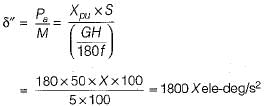
Also, inertia constant,
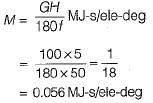
Also, inertia constant,
When generating units are loaded to equal incremental costs, it results in- a)minimum fuel costs
- b)fuel costs are at a maximum
- c)fuel costs are not affected
- d)maximum loading of generating units
Correct answer is option 'A'. Can you explain this answer?
When generating units are loaded to equal incremental costs, it results in
a)
minimum fuel costs
b)
fuel costs are at a maximum
c)
fuel costs are not affected
d)
maximum loading of generating units
| | Parth Ghoshal answered |
To minimize the total fuel cost, the generating units must operate at equal incremental cost of production.
HVDC transmission is preferred to EHV AC because- a)HVDC terminal equipment are inexpensive
- b)VAR compensation is not required in HVDC system
- c)system reliability can be improved
- d)harmonic problem is avoided
Correct answer is option 'C'. Can you explain this answer?
HVDC transmission is preferred to EHV AC because
a)
HVDC terminal equipment are inexpensive
b)
VAR compensation is not required in HVDC system
c)
system reliability can be improved
d)
harmonic problem is avoided
 | Hrishikesh Yadav answered |
HVDC transmission is more reliable than EHV AC because it uses ground or sea return and therefore, in case of fault on a line it can still be used to supply power with the help of healthy lines.
Fast acting excitation systems- a)improve transient stability.
- b)improve steady state stability.
- c)both (a) and (b).
- d)have no effect on stability of the system.
Correct answer is option 'A'. Can you explain this answer?
Fast acting excitation systems
a)
improve transient stability.
b)
improve steady state stability.
c)
both (a) and (b).
d)
have no effect on stability of the system.
| | Shivam Das answered |
Fast field excitation system is one of the method to improve transient stability of the system.
Bundled conductors in a transmission line will- a)reduce line loading.
- b)improve steady state stability.
- c)improve protection of line.
- d)reduce voltage of buses at the two ends.
Correct answer is option 'B'. Can you explain this answer?
Bundled conductors in a transmission line will
a)
reduce line loading.
b)
improve steady state stability.
c)
improve protection of line.
d)
reduce voltage of buses at the two ends.
 | Ritika Sarkar answered |
Bundled conductors increases self GMD due to which the series inductive reactance is reduced as a result of which power transferred from sending end to the receiving end is increased. Hence, it improves the steady state stability of the system.
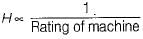
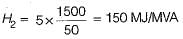
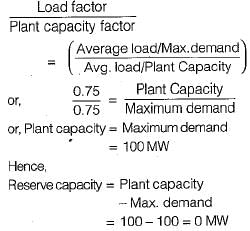
A 500-MVA synchronous machine has H1 = 4.6 MJ/MVA, and a 1500 MVA machine has H2 = 3.0 MJ/MVA. The two machines operate in parallel in a power station. The equivalent H constant for the two, relative to a 100 MVA base will be- a)22 MJ/MVA
- b)45 MJ/MVA
- c)52 MJ/MVA
- d)68 MJ/MVA
Correct answer is option 'D'. Can you explain this answer?
A 500-MVA synchronous machine has H1 = 4.6 MJ/MVA, and a 1500 MVA machine has H2 = 3.0 MJ/MVA. The two machines operate in parallel in a power station. The equivalent H constant for the two, relative to a 100 MVA base will be
a)
22 MJ/MVA
b)
45 MJ/MVA
c)
52 MJ/MVA
d)
68 MJ/MVA
| | Anoushka Choudhury answered |
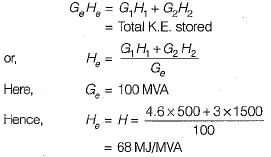
We know that,
If the inertia constant H = 9.0 MJ/MVA for a 50 MVA generator, the stored energy is- a)9.0 MJ
- b)125 MJ
- c)450 MJ
- d)5.55 MJ
Correct answer is option 'C'. Can you explain this answer?
If the inertia constant H = 9.0 MJ/MVA for a 50 MVA generator, the stored energy is
a)
9.0 MJ
b)
125 MJ
c)
450 MJ
d)
5.55 MJ
| | Ameya Gupta answered |
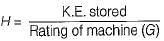
or,
K.E. stored = GH = 50 x 9 = 450 MJ
A shunt reactor in general- a)reduces steady state power transfer limit.
- b)improves steady state power transfer limit.
- c)does not affect power transfer.
- d)reduces the reactive power consumption.
Correct answer is option 'C'. Can you explain this answer?
A shunt reactor in general
a)
reduces steady state power transfer limit.
b)
improves steady state power transfer limit.
c)
does not affect power transfer.
d)
reduces the reactive power consumption.
 | Pranab Basu answered |
Shunt reactors are used to reduce the effect of Ferranti effect when a medium or a long line is lightly loaded or is on no-load. It doesn’t affect the steady state power transfer limit.

In a nuclear reactor, chain reaction is controlled by- a)Iron rods
- b)Cadmium rods
- c)Graphite rods
- d)Brass rods
Correct answer is option 'B'. Can you explain this answer?
In a nuclear reactor, chain reaction is controlled by
a)
Iron rods
b)
Cadmium rods
c)
Graphite rods
d)
Brass rods
| | Arpita Banerjee answered |
Control rods made up of boron, Cadmium are used to control the nuclear chain reaction in a nuclear power plant.
In a dc transmision- a)it is necessary for the sending and receiving end to be operated in synchronism.
- b)the effects of inductive and capacitive reactances are greater than in ac transmission line of the same rating.
- c)there are no effects due to inductive and capacitive reactances.
- d)power transfer capability is limited by stability considerations.
Correct answer is option 'C'. Can you explain this answer?
In a dc transmision
a)
it is necessary for the sending and receiving end to be operated in synchronism.
b)
the effects of inductive and capacitive reactances are greater than in ac transmission line of the same rating.
c)
there are no effects due to inductive and capacitive reactances.
d)
power transfer capability is limited by stability considerations.
 | Gayatri Menon answered |
As operating frequency, f = 0 therefore, there is no effect of XL and XC.
A dc line carries- a)same power as an ac line
- b)less power than an equivalent ac line
- c)more power than the ac line
- d)both (a) and (c)
Correct answer is option 'C'. Can you explain this answer?
A dc line carries
a)
same power as an ac line
b)
less power than an equivalent ac line
c)
more power than the ac line
d)
both (a) and (c)
 | Pranjal Datta answered |
Due to requirement of less number of conductors, a dc line carries more power than a ac line, (losses of the line reduces in HVDC).
Within the boiler, the steam has highest temperature in- a)superheater
- b)water tubes
- c)water walls
- d)water drum
Correct answer is option 'A'. Can you explain this answer?
Within the boiler, the steam has highest temperature in
a)
superheater
b)
water tubes
c)
water walls
d)
water drum
 | Avik Iyer answered |
Superheated steam has the highest temperature which comes out from super heater.
The incremental transmission loss of a plant can’t be a- a)negative quantity
- b)positive quantity
- c)a zero value
- d)non-zero value
Correct answer is option 'C'. Can you explain this answer?
The incremental transmission loss of a plant can’t be a
a)
negative quantity
b)
positive quantity
c)
a zero value
d)
non-zero value
| | Kajal Mukherjee answered |
The incremental transmission loss of a plant can be positive, a non-zero value but, can’t be zero.

Back-to-back HVDC is used to- a)increase the transmission capability
- b)decrease line losses
- c)reduce voltage drop
- d)provide stable interconnection
Correct answer is option 'D'. Can you explain this answer?
Back-to-back HVDC is used to
a)
increase the transmission capability
b)
decrease line losses
c)
reduce voltage drop
d)
provide stable interconnection
| | Kajal Mukherjee answered |
**Back-to-back HVDC and its purpose:**
Back-to-back HVDC refers to a configuration where two HVDC converters are interconnected without any transmission line between them. This configuration is used to provide stable interconnection between two AC systems that have different frequencies, voltages, or phase angles. It essentially acts as a translator between the two systems, allowing power to be transferred between them.
**Explanation of the correct answer:**
The correct answer for this question is option 'D', which states that back-to-back HVDC is used to provide stable interconnection. This means that the main purpose of using back-to-back HVDC is to ensure a reliable and stable connection between two AC systems with different characteristics.
**Detailed explanation:**
1. **Stable interconnection:** Back-to-back HVDC provides stable interconnection between two AC systems. It can handle the differences in frequency, voltage, and phase angle between the two systems, allowing power to be transferred smoothly and efficiently. This stability is crucial for the overall performance and reliability of the interconnected systems.
2. **Frequency conversion:** In some cases, the AC systems connected through back-to-back HVDC may have different frequencies. The HVDC converters in the back-to-back configuration can perform frequency conversion, allowing power to be transferred between the systems despite the frequency differences. This enables the interconnection of power systems operating at different frequencies, such as those found in different countries or regions.
3. **Voltage transformation:** Back-to-back HVDC can also be used to connect AC systems with different voltage levels. The HVDC converters can perform voltage transformation, allowing power to be transferred between systems with different voltage magnitudes. This is particularly useful when integrating renewable energy sources, as they often operate at different voltage levels than the existing grid.
4. **Phase angle compensation:** Another important feature of back-to-back HVDC is the ability to compensate for phase angle differences between the interconnected AC systems. This ensures a smooth and stable power transfer between the systems, minimizing any disturbances or voltage fluctuations.
5. **Enhancing system stability:** By providing stable interconnection, back-to-back HVDC helps enhance the overall stability of the interconnected systems. It allows for efficient power flow control, reduces the risk of voltage instability, and helps maintain system frequency within acceptable limits.
In summary, back-to-back HVDC is used to provide stable interconnection between AC systems with different characteristics, such as frequency, voltage, and phase angle. It enables seamless power transfer, enhances system stability, and allows for the integration of different power systems.
Back-to-back HVDC refers to a configuration where two HVDC converters are interconnected without any transmission line between them. This configuration is used to provide stable interconnection between two AC systems that have different frequencies, voltages, or phase angles. It essentially acts as a translator between the two systems, allowing power to be transferred between them.
**Explanation of the correct answer:**
The correct answer for this question is option 'D', which states that back-to-back HVDC is used to provide stable interconnection. This means that the main purpose of using back-to-back HVDC is to ensure a reliable and stable connection between two AC systems with different characteristics.
**Detailed explanation:**
1. **Stable interconnection:** Back-to-back HVDC provides stable interconnection between two AC systems. It can handle the differences in frequency, voltage, and phase angle between the two systems, allowing power to be transferred smoothly and efficiently. This stability is crucial for the overall performance and reliability of the interconnected systems.
2. **Frequency conversion:** In some cases, the AC systems connected through back-to-back HVDC may have different frequencies. The HVDC converters in the back-to-back configuration can perform frequency conversion, allowing power to be transferred between the systems despite the frequency differences. This enables the interconnection of power systems operating at different frequencies, such as those found in different countries or regions.
3. **Voltage transformation:** Back-to-back HVDC can also be used to connect AC systems with different voltage levels. The HVDC converters can perform voltage transformation, allowing power to be transferred between systems with different voltage magnitudes. This is particularly useful when integrating renewable energy sources, as they often operate at different voltage levels than the existing grid.
4. **Phase angle compensation:** Another important feature of back-to-back HVDC is the ability to compensate for phase angle differences between the interconnected AC systems. This ensures a smooth and stable power transfer between the systems, minimizing any disturbances or voltage fluctuations.
5. **Enhancing system stability:** By providing stable interconnection, back-to-back HVDC helps enhance the overall stability of the interconnected systems. It allows for efficient power flow control, reduces the risk of voltage instability, and helps maintain system frequency within acceptable limits.
In summary, back-to-back HVDC is used to provide stable interconnection between AC systems with different characteristics, such as frequency, voltage, and phase angle. It enables seamless power transfer, enhances system stability, and allows for the integration of different power systems.
As compared to ac transmission dc transmission is free from- a)inductance
- b)capacitance
- c)phase dispalcement
- d)all of the above
Correct answer is option 'D'. Can you explain this answer?
As compared to ac transmission dc transmission is free from
a)
inductance
b)
capacitance
c)
phase dispalcement
d)
all of the above
| | Naveen Mukherjee answered |
Comparison of AC and DC Transmission
When comparing AC (Alternating Current) transmission with DC (Direct Current) transmission, it is essential to understand the fundamental differences that lead to DC being free from certain issues.
1. Inductance
- AC transmission systems are significantly affected by inductance due to the presence of inductive loads and the alternating nature of the current.
- Inductance causes reactive power losses and can lead to voltage drops, making the system less efficient.
- DC transmission does not experience inductance effects, as the current flows in a constant direction, resulting in a more stable operation.
2. Capacitance
- In AC systems, capacitance plays a crucial role as it can cause issues such as power factor problems and voltage rise.
- Capacitive reactance can also lead to challenges in voltage regulation over long distances.
- DC transmission avoids these capacitance-related problems since the constant flow of current does not result in capacitive charging currents.
3. Phase Displacement
- AC systems deal with the concept of phase displacement, where the voltage and current can be out of phase due to reactance.
- This phase difference can lead to complexities in power management and distribution.
- DC transmission does not have phase displacement since the current and voltage are always in synchrony, simplifying control and management.
Conclusion
In summary, DC transmission is free from inductance, capacitance, and phase displacement, making it a more straightforward and efficient option for long-distance power transmission. This clarity in operation contributes to its increasing popularity in modern electrical engineering applications.
When comparing AC (Alternating Current) transmission with DC (Direct Current) transmission, it is essential to understand the fundamental differences that lead to DC being free from certain issues.
1. Inductance
- AC transmission systems are significantly affected by inductance due to the presence of inductive loads and the alternating nature of the current.
- Inductance causes reactive power losses and can lead to voltage drops, making the system less efficient.
- DC transmission does not experience inductance effects, as the current flows in a constant direction, resulting in a more stable operation.
2. Capacitance
- In AC systems, capacitance plays a crucial role as it can cause issues such as power factor problems and voltage rise.
- Capacitive reactance can also lead to challenges in voltage regulation over long distances.
- DC transmission avoids these capacitance-related problems since the constant flow of current does not result in capacitive charging currents.
3. Phase Displacement
- AC systems deal with the concept of phase displacement, where the voltage and current can be out of phase due to reactance.
- This phase difference can lead to complexities in power management and distribution.
- DC transmission does not have phase displacement since the current and voltage are always in synchrony, simplifying control and management.
Conclusion
In summary, DC transmission is free from inductance, capacitance, and phase displacement, making it a more straightforward and efficient option for long-distance power transmission. This clarity in operation contributes to its increasing popularity in modern electrical engineering applications.
In HVDC system a converter acts as a rectifier when the firing angle α has a value- a)00 < α < 1200
- b)00 < α < 900
- c)900 < α < 1800
- d)none of these
Correct answer is option 'B'. Can you explain this answer?
In HVDC system a converter acts as a rectifier when the firing angle α has a value
a)
00 < α < 1200
b)
00 < α < 900
c)
900 < α < 1800
d)
none of these
| | Aarya Basu answered |
Of the thyristors is controlled to convert AC to DC power. The rectifier converts the AC power from the AC power source into DC power, which is then transmitted over the HVDC transmission line. The converter also acts as an inverter when the firing angle of the thyristors is controlled to convert DC to AC power. This is done at the receiving end of the HVDC transmission line to convert the DC power back into AC power that can be used by the AC power grid. The converter is a crucial component of any HVDC system, as it is responsible for converting power between AC and DC formats.
HVDC transmission needs- a)dc filters
- b)ac filters and transformers
- c)ac filters
- d)pulse converters
Correct answer is option 'D'. Can you explain this answer?
HVDC transmission needs
a)
dc filters
b)
ac filters and transformers
c)
ac filters
d)
pulse converters
| | Swati Tiwari answered |
HVDC transmission, also known as High Voltage Direct Current transmission, is a method of transmitting electrical power over long distances using direct current (DC) instead of alternating current (AC). HVDC transmission offers several advantages over traditional AC transmission, including lower losses, increased power transfer capability, and the ability to connect asynchronous grids.
One of the key components in HVDC transmission is the pulse converter, which is responsible for converting AC power into DC power at the sending end and vice versa at the receiving end. The pulse converter consists of rectifiers and inverters, which convert AC to DC and DC to AC, respectively.
Explanation of the correct answer:
The correct answer is option 'D' - pulse converters. Here's why:
1. Role of Pulse Converters:
a) The pulse converters play a crucial role in HVDC transmission as they convert the AC power generated by the power stations into DC power for transmission.
b) At the receiving end, they convert the transmitted DC power back into AC power for distribution to the grid.
2. Elimination of AC Filters:
a) AC filters are not needed in HVDC transmission because the AC power generated by the power stations is directly converted to DC power by the pulse converters.
b) Unlike in AC transmission, there is no need for AC filters to remove harmonic components or maintain the power quality.
3. Elimination of DC Filters:
a) Similarly, DC filters are not required in HVDC transmission as the pulse converters ensure a smooth DC waveform with minimal harmonic distortion.
b) The pulse converters perform the necessary filtering and smoothing of the DC power, eliminating the need for additional DC filters.
4. Importance of Transformers:
a) While AC filters and transformers are not required in HVDC transmission, it's important to note that transformers are still used at both the sending and receiving ends.
b) However, the transformers used in HVDC transmission are different from traditional AC transformers.
c) HVDC transformers are specifically designed for high-voltage DC transmission and are often referred to as converter transformers.
In summary, the correct answer is option 'D' - pulse converters. HVDC transmission relies on pulse converters to convert AC power into DC power for transmission and vice versa. AC filters, AC transformers, and DC filters are not needed in HVDC transmission due to the inherent properties of the pulse converters and the design of the transmission system.
One of the key components in HVDC transmission is the pulse converter, which is responsible for converting AC power into DC power at the sending end and vice versa at the receiving end. The pulse converter consists of rectifiers and inverters, which convert AC to DC and DC to AC, respectively.
Explanation of the correct answer:
The correct answer is option 'D' - pulse converters. Here's why:
1. Role of Pulse Converters:
a) The pulse converters play a crucial role in HVDC transmission as they convert the AC power generated by the power stations into DC power for transmission.
b) At the receiving end, they convert the transmitted DC power back into AC power for distribution to the grid.
2. Elimination of AC Filters:
a) AC filters are not needed in HVDC transmission because the AC power generated by the power stations is directly converted to DC power by the pulse converters.
b) Unlike in AC transmission, there is no need for AC filters to remove harmonic components or maintain the power quality.
3. Elimination of DC Filters:
a) Similarly, DC filters are not required in HVDC transmission as the pulse converters ensure a smooth DC waveform with minimal harmonic distortion.
b) The pulse converters perform the necessary filtering and smoothing of the DC power, eliminating the need for additional DC filters.
4. Importance of Transformers:
a) While AC filters and transformers are not required in HVDC transmission, it's important to note that transformers are still used at both the sending and receiving ends.
b) However, the transformers used in HVDC transmission are different from traditional AC transformers.
c) HVDC transformers are specifically designed for high-voltage DC transmission and are often referred to as converter transformers.
In summary, the correct answer is option 'D' - pulse converters. HVDC transmission relies on pulse converters to convert AC power into DC power for transmission and vice versa. AC filters, AC transformers, and DC filters are not needed in HVDC transmission due to the inherent properties of the pulse converters and the design of the transmission system.
A hydrograph indicates- a)the discharge at anytime during the period under consideration.
- b)the maximum and minimum run-off during the period.
- c)the average run-off during the period
- d)all of the above
Correct answer is option 'D'. Can you explain this answer?
A hydrograph indicates
a)
the discharge at anytime during the period under consideration.
b)
the maximum and minimum run-off during the period.
c)
the average run-off during the period
d)
all of the above
 | Gitanjali Deshpande answered |
Hydrograph and its Significance
A hydrograph is a graphical representation of the discharge (flow rate) of a river or stream over a period of time. It is an important tool in hydrology that helps in assessing the impact of precipitation on the river system and predicting floods.
Components of a Hydrograph
A hydrograph consists of two main components:
1. Rising limb: It represents the rate of increase in discharge during a storm event. The rising limb starts from the beginning of the storm and reaches its peak discharge during the storm.
2. Recession limb: It represents the rate of decrease in discharge after the storm has passed. The recession limb starts from the peak discharge and ends when the discharge has returned to its pre-storm level.
Significance of Hydrograph
A hydrograph is significant in the following ways:
1. It helps in predicting floods: The rising limb of a hydrograph provides information on the rate of increase in discharge during a storm event. By analyzing the hydrograph, it is possible to predict the time and magnitude of floods.
2. It helps in designing hydraulic structures: The hydrograph provides information on the maximum discharge that a river or stream can carry. This information is useful in designing hydraulic structures such as bridges, culverts, and dams.
3. It helps in assessing the impact of land-use changes: By comparing hydrographs from different time periods, it is possible to assess the impact of land-use changes on the river system. For example, if a forest is cleared and replaced with agriculture, the hydrograph will change due to changes in infiltration and runoff.
Conclusion
In conclusion, a hydrograph is a graphical representation of the discharge of a river or stream over a period of time. It is an important tool in hydrology that helps in predicting floods, designing hydraulic structures, and assessing the impact of land-use changes. A hydrograph indicates the discharge at any time during the period under consideration, the maximum and minimum runoff during the period, and the average runoff during the period.
A hydrograph is a graphical representation of the discharge (flow rate) of a river or stream over a period of time. It is an important tool in hydrology that helps in assessing the impact of precipitation on the river system and predicting floods.
Components of a Hydrograph
A hydrograph consists of two main components:
1. Rising limb: It represents the rate of increase in discharge during a storm event. The rising limb starts from the beginning of the storm and reaches its peak discharge during the storm.
2. Recession limb: It represents the rate of decrease in discharge after the storm has passed. The recession limb starts from the peak discharge and ends when the discharge has returned to its pre-storm level.
Significance of Hydrograph
A hydrograph is significant in the following ways:
1. It helps in predicting floods: The rising limb of a hydrograph provides information on the rate of increase in discharge during a storm event. By analyzing the hydrograph, it is possible to predict the time and magnitude of floods.
2. It helps in designing hydraulic structures: The hydrograph provides information on the maximum discharge that a river or stream can carry. This information is useful in designing hydraulic structures such as bridges, culverts, and dams.
3. It helps in assessing the impact of land-use changes: By comparing hydrographs from different time periods, it is possible to assess the impact of land-use changes on the river system. For example, if a forest is cleared and replaced with agriculture, the hydrograph will change due to changes in infiltration and runoff.
Conclusion
In conclusion, a hydrograph is a graphical representation of the discharge of a river or stream over a period of time. It is an important tool in hydrology that helps in predicting floods, designing hydraulic structures, and assessing the impact of land-use changes. A hydrograph indicates the discharge at any time during the period under consideration, the maximum and minimum runoff during the period, and the average runoff during the period.
The incremental fuel costs of two plants are given by
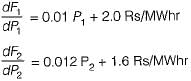
For economic schedule of a load of 180 MW- a)P1 = 100 MW; P2 = 80 MW
- b)P1 = 90 MW; P2 = 90 MW
- c)P1 = 80 MW; P2 = 100 MW
- d)P1 = 120 MW; P2 = 60 MW
Correct answer is option 'A'. Can you explain this answer?
The incremental fuel costs of two plants are given by
For economic schedule of a load of 180 MW
For economic schedule of a load of 180 MW
a)
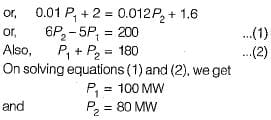
P1 = 100 MW; P2 = 80 MW
b)
P1 = 90 MW; P2 = 90 MW
c)
P1 = 80 MW; P2 = 100 MW
d)
P1 = 120 MW; P2 = 60 MW
| | Ishani Iyer answered |
For economic scheduling of plants, we have:

In a nuclear power station using boiling water reactor, water is used as- a)a moderator but not as a coolant
- b)a coolant but not as a moderator
- c)both moderator and coolant
- d)neither moderator nor coolant
Correct answer is option 'C'. Can you explain this answer?
In a nuclear power station using boiling water reactor, water is used as
a)
a moderator but not as a coolant
b)
a coolant but not as a moderator
c)
both moderator and coolant
d)
neither moderator nor coolant
| | Sanchita Choudhary answered |
Boiling Water Reactor in Nuclear Power Station:
A boiling water reactor (BWR) is a type of nuclear reactor that uses water as both a coolant and a moderator. In a BWR, the reactor core heats up water, which then boils and turns into steam. The steam is used to turn turbines, which generate electricity.
Function of Water in BWR:
Water plays two important roles in a BWR: it acts as a coolant and a moderator.
- Coolant: Water removes heat from the reactor core and carries it away, preventing the fuel rods from overheating and melting.
- Moderator: Water slows down neutrons produced by the fission of uranium atoms, allowing them to more easily collide with other uranium atoms and sustain the chain reaction.
Advantages of Water as Moderator and Coolant:
Using water as both a coolant and a moderator has several advantages.
- Efficiency: By using one substance for both functions, a BWR can be more efficient and compact than other types of reactors.
- Safety: Water is an excellent coolant, because it absorbs a lot of heat for every degree it heats up. This means that it can carry away a lot of heat from the reactor core without getting too hot itself.
- Control: Water also acts as a control mechanism, because it can be used to moderate the reaction rate by adjusting the water flow.
Conclusion:
In conclusion, water is used as both a moderator and a coolant in a boiling water reactor. This dual function allows for greater efficiency, safety, and control in the nuclear power plant.
A boiling water reactor (BWR) is a type of nuclear reactor that uses water as both a coolant and a moderator. In a BWR, the reactor core heats up water, which then boils and turns into steam. The steam is used to turn turbines, which generate electricity.
Function of Water in BWR:
Water plays two important roles in a BWR: it acts as a coolant and a moderator.
- Coolant: Water removes heat from the reactor core and carries it away, preventing the fuel rods from overheating and melting.
- Moderator: Water slows down neutrons produced by the fission of uranium atoms, allowing them to more easily collide with other uranium atoms and sustain the chain reaction.
Advantages of Water as Moderator and Coolant:
Using water as both a coolant and a moderator has several advantages.
- Efficiency: By using one substance for both functions, a BWR can be more efficient and compact than other types of reactors.
- Safety: Water is an excellent coolant, because it absorbs a lot of heat for every degree it heats up. This means that it can carry away a lot of heat from the reactor core without getting too hot itself.
- Control: Water also acts as a control mechanism, because it can be used to moderate the reaction rate by adjusting the water flow.
Conclusion:
In conclusion, water is used as both a moderator and a coolant in a boiling water reactor. This dual function allows for greater efficiency, safety, and control in the nuclear power plant.
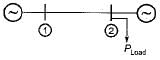
The current distribution factors for the power system network shown below are given by
- a)

- b)

- c)

- d)

Correct answer is option 'C'. Can you explain this answer?
The current distribution factors for the power system network shown below are given by
a)
b)
c)
d)
| | Janhavi Roy answered |
Since the load is at plant 2 therefore,
Na2 = 0 and Na1 = 1
Na2 = 0 and Na1 = 1
The optimization problem is- a)to allocate load demand among various units such that the cost of generation is maintained constant.
- b)to allocate total load demand among various units such that the cost of generation is minimized.
- c)to allocate total load demand among various units such that the cost of generatin is enormously increased.
- d)to allocate total load demand among various units such that there is no effect with cost of generation.
Correct answer is option 'B'. Can you explain this answer?
The optimization problem is
a)
to allocate load demand among various units such that the cost of generation is maintained constant.
b)
to allocate total load demand among various units such that the cost of generation is minimized.
c)
to allocate total load demand among various units such that the cost of generatin is enormously increased.
d)
to allocate total load demand among various units such that there is no effect with cost of generation.
| | Mihir Chawla answered |
Understanding the Optimization Problem
In the context of electrical engineering, particularly in power systems, optimization plays a crucial role in how energy generation is managed. The key goal is to efficiently allocate resources while minimizing costs. Let's break down the reasoning behind option 'B'.
Definition of the Problem
- The optimization problem involves distributing total load demand across various generating units.
- The primary aim is to ensure that generation costs are kept at the lowest possible level while meeting the required demand.
Why Option 'B' is Correct
- Minimization of Costs: By allocating the load demand efficiently, the overall generation costs can be minimized. This is crucial for economic operation.
- Efficiency: Different generating units have varying cost structures and efficiencies. The optimization process ensures that the least expensive units are utilized first, reducing the total cost of generation.
- Demand Fulfillment: It is vital to meet the total load demand without exceeding or underutilizing resources, which can lead to either wastage or shortages.
Other Options Explained
- Option 'A': Maintaining a constant cost of generation does not account for efficiency gains, which can lead to unnecessary expenses.
- Option 'C': Increasing the cost of generation is counterproductive and contradicts the purpose of optimization.
- Option 'D': Ignoring cost implications does not align with the fundamental goals of economic power system operation.
Conclusion
In summary, option 'B' accurately reflects the goal of the optimization problem in power systems, which is to minimize costs while meeting total load demand effectively.
In the context of electrical engineering, particularly in power systems, optimization plays a crucial role in how energy generation is managed. The key goal is to efficiently allocate resources while minimizing costs. Let's break down the reasoning behind option 'B'.
Definition of the Problem
- The optimization problem involves distributing total load demand across various generating units.
- The primary aim is to ensure that generation costs are kept at the lowest possible level while meeting the required demand.
Why Option 'B' is Correct
- Minimization of Costs: By allocating the load demand efficiently, the overall generation costs can be minimized. This is crucial for economic operation.
- Efficiency: Different generating units have varying cost structures and efficiencies. The optimization process ensures that the least expensive units are utilized first, reducing the total cost of generation.
- Demand Fulfillment: It is vital to meet the total load demand without exceeding or underutilizing resources, which can lead to either wastage or shortages.
Other Options Explained
- Option 'A': Maintaining a constant cost of generation does not account for efficiency gains, which can lead to unnecessary expenses.
- Option 'C': Increasing the cost of generation is counterproductive and contradicts the purpose of optimization.
- Option 'D': Ignoring cost implications does not align with the fundamental goals of economic power system operation.
Conclusion
In summary, option 'B' accurately reflects the goal of the optimization problem in power systems, which is to minimize costs while meeting total load demand effectively.
The angle swings during transients- a)should not exceed 900.
- b)can exceed 900 but can’t exceed 1800.
- c)can go beyond 180°.
- d)will not be greater than swings under minor disturbances.
Correct answer is option 'B'. Can you explain this answer?
The angle swings during transients
a)
should not exceed 900.
b)
can exceed 900 but can’t exceed 1800.
c)
can go beyond 180°.
d)
will not be greater than swings under minor disturbances.
| | Sanskriti Bajaj answered |
Not exceed 1800.
c)can exceed 1800 but should not exceed 2700.
d)can exceed 2700 but should not exceed 3600.
c)can exceed 1800 but should not exceed 2700.
d)can exceed 2700 but should not exceed 3600.
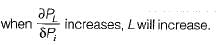
If  for a plant i with output P1 and loss in the system being PL increases, the penalty factor of the system
- a)does not change
- b)decreases
- c) increases
- d)depends on the incremental fuel cost
Correct answer is option 'C'. Can you explain this answer?
If for a plant i with output P1 and loss in the system being PL increases, the penalty factor of the system
for a plant i with output P1 and loss in the system being PL increases, the penalty factor of the systema)
does not change
b)
decreases
c)
increases
d)
depends on the incremental fuel cost
| | Prisha Kulkarni answered |
Penalty factor of the system is

The load carrying capability of a long ac line is- a)limited by conductor size.
- b)limited by stability considerations.
- c)limited by thermal consderations.
- d)decreased by using bundled conductors.
Correct answer is option 'B'. Can you explain this answer?
The load carrying capability of a long ac line is
a)
limited by conductor size.
b)
limited by stability considerations.
c)
limited by thermal consderations.
d)
decreased by using bundled conductors.
| | Raj Desai answered |
The load carrying capability of a long ac line is limited by stability considerations.
Explanation:
When it comes to long AC transmission lines, there are several factors that can limit their load carrying capability. However, stability considerations play a significant role in determining the maximum load that a long AC line can carry.
1. Voltage Stability:
One of the primary stability concerns in long AC transmission lines is voltage stability. As the length of the line increases, the reactive power requirements also increase due to the line's capacitance. If the reactive power demand exceeds the capability of the line or the connected power system, voltage instability can occur. This can lead to voltage collapse or excessive voltage drop, which can affect the performance and reliability of the system.
2. Transient Stability:
Long AC lines are more prone to transient stability issues compared to shorter lines. Transient stability refers to the ability of the power system to maintain synchronism after a disturbance or fault. When a fault occurs on a long AC line, the transient stability of the system can be compromised. This can result in large swings in voltage and frequency, which can potentially lead to cascading failures and blackouts.
3. Electromechanical Oscillations:
Another stability consideration in long AC transmission lines is electromechanical oscillations. These oscillations can occur due to interactions between the electrical and mechanical components of the power system. Long lines can introduce delays and phase shifts that can amplify these oscillations, leading to instability.
4. Power System Stability Limits:
Power systems have stability limits that define the maximum load that can be safely carried without compromising stability. These limits are determined based on various stability considerations, including voltage stability, transient stability, and oscillatory stability. Long AC lines can have lower stability limits compared to shorter lines due to the aforementioned stability issues.
Conclusion:
While factors like conductor size, thermal considerations, and the use of bundled conductors can influence the load carrying capability of a long AC line, stability considerations ultimately determine the maximum load that can be safely transmitted. Voltage stability, transient stability, electromechanical oscillations, and power system stability limits all play a crucial role in determining the stability of long AC transmission lines. Therefore, the correct answer is option 'B' - limited by stability considerations.
Explanation:
When it comes to long AC transmission lines, there are several factors that can limit their load carrying capability. However, stability considerations play a significant role in determining the maximum load that a long AC line can carry.
1. Voltage Stability:
One of the primary stability concerns in long AC transmission lines is voltage stability. As the length of the line increases, the reactive power requirements also increase due to the line's capacitance. If the reactive power demand exceeds the capability of the line or the connected power system, voltage instability can occur. This can lead to voltage collapse or excessive voltage drop, which can affect the performance and reliability of the system.
2. Transient Stability:
Long AC lines are more prone to transient stability issues compared to shorter lines. Transient stability refers to the ability of the power system to maintain synchronism after a disturbance or fault. When a fault occurs on a long AC line, the transient stability of the system can be compromised. This can result in large swings in voltage and frequency, which can potentially lead to cascading failures and blackouts.
3. Electromechanical Oscillations:
Another stability consideration in long AC transmission lines is electromechanical oscillations. These oscillations can occur due to interactions between the electrical and mechanical components of the power system. Long lines can introduce delays and phase shifts that can amplify these oscillations, leading to instability.
4. Power System Stability Limits:
Power systems have stability limits that define the maximum load that can be safely carried without compromising stability. These limits are determined based on various stability considerations, including voltage stability, transient stability, and oscillatory stability. Long AC lines can have lower stability limits compared to shorter lines due to the aforementioned stability issues.
Conclusion:
While factors like conductor size, thermal considerations, and the use of bundled conductors can influence the load carrying capability of a long AC line, stability considerations ultimately determine the maximum load that can be safely transmitted. Voltage stability, transient stability, electromechanical oscillations, and power system stability limits all play a crucial role in determining the stability of long AC transmission lines. Therefore, the correct answer is option 'B' - limited by stability considerations.
The area under daily load curve gives- a)energy generated during peak hours
- b)energy generated during off-peak hours
- c)energy generated per day
- d)energy generated to supply peak load
Correct answer is option 'C'. Can you explain this answer?
The area under daily load curve gives
a)
energy generated during peak hours
b)
energy generated during off-peak hours
c)
energy generated per day
d)
energy generated to supply peak load
| | Ashwin Mukherjee answered |
Understanding the Daily Load Curve
The daily load curve is a graphical representation of electrical demand (load) over a 24-hour period. It illustrates how electricity consumption varies throughout the day, identifying peak and off-peak periods.
Area Under the Curve: Definition
The area under the daily load curve represents the total energy consumed during that time frame. This area is calculated by integrating the load over time, effectively summing up the energy used at each point throughout the day.
Why Option 'C' is Correct
The correct answer is option 'C' - energy generated per day. Here’s why:
Implications for Energy Management
Understanding the area under the daily load curve is crucial for energy management. It helps utilities and consumers:
In conclusion, the area under the daily load curve is a vital metric for understanding daily energy generation and consumption, making option 'C' the accurate choice.
The daily load curve is a graphical representation of electrical demand (load) over a 24-hour period. It illustrates how electricity consumption varies throughout the day, identifying peak and off-peak periods.
Area Under the Curve: Definition
The area under the daily load curve represents the total energy consumed during that time frame. This area is calculated by integrating the load over time, effectively summing up the energy used at each point throughout the day.
Why Option 'C' is Correct
The correct answer is option 'C' - energy generated per day. Here’s why:
- Total Energy Calculation: The area under the curve quantifies the total energy generated or consumed in a given day, measured in kilowatt-hours (kWh).
- Integral of Load: The integral of the daily load curve gives the total energy supplied, as it accounts for variations in load throughout the entire day.
- Peak vs. Off-Peak: While peak and off-peak hours contribute to the total energy, the area under the entire curve encompasses both, thus representing daily energy generation.
Implications for Energy Management
Understanding the area under the daily load curve is crucial for energy management. It helps utilities and consumers:
- Plan Energy Supply: Anticipate energy needs and optimize generation.
- Manage Costs: Identify and potentially reduce energy consumption during peak hours.
- Enhance Efficiency: Improve resource allocation based on consumption patterns.
In conclusion, the area under the daily load curve is a vital metric for understanding daily energy generation and consumption, making option 'C' the accurate choice.
The capital cost on a HVDC converter is- a)less than ac substation
- b)same as ac substation
- c)either less or more than ac substation
- d)more than that of ac substation
Correct answer is option 'D'. Can you explain this answer?
The capital cost on a HVDC converter is
a)
less than ac substation
b)
same as ac substation
c)
either less or more than ac substation
d)
more than that of ac substation
| | Sarthak Yadav answered |
Understanding HVDC Converter Costs
When comparing the capital costs of HVDC (High Voltage Direct Current) converters with AC substations, it is essential to consider several factors that contribute to the higher expenses associated with HVDC technology.
1. Component Complexity
- HVDC systems require more sophisticated technology than traditional AC substations.
- The components, such as converters and control systems, are more complex, leading to higher manufacturing costs.
2. Equipment Type
- HVDC converters often use advanced semiconductors, which are more expensive than standard equipment found in AC substations.
- The need for specialized transformers and filters in HVDC systems further adds to the overall cost.
3. Installation and Infrastructure
- The installation of HVDC systems typically involves rigorous engineering and more extensive infrastructure.
- This complexity often results in increased labor and project management costs.
4. Operational Efficiency
- Although HVDC has higher initial costs, it offers benefits like lower transmission losses over long distances.
- The long-term operational efficiencies may justify the initial expenditure, but this does not negate the higher capital costs.
5. Application Scenarios
- HVDC is often used for specific applications, such as underwater or underground cables, which require additional protective measures and materials.
- These specialized applications drive up the cost compared to conventional AC systems.
In summary, the capital cost of HVDC converters is generally more than that of AC substations due to the complexity, advanced technology, and specialized applications involved in HVDC systems.
When comparing the capital costs of HVDC (High Voltage Direct Current) converters with AC substations, it is essential to consider several factors that contribute to the higher expenses associated with HVDC technology.
1. Component Complexity
- HVDC systems require more sophisticated technology than traditional AC substations.
- The components, such as converters and control systems, are more complex, leading to higher manufacturing costs.
2. Equipment Type
- HVDC converters often use advanced semiconductors, which are more expensive than standard equipment found in AC substations.
- The need for specialized transformers and filters in HVDC systems further adds to the overall cost.
3. Installation and Infrastructure
- The installation of HVDC systems typically involves rigorous engineering and more extensive infrastructure.
- This complexity often results in increased labor and project management costs.
4. Operational Efficiency
- Although HVDC has higher initial costs, it offers benefits like lower transmission losses over long distances.
- The long-term operational efficiencies may justify the initial expenditure, but this does not negate the higher capital costs.
5. Application Scenarios
- HVDC is often used for specific applications, such as underwater or underground cables, which require additional protective measures and materials.
- These specialized applications drive up the cost compared to conventional AC systems.
In summary, the capital cost of HVDC converters is generally more than that of AC substations due to the complexity, advanced technology, and specialized applications involved in HVDC systems.
Cost curves are expressed as:- a)Rs/million cal
- b)Million cal/hr x Rs/million cal
- c)Rs/hr
- d)Both (b) and (c)
Correct answer is option 'C'. Can you explain this answer?
Cost curves are expressed as:
a)
Rs/million cal
b)
Million cal/hr x Rs/million cal
c)
Rs/hr
d)
Both (b) and (c)
| | Prasad Saini answered |
Understanding Cost Curves in Electrical Engineering
Cost curves are essential for analyzing the economic efficiency of energy production and consumption. They provide insights into how costs change with varying levels of output.
Cost Representation
Cost curves can be expressed in various units depending on the context. The correct choice here is option 'C', which is Rs/hr. Here’s why:
Hourly Rate of Cost
- Cost curves often represent costs incurred over time.
- When analyzing operational costs, it is crucial to express these costs on an hourly basis to understand expenses related to energy generation or consumption.
Comparison with Other Options
- Option A (Rs/million cal): This unit expresses cost per energy unit, but does not convey the time aspect, which is critical for operational analysis.
- Option B (Million cal/hr x Rs/million cal): This represents a product of energy output and cost per energy unit, which is less direct and can be misleading when simplifying cost analysis. It requires additional calculations to derive meaningful cost insights.
- Option D (Both B and C): Since option B is not a straightforward cost representation, option D cannot be correct.
Conclusion
In conclusion, expressing cost curves as Rs/hr allows for a clear understanding of costs associated with energy generation or consumption over time. This is essential for effective budgeting and financial planning in electrical engineering projects.
Cost curves are essential for analyzing the economic efficiency of energy production and consumption. They provide insights into how costs change with varying levels of output.
Cost Representation
Cost curves can be expressed in various units depending on the context. The correct choice here is option 'C', which is Rs/hr. Here’s why:
Hourly Rate of Cost
- Cost curves often represent costs incurred over time.
- When analyzing operational costs, it is crucial to express these costs on an hourly basis to understand expenses related to energy generation or consumption.
Comparison with Other Options
- Option A (Rs/million cal): This unit expresses cost per energy unit, but does not convey the time aspect, which is critical for operational analysis.
- Option B (Million cal/hr x Rs/million cal): This represents a product of energy output and cost per energy unit, which is less direct and can be misleading when simplifying cost analysis. It requires additional calculations to derive meaningful cost insights.
- Option D (Both B and C): Since option B is not a straightforward cost representation, option D cannot be correct.
Conclusion
In conclusion, expressing cost curves as Rs/hr allows for a clear understanding of costs associated with energy generation or consumption over time. This is essential for effective budgeting and financial planning in electrical engineering projects.
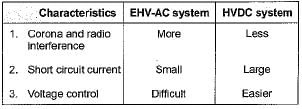
Chapter doubts & questions for Power System Stability - 6 Months Preparation for GATE Electrical 2026 is part of Electrical Engineering (EE) exam preparation. The chapters have been prepared according to the Electrical Engineering (EE) exam syllabus. The Chapter doubts & questions, notes, tests & MCQs are made for Electrical Engineering (EE) 2026 Exam. Find important definitions, questions, notes, meanings, examples, exercises, MCQs and online tests here.
Chapter doubts & questions of Power System Stability - 6 Months Preparation for GATE Electrical in English & Hindi are available as part of Electrical Engineering (EE) exam. Download more important topics, notes, lectures and mock test series for Electrical Engineering (EE) Exam by signing up for free.
6 Months Preparation for GATE Electrical675 videos|1390 docs|885 tests |
