


All questions of Classification of Soils for Civil Engineering (CE) Exam
In a saturated soil deposit having a density of 22 kN/m3, the effective normal stress on ahorizontal plane at 5 m depth will be- a)22 kN/m2
- b)50 kN/m2
- c)60 kN/m2
- d)110 kN/m2
Correct answer is option 'D'. Can you explain this answer?
In a saturated soil deposit having a density of 22 kN/m3, the effective normal stress on ahorizontal plane at 5 m depth will be
a)
22 kN/m2
b)
50 kN/m2
c)
60 kN/m2
d)
110 kN/m2
 | Imran Ali answered |
Is option D right answer?
we have to calculate effective stress.
we have to calculate effective stress.

The purpose of soil classification is to___________- a)To arrange various soils types in to groups
- b)To use it for various purpose
- c)For finding its properties
- d)For investigating the soil
Correct answer is option 'A'. Can you explain this answer?
The purpose of soil classification is to___________
a)
To arrange various soils types in to groups
b)
To use it for various purpose
c)
For finding its properties
d)
For investigating the soil
 | Aditya Deshmukh answered |
Correct option is (a).
The purpose of soil classification is to arrange various types of soils in to groups according to their engineering or agricultural properties.
The purpose of soil classification is to arrange various types of soils in to groups according to their engineering or agricultural properties.
Particle size classification is best suited for_________- a)Coarse grained soil
- b)Clay soil
- c)Dry soil
- d)All of the mentioned
Correct answer is option 'B'. Can you explain this answer?
Particle size classification is best suited for_________
a)
Coarse grained soil
b)
Clay soil
c)
Dry soil
d)
All of the mentioned
 | Sagarika Patel answered |
CORRECT OPTION IS (B).
Since properties of clay soils is less dependent on particle size distrubution(textural classification) and more dependent on size it is best suited for clay soil.
Since properties of clay soils is less dependent on particle size distrubution(textural classification) and more dependent on size it is best suited for clay soil.
In Casagrande’s plasticity chart, the numbers in the chart denotes____________- a)Relative suitability
- b)Grade of the soil
- c)Division of the group
- d)None of the mentioned
Correct answer is option 'A'. Can you explain this answer?
In Casagrande’s plasticity chart, the numbers in the chart denotes____________
a)
Relative suitability
b)
Grade of the soil
c)
Division of the group
d)
None of the mentioned
| | Aditya Deshmukh answered |
In Casagrande’s plasticity chart, the numbers denote relative suitability with No.1 as the best and No. 10 as the worst.
Basalt stone is by nature:- a)volcanic
- b)sedimentary
- c)meta morphic
- d)plutonic
Correct answer is option 'A'. Can you explain this answer?
Basalt stone is by nature:
a)
volcanic
b)
sedimentary
c)
meta morphic
d)
plutonic
 | Sanya Agarwal answered |
Basalt is a volcanic stone that has been used in architecture for centuries. With a name derived from the Latin for very hard stone, basalt is indeed a very hard, black igneous rock found all over Earth and our solar system.
Systems which are used for classification of soil based on particle size are__________- a)PRA system of united states
- b)Indian standard classification system
- c)International soil classification
- d)All of the mentioned
Correct answer is option 'D'. Can you explain this answer?
Systems which are used for classification of soil based on particle size are__________
a)
PRA system of united states
b)
Indian standard classification system
c)
International soil classification
d)
All of the mentioned
 | Jennycel Ampis answered |
D.yes its because all of them have a knowledge to make valuable soil and not valuable they learn to a high level so i agree all of them
The harmonic diameter, can be found out by using__________- a)kozney’s method
- b)casagrande method
- c)Skempton’s method
- d)Atterberg method
Correct answer is option 'A'. Can you explain this answer?
The harmonic diameter, can be found out by using__________
a)
kozney’s method
b)
casagrande method
c)
Skempton’s method
d)
Atterberg method
 | Sahana Choudhary answered |
The harmonic diameter DH can be found by using kozney’s method using the formula
F=6/ρs×1/Dn.
F=6/ρs×1/Dn.
The description of ‘sandy silty clay’ signifies that- a)the soil contains unequal proportions of the three constituents, in the order sand > silt > clay
- b)the soil contains equal proportions of sand, silt and clay
- c)the soil contains unequal proportions of sand, silt and clay
- d)the soil contains unequal proportions of the three constituents such that clay > silt > sand
Correct answer is option 'D'. Can you explain this answer?
The description of ‘sandy silty clay’ signifies that
a)
the soil contains unequal proportions of the three constituents, in the order sand > silt > clay
b)
the soil contains equal proportions of sand, silt and clay
c)
the soil contains unequal proportions of sand, silt and clay
d)
the soil contains unequal proportions of the three constituents such that clay > silt > sand
 | Rajeev Menon answered |
The constituent which is present in lesser proportion ends with '-y'. Thus, Here silt and sand will be present in lesser proportion in comparison with clay. Hence, it will be appropriate to indicate that the soil contains unequal proportions of the three constituents such that clay > silt > sand.
Soil occurring in nature, is composed of__________- a)Sand
- b)Decomposed substance
- c)All of the mentioned
- d)None of the mentioned
Correct answer is option 'A'. Can you explain this answer?
Soil occurring in nature, is composed of__________
a)
Sand
b)
Decomposed substance
c)
All of the mentioned
d)
None of the mentioned
| | Puja Sharma answered |
Soil occurring in nature is composed of different percentage of sand, silt, and clay size particles.
The specific surface of a soil particle will be___________- a)Proportional to inter-molecular surface
- b)Inversely proportional to electric force
- c)Proportional to the compressive force
- d)Directly proportional to electric force
Correct answer is option 'D'. Can you explain this answer?
The specific surface of a soil particle will be___________
a)
Proportional to inter-molecular surface
b)
Inversely proportional to electric force
c)
Proportional to the compressive force
d)
Directly proportional to electric force
 | Saptarshi Khanna answered |
Understanding Specific Surface of Soil Particles
The specific surface area of soil particles refers to the total surface area of the particles per unit mass. It plays a crucial role in soil behavior, affecting various engineering properties.
Relationship with Electric Force
1. Direct Proportionality:
- The specific surface is directly proportional to the electric force acting on the soil particles.
- This is because a greater specific surface area means more surface sites are available for interactions with water and ions, which can influence electric forces.
2. Implications for Soil Behavior:
- Higher specific surface increases the soil's ability to hold water and nutrients, enhancing its reactivity and bonding with other materials.
- This is particularly important in fine-grained soils, where the surface area is significantly higher compared to coarse soils.
Comparative Analysis with Other Forces
1. Inter-molecular Surface:
- While the inter-molecular surface relates to molecular interactions, it does not directly determine the specific surface area of soil particles.
2. Electric Force:
- Unlike electric force, compressive forces do not have a direct relationship with specific surface area since they mainly influence the mechanical strength and stability of the soil.
3. Inversely Proportional Relationships:
- The concept of being "inversely proportional" to electric force does not apply in the context of specific surface area, as a larger surface area enhances, rather than diminishes, electric interactions.
Conclusion
In summary, the correct answer highlights that the specific surface of a soil particle is directly proportional to electric force, emphasizing the importance of surface interactions in soil mechanics. Understanding this relationship is essential for predicting soil behavior in civil engineering applications.
The specific surface area of soil particles refers to the total surface area of the particles per unit mass. It plays a crucial role in soil behavior, affecting various engineering properties.
Relationship with Electric Force
1. Direct Proportionality:
- The specific surface is directly proportional to the electric force acting on the soil particles.
- This is because a greater specific surface area means more surface sites are available for interactions with water and ions, which can influence electric forces.
2. Implications for Soil Behavior:
- Higher specific surface increases the soil's ability to hold water and nutrients, enhancing its reactivity and bonding with other materials.
- This is particularly important in fine-grained soils, where the surface area is significantly higher compared to coarse soils.
Comparative Analysis with Other Forces
1. Inter-molecular Surface:
- While the inter-molecular surface relates to molecular interactions, it does not directly determine the specific surface area of soil particles.
2. Electric Force:
- Unlike electric force, compressive forces do not have a direct relationship with specific surface area since they mainly influence the mechanical strength and stability of the soil.
3. Inversely Proportional Relationships:
- The concept of being "inversely proportional" to electric force does not apply in the context of specific surface area, as a larger surface area enhances, rather than diminishes, electric interactions.
Conclusion
In summary, the correct answer highlights that the specific surface of a soil particle is directly proportional to electric force, emphasizing the importance of surface interactions in soil mechanics. Understanding this relationship is essential for predicting soil behavior in civil engineering applications.
The ISCS classifies the soil in to__________- a)12 groups
- b)15 groups
- c)18 groups
- d)16 groups
Correct answer is option 'C'. Can you explain this answer?
The ISCS classifies the soil in to__________
a)
12 groups
b)
15 groups
c)
18 groups
d)
16 groups
| | Pallabi Bajaj answered |
The ISCS classifies the soil into 18 groups as against 15 groups of USCS.
A soil is considered as coarse grained, if it retains more than___________in a sieve.- a)90% of the soil
- b)70% of the soil
- c)50% of the soil
- d)20% of the soil
Correct answer is option 'C'. Can you explain this answer?
A soil is considered as coarse grained, if it retains more than___________in a sieve.
a)
90% of the soil
b)
70% of the soil
c)
50% of the soil
d)
20% of the soil
| | Rithika Reddy answered |
If more than 50 % of the soil is retained on a NO.200 US sieve (0.075), it is designated as coarse grained soil.
The group index of a soil depends on____________- a)Liquid limit
- b)Plastic limit
- c)All of the above
- d)None of the above
Correct answer is option 'C'. Can you explain this answer?
The group index of a soil depends on____________
a)
Liquid limit
b)
Plastic limit
c)
All of the above
d)
None of the above
| | Dipanjan Ghosh answered |
Group index of a soil usually varies by
1. Liquid limit
2. Plastic limit
3. Amount of material passing through the 75-micron IS sieve.
1. Liquid limit
2. Plastic limit
3. Amount of material passing through the 75-micron IS sieve.
The type of triangle, used in textural classification of soil is_____________- a)Right angled triangle
- b)Equilateral triangle
- c)Perpendicular triangle
- d)None of the mentioned
Correct answer is option 'B'. Can you explain this answer?
The type of triangle, used in textural classification of soil is_____________
a)
Right angled triangle
b)
Equilateral triangle
c)
Perpendicular triangle
d)
None of the mentioned
| | Garima Basak answered |
A triangle, having equal length of sides (i.e. Equilateral triangle) is used in textural classification chart.
Specific surface of a soil is related with__________- a)Chemical properties of the soil
- b)Physical properties of the soil
- c)General characteristic of the soil
- d)All of the mentioned
Correct answer is option 'B'. Can you explain this answer?
Specific surface of a soil is related with__________
a)
Chemical properties of the soil
b)
Physical properties of the soil
c)
General characteristic of the soil
d)
All of the mentioned
| | Ashwin Desai answered |
As specific surface is associated with surface characteristics of a particle, therefore it is related with physical properties.
For engineering purpose, soil can be classified in terms of___________- a)Particle size
- b)Textural
- c)Unified soil
- d)All of the mentioned
Correct answer is option 'D'. Can you explain this answer?
For engineering purpose, soil can be classified in terms of___________
a)
Particle size
b)
Textural
c)
Unified soil
d)
All of the mentioned
 | Shivam Sharma answered |
The purpose of soil classification is to arrange various soils into groups according to their engineering or agricultural or other various properties .for engineering purpose ,soils are for general engineering purposes, soil may be classified by the following systems.
By USCS system, soil are classified in to___________Major groups.- a)2
- b)5
- c)6
- d)4
Correct answer is option 'D'. Can you explain this answer?
By USCS system, soil are classified in to___________Major groups.
a)
2
b)
5
c)
6
d)
4
| | Anjana Mukherjee answered |
Various soil are classified in to four major groups
1. Coarse grained
2. Fine grained
3. Organic soils
4. Peat.
1. Coarse grained
2. Fine grained
3. Organic soils
4. Peat.
The A-line, in unified classification system table has the equation of__________- a)IP=WL-20
- b)IP=0.73(WL-20)
- c)IP=0.73(20-wL)
- d)IP=20-WL
Correct answer is option 'B'. Can you explain this answer?
The A-line, in unified classification system table has the equation of__________
a)
IP=WL-20
b)
IP=0.73(WL-20)
c)
IP=0.73(20-wL)
d)
IP=20-WL
| | Gauri Roy answered |
The A-line, dividing the inorganic clay from silt and organic soil has the equation: IP=0.73(WL-20).
Which of the following is hardest mineral?- a)Quartz
- b)Feldspar
- c)Garnet
- d)Amphibole
Correct answer is option 'A'. Can you explain this answer?
Which of the following is hardest mineral?
a)
Quartz
b)
Feldspar
c)
Garnet
d)
Amphibole
| | Bhargavi Sengupta answered |
Hardest Mineral: Quartz
Quartz is the hardest mineral among the options given. Let's discuss why quartz is considered the hardest mineral in more detail.
1. Mineral Hardness
- Mineral hardness is a measure of a mineral's resistance to scratching or abrasion.
- Friedrich Mohs, a German mineralogist, developed the Mohs scale of mineral hardness, which ranks minerals from 1 (softest) to 10 (hardest).
- The scale is based on the ability of one mineral to scratch another.
2. Mohs Scale of Mineral Hardness
- The Mohs scale is widely used to determine the hardness of minerals.
- Quartz is ranked as number 7 on the Mohs scale, indicating that it is a hard mineral.
- The scale is logarithmic, meaning that a mineral with a higher number can scratch any mineral with a lower number.
3. Quartz
- Quartz is a common mineral found in many geological environments.
- It is composed of silicon dioxide (SiO2) and has a hexagonal crystal structure.
- Quartz is known for its durability and resistance to scratching due to its strong chemical bonds.
4. Comparison with Other Minerals
- Feldspar: Feldspar is a group of minerals that are softer than quartz. They typically range from 6 to 6.5 on the Mohs scale.
- Garnet: Garnet is another mineral that is softer than quartz. It ranges from 6.5 to 7.5 on the Mohs scale.
- Amphibole: Amphibole minerals, such as hornblende, are also softer than quartz, with a hardness ranging from 5 to 6.
5. Justification
- Since quartz has a higher hardness compared to feldspar, garnet, and amphibole, it is considered the hardest mineral among the options given.
- The hardness of quartz allows it to resist scratching and abrasion, making it suitable for various industrial applications.
In conclusion, quartz is the hardest mineral among the given options. Its ranking of 7 on the Mohs scale signifies its superior hardness compared to feldspar, garnet, and amphibole.
Quartz is the hardest mineral among the options given. Let's discuss why quartz is considered the hardest mineral in more detail.
1. Mineral Hardness
- Mineral hardness is a measure of a mineral's resistance to scratching or abrasion.
- Friedrich Mohs, a German mineralogist, developed the Mohs scale of mineral hardness, which ranks minerals from 1 (softest) to 10 (hardest).
- The scale is based on the ability of one mineral to scratch another.
2. Mohs Scale of Mineral Hardness
- The Mohs scale is widely used to determine the hardness of minerals.
- Quartz is ranked as number 7 on the Mohs scale, indicating that it is a hard mineral.
- The scale is logarithmic, meaning that a mineral with a higher number can scratch any mineral with a lower number.
3. Quartz
- Quartz is a common mineral found in many geological environments.
- It is composed of silicon dioxide (SiO2) and has a hexagonal crystal structure.
- Quartz is known for its durability and resistance to scratching due to its strong chemical bonds.
4. Comparison with Other Minerals
- Feldspar: Feldspar is a group of minerals that are softer than quartz. They typically range from 6 to 6.5 on the Mohs scale.
- Garnet: Garnet is another mineral that is softer than quartz. It ranges from 6.5 to 7.5 on the Mohs scale.
- Amphibole: Amphibole minerals, such as hornblende, are also softer than quartz, with a hardness ranging from 5 to 6.
5. Justification
- Since quartz has a higher hardness compared to feldspar, garnet, and amphibole, it is considered the hardest mineral among the options given.
- The hardness of quartz allows it to resist scratching and abrasion, making it suitable for various industrial applications.
In conclusion, quartz is the hardest mineral among the given options. Its ranking of 7 on the Mohs scale signifies its superior hardness compared to feldspar, garnet, and amphibole.
Sieve analysis on a dry soil sample of mass 1000 g showed that 980 g and 270 g of soil pass through 4.75 mm and 0.075 mm sieve, respectively. The liquid limit and plastic limits of the soil fraction passing through 425 m sieves are 40% and 18%, respectively. The soil may be classified as- a)SC
- b)Ml
- c)Cl
- d)SM
Correct answer is option 'A'. Can you explain this answer?
Sieve analysis on a dry soil sample of mass 1000 g showed that 980 g and 270 g of soil pass through 4.75 mm and 0.075 mm sieve, respectively. The liquid limit and plastic limits of the soil fraction passing through 425 m sieves are 40% and 18%, respectively. The soil may be classified as
a)
SC
b)
Ml
c)
Cl
d)
SM
| | Ashwin Kulkarni answered |
980 gm of soil passes through 4.75 mm sieve
270 gm of soil passes through 0.075 mm sieve
Liquid limit of the soil,
Plastic limit of the soil,
Formula of plasticity index is given by,
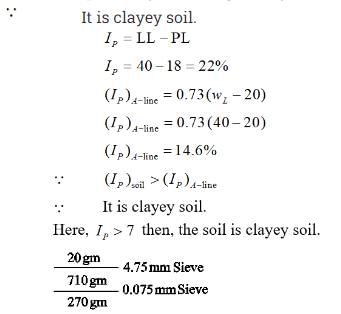
More than 50% of the material passes through 4.75 mm sieve therefore it is sand.
Percentage finer is 27%.
It is clayey sand, SC.
Inorganic soil with low compressibility are represented by- a)MH
- b)SL
- c)ML
- d)CH
Correct answer is option 'C'. Can you explain this answer?
Inorganic soil with low compressibility are represented by
a)
MH
b)
SL
c)
ML
d)
CH
| | Arnab Choudhury answered |
In ML;
M represents inorganic soil,
L represents low compressibility,
MH. Inorganic soil of high compressibility,
SL: Sand of low compressibility,
CH: Clay with high compressibility,
M represents inorganic soil,
L represents low compressibility,
MH. Inorganic soil of high compressibility,
SL: Sand of low compressibility,
CH: Clay with high compressibility,
In a canal system the order in which water flowsis- a)branch canal – distributary – minor– fieldchannels
- b)branch canal minor – distributary – fieldchannels
- c)branch canal – minor– field channel –distibutary
- d)branch canal – field canal – distributary –minor
Correct answer is option 'A'. Can you explain this answer?
In a canal system the order in which water flowsis
a)
branch canal – distributary – minor– fieldchannels
b)
branch canal minor – distributary – fieldchannels
c)
branch canal – minor– field channel –distibutary
d)
branch canal – field canal – distributary –minor
 | Sneha Nair answered |
Canal System and Water Flow Order
A canal system is a network of waterways used for irrigation, drainage, and transportation. The order in which water flows in a canal system is important for efficient water management. The correct order of water flow in a canal system is as follows:
1. Branch Canal
A branch canal is a canal that diverts water from a main canal to a smaller canal. It is the first channel in the water flow order.
2. Distributary
A distributary is a channel that carries water from a branch canal to a field or farm. It is the second channel in the water flow order.
3. Minor Field Channels
Minor field channels are small channels that distribute water to the crops in the fields. They are the third channel in the water flow order.
Importance of the Correct Water Flow Order
The correct water flow order is important for the following reasons:
1. Efficient Use of Water
The correct water flow order ensures that water is distributed efficiently to the fields. This helps to minimize water wastage and ensure that crops receive an adequate amount of water.
2. Proper Drainage
The correct water flow order ensures that excess water is drained properly from the fields. This helps to prevent waterlogging and soil erosion.
3. Reduced Maintenance Costs
The correct water flow order reduces maintenance costs by minimizing the need for repairs and replacements.
Conclusion
In conclusion, the correct water flow order in a canal system is branch canal, distributary, and minor field channels. This order ensures efficient water management, proper drainage, and reduced maintenance costs.
A canal system is a network of waterways used for irrigation, drainage, and transportation. The order in which water flows in a canal system is important for efficient water management. The correct order of water flow in a canal system is as follows:
1. Branch Canal
A branch canal is a canal that diverts water from a main canal to a smaller canal. It is the first channel in the water flow order.
2. Distributary
A distributary is a channel that carries water from a branch canal to a field or farm. It is the second channel in the water flow order.
3. Minor Field Channels
Minor field channels are small channels that distribute water to the crops in the fields. They are the third channel in the water flow order.
Importance of the Correct Water Flow Order
The correct water flow order is important for the following reasons:
1. Efficient Use of Water
The correct water flow order ensures that water is distributed efficiently to the fields. This helps to minimize water wastage and ensure that crops receive an adequate amount of water.
2. Proper Drainage
The correct water flow order ensures that excess water is drained properly from the fields. This helps to prevent waterlogging and soil erosion.
3. Reduced Maintenance Costs
The correct water flow order reduces maintenance costs by minimizing the need for repairs and replacements.
Conclusion
In conclusion, the correct water flow order in a canal system is branch canal, distributary, and minor field channels. This order ensures efficient water management, proper drainage, and reduced maintenance costs.
The octahedral structural unit of clay minerals consists of _______ hydroxyls forming a configuration of an octahedron and having one aluminium atom at the centre.- a)seven
- b)six
- c)eight
- d)four
Correct answer is option 'B'. Can you explain this answer?
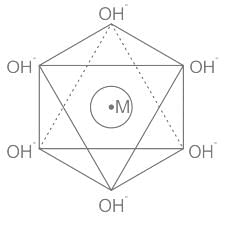
The octahedral structural unit of clay minerals consists of _______ hydroxyls forming a configuration of an octahedron and having one aluminium atom at the centre.
a)
seven
b)
six
c)
eight
d)
four
 | Lavanya Menon answered |
Concept:
The atomic structure of clay minerals has two fundamental crystalline sheets:
The atomic structure of clay minerals has two fundamental crystalline sheets:
- Tetrahedral sheet or Silica sheet
- Octahedral sheet or Alumina sheet
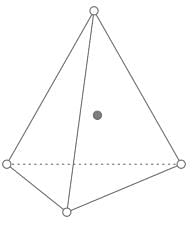
1. Tetrahedral sheet or Silica sheet: It consists of four oxygen atoms placed at tips of a tetrahedron enclosing a silicon atom. Each of the ‘O’ ion at the base is common to two adjacent units. The sharing of charges leaves three negative charges at the base per tetrahedral sheet. This, along with two negative charges at apex, makes total four negative charges with four positive charges of the silicon ion. Thus there is net charge of -1 per unit.
2. Octahedral sheet or Alumina sheet: It is combination of octahedral units. An octahedral unit consists of six hydroxyl ions at the tips of an octahedron enclosing an aluminum or magnesium or any other metallic atom. The rows of hydroxyl ions in the sheet are in two planes with each hydroxyl ion common to three octahedral units. Each hydroxyl ion divides its -1 charge with two other units, leaving a total of 2 negative charge per unit. Thus, net charge of an octahedral unit with aluminum ion having +3 charge at center is +1.
2. Octahedral sheet or Alumina sheet: It is combination of octahedral units. An octahedral unit consists of six hydroxyl ions at the tips of an octahedron enclosing an aluminum or magnesium or any other metallic atom. The rows of hydroxyl ions in the sheet are in two planes with each hydroxyl ion common to three octahedral units. Each hydroxyl ion divides its -1 charge with two other units, leaving a total of 2 negative charge per unit. Thus, net charge of an octahedral unit with aluminum ion having +3 charge at center is +1.
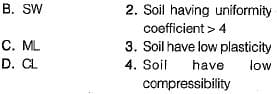
Match List-I (Soil classification symbol) with List-ll (Soil property) and select the correct answer using the codes given below the lists:

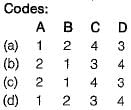
- a)A
- b)B
- c)C
- d)D
Correct answer is option 'B'. Can you explain this answer?
Match List-I (Soil classification symbol) with List-ll (Soil property) and select the correct answer using the codes given below the lists:
a)
A
b)
B
c)
C
d)
D
| | Lekshmi Das answered |
GW is well graded gravel for which coefficient of uniformity (Cu) > 4.
SW is well graded sand for which coefficient of u n ifo rm ity (Cu) > 6
ML is silt with low plasticity (< 35%)
CL is clay with low plasticity (< 35%). It also possess low compressibility.
SW is well graded sand for which coefficient of u n ifo rm ity (Cu) > 6
ML is silt with low plasticity (< 35%)
CL is clay with low plasticity (< 35%). It also possess low compressibility.
In a particular soil sample, laboratory analysis has yielded the following result:
1. Sand-20%
2. Silt - 30%
3. Clay-50%
Without using the textural chart, the correct textural classification of the soil would be- a)loam
- b)sandy clay
- c)silty loam
- d)clay
Correct answer is option 'D'. Can you explain this answer?
In a particular soil sample, laboratory analysis has yielded the following result:
1. Sand-20%
2. Silt - 30%
3. Clay-50%
Without using the textural chart, the correct textural classification of the soil would be
1. Sand-20%
2. Silt - 30%
3. Clay-50%
Without using the textural chart, the correct textural classification of the soil would be
a)
loam
b)
sandy clay
c)
silty loam
d)
clay
| | Shalini Deshpande answered |
As 50% of soil is clay. So it will be classified as clay.
Highway research board (HRB) classification system is also known as__________- a)Indian classification system
- b)Public road administration (PRA) system
- c)International classification system
- d)M.I.T. classification system
Correct answer is option 'B'. Can you explain this answer?
Highway research board (HRB) classification system is also known as__________
a)
Indian classification system
b)
Public road administration (PRA) system
c)
International classification system
d)
M.I.T. classification system
| | Pranavi Choudhury answered |
Highway research board classification system is also known as public road administration (PRA) system.
The term ‘silt’ in particle size classification system ,can be replaced by___________- a) Silt size
- b) Clay size
- c) Silt type
- d) None of the mentioned
Correct answer is option 'A'. Can you explain this answer?
The term ‘silt’ in particle size classification system ,can be replaced by___________
a)
Silt sizeb)
Clay sizec)
Silt typed)
None of the mentioned  | Neha Choudhury answered |
As the system is classified based on size, it is preferable to use the word ‘silt size’ and ‘clay size’ in place of simply ‘silt’ or ‘clay’.
Public road administration (PRA) system is based on_____________- a)Particle-size composition and Plasticity characteristics
- b)Particle size distribution
- c)All of the mentioned
- d)None of the mentioned
Correct answer is option 'A'. Can you explain this answer?
Public road administration (PRA) system is based on_____________
a)
Particle-size composition and Plasticity characteristics
b)
Particle size distribution
c)
All of the mentioned
d)
None of the mentioned
 | Mahesh Yadav answered |
The Public Road Administration (PRA) system is based on Particle-size composition and Plasticity characteristics.
Explanation:
The PRA system is a method used to determine the suitability of soil for road construction and maintenance. It involves analyzing the particle-size composition and plasticity characteristics of the soil.
Particle-size composition:
- The particle-size composition refers to the distribution of different-sized particles in the soil.
- It is determined by conducting sieve analysis, in which the soil sample is passed through a series of sieves with different mesh sizes to separate the particles.
- The percentage of particles retained on each sieve is then calculated, and a particle-size distribution curve is plotted.
Plasticity characteristics:
- Plasticity characteristics refer to the ability of soil to undergo deformation without cracking or breaking.
- This property is primarily influenced by the clay content in the soil.
- Clay particles have a high plasticity due to their ability to absorb water and form a cohesive mass.
- The plasticity characteristics of soil are determined using tests such as the Atterberg limits test, which measures the moisture content at which the soil transitions between different states (liquid, plastic, and solid).
Importance of particle-size composition and plasticity characteristics in road construction:
- Particle-size composition and plasticity characteristics play a crucial role in determining the engineering properties and behavior of soil.
- These properties influence the soil's strength, permeability, compaction, and stability, which are critical factors for road construction and maintenance.
- For example, soils with a high clay content have high plasticity and tend to shrink and swell with changes in moisture content, leading to pavement distress and stability issues.
- On the other hand, soils with a well-graded particle-size distribution (containing a range of particle sizes) provide good compaction characteristics and improved load-bearing capacity.
Conclusion:
In conclusion, the Public Road Administration (PRA) system is based on the analysis of particle-size composition and plasticity characteristics of soil. These properties are essential for assessing the suitability of soil for road construction and maintenance, as they influence the soil's strength, stability, and other engineering properties.
Explanation:
The PRA system is a method used to determine the suitability of soil for road construction and maintenance. It involves analyzing the particle-size composition and plasticity characteristics of the soil.
Particle-size composition:
- The particle-size composition refers to the distribution of different-sized particles in the soil.
- It is determined by conducting sieve analysis, in which the soil sample is passed through a series of sieves with different mesh sizes to separate the particles.
- The percentage of particles retained on each sieve is then calculated, and a particle-size distribution curve is plotted.
Plasticity characteristics:
- Plasticity characteristics refer to the ability of soil to undergo deformation without cracking or breaking.
- This property is primarily influenced by the clay content in the soil.
- Clay particles have a high plasticity due to their ability to absorb water and form a cohesive mass.
- The plasticity characteristics of soil are determined using tests such as the Atterberg limits test, which measures the moisture content at which the soil transitions between different states (liquid, plastic, and solid).
Importance of particle-size composition and plasticity characteristics in road construction:
- Particle-size composition and plasticity characteristics play a crucial role in determining the engineering properties and behavior of soil.
- These properties influence the soil's strength, permeability, compaction, and stability, which are critical factors for road construction and maintenance.
- For example, soils with a high clay content have high plasticity and tend to shrink and swell with changes in moisture content, leading to pavement distress and stability issues.
- On the other hand, soils with a well-graded particle-size distribution (containing a range of particle sizes) provide good compaction characteristics and improved load-bearing capacity.
Conclusion:
In conclusion, the Public Road Administration (PRA) system is based on the analysis of particle-size composition and plasticity characteristics of soil. These properties are essential for assessing the suitability of soil for road construction and maintenance, as they influence the soil's strength, stability, and other engineering properties.
Unified soil classification system (USCS) was developed by____________- a)Kozney
- b)Atterberg
- c)Casagrande
- d)Rankine
Correct answer is option 'C'. Can you explain this answer?
Unified soil classification system (USCS) was developed by____________
a)
Kozney
b)
Atterberg
c)
Casagrande
d)
Rankine
 | Swara Dasgupta answered |
In 1940, casagrande originally developed the unified soil classification system (USCS).
Which of the following terms are used to indicate grain sizes?- a)Gravel
- b)Sand
- c)Silt
- d)All of the mentioned
Correct answer is option 'D'. Can you explain this answer?
Which of the following terms are used to indicate grain sizes?
a)
Gravel
b)
Sand
c)
Silt
d)
All of the mentioned
| | Siddharth Bajaj answered |
Terms such as gravel, sand, silt, and clay are used to indicate grain sizes .these terms are used only as designation of particle size.
Coarse grained soils, containing fines between 5-12%, are designated by___________Symbol.- a)GW-GM and SP-SM
- b)CL-ML
- c)None of the mentioned
- d)All of the mentioned
Correct answer is option 'A'. Can you explain this answer?
Coarse grained soils, containing fines between 5-12%, are designated by___________Symbol.
a)
GW-GM and SP-SM
b)
CL-ML
c)
None of the mentioned
d)
All of the mentioned
| | Lakshmi Datta answered |
If the percentage of fines lies between 5 to 12 %, coarse grained soils are designated by dual symbols GW-GM or SP-SM.
specific surface(SS) can also expressed as________- a)Surface area of the particle per unit volume
- b)Physical properties of the soil
- c)Moisture content of the soil
- d)None of the mentioned
Correct answer is option 'A'. Can you explain this answer?
specific surface(SS) can also expressed as________
a)
Surface area of the particle per unit volume
b)
Physical properties of the soil
c)
Moisture content of the soil
d)
None of the mentioned
| | Sneha Nair answered |
Understanding Specific Surface (SS)
Specific Surface (SS) is a critical concept in soil mechanics and civil engineering, particularly in understanding soil behavior and its interaction with water and other materials.
Definition of Specific Surface
- Specific Surface refers to the surface area of soil particles per unit volume of the soil.
- It quantifies the amount of surface area available, which significantly influences various physical and chemical interactions.
Importance of Specific Surface
- Soil Behavior: A higher specific surface indicates more surface area for particle interactions, leading to greater adhesion and cohesion properties.
- Water Retention: Soils with high SS can retain more moisture due to the increased surface area available for water molecules to adhere to.
- Chemical Reactions: In soils, the specific surface plays a vital role in adsorption processes, affecting nutrient availability and soil fertility.
Calculation of Specific Surface
- It is typically calculated by determining the total surface area of soil particles and dividing it by the volume of the soil sample.
- This can be influenced by factors such as particle size distribution and shape.
Conclusion
In summary, the correct expression for specific surface is option 'A' because it directly relates to the surface area of particles relative to the volume they occupy, which is fundamental in assessing soil properties and behaviors in civil engineering applications. Understanding SS aids engineers in designing effective foundations, slopes, and other structures by considering how soils will behave under various conditions.
Specific Surface (SS) is a critical concept in soil mechanics and civil engineering, particularly in understanding soil behavior and its interaction with water and other materials.
Definition of Specific Surface
- Specific Surface refers to the surface area of soil particles per unit volume of the soil.
- It quantifies the amount of surface area available, which significantly influences various physical and chemical interactions.
Importance of Specific Surface
- Soil Behavior: A higher specific surface indicates more surface area for particle interactions, leading to greater adhesion and cohesion properties.
- Water Retention: Soils with high SS can retain more moisture due to the increased surface area available for water molecules to adhere to.
- Chemical Reactions: In soils, the specific surface plays a vital role in adsorption processes, affecting nutrient availability and soil fertility.
Calculation of Specific Surface
- It is typically calculated by determining the total surface area of soil particles and dividing it by the volume of the soil sample.
- This can be influenced by factors such as particle size distribution and shape.
Conclusion
In summary, the correct expression for specific surface is option 'A' because it directly relates to the surface area of particles relative to the volume they occupy, which is fundamental in assessing soil properties and behaviors in civil engineering applications. Understanding SS aids engineers in designing effective foundations, slopes, and other structures by considering how soils will behave under various conditions.
The best known classification system in textural classification is__________- a)M.I.T. classification system
- b)Triangular classification of U.S. public road administration
- c)Indian classification system
- d)International classification
Correct answer is option 'B'. Can you explain this answer?
The best known classification system in textural classification is__________
a)
M.I.T. classification system
b)
Triangular classification of U.S. public road administration
c)
Indian classification system
d)
International classification
| | Garima Basak answered |
Triangular classification of U.S. public road administration is a commonly used system for textural classification.
Microscopic soil particles have a very___________- a)Larger specific surface
- b)A larger volume
- c)Small specific surface
- d)Larger diameter
Correct answer is option 'A'. Can you explain this answer?
Microscopic soil particles have a very___________
a)
Larger specific surface
b)
A larger volume
c)
Small specific surface
d)
Larger diameter
 | Nidhi Tiwari answered |
As the specific surface increases as the size of the grain decreases .Therefore Microscopic particles have a large specific surface.
Based on HRB classification system, the soil are divided in to___________- a)2 primary groups
- b)6 primary groups
- c)7 primary groups
- d)6 primary groups
Correct answer is option 'C'. Can you explain this answer?
Based on HRB classification system, the soil are divided in to___________
a)
2 primary groups
b)
6 primary groups
c)
7 primary groups
d)
6 primary groups
| | Siddharth Bajaj answered |
Based on HRB system, the soil is divided into 7 primary groups, designated as A-1, A-2…A-7.
Which of the following clay mineral present in black cotton soil is a cause for its large swelling and shrinkage?- a)Illite
- b)Montmorillonite
- c)Halloysite
- d)Kaolinite
Correct answer is option 'B'. Can you explain this answer?
Which of the following clay mineral present in black cotton soil is a cause for its large swelling and shrinkage?
a)
Illite
b)
Montmorillonite
c)
Halloysite
d)
Kaolinite
| | Lavanya Menon answered |
- Black cotton soils have montmorillonite clay mineral which shows swelling and shrinkage behavior on wetting and drying.
- Under-reamed piles are used for the structures constructed on black cotton soils or expansive soil to resist the expansive nature of the soil through the bulb provided in the piles.
- Black Cotton Soil also consists of the excess of Montmorillonite mineral.
- Bentonite clay shows swelling and shrinkage characteristics due to moisture content variation due to the presence of Montmorillonite mineral.
- Bentonite clay is also called Montmorillonite clay.
The performance of the soil, when used for pavement construction is found out by using_____________- a)Quality test
- b)Group index
- c)Material test
- d)None of the mentioned
Correct answer is option 'B'. Can you explain this answer?
The performance of the soil, when used for pavement construction is found out by using_____________
a)
Quality test
b)
Group index
c)
Material test
d)
None of the mentioned
| | Garima Basak answered |
As group index is a mean of rating the value of a soil as a sub-grade material
It can be used for finding the performance and quality of the soil.
It can be used for finding the performance and quality of the soil.
Permeability of the soil depends on__________- a)Size of the soil particle
- b)Moisture present in soil
- c)Specific surface of the soil particle
- d)Density of the soil
Correct answer is option 'C'. Can you explain this answer?
Permeability of the soil depends on__________
a)
Size of the soil particle
b)
Moisture present in soil
c)
Specific surface of the soil particle
d)
Density of the soil
| | Sahana Choudhary answered |
Permeability of soil greatly depends on specific surface of the soil because of the viscous effects associated with surface characteristics of the grains.
The Indian standard soil classification system ,(ISCS) was first developed in___________- a)1947
- b)1950
- c)1959
- d)1960
Correct answer is option 'C'. Can you explain this answer?
The Indian standard soil classification system ,(ISCS) was first developed in___________
a)
1947
b)
1950
c)
1959
d)
1960
| | Avinash Mehta answered |
Answer: c
Explanation: The Indian standard classification system (ISCS) was first developed in 1959 and revised in 1970.
Clay minerals in soils are produced due to ___________ type of weathering. - a)Chemical
- b)Synthetic
- c)Physical
- d)Biological
Correct answer is option 'A'. Can you explain this answer?
Clay minerals in soils are produced due to ___________ type of weathering.
a)
Chemical
b)
Synthetic
c)
Physical
d)
Biological
| | Divya Mehta answered |
Clay minerals in soils are produced due to Chemical weathering.
Chemical weathering is the process by which rocks and minerals undergo chemical changes, resulting in the formation of new minerals. This process involves the reaction of minerals with water and atmospheric gases, leading to the breakdown and alteration of the original rock material. Clay minerals are a common product of chemical weathering, and they play a crucial role in soil formation and fertility.
Here are some key points explaining why clay minerals are produced due to chemical weathering:
1. Chemical reactions: Chemical weathering involves various chemical reactions between minerals and reactive substances. These reactions can occur due to the presence of water, oxygen, carbon dioxide, acids, and other chemicals in the environment. Clay minerals are formed as a result of these reactions.
2. Hydrolysis: Hydrolysis is one of the main processes involved in chemical weathering. It occurs when water reacts with minerals, causing them to break down and form new compounds. Clay minerals, such as kaolinite, illite, and montmorillonite, are formed through hydrolysis reactions.
3. Dissolution: Dissolution is another important process in chemical weathering. It involves the dissolution of soluble minerals in water. As these minerals dissolve, they release ions into the water, which can then react with other minerals to form clay minerals.
4. Ion exchange: Clay minerals have the ability to exchange ions with surrounding solutions. This ion exchange process is an important mechanism in chemical weathering. It allows clay minerals to adsorb and release various ions, contributing to the overall chemical composition of the soil.
5. Weathering agents: Chemical weathering can be enhanced by various weathering agents, such as acids, organic acids, and chelating agents. These agents can accelerate the breakdown of minerals and promote the formation of clay minerals.
In conclusion, clay minerals in soils are primarily produced through chemical weathering processes. The reactions between minerals and water, as well as other reactive substances, lead to the breakdown and alteration of the original rock material, resulting in the formation of clay minerals. These clay minerals play a crucial role in soil fertility and the overall functioning of terrestrial ecosystems.
Chemical weathering is the process by which rocks and minerals undergo chemical changes, resulting in the formation of new minerals. This process involves the reaction of minerals with water and atmospheric gases, leading to the breakdown and alteration of the original rock material. Clay minerals are a common product of chemical weathering, and they play a crucial role in soil formation and fertility.
Here are some key points explaining why clay minerals are produced due to chemical weathering:
1. Chemical reactions: Chemical weathering involves various chemical reactions between minerals and reactive substances. These reactions can occur due to the presence of water, oxygen, carbon dioxide, acids, and other chemicals in the environment. Clay minerals are formed as a result of these reactions.
2. Hydrolysis: Hydrolysis is one of the main processes involved in chemical weathering. It occurs when water reacts with minerals, causing them to break down and form new compounds. Clay minerals, such as kaolinite, illite, and montmorillonite, are formed through hydrolysis reactions.
3. Dissolution: Dissolution is another important process in chemical weathering. It involves the dissolution of soluble minerals in water. As these minerals dissolve, they release ions into the water, which can then react with other minerals to form clay minerals.
4. Ion exchange: Clay minerals have the ability to exchange ions with surrounding solutions. This ion exchange process is an important mechanism in chemical weathering. It allows clay minerals to adsorb and release various ions, contributing to the overall chemical composition of the soil.
5. Weathering agents: Chemical weathering can be enhanced by various weathering agents, such as acids, organic acids, and chelating agents. These agents can accelerate the breakdown of minerals and promote the formation of clay minerals.
In conclusion, clay minerals in soils are primarily produced through chemical weathering processes. The reactions between minerals and water, as well as other reactive substances, lead to the breakdown and alteration of the original rock material, resulting in the formation of clay minerals. These clay minerals play a crucial role in soil fertility and the overall functioning of terrestrial ecosystems.
Soil classification based on the particle size distribution is_____________- a)Unified soil classification
- b)IS classification
- c)None of these
- d)Textural classification
Correct answer is option 'D'. Can you explain this answer?
Soil classification based on the particle size distribution is_____________
a)
Unified soil classification
b)
IS classification
c)
None of these
d)
Textural classification
| | Rajeev Sharma answered |
Soil classification of composite soils exclusively based on the particle size distribution is known as textural classification.
Fine grained soil are sub divided in to___________- a)Silt and clay
- b)Sand and clay
- c)Organic and silt
- d)Gravel and peat
Correct answer is option 'A'. Can you explain this answer?
Fine grained soil are sub divided in to___________
a)
Silt and clay
b)
Sand and clay
c)
Organic and silt
d)
Gravel and peat
| | Kavya Mehta answered |
Based on their liquid limit and plasticity index, fine grained soil are subdivided in to silt and clay
Sieve analysis on a dry soil sample of mass 1000g showed that 980g and 270g of soil pass through 4.75 mm and 0.075 mm sieve respectively. The liquid limit and plastic limit of the soil fraction passing through 425 μ sieves are 40% and 18%, respectively. The soil may be classified as- a)SC
- b)MI
- c)CI
- d)SM
Correct answer is option 'A'. Can you explain this answer?
Sieve analysis on a dry soil sample of mass 1000g showed that 980g and 270g of soil pass through 4.75 mm and 0.075 mm sieve respectively. The liquid limit and plastic limit of the soil fraction passing through 425 μ sieves are 40% and 18%, respectively. The soil may be classified as
a)
SC
b)
MI
c)
CI
d)
SM
| | Anjana Singh answered |
Total mass of dry sample = 1000 g
Soil passing through 4.75 mm sieve = 980 g
=9801000×100=98 %
Soil passing through 0.075 mm sieve
= 270 g = 27%
Liquid limit, wL=40%
Plastic limit, wp=18%
Plasticity Index, Ip=wL−wP
= 40 - 18 = 22%
Since less than 50% passes through 0.075 mm sieve, soil is coarse grained
More than 50% of coarser fraction passes through 4.75 mm sieve, so it is sand.
Since fines(< .075 mm) are more than 12%
so using A line chart
IPC=0.73(wL−20)
= 0.73 (40 - 20) = 14.6
Ip>IPC, So point lies above A line (clayey type)
Hence, soil is classified as SC.
Soil passing through 4.75 mm sieve = 980 g
=9801000×100=98 %
Soil passing through 0.075 mm sieve
= 270 g = 27%
Liquid limit, wL=40%
Plastic limit, wp=18%
Plasticity Index, Ip=wL−wP
= 40 - 18 = 22%
Since less than 50% passes through 0.075 mm sieve, soil is coarse grained
More than 50% of coarser fraction passes through 4.75 mm sieve, so it is sand.
Since fines(< .075 mm) are more than 12%
so using A line chart
IPC=0.73(wL−20)
= 0.73 (40 - 20) = 14.6
Ip>IPC, So point lies above A line (clayey type)
Hence, soil is classified as SC.
In a soil specimen, 70% of particles are passing through 4.75 mm IS sieve and 40% of particles are passing through 75 μ IS sieve. Its uniformity coefficient is 8 and coefficient of curvature is 2. AS per IS classification, this soil is classified as- a)SP
- b)GW
- c)SW
- d)GP
Correct answer is option 'C'. Can you explain this answer?
In a soil specimen, 70% of particles are passing through 4.75 mm IS sieve and 40% of particles are passing through 75 μ IS sieve. Its uniformity coefficient is 8 and coefficient of curvature is 2. AS per IS classification, this soil is classified as
a)
SP
b)
GW
c)
SW
d)
GP
| | Sanya Agarwal answered |
The soil can be classified according to the Indian Standard (IS) classification system based on the grain size distribution and the coefficients of uniformity and curvature.
Given data:
Percentage of particles passing through 4.75 mm IS sieve = 70%
Percentage of particles passing through 75 μ IS sieve = 40%
Uniformity Coefficient (Cu) = 8
Coefficient of Curvature (Cc) = 2
According to the IS classification system, soils are classified into four groups: Gravel (G), Sand (S), Silt (M), and Clay (C). To classify the soil, we need to determine the primary and secondary components of the soil.
From the given data, we can deduce that the soil is primarily composed of sand (S) since the majority (70%) of the particles pass through the 4.75 mm sieve. The secondary component of the soil is gravel (G) since 40% of the particles pass through the 75 μ sieve.
Now, we need to determine the grading characteristic of the soil, which is done using the uniformity coefficient (Cu) and the coefficient of curvature (Cc). The soil is considered well-graded if Cu > 6 and 1 < Cc < 3. In this case, Cu = 8 and Cc = 2, which means the soil is well-graded.
Since the soil is primarily composed of sand and is well-graded, it can be classified as SW
Given data:
Percentage of particles passing through 4.75 mm IS sieve = 70%
Percentage of particles passing through 75 μ IS sieve = 40%
Uniformity Coefficient (Cu) = 8
Coefficient of Curvature (Cc) = 2
According to the IS classification system, soils are classified into four groups: Gravel (G), Sand (S), Silt (M), and Clay (C). To classify the soil, we need to determine the primary and secondary components of the soil.
From the given data, we can deduce that the soil is primarily composed of sand (S) since the majority (70%) of the particles pass through the 4.75 mm sieve. The secondary component of the soil is gravel (G) since 40% of the particles pass through the 75 μ sieve.
Now, we need to determine the grading characteristic of the soil, which is done using the uniformity coefficient (Cu) and the coefficient of curvature (Cc). The soil is considered well-graded if Cu > 6 and 1 < Cc < 3. In this case, Cu = 8 and Cc = 2, which means the soil is well-graded.
Since the soil is primarily composed of sand and is well-graded, it can be classified as SW
Particle size classification system does not signify__________- a)Soil types
- b)Soil Particle size
- c)All of the mentioned
- d)None of the mentioned
Correct answer is option 'A'. Can you explain this answer?
Particle size classification system does not signify__________
a)
Soil types
b)
Soil Particle size
c)
All of the mentioned
d)
None of the mentioned
| | Sagarika Patel answered |
Particle size classification used only as designation of particle sizes, and do not signify the naturally occurring types which are mixtures of particle of different sizes.
A soil mass contains 40% gravel, 50% sand and 10% silt. This soil can be classified as- a)silty sandy gravel having coefficient of uniformity less than 60.
- b)silty gravelly sand having coefficient of uniformity equal to 10.
- c)gravelly silty sand having coefficient of uniformity greater than 60.
- d)gravelly silty sand and its coefficient of uniformity cannot be determined.
Correct answer is option 'C'. Can you explain this answer?
A soil mass contains 40% gravel, 50% sand and 10% silt. This soil can be classified as
a)
silty sandy gravel having coefficient of uniformity less than 60.
b)
silty gravelly sand having coefficient of uniformity equal to 10.
c)
gravelly silty sand having coefficient of uniformity greater than 60.
d)
gravelly silty sand and its coefficient of uniformity cannot be determined.
| | Nishanth Banerjee answered |

According to ISCS , fine grained soils are subdivided in to___________- a)2
- b)4
- c)5
- d)3
Correct answer is option 'D'. Can you explain this answer?
According to ISCS , fine grained soils are subdivided in to___________
a)
2
b)
4
c)
5
d)
3
| | Gauri Roy answered |
Fine grained soil are subdivided into 3 types
1. Inorganic silts and very fine sands
2. Inorganic clays
3. Organic silts and clay and organic matter.
1. Inorganic silts and very fine sands
2. Inorganic clays
3. Organic silts and clay and organic matter.
Specific surface is termed as__________- a)Total volume of soil particles
- b)Total area of soil particles
- c)Total surface area in a unit mass
- d)Ratio of total surface to the total volume
Correct answer is option 'C'. Can you explain this answer?
Specific surface is termed as__________
a)
Total volume of soil particles
b)
Total area of soil particles
c)
Total surface area in a unit mass
d)
Ratio of total surface to the total volume
| | Sahana Choudhary answered |
Specific surface is usually defined as the total surface area of the soil particle in a unit mass.
To use textural classification chart,___________lines must be drawn.- a)Parallel to the three sides of the triangle
- b)Parallel to the only one side of the triangle
- c)Adjacent to the three sides of the triangle
- d)Adjacent to the one sides of the triangle
Correct answer is option 'A'. Can you explain this answer?
To use textural classification chart,___________lines must be drawn.
a)
Parallel to the three sides of the triangle
b)
Parallel to the only one side of the triangle
c)
Adjacent to the three sides of the triangle
d)
Adjacent to the one sides of the triangle
| | Pranavi Choudhury answered |
to use the textural classification chart, for a given percentages of three constituents forming a soil, lines are drawn parallel to three sides of the equilateral triangle.
Which of the following minerals is formed by linking gibbsite sheets to sheets of silica through unbalanced oxygen atoms at the top points of silica?- a)Illite
- b)Albite
- c)Kaolinite
- d)Montmorillonite
Correct answer is option 'C'. Can you explain this answer?
Which of the following minerals is formed by linking gibbsite sheets to sheets of silica through unbalanced oxygen atoms at the top points of silica?
a)
Illite
b)
Albite
c)
Kaolinite
d)
Montmorillonite
| | Lalit Yadav answered |
Kaolinite:
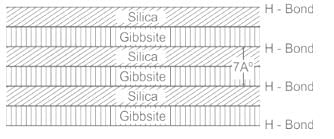
- The kaolinite structural unit is made up of gibbsite sheets(with aluminum atoms at their centers) joined to silica sheets through the unbalanced oxygen atoms at the apexes of the silicas.
- These basic units are then stacked one on top of the other to form a lattice of the mineral
- The successive 7 angstrom units are held together by hydrogen bonds.
- The strong bonding does not permit water to enter the lattice
- Thus, kaolinite minerals are stable and do not expand under saturation
- The total thickness of the structural unit of a Kaolinite mineral is 7 A°, where 1 A° = 10-10 meters.
Chapter doubts & questions for Classification of Soils - 3 Months Preparation Course for GATE Civil Engineering (CE) 2026 is part of Civil Engineering (CE) exam preparation. The chapters have been prepared according to the Civil Engineering (CE) exam syllabus. The Chapter doubts & questions, notes, tests & MCQs are made for Civil Engineering (CE) 2026 Exam. Find important definitions, questions, notes, meanings, examples, exercises, MCQs and online tests here.
Chapter doubts & questions of Classification of Soils - 3 Months Preparation Course for GATE Civil Engineering (CE) in English & Hindi are available as part of Civil Engineering (CE) exam. Download more important topics, notes, lectures and mock test series for Civil Engineering (CE) Exam by signing up for free.
3 Months Preparation Course for GATE Civil Engineering (CE)489 videos|1335 docs|878 tests |
