


All Exams > Electrical Engineering (EE) > 3 Months Preparation for GATE Electrical > All Questions
All questions of Calculus for Electrical Engineering (EE) Exam
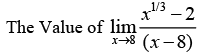

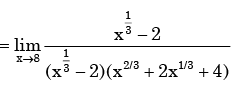


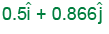

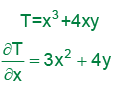
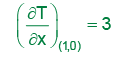
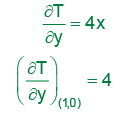

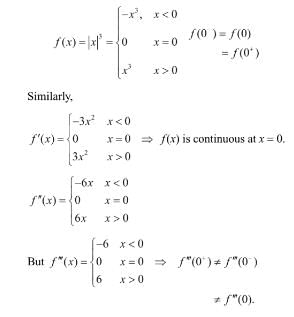
Consider the function f(x) = |x|3, where x is real. Then the function f(x) at x = 0 isa)Continuous but not differentiable
b)Once differentiable but not twice
c)Twice differentiable but not thrice
d)Thrice differentiable
Correct answer is option 'C'. Can you explain this answer?
 | Diya Mukherjee answered |
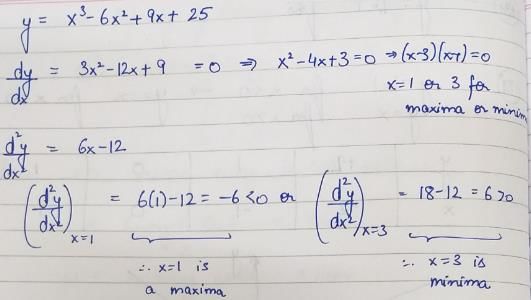
The minimum point of the function f(x) = (x2/3) – x is at - a) x = 1
- b)x = -1
- c) x = 0
- d)x = 1/√3
Correct answer is option 'A'. Can you explain this answer?
The minimum point of the function f(x) = (x2/3) – x is at
a)
x = 1
b)
x = -1
c)
x = 0
d)
x = 1/√3
 | Avinash Sharma answered |
Correct Answer :- a
Explanation : f(x) = (x^2/3) - x
f'(x) = 2/3(x-1/2) - 1
f"(x) = -1/3(x-3/2)
For critical points. f′(x)=0
=> 2/3(x-1/2) - 1 = 0
f has minimum value of x = 1
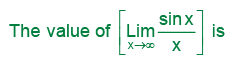
- a)∞
- b)2
- c)0
- d)1
Correct answer is option 'C'. Can you explain this answer?
a)
∞
b)
2
c)
0
d)
1
 | Yash Patel answered |
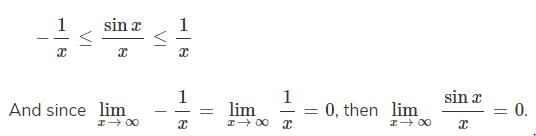
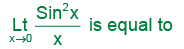
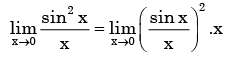
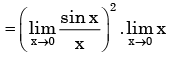
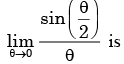
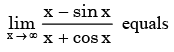
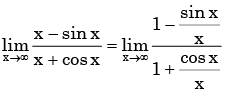
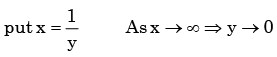
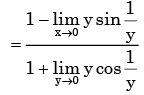
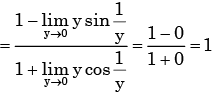
the squeeze theorem for this. Recall that sinx is only defined on −1≤sinx≤1. Therefore
Consider the following two statements about the function f(x) = |x| P: f(x) is continuous for all real values of x Q: f(x) is differentiable for all real values of x Which of the f oll owi ng is TRU E? - a)P is true and Q is false
- b)P is false and Q is true
- c)Both P and Q are true
- d)Both P and Q are false
Correct answer is option 'A'. Can you explain this answer?
Consider the following two statements about the function f(x) = |x|
P: f(x) is continuous for all real values of x
Q: f(x) is differentiable for all real values of x
Which of the f oll owi ng is TRU E?
a)
P is true and Q is false
b)
P is false and Q is true
c)
Both P and Q are true
d)
Both P and Q are false
| | Avinash Sharma answered |
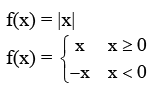
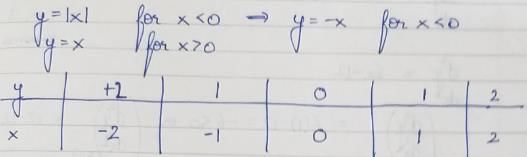
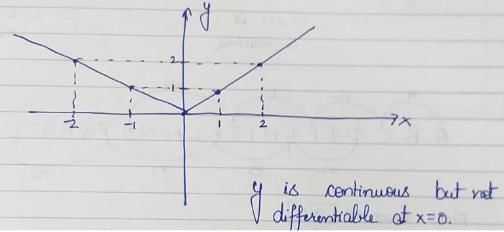
The graph of f(x) is
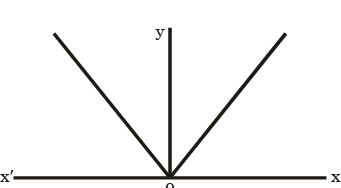
f(x) is continuous for all real values of x Lim |x| = Lim |x| = 0

as can be seen from graph of |x|.
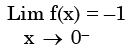
and Lim f(x) = +1 as can be seen from graph of |x|
x → 0+
Left deriva tive ≠ Rig ht derivative
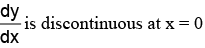
So |x| is continuous but not differentiable at x = 0.
If x is real, find the maximum value of (-x2 + 3x + 7)- a)36/5
- b)37/7
- c)37/4
- d)36/7
Correct answer is option 'C'. Can you explain this answer?
If x is real, find the maximum value of (-x2 + 3x + 7)
a)
36/5
b)
37/7
c)
37/4
d)
36/7
 | Bijoy Mehra answered |
Given Equation:
- x is real, find the maximum value of (-x^2 + 3x + 7)
Step 1: Find the vertex of the parabola
- The given equation is in the form of a quadratic equation, -x^2 + 3x + 7.
- To find the maximum value, we need to find the vertex of the parabola represented by this equation.
- The x-coordinate of the vertex is given by the formula: x = -b/2a, where a=-1 and b=3 in this case.
- Substituting the values of a and b, we get x = -3/(2*(-1)) = 3/2.
- Now, substitute x = 3/2 back into the equation to find the maximum value.
Step 2: Calculate the maximum value
- Substitute x = 3/2 into the equation: (-3/2)^2 + 3*(3/2) + 7
- Simplify the expression to find the maximum value: -9/4 + 9/2 + 7 = 37/4
Therefore, the maximum value of the given equation (-x^2 + 3x + 7) when x is real is 37/4. Hence, the correct answer is option 'C'.
- x is real, find the maximum value of (-x^2 + 3x + 7)
Step 1: Find the vertex of the parabola
- The given equation is in the form of a quadratic equation, -x^2 + 3x + 7.
- To find the maximum value, we need to find the vertex of the parabola represented by this equation.
- The x-coordinate of the vertex is given by the formula: x = -b/2a, where a=-1 and b=3 in this case.
- Substituting the values of a and b, we get x = -3/(2*(-1)) = 3/2.
- Now, substitute x = 3/2 back into the equation to find the maximum value.
Step 2: Calculate the maximum value
- Substitute x = 3/2 into the equation: (-3/2)^2 + 3*(3/2) + 7
- Simplify the expression to find the maximum value: -9/4 + 9/2 + 7 = 37/4
Therefore, the maximum value of the given equation (-x^2 + 3x + 7) when x is real is 37/4. Hence, the correct answer is option 'C'.

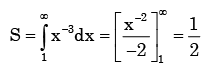

- a)0
- b)π/2
- c)1/5
- d)π/3
Correct answer is option 'B'. Can you explain this answer?
a)
0
b)
π/2
c)
1/5
d)
π/3
 | Akash Kumar answered |
Explain the questions
The Fourier series for the function f(x)=sin2x is - a)sinx+sin2x
- b)1-cos2x
- c)sin2x+cos2x
- d)0.5-0.5cos2x
Correct answer is option 'D'. Can you explain this answer?
The Fourier series for the function f(x)=sin2x is
a)
sinx+sin2x
b)
1-cos2x
c)
sin2x+cos2x
d)
0.5-0.5cos2x
 | Ashish Chakraborty answered |
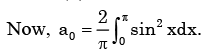
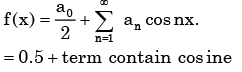
Here f(x ) = sin2 x is even function, hence f( x ) has no sine term.

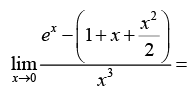
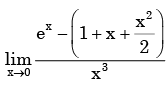
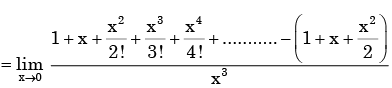
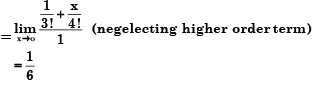
The distance between the origin and the point nearest to it on the surface z2 = 1 + xy is - a)1
- b)√3/2
- c)√3
- d)-2
Correct answer is option 'A'. Can you explain this answer?
The distance between the origin and the point nearest to it on the surface z2 = 1 + xy is
a)
1
b)
√3/2
c)
√3
d)
-2
 | Baishali Bajaj answered |
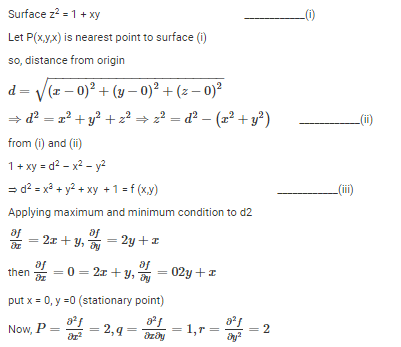
or pr – q^2 = 4 – 1 = 3 > 0 and r = +ve
so f(xy) is minimum at (0,0)
Hence, minimum value of d^2 at (0,0)
d2 = x^2 + y^2 + xy + 1 = (0)^2 + (0)^2 + (0)(0) + 1 = 1
Then the nearest point is
z^2 = 1 + xy = 1+ (0)(0) = 1
or z = 1
X(t) is a real valued function of a real variable with period T. Its trigonometric Fourier Series expansion contains no terms of frequency ω = 2π (2k ) /T ; k = 1, 2,.... Also, no sine terms are present. Then x(t) satisfies the equation - a)x ( t ) =−x(t − T)
- b)x (t) = −x(T − t)= −x (−t)
- c)x (t) = x(T− t) = −x (t −T / 2)
- d)x (t ) = x(t−T) = x (t −T / 2)
Correct answer is option 'D'. Can you explain this answer?
X(t) is a real valued function of a real variable with period T. Its trigonometric Fourier Series expansion contains no terms of frequency ω = 2π (2k ) /T ; k = 1, 2,.... Also, no sine terms are present. Then x(t) satisfies the equation
a)
x ( t ) =−x(t − T)
b)
x (t) = −x(T − t)= −x (−t)
c)
x (t) = x(T− t) = −x (t −T / 2)
d)
x (t ) = x(t−T) = x (t −T / 2)
 | Nandini Banerjee answered |
No sine terms are present.
∴x(t ) is even function.
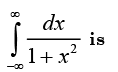

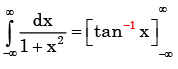
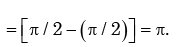
The value of the directional derivative of the function θ (x, y, z) = xy2 + yz2 + zx2 at the point (2, -1, 1) in the direction of the vector p = i + 2j + 2k is- a)1
- b)0.95
- c)0.93
- d)0.9
Correct answer is option 'A'. Can you explain this answer?
The value of the directional derivative of the function θ (x, y, z) = xy2 + yz2 + zx2 at the point (2, -1, 1) in the direction of the vector p = i + 2j + 2k is
a)
1
b)
0.95
c)
0.93
d)
0.9
 | Vertex Academy answered |
Given that,
ϕ = xy2 + yz2 + zx2
directional vector (p) = I + 2j + 2K
Directional derivative = 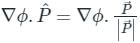

∇ϕ at the point (2, -1, 1) is
∇ϕ = ((-1)2 + 2(2)(1)) î + (2(2)(-1) + (1)2) ĵ + (2(-1)(1) + (2)2)k̂
= 5î - 3ĵ + 2k̂
Directional derivative = 
= 5 - 6 + 4 / 3
= 1
The Fourier series of a real periodic function has only P. cosine terms if it is even Q. sine terms if it is even R. cosine terms if it is odd S. sine terms if it is odd Which of the above statements are correct? - a)P and S
- b)P and R
- c)Q and S
- d)Q and R
Correct answer is option 'A'. Can you explain this answer?
The Fourier series of a real periodic function has only
P. cosine terms if it is even
Q. sine terms if it is even
R. cosine terms if it is odd
S. sine terms if it is odd
Which of the above statements are correct?
a)
P and S
b)
P and R
c)
Q and S
d)
Q and R
 | Bijoy Menon answered |
Because sine function is odd and cosine is even function.
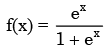
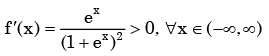
 is given by
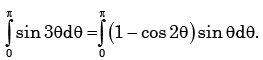
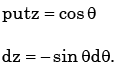
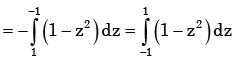
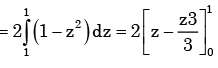

The divergence theorem value for the function x2 + y2 + z2 at a distance of one unit from the origin is- a)0
- b)1
- c)2
- d)3
Correct answer is option 'D'. Can you explain this answer?
The divergence theorem value for the function x2 + y2 + z2 at a distance of one unit from the origin is
a)
0
b)
1
c)
2
d)
3
 | Sandeep Sen answered |
Divergence Theorem:
The divergence theorem relates a volume integral of a vector field to a surface integral of the vector field over the bounding surface of the volume. It states that the flux of a vector field across a closed surface is equal to the volume integral of the divergence of the vector field over the enclosed volume.
Given Vector Field:
The given vector field is F = (x^2, y^2, z^2).
Divergence of the Vector Field:
To calculate the divergence of the vector field, we need to find the partial derivatives of each component with respect to their corresponding variables and sum them up.
∇ · F = ∂(x^2)/∂x + ∂(y^2)/∂y + ∂(z^2)/∂z
= 2x + 2y + 2z
Application of Divergence Theorem:
Using the divergence theorem, we can evaluate the flux of the vector field across a closed surface by calculating the volume integral of the divergence over the enclosed volume.
In this case, the vector field is evaluated at a distance of one unit from the origin, which means we are considering a sphere centered at the origin with a radius of one unit.
Volume Integral:
To calculate the volume integral, we need to find the triple integral of the divergence of the vector field over the volume of the sphere.
∫∫∫ (2x + 2y + 2z) dV
Spherical Coordinates:
To evaluate the triple integral, it is convenient to switch to spherical coordinates since we are dealing with a sphere.
∫∫∫ (2ρsinφcosθ + 2ρsinφsinθ + 2ρcosφ) ρ^2sinφ dρ dθ dφ
Limits of Integration:
The limits of integration for ρ, θ, and φ are as follows:
ρ: 0 to 1 (since we are considering the sphere of radius one unit)
θ: 0 to 2π (full revolution around the z-axis)
φ: 0 to π (from the positive z-axis to the negative z-axis)
Integration:
Evaluating the triple integral, we get:
∫∫∫ (2ρsinφcosθ + 2ρsinφsinθ + 2ρcosφ) ρ^2sinφ dρ dθ dφ
= ∫[0 to 2π] ∫[0 to π] ∫[0 to 1] (2ρ^3sin^2φcosθ + 2ρ^3sin^2φsinθ + 2ρ^3sinφcosφ) dρ dθ dφ
= 2/4 * 2π * 2 * π * 1^4 * 1/4 + 0 + 0
= 2π/2
= π
Therefore, the divergence theorem value for the given vector field at a distance of one unit from the origin is π, which is approximately 3.
The divergence theorem relates a volume integral of a vector field to a surface integral of the vector field over the bounding surface of the volume. It states that the flux of a vector field across a closed surface is equal to the volume integral of the divergence of the vector field over the enclosed volume.
Given Vector Field:
The given vector field is F = (x^2, y^2, z^2).
Divergence of the Vector Field:
To calculate the divergence of the vector field, we need to find the partial derivatives of each component with respect to their corresponding variables and sum them up.
∇ · F = ∂(x^2)/∂x + ∂(y^2)/∂y + ∂(z^2)/∂z
= 2x + 2y + 2z
Application of Divergence Theorem:
Using the divergence theorem, we can evaluate the flux of the vector field across a closed surface by calculating the volume integral of the divergence over the enclosed volume.
In this case, the vector field is evaluated at a distance of one unit from the origin, which means we are considering a sphere centered at the origin with a radius of one unit.
Volume Integral:
To calculate the volume integral, we need to find the triple integral of the divergence of the vector field over the volume of the sphere.
∫∫∫ (2x + 2y + 2z) dV
Spherical Coordinates:
To evaluate the triple integral, it is convenient to switch to spherical coordinates since we are dealing with a sphere.
∫∫∫ (2ρsinφcosθ + 2ρsinφsinθ + 2ρcosφ) ρ^2sinφ dρ dθ dφ
Limits of Integration:
The limits of integration for ρ, θ, and φ are as follows:
ρ: 0 to 1 (since we are considering the sphere of radius one unit)
θ: 0 to 2π (full revolution around the z-axis)
φ: 0 to π (from the positive z-axis to the negative z-axis)
Integration:
Evaluating the triple integral, we get:
∫∫∫ (2ρsinφcosθ + 2ρsinφsinθ + 2ρcosφ) ρ^2sinφ dρ dθ dφ
= ∫[0 to 2π] ∫[0 to π] ∫[0 to 1] (2ρ^3sin^2φcosθ + 2ρ^3sin^2φsinθ + 2ρ^3sinφcosφ) dρ dθ dφ
= 2/4 * 2π * 2 * π * 1^4 * 1/4 + 0 + 0
= 2π/2
= π
Therefore, the divergence theorem value for the given vector field at a distance of one unit from the origin is π, which is approximately 3.

The area bounded by the curves y2 = 9x, x – y + 2 = 0 is given by- a)1
- b)0.5
- c)3/2
- d)5/4
Correct answer is option 'B'. Can you explain this answer?
The area bounded by the curves y2 = 9x, x – y + 2 = 0 is given by
a)
1
b)
0.5
c)
3/2
d)
5/4
| | Sanya Agarwal answered |
Calculation
Given equations are: y2 = 9x, x – y + 2 = 0
By solving the above two equations,
The point of intersection of the two curves are: (1, 3) and (4, 6)
Now, the graph is shown below.
By considering the horizontal strip,
The limits of y are: 3 to 6
The limits of x are: (y – 2) to y2/9
Now, the required area is =∫∫dxdy
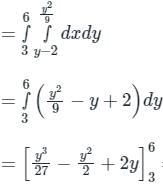
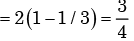
= 1/2
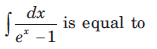
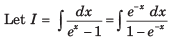
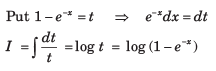
 (where C is a closed curve given by |z| = 1) is


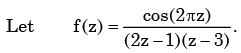

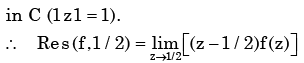
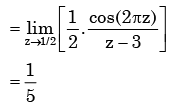
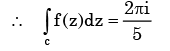

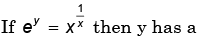
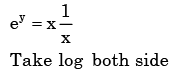
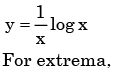
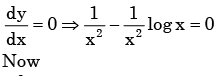
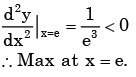
The maximum value of f ( x) = (1 + cos x) sin x is- a)3
- b)3√3
- c)4
- d)3√3/4
Correct answer is option 'D'. Can you explain this answer?
The maximum value of f ( x) = (1 + cos x) sin x is
a)
3
b)
3√3
c)
4
d)
3√3/4
 | Radhika Sharma answered |
The given function is:
f(x) = (1 - cos(x))sin(x)
To find the maximum value of the function:
We can find the maximum value of the function by finding the critical points and determining whether they are maximum or minimum points.
Finding the critical points:
The critical points occur when the derivative of the function is zero or undefined. Let's find the derivative of the given function.
f'(x) = (1 - cos(x))cos(x) + sin(x)(-sin(x))
= cos(x) - cos^2(x) - sin^2(x)
= cos(x) - (1 - sin^2(x))
= cos(x) - 1 + sin^2(x)
= sin^2(x) + cos(x) - 1
Simplifying the derivative:
To find the critical points, we need to solve the equation f'(x) = 0.
sin^2(x) + cos(x) - 1 = 0
Using the identity sin^2(x) = 1 - cos^2(x):
1 - cos^2(x) + cos(x) - 1 = 0
Simplifying further:
-cos^2(x) + cos(x) = 0
Factoring out cos(x):
cos(x)(-cos(x) + 1) = 0
Setting each factor to zero:
cos(x) = 0 or -cos(x) + 1 = 0
Solving the first equation:
cos(x) = 0
This occurs when x = π/2 or x = 3π/2.
Solving the second equation:
-cos(x) + 1 = 0
cos(x) = 1
This occurs when x = 0 or x = 2π.
Therefore, the critical points are x = π/2, 3π/2, 0, and 2π.
Determining the nature of critical points:
To determine whether the critical points are maximum or minimum points, we can use the second derivative test. Let's find the second derivative of the function.
f''(x) = d/dx (sin^2(x) + cos(x) - 1)
= 2sin(x)cos(x) - sin(x)
Using the identity 2sin(x)cos(x) = sin(2x):
f''(x) = sin(2x) - sin(x)
Simplifying the second derivative:
f''(x) = 2sin(x)cos(x) - sin(x)
= sin(x)(2cos(x) - 1)
Evaluating the second derivative at the critical points:
f''(π/2) = sin(π/2)(2cos(π/2) - 1)
= 1(2(0) - 1)
= -1
f''(3π/2) = sin(3π/2)(2cos(3π/2) - 1)
= -1(2(0) - 1)
= 1
f''(0
f(x) = (1 - cos(x))sin(x)
To find the maximum value of the function:
We can find the maximum value of the function by finding the critical points and determining whether they are maximum or minimum points.
Finding the critical points:
The critical points occur when the derivative of the function is zero or undefined. Let's find the derivative of the given function.
f'(x) = (1 - cos(x))cos(x) + sin(x)(-sin(x))
= cos(x) - cos^2(x) - sin^2(x)
= cos(x) - (1 - sin^2(x))
= cos(x) - 1 + sin^2(x)
= sin^2(x) + cos(x) - 1
Simplifying the derivative:
To find the critical points, we need to solve the equation f'(x) = 0.
sin^2(x) + cos(x) - 1 = 0
Using the identity sin^2(x) = 1 - cos^2(x):
1 - cos^2(x) + cos(x) - 1 = 0
Simplifying further:
-cos^2(x) + cos(x) = 0
Factoring out cos(x):
cos(x)(-cos(x) + 1) = 0
Setting each factor to zero:
cos(x) = 0 or -cos(x) + 1 = 0
Solving the first equation:
cos(x) = 0
This occurs when x = π/2 or x = 3π/2.
Solving the second equation:
-cos(x) + 1 = 0
cos(x) = 1
This occurs when x = 0 or x = 2π.
Therefore, the critical points are x = π/2, 3π/2, 0, and 2π.
Determining the nature of critical points:
To determine whether the critical points are maximum or minimum points, we can use the second derivative test. Let's find the second derivative of the function.
f''(x) = d/dx (sin^2(x) + cos(x) - 1)
= 2sin(x)cos(x) - sin(x)
Using the identity 2sin(x)cos(x) = sin(2x):
f''(x) = sin(2x) - sin(x)
Simplifying the second derivative:
f''(x) = 2sin(x)cos(x) - sin(x)
= sin(x)(2cos(x) - 1)
Evaluating the second derivative at the critical points:
f''(π/2) = sin(π/2)(2cos(π/2) - 1)
= 1(2(0) - 1)
= -1
f''(3π/2) = sin(3π/2)(2cos(3π/2) - 1)
= -1(2(0) - 1)
= 1
f''(0
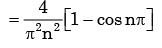
The Fourier series expansion of a symmetric and even function, f(x) where 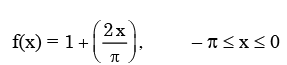
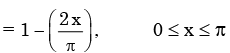 Will be
 - a)
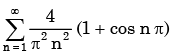
- b)
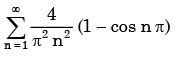
- c)

- d)
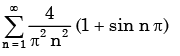
Correct answer is option 'B'. Can you explain this answer?
The Fourier series expansion of a symmetric and even function, f(x) where
Will be
a)
b)
c)
d)
| | Rhea Reddy answered |
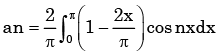
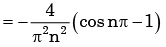
f(x) is symmetric and even, it’s Fourier series contain only cosine term. Now.

Suppose C is the closed curve defined as the circle x2 + y2 = 1 with C oriented anti-clockwise. The value of ∮(xy2dx + x2ydy) over the curve C equals ________
Correct answer is between '-0.03,0.03'. Can you explain this answer?
Suppose C is the closed curve defined as the circle x2 + y2 = 1 with C oriented anti-clockwise. The value of ∮(xy2dx + x2ydy) over the curve C equals ________
 | Engineers Adda answered |
Concept:
Green’s theorem:
Let R be a closed bounded region in the xy plane whose boundary C consists of finitely many
smooth curves.
Let F1(x, y) & F(x, y) be functions that are continuous and have continuous partial
derivatives
∂F1 / ∂y and ∂F2 / ∂x. Then
∂F1 / ∂y and ∂F2 / ∂x. Then

Analysis:
Given curve C: x2 + y2 = 1
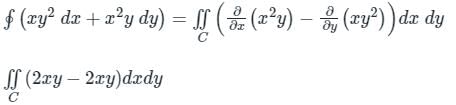
= 0
Mathematically, the functions in Green’s theorem will be- a)Continuous derivatives
- b)Discrete derivatives
- c)Continuous partial derivatives
- d)Discrete partial derivatives
Correct answer is option 'C'. Can you explain this answer?
Mathematically, the functions in Green’s theorem will be
a)
Continuous derivatives
b)
Discrete derivatives
c)
Continuous partial derivatives
d)
Discrete partial derivatives
| | Engineers Adda answered |
The Green’s theorem states that if L and M are functions of (x,y) in an open region containing D and having continuous partial derivatives then,
∫ (F dx + G dy) = ∫∫(dG/dx – dF/dy)dx dy, with path taken anticlockwise.
∫ (F dx + G dy) = ∫∫(dG/dx – dF/dy)dx dy, with path taken anticlockwise.
The value of the integral of the complex function 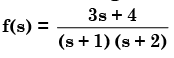 Along the path |s| = 3 is
 - a)2πj
- b)4πj
- c)6πj
- d)8πj
Correct answer is option 'C'. Can you explain this answer?
The value of the integral of the complex function
Along the path |s| = 3 is
a)
2πj
b)
4πj
c)
6πj
d)
8πj
 | Cstoppers Instructors answered |
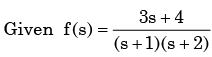
f (s) has singularities at s =−1, −2 which are inside the given circle
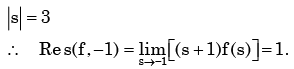
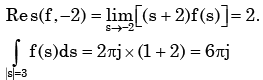
Using Cauchy’s integral theorem, the value of the integral (integration being taken in counter clockwise direction) 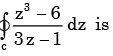
- a)

- b)

- c)

- d)1
Correct answer is option 'A'. Can you explain this answer?
Using Cauchy’s integral theorem, the value of the integral (integration being taken in counter clockwise direction)
a)
b)
c)
d)
1
| | Yash Patel answered |
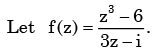
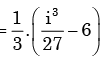
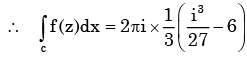
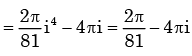
Here f (z) has a singularities at z i / 3


If x2 + y2 = 1, find the maximum value of x2 + 4xy - y2.- a)1
- b)√2
- c)√5
- d)4
Correct answer is option 'C'. Can you explain this answer?
If x2 + y2 = 1, find the maximum value of x2 + 4xy - y2.
a)
1
b)
√2
c)
√5
d)
4
| | Sanya Agarwal answered |
Given:
x2 + y2 = 1.
x2 + 4xy - y2
Concept Used:
The maximum value of a sin θ + b cos θ is  .
.
.Calculation:
Since, x2 + y2 = 1, we can suppose x = cos θ and y = sin θ.
Now, x2 + 4xy - y2
= cos2 θ + 4 sin θ cos θ - sin2 θ
= (cos2 θ - sin2 θ) + 4 sin θ cos θ
= cos 2θ + 2 sin 2θ
Its maximum value is 
= √5.
Find the minimum value of (2x + 1)(x + 3).- a)25/8
- b)-25/8
- c)63/8
- d)-63/8
Correct answer is option 'B'. Can you explain this answer?
Find the minimum value of (2x + 1)(x + 3).
a)
25/8
b)
-25/8
c)
63/8
d)
-63/8
| | Sanvi Kapoor answered |
Given:
(2x + 1)(x + 3)
Concept used:
In Quadratic Polynomial ax2 + bx + c
When, a > 0
Minimum value = (4ac - b2)/4a
Calculation:
(2x + 1)(x + 3)
⇒ 2x2 + 6x + x + 3
⇒ 2x2 + 7x + 3
Compare the above equation with quadratic polynomial ax2 + bx + c.
a = 2, b = 7 and c = 3
Here, a > 0
Minimum value = (4ac - b2)/4a
⇒ Minimum value = ( 4 × 2 × 3 - 49)/8
⇒ Minimum value = (24 - 49)/8
⇒ Minimum value = -25/8
∴ -25/8 is the minimum value of (2x + 1)(x + 3).
The directional derivative of ϕ = xy + yz + zx along the tangent to the curve at x = t, y = t2, z = t3 at P(1,1,1) is A/√14, then the value of A is:
Correct answer is '12'. Can you explain this answer?
The directional derivative of ϕ = xy + yz + zx along the tangent to the curve at x = t, y = t2, z = t3 at P(1,1,1) is A/√14, then the value of A is:
 | Mahesh Yadav answered |
To find the directional derivative of the function f(x,y,z) = xy + yz + zx, we need to find the gradient vector of f at the point P(1,1,1) and then take the dot product of the gradient vector with the tangent vector of the curve at P.
First, let's find the gradient vector of f:
∇f = (∂f/∂x, ∂f/∂y, ∂f/∂z)
= (y+z, x+z, x+y)
Now, let's find the tangent vector of the curve at P(1,1,1). We can do this by taking the derivative of each component of the curve with respect to t:
r(t) = (x(t), y(t), z(t))
= (t, t^2, t^3)
dr/dt = (dx/dt, dy/dt, dz/dt)
= (1, 2t, 3t^2)
At P(1,1,1), t = 1, so the tangent vector at P is:
dr/dt = (1, 2(1), 3(1)^2)
= (1, 2, 3)
Finally, we can find the directional derivative by taking the dot product of the gradient vector and the tangent vector:
Directional derivative = ∇f · dr/dt
= (y+z, x+z, x+y) · (1, 2, 3)
= (1+1, 1+1, 1+2)
= (2, 2, 3)
Therefore, the directional derivative of f = xy + yz + zx along the tangent to the curve at P(1,1,1) is (2, 2, 3).
First, let's find the gradient vector of f:
∇f = (∂f/∂x, ∂f/∂y, ∂f/∂z)
= (y+z, x+z, x+y)
Now, let's find the tangent vector of the curve at P(1,1,1). We can do this by taking the derivative of each component of the curve with respect to t:
r(t) = (x(t), y(t), z(t))
= (t, t^2, t^3)
dr/dt = (dx/dt, dy/dt, dz/dt)
= (1, 2t, 3t^2)
At P(1,1,1), t = 1, so the tangent vector at P is:
dr/dt = (1, 2(1), 3(1)^2)
= (1, 2, 3)
Finally, we can find the directional derivative by taking the dot product of the gradient vector and the tangent vector:
Directional derivative = ∇f · dr/dt
= (y+z, x+z, x+y) · (1, 2, 3)
= (1+1, 1+1, 1+2)
= (2, 2, 3)
Therefore, the directional derivative of f = xy + yz + zx along the tangent to the curve at P(1,1,1) is (2, 2, 3).
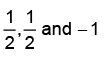
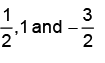
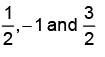
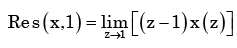
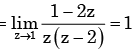
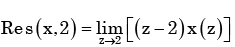
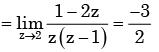
The residues of a complex function 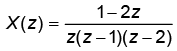 at its poles are
 - a)

- b)
- c)
- d)
Correct answer is option 'C'. Can you explain this answer?
The residues of a complex function at its poles are
at its poles are a)
b)
c)
d)
| | Avinash Sharma answered |
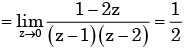
x(z) has simple poles at z = 0,1, 2.

Using Green’s theorem, the value of the integral 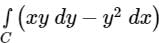 , where C is the square, cut from the first quadrant by the lines x = 1 and y = 1, will be.
- a)1
- b)1/2
- c)5/3
- d)3/2
Correct answer is option 'D'. Can you explain this answer?
Using Green’s theorem, the value of the integral , where C is the square, cut from the first quadrant by the lines x = 1 and y = 1, will be.
, where C is the square, cut from the first quadrant by the lines x = 1 and y = 1, will be.a)
1
b)
1/2
c)
5/3
d)
3/2
| | Sanya Agarwal answered |
Concept:
If M(x,y), N(x,y), ∂N/∂y and ∂M/∂x be continuous functions over region R bounded by a simple closed curve c in x-y plane, then according to this theorem:

It is used to simplify the vector integration.
It gives the relation between the closed line and open surface integration.
Calculation:
Given:
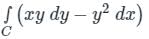
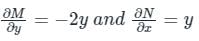
Comparing with the standard equation Mdx + Ndy; M = -y2 and N = xy.
∴ 

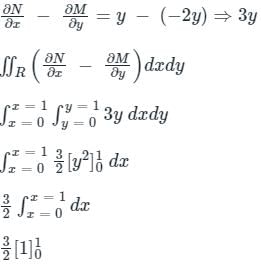
= 3/2
The following surface integral is to be evaluated over a sphere for the given steady vector field, F = xi + yj + zk defined with respect to a Cartesian coordinate system having i, j, and k as unit base vectors.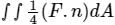 , Where S is the sphere, x2 + y2 + z2 = 1 and n is the outward unit normal vector to the sphere. The value of the surface integral is
- a)π
- b)2π
- c)

- d)4π
Correct answer is option 'A'. Can you explain this answer?
The following surface integral is to be evaluated over a sphere for the given steady vector field, F = xi + yj + zk defined with respect to a Cartesian coordinate system having i, j, and k as unit base vectors.
, Where S is the sphere, x2 + y2 + z2 = 1 and n is the outward unit normal vector to the sphere. The value of the surface integral isa)
π
b)
2π
c)
d)
4π
 | Pioneer Academy answered |
Concept:
Gauss divergence theorem:
It states that the surface integral of the normal component of a vector function  taken over a closed surface ‘S’ is equal to the volume integral of the divergence of that vector function
  taken over a volume enclosed by the closed surface ‘S’.
taken over a closed surface ‘S’ is equal to the volume integral of the divergence of that vector function taken over a volume enclosed by the closed surface ‘S’.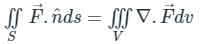
Calculation:
Given:
F = xi + yj + zk
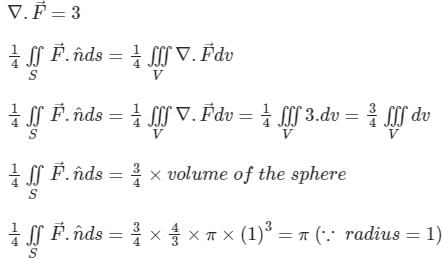
Stokes theorem:
It states that the line integral of a vector field  around any closed surface C is equal to the surface integral of the normal component of the curl of vector
  over an unclosed surface ‘S’.
around any closed surface C is equal to the surface integral of the normal component of the curl of vector over an unclosed surface ‘S’.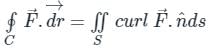
Green's theorem:

The value of  where ‘C’ is the curve passing through the point (0, √2) and satisfying the differential equation dy/dx = −2x/y is ________.
Correct answer is between '-5,-4'. Can you explain this answer?
The value of where ‘C’ is the curve passing through the point (0, √2) and satisfying the differential equation dy/dx = −2x/y is ________.
where ‘C’ is the curve passing through the point (0, √2) and satisfying the differential equation dy/dx = −2x/y is ________.| | Engineers Adda answered |
Concept:
Green's theorem converts the line integral to a double integral.
Green's theorem transform the line integral in xy - plane to a surface integral on the same xy - plane
If P and Q are functions of (x, y) defined in an open region then

Application:
Given the differential equation is:

y dy = -2 xdx
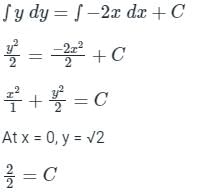
C = 1
∴ The equation of a curve is:
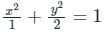
This is an ellipse.
On comparing with  we get:
we get:a = 1 and b = √2
Now, the given integral is:
(4y – 3x)dx + (3x + 2y) dy
Here M = 4y – 3x and N = 3x + 2y
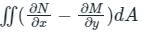
Applying Greens theorem, we convert the line integral to a double integral, i.e.
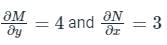
∴ The given integral becomes:
= 

= - (Area under ellipse)
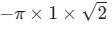
= 
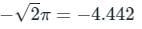
= 

With a 1 unit change in b, what is the change in x in the solution of the system of equations x + y = 2, 1.01 x + 0.99 y = b? - a)Zero
- b)2 units
- c)50 units
- d)100 units
Correct answer is option 'C'. Can you explain this answer?
With a 1 unit change in b, what is the change in x in the solution of the system of equations x + y = 2, 1.01 x + 0.99 y = b?
a)
Zero
b)
2 units
c)
50 units
d)
100 units
 | Sahil Majumdar answered |
Given x + y = 2 …………….. (i)
1.01 x + 0.99 y = b …………….. (ii)
Multiply 0.99 is equation (i), and subtract from equation (ii), we get


Find the greatest value of the directional derivatives of the function f = x2yz3 at (2, 1, -1) is
Correct answer is between '13.0,13.7'. Can you explain this answer?
Find the greatest value of the directional derivatives of the function f = x2yz3 at (2, 1, -1) is
| | Sanya Agarwal answered |
Concept:
The greatest value of directional derivative = |∇ ϕ|
Analysis:
f = x2yz3 (2, 1, -1)
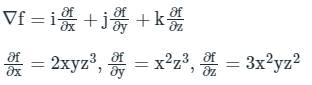
∇f = -4i - 4j + 12k

|Δ f| = 13.26
The minimum distance from the point (4, 2) to the parabola y2 = 8x is- a)√2
- b)2√2
- c)2
- d)3√2
Correct answer is option 'B'. Can you explain this answer?
The minimum distance from the point (4, 2) to the parabola y2 = 8x is
a)
√2
b)
2√2
c)
2
d)
3√2
 | Anshu Kumar answered |
Let the point closest to (4, 2) be (2t2,4)

The value of the integral of the function g(x, y) = 4x3 + 10y4 along the straight line segment from the point (0, 0) to the point (1, 2) in the x-y plane is - a)33
- b)35
- c)40
- d)56
Correct answer is option 'A'. Can you explain this answer?
The value of the integral of the function g(x, y) = 4x3 + 10y4 along the straight line segment from the point (0, 0) to the point (1, 2) in the x-y plane is
a)
33
b)
35
c)
40
d)
56
 | Rajat Basu answered |
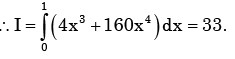
The equation of the line passing through (0,0) and (1,2) is y = 2x
Given y x, y ) = 4x3+ 10y4 = 4x3 + 10(2x )4 = 4x3+ 160xy
Which of the following theorem convert line integral to surface integral?- a)Gauss divergence and Stoke’s theorem
- b)Stoke’s theorem only
- c)Green’ s theorem only
- d)Stoke’s and Green’s theorem
Correct answer is option 'D'. Can you explain this answer?
Which of the following theorem convert line integral to surface integral?
a)
Gauss divergence and Stoke’s theorem
b)
Stoke’s theorem only
c)
Green’ s theorem only
d)
Stoke’s and Green’s theorem
| | Nilesh Kapoor answered |
The correct answer is b) Gauss divergence and Stokes.
The directional derivative of 1/r in the direction of  is
is- a)1/r2
- b)-1/r2
- c)1/r3
- d)-
 /r3
/r3
Correct answer is option 'B'. Can you explain this answer?
The directional derivative of 1/r in the direction of is
isa)
1/r2
b)
-1/r2
c)
1/r3
d)
-/r3
/r3| | Pioneer Academy answered |
Concept:
Let f(r) be a function then directional derivative of the function f(r) is given by:
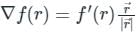
Calculation:
Given:
f(r) = 1/r
As we know that, if f(r) is a function then directional derivative of the function f(r)is given by:
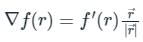
f(r) = 1/r


∵ 
Here, we have to find the directional derivative of f(r) in the direction of  . It will be given by:
. It will be given by:

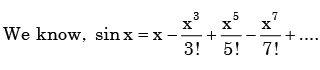
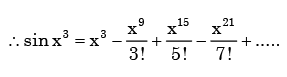
Chapter doubts & questions for Calculus - 3 Months Preparation for GATE Electrical 2026 is part of Electrical Engineering (EE) exam preparation. The chapters have been prepared according to the Electrical Engineering (EE) exam syllabus. The Chapter doubts & questions, notes, tests & MCQs are made for Electrical Engineering (EE) 2026 Exam. Find important definitions, questions, notes, meanings, examples, exercises, MCQs and online tests here.
Chapter doubts & questions of Calculus - 3 Months Preparation for GATE Electrical in English & Hindi are available as part of Electrical Engineering (EE) exam. Download more important topics, notes, lectures and mock test series for Electrical Engineering (EE) Exam by signing up for free.
3 Months Preparation for GATE Electrical676 videos|1399 docs|882 tests |
