


All Exams > Electrical Engineering (EE) > 3 Months Preparation for GATE Electrical > All Questions
All questions of Error Analysis for Electrical Engineering (EE) Exam
The change in resistance of an electrical strain gauge with a gauge factor of 2.0 and resistance of 50 Ω when subjected to a strain of 0.001 is:- a)0.1 Ω
- b)0.01 Ω
- c)0.001 Ω
- d)0.0001 Ω
Correct answer is option 'A'. Can you explain this answer?
The change in resistance of an electrical strain gauge with a gauge factor of 2.0 and resistance of 50 Ω when subjected to a strain of 0.001 is:
a)
0.1 Ω
b)
0.01 Ω
c)
0.001 Ω
d)
0.0001 Ω
 | Divya Singh answered |
Calculation:
Gauge Factor (GF):
- The gauge factor is given as 2.0.
Initial Resistance (R):
- The initial resistance of the strain gauge is 50 Ω.
Strain (ε):
- The strain applied is 0.001.
Change in Resistance (∆R):
- The change in resistance can be calculated using the formula: ∆R = GF * R * ε.
- ∆R = 2.0 * 50 * 0.001 = 1 Ω.
Answer:
- Therefore, the change in resistance of the electrical strain gauge when subjected to a strain of 0.001 is 1 Ω.
- The closest option to this value is option 'A' which is 0.1 Ω.
Gauge Factor (GF):
- The gauge factor is given as 2.0.
Initial Resistance (R):
- The initial resistance of the strain gauge is 50 Ω.
Strain (ε):
- The strain applied is 0.001.
Change in Resistance (∆R):
- The change in resistance can be calculated using the formula: ∆R = GF * R * ε.
- ∆R = 2.0 * 50 * 0.001 = 1 Ω.
Answer:
- Therefore, the change in resistance of the electrical strain gauge when subjected to a strain of 0.001 is 1 Ω.
- The closest option to this value is option 'A' which is 0.1 Ω.

If a zero-centred voltmeter has a scale from – 5V to +5V, then the span of it is _____.- a)0 V
- b)10 V
- c)5 V
- d)–5 V
Correct answer is option 'B'. Can you explain this answer?
If a zero-centred voltmeter has a scale from – 5V to +5V, then the span of it is _____.
a)
0 V
b)
10 V
c)
5 V
d)
–5 V
 | Tanvi Rane answered |
-5V to +5V, it means that the voltmeter can measure voltages from -5V to +5V. The zero-centred scale indicates that the zero point of the scale is located at the centre, which means that the voltmeter can measure both positive and negative voltages.
In case of overdamping, the instrument will become- a)Oscillating
- b)Dead
- c)Fast and sensitive
- d)Slow and lethargic
Correct answer is option 'D'. Can you explain this answer?
In case of overdamping, the instrument will become
a)
Oscillating
b)
Dead
c)
Fast and sensitive
d)
Slow and lethargic
 | Bayshore Academy answered |
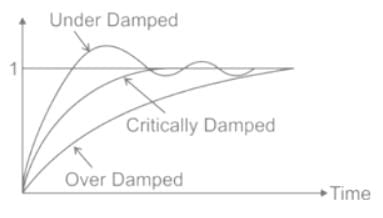
- In case of over damping, the instrument will become slow and lethargic and it rises very slowly from its zero position to final position
- An over damped system would never allow the system to reach the desired end state since it is over damped and that is why they are never used.
Error due to improper zero adjustment is classified as- a)Environment error
- b)Instrument error
- c)Random error
- d)Operator error
Correct answer is option 'B'. Can you explain this answer?
Error due to improper zero adjustment is classified as
a)
Environment error
b)
Instrument error
c)
Random error
d)
Operator error
 | Anirban Gupta answered |
Error due to improper zero adjustment
Improper zero adjustment is classified as Instrument error.
Explanation:
- When the zero adjustment on an instrument is not set properly, it can result in errors in the measurement readings.
- This type of error is considered an instrument error because it is directly related to the calibration and adjustment of the measuring instrument itself.
- Improper zero adjustment can lead to inaccuracies in the measurements taken by the instrument, affecting the overall reliability of the data collected.
- It is important for operators to ensure that the zero adjustment is correctly set before taking any measurements to minimize the risk of errors due to improper zero adjustment.
Therefore, error due to improper zero adjustment is classified as an Instrument error in the field of electrical engineering.
The difference between the indicated value and the true value of a quantity is:- a)Gross error
- b)Absolute error
- c)Dynamic error
- d)Relative error
Correct answer is option 'B'. Can you explain this answer?
The difference between the indicated value and the true value of a quantity is:
a)
Gross error
b)
Absolute error
c)
Dynamic error
d)
Relative error
 | Machine Experts answered |
Absolute error (ε):
The difference between the indicated or measured value and the true or actual value is called absolute error. Also known as a static error.
Absolute error (ε) = Am - At
Where
Am = measured or indicated value
At = true or actual value
Gross error:
- Gross errors are the observational errors that happen due to the lack of observation of the observer.
- These errors vary from observer to observer.
- The gross errors may also occur due to improper selection of the instrument.
Relative error:
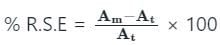
The relative error is the absolute error over the true or actual value.
Relative static error 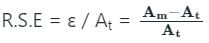
Probable error is a quantity formerly used as a measure of variability which is equal to 0.6745 times the standard deviation.
A meter reads 125 V and the true value of the voltage is 125.5 V. Find the static error of the instrument.- a)125/0.5 V
- b)125 V
- c)0.5 V
- d)0.5 / 125 V
Correct answer is option 'C'. Can you explain this answer?
A meter reads 125 V and the true value of the voltage is 125.5 V. Find the static error of the instrument.
a)
125/0.5 V
b)
125 V
c)
0.5 V
d)
0.5 / 125 V
 | Sushant Mehta answered |
Understanding Static Error
Static error is the difference between the measured value and the true value of a measurement. In this case, we are measuring voltage.
Given Values
- Measured Voltage (V_measured) = 125 V
- True Voltage (V_true) = 125.5 V
Calculating Static Error
To find the static error, we use the formula:
Static Error = V_measured - V_true
Substituting the values:
- Static Error = 125 V - 125.5 V
- Static Error = -0.5 V
This negative value indicates that the measured voltage is lower than the true voltage by 0.5 V.
Understanding the Options
Now, let's evaluate the options provided:
- a) 125/0.5 V: This option represents a fraction and does not apply here.
- b) 125 V: This is the measured value, not the error.
- c) 0.5 V: This is indeed the absolute value of the static error.
- d) 0.5 / 125 V: This represents a ratio, which is not the correct representation of static error.
Conclusion
Thus, the correct answer is option 'C', which represents the static error of the instrument as 0.5 V. This tells us how much the instrument's reading deviates from the true value.
Static error is the difference between the measured value and the true value of a measurement. In this case, we are measuring voltage.
Given Values
- Measured Voltage (V_measured) = 125 V
- True Voltage (V_true) = 125.5 V
Calculating Static Error
To find the static error, we use the formula:
Static Error = V_measured - V_true
Substituting the values:
- Static Error = 125 V - 125.5 V
- Static Error = -0.5 V
This negative value indicates that the measured voltage is lower than the true voltage by 0.5 V.
Understanding the Options
Now, let's evaluate the options provided:
- a) 125/0.5 V: This option represents a fraction and does not apply here.
- b) 125 V: This is the measured value, not the error.
- c) 0.5 V: This is indeed the absolute value of the static error.
- d) 0.5 / 125 V: This represents a ratio, which is not the correct representation of static error.
Conclusion
Thus, the correct answer is option 'C', which represents the static error of the instrument as 0.5 V. This tells us how much the instrument's reading deviates from the true value.
What is the smallest change in the input signal that can be detected by an instrument called?- a)Accuracy
- b)Precision
- c)Resolution
- d)Sensitivity
Correct answer is option 'C'. Can you explain this answer?
What is the smallest change in the input signal that can be detected by an instrument called?
a)
Accuracy
b)
Precision
c)
Resolution
d)
Sensitivity
 | Vertex Academy answered |
Accuracy: It is the degree of closeness with which the reading approaches the true value of the quantity to be measured.
Precision: It is the measure of reproducibility i.e., given a fixed value of a quantity, precision is a measure of the degree of agreement within a group of measurements.
- The precision of an instrument does not guarantee accuracy
- An instrument with more significant figures has more precision
- Deflection factor is reciprocal of sensitivity
Resolution: The smallest change in output to the change in input is known as resolution. Resolution is the smallest measurable input change.
Sensitivity: It is defined as the ratio of the changes in the output of an instrument to a change in the value of the quantity being measured. It denotes the smallest change in the measured variable to which the instrument responds.
Deflection factor or inverse sensitivity is the reciprocal of sensitivity.
Perfect reproducibility means the instrument has:- a)No drift
- b)High accuracy
- c)Maximum drift
- d)Minimum accuracy
Correct answer is option 'A'. Can you explain this answer?
Perfect reproducibility means the instrument has:
a)
No drift
b)
High accuracy
c)
Maximum drift
d)
Minimum accuracy
| | Machine Experts answered |
Reproducibility: It is the degree of closeness with which given value may be repeatedly measured. It may be specified in terms of units for a given period of time.
Perfect reproducibility means that the instrument has no drift.
No drift means that with a given input the measured values do not vary with time.
A wattmeter reads 25.34 W. The absolute error in measurement is - 0.11 W. What is the true value of power:- a)25.23 W
- b)25.45 W
- c)- 25.23 W
- d)- 25.45 W
Correct answer is option 'B'. Can you explain this answer?
A wattmeter reads 25.34 W. The absolute error in measurement is - 0.11 W. What is the true value of power:
a)
25.23 W
b)
25.45 W
c)
- 25.23 W
d)
- 25.45 W
| | Vertex Academy answered |
Given that,
Measured value = 25.34 W
Absolute error = - 0.11 W
Absolute error = Measured value – true value
⇒ -0.11 = 25.34 – true value
⇒ 25.34 + 0.11 = 25.45 W
The instruments that determine the electrical quantity to be measured directly in terms of deflection are called:- a)Absolute instruments
- b)Integrating instruments
- c)Secondary instruments
- d)Recording instruments
Correct answer is option 'C'. Can you explain this answer?
The instruments that determine the electrical quantity to be measured directly in terms of deflection are called:
a)
Absolute instruments
b)
Integrating instruments
c)
Secondary instruments
d)
Recording instruments
| | Vertex Academy answered |
We can classify the instruments into two types:
1. Absolute Instruments:
- These instruments give the magnitude of the quantity under measurements in terms of physical constants of the instrument
- There is no necessity of calibrating or comparing with other instruments
- Tangent Galvanometer and Rayleigh’s current balance are examples of this class
2. Secondary Instruments:
- These instruments are so constructed that the quantity being measured can only be measured by observing the output indicated by the instrument i.e. deflection of the instrument
- These instruments are calibrated by comparison with an absolute instrument or any other secondary instrument which has already been calibrated against an absolute instrument
- A voltmeter, a glass thermometer, and a pressure gauge are typical examples of secondary instruments
Working with absolute instruments for routine work is time-consuming. Therefore, secondary instruments are most commonly used. Absolute instruments are seldom used except in standard institutions and laboratories while secondary instruments find usage almost in every sphere of measurement.
Chapter doubts & questions for Error Analysis - 3 Months Preparation for GATE Electrical 2026 is part of Electrical Engineering (EE) exam preparation. The chapters have been prepared according to the Electrical Engineering (EE) exam syllabus. The Chapter doubts & questions, notes, tests & MCQs are made for Electrical Engineering (EE) 2026 Exam. Find important definitions, questions, notes, meanings, examples, exercises, MCQs and online tests here.
Chapter doubts & questions of Error Analysis - 3 Months Preparation for GATE Electrical in English & Hindi are available as part of Electrical Engineering (EE) exam. Download more important topics, notes, lectures and mock test series for Electrical Engineering (EE) Exam by signing up for free.
3 Months Preparation for GATE Electrical676 videos|1399 docs|882 tests |
